Celtic mythology is rich, layered, and often shaped by oral tradition, surviving manuscripts, and regional folklore. The best books help readers separate story, scholarship, and modern interpretation.
Whether you want an accessible overview, a deeper historical study, or a collection of primary tales, this roundup highlights Celtic mythology books that suit different reading goals and experience levels.
Best 10 Celtic Mythology Books Picks for 2026
Mythic Overview

- Illustrated overview of Celtic gods, monsters, and magic
- Covers Ireland, Scotland, Brittany, and Wales
- Good for readers seeking a broad introduction
Best For: Readers who want an illustrated overview of Celtic legends and folklore across multiple regions.
Heroic Tales
Celtic Mythology: Tales of Gods, Goddesses, and Heroes

- Audiobook collection of Celtic gods, goddesses, and heroes
- Vivid prose and unabridged narration
- Features figures like Lugus, Rhiannon, and Cú Chulainn
Best For: Listeners who want a story-focused introduction to Celtic gods, heroes, and legendary battles.
Classic Sagas

- Foundational early Irish myths first written down in the 8th century
- Penguin Classics edition with notes and introductions
- Strong mix of myth, legend, and literary history
Best For: Readers interested in classic early Irish texts with literary importance and scholarly framing.
Scholarly Deep Dive

- Comprehensive study of Celtic mythology and religion
- Includes translated prayers, poems, inscriptions, and songs
- Draws from archaeology, manuscripts, and folklore
Best For: Readers seeking a detailed study of Celtic belief, ritual, and traditional sources.
Definitive Anthology
The Mammoth Book of Celtic Myths and Legends

- Covers Irish, Scots, Welsh, Cornish, Manx, and Breton traditions.
- Mixes well-known legends with newly found manuscript tales.
- 640-page anthology by Peter Berresford Ellis.
Best For: Readers who want a large, wide-ranging collection of Celtic myths and legends in one volume.
Accessible Handbook
Celtic Mythology: The Gods, Goddesses, and Heroes Handbook

- Focuses on gods, goddesses, heroes, and monsters.
- Covers England, Scotland, Ireland, and Wales.
- Compact 256-page book from the Candlelit Tales duo.
Best For: Readers looking for a concise, accessible introduction to Celtic gods, heroes, and monsters.
Illustrated Guide
The Celtic Myths: A Guide to the Ancient Gods and Legends

- Blends myth retellings with archaeology and history.
- Focuses on Irish and Welsh myths.
- Includes illustrations, photos, drawings, and boxed features.
Best For: Readers who want a visually supported, context-rich guide to Irish and Welsh Celtic myths.
Spiritual Beginner’s Guide
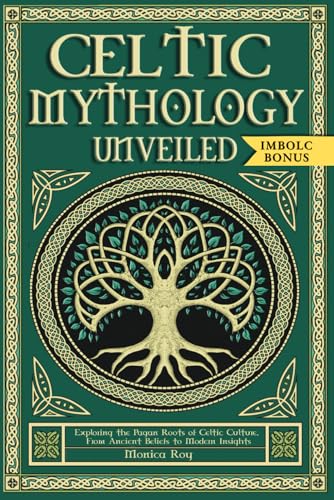
- Covers gods, sacred sites, heroes, and festivals
- Focuses on modern spirituality and nature-based practice
- Paperback includes bonus guide and audio meditation
Best For: Readers who want an accessible, spirituality-focused Celtic mythology introduction
Illustrated Kids’ Myth Collection

- More than 20 retold myths for ages 7–9
- Includes character profiles and pronunciation help
- Features illustrations, gold foil cover, and gilded edges
Best For: Young readers and families looking for an illustrated Celtic myths gift
Deep-Dive Beginner’s Guide

- Covers 50+ gods, heroes, creatures, and artifacts
- Explains Irish cycles, festivals, and otherworld realms
- Aims to be scholarly, entertaining, and useful for creators
Best For: Readers who want a deeper beginner guide with strong lore and world-building detail
Mythic Overview – The Book of Celtic Myths
If you want Celtic mythology books that offer a broad, reader-friendly introduction, this collection is a practical place to start. It covers gods, monsters, magic, Druids, fairies, and even King Arthur, while also touching on the history and folklore of Ireland, Scotland, Brittany, and Wales.
Best For: Readers who want an illustrated overview of Celtic legends and folklore across multiple regions.
Pros:
- Broad coverage of Celtic stories, beliefs, and legendary figures
- Includes Irish, Scottish, Breton, and Welsh folklore
- Illustrated edition adds visual appeal
- Compact 256-page format is easy to work through
Cons:
- Focuses on overview rather than deep scholarly analysis
- May be too general if you want a single-region study
This is a strong pick if you want an accessible survey of the Celtic world with plenty of mythic variety. It balances storytelling with cultural context, making it a solid roundup choice for general readers.
Heroic Tales – Celtic Mythology: Tales of Gods, Goddesses, and Heroes
For readers comparing Celtic mythology books, this audiobook is a strong choice if you want the stories told in vivid prose. Philip Freeman brings together myths about gods, goddesses, and heroes, including Lugus, Rhiannon, and Cú Chulainn, while highlighting the mysterious otherworld that overlaps with human life.
Best For: Listeners who want a story-focused introduction to Celtic gods, heroes, and legendary battles.
Pros:
- Brings together many of the best-known Celtic myth stories
- Vivid prose makes shadowy figures and legendary battles feel immediate
- Includes famous names like Rhiannon and Cú Chulainn
- Unabridged audiobook format with a 7.5-hour listening length
Cons:
- Audio format may not suit buyers looking for a printed reference book
- Less useful if you prefer a heavily academic treatment
This is a good fit if your priority is engaging narration and legendary storytelling rather than dense analysis. It stands out for making Celtic myth feel lively and approachable.
Classic Sagas – Early Irish Myths and Sagas
If you want Celtic mythology books with a stronger literary and historical foundation, this Penguin Classics volume is a dependable pick. These early Irish stories were first written down in the eighth century and preserve a world of heroic battles, love, treachery, and the otherworld alongside gods and warriors.
Best For: Readers interested in classic early Irish texts with literary importance and scholarly framing.
Pros:
- Contains foundational early Irish myths and sagas
- Shows the mix of myth, legend, and history in one volume
- Includes authoritative Penguin Classics presentation with notes and introductions
- Strong literary significance and influence on later writers
Cons:
- More suited to readers comfortable with older texts
- Focuses specifically on early Irish material rather than a wider Celtic survey
This book is especially useful if you want primary-source style material and a classic edition you can trust. It offers some of the most important Irish mythic stories in a compact scholarly format.
Scholarly Deep Dive – Celtic Myth and Religion
Among Celtic mythology books, this one is the best fit if you want a more comprehensive study of belief, ritual, and tradition. It looks at the Celtic Otherworld, cosmology, sacred cycles, symbolism, folklore, archaeology, and translated prayers, poems, and songs from multiple Celtic languages.
Best For: Readers seeking a detailed study of Celtic belief, ritual, and traditional sources.
Pros:
- Wide-ranging coverage of mythology, religion, and folklore
- Includes newly translated prayers, poems, inscriptions, and songs
- Draws on archaeology, manuscripts, and ethnographic sources
- Covers several Celtic languages and traditions
Cons:
- More academic than a casual myth collection
- Likely better for serious study than quick reading
This is the most research-oriented option in the group, so it makes sense if you want depth over storytelling. It works well for readers who want a fuller picture of Celtic traditional belief and surviving source material.
Definitive Anthology – The Mammoth Book of Celtic Myths and Legends
If you want one of the most expansive Celtic mythology books, this anthology is built for breadth. It gathers myths and legends from all six Celtic cultures—Irish, Scots, Welsh, Cornish, Manx, and Breton—while also presenting newly surfaced tales from manuscript sources, making it a strong choice for readers who want depth and variety.
Best For: Readers who want a large, wide-ranging collection of Celtic myths and legends in one volume.
Pros:
- Covers all six Celtic cultures for broad geographic scope.
- Includes both popular tales and lesser-known manuscript stories.
- 640 pages offers a substantial amount of material.
- Author combines source knowledge with storytelling skill.
Cons:
- Very large volume may feel overwhelming if you want a quick introduction.
- More anthology-driven than analysis-heavy.
Overall, this is the strongest pick for readers who want a definitive, story-rich reference rather than a slim primer. Its scale and range make it especially appealing if you want a single book that captures the breadth of Celtic tradition.
Accessible Handbook – Celtic Mythology: The Gods, Goddesses, and Heroes Handbook
Celtic Mythology: The Gods, Goddesses, and Heroes Handbook (World Mythology and Folklore Series)
Check Price On AmazonThis is a practical option if you want Celtic mythology books that are easy to browse and built around key figures. Written by the storytelling duo behind Candlelit Tales, it focuses on gods, goddesses, heroes, and monsters across England, Scotland, Ireland, and Wales in an approachable, compact format.
Best For: Readers looking for a concise, accessible introduction to Celtic gods, heroes, and monsters.
Pros:
- Accessible overview of major characters and stories.
- Covers mythology from England, Scotland, Ireland, and Wales.
- Compact 256-page format is easy to handle.
- Story-led presentation makes the material approachable.
Cons:
- Less expansive than larger reference-style collections.
- Focused more on breadth and readability than deep scholarly detail.
As a buying choice, this book suits readers who want an inviting entry point rather than an exhaustive survey. It looks like a solid fit for casual mythology readers who prefer a guided, character-focused handbook.
Illustrated Guide – The Celtic Myths: A Guide to the Ancient Gods and Legends
For buyers comparing Celtic mythology books that blend story and context, this guide stands out for its mix of myth retellings and historical perspective. It focuses on Irish and Welsh myths while bringing in archaeology, Iron Age history, shamanism, and visual features to give the legends a fuller background.
Best For: Readers who want a visually supported, context-rich guide to Irish and Welsh Celtic myths.
Pros:
- Combines mythology with archaeology and history.
- Explores Irish and Welsh myths in detail.
- Includes boxed features, quotes, illustrations, photos, and drawings.
- Compact guide format is suited to focused reading.
Cons:
- Primarily centered on Irish and Welsh material rather than all Celtic cultures.
- Shorter than anthology-style collections.
This is a strong choice if you want more than retellings and appreciate context alongside narrative. The combination of scholarly grounding and visual presentation makes it especially appealing for readers who like interpretive guides.
Spiritual Beginner’s Guide – Celtic Mythology Unveiled
If you’re browsing Celtic mythology books for a practical, modern introduction, this one leans strongly into spiritual reflection, seasonal traditions, and the pagan roots of Celtic culture. It covers gods, goddesses, sacred sites, festivals, and nature-based practices, with extra bonuses in the paperback edition.
Best For: Readers who want a beginner-friendly, spirituality-focused overview of Celtic mythology with ritual and seasonal content.
Pros:
- Includes the Celtic pantheon, sacred sites, heroic sagas, and the divine feminine.
- Connects ancient myths to modern spirituality, ancestry, and nature-based practice.
- Paperback bonus gifts: an Imbolc & Brigid guide plus a guided elemental meditation.
- Welcomes readers with no previous knowledge needed.
Cons:
- Only 146 pages, so the coverage is broad rather than deeply scholarly.
- More focused on spiritual meaning than on academic history.
- May appeal less to readers who want a children’s-style retelling or illustration-heavy format.
This is a solid pick if you want Celtic mythology presented as a living tradition rather than just a set of old stories. It’s especially useful for readers who want myth, ritual, and modern spiritual application in one approachable guide.
Illustrated Kids’ Myth Collection – Celtic Myths
Celtic Myths: Meet the God, Creatures, and Heroes of Celtic Legend (Ancient Myths)
Check Price On AmazonIf you’re comparing Celtic mythology books for younger readers, this DK title is built as a bright, easy-to-follow retelling collection. It offers more than 20 myths, character profiles, pronunciation help, and standout illustrations designed for ages 7–9.
Best For: Children ages 7–9 who want a colorful, age-appropriate introduction to Celtic legends.
Pros:
- Contains more than 20 retold Celtic myths for children.
- Includes profiles of gods, heroes, and creatures with pronunciation guidance.
- Features illustrations by Katie Ponder, plus gold foil cover and gilded edges.
- Designed for straightforward reading and bedtime storytelling.
Cons:
- Geared to kids, so it won’t satisfy readers seeking deeper analysis.
- Reading level and format are less suitable for adult mythology study.
- Publication date is listed as 2025, so availability may depend on release timing.
This is the most giftable and child-friendly option here, with a polished presentation and clear storytelling. It works best when your priority is accessibility, visuals, and a strong first encounter with Celtic legend.
Deep-Dive Beginner’s Guide – Uncovering Celtic Mythology
Among Celtic mythology books aimed at beginners, this one pushes further into gods, warriors, creatures, cycles, artifacts, and cosmology. It’s written for readers who want more than a surface summary and want the mythic world explained in a way that also speaks to fantasy fans and world-builders.
Best For: Readers who want a fuller, more detailed Celtic mythology guide with strong world-building value.
Pros:
- Covers 50+ gods, heroes, and creatures, including Dagda, Brigid, and Cú Chulainn.
- Explains the four Irish cycles, Celtic festivals, artifacts, symbolism, and otherworld realms.
- Designed to be scholarly and entertaining without dry jargon.
- Useful for writers, creators, and readers exploring Celtic roots or fantasy inspiration.
Cons:
- The marketing is very broad, so expectations should be set for an introductory guide rather than a reference encyclopedia.
- Independently published format may vary in polish from major trade editions.
- Readers wanting a child-friendly or highly illustrated book should look elsewhere.
If you want a more expansive beginner’s book with a stronger emphasis on myth structure and lore, this is the most substantial option in the list. It stands out for readers who want depth, context, and practical inspiration for creative work.
How We Picked These Celtic Mythology Books
We prioritized clear writing, credible sourcing, range of reading levels, and coverage breadth. That means choosing titles that work for newcomers as well as readers who want translations, scholarly context, or broader myth-and-folklore collections.
Quick Comparison
Before you buy, decide whether you want a beginner-friendly introduction, a source-based text, or a thematic overview. Some Celtic Mythology Books emphasize gods and heroes, while others focus on belief systems, early Irish material, or folklore traditions.
Key Buying Factors for Celtic Mythology Books
Reading Level
Choose a book that matches your comfort with dense history, academic terminology, and unfamiliar names. Beginner guides are best for casual readers, while scholarly works are better for students and serious enthusiasts.
Scope and Focus
Some books cover pan-Celtic mythology, while others focus mainly on Irish traditions. If you want a broader survey, look for titles that discuss Celtic culture, religion, and folklore together. If you want depth, a narrower regional focus can be more rewarding.
Primary Texts Versus Retellings
Retellings are easier to read and ideal for general learning. Primary-text collections and annotated translations are better if you want direct access to early narratives and traditional material.
Scholarly Depth
For research, choose books with notes, translations, and historical context. For leisure reading, look for strong storytelling and concise explanations rather than heavy academic detail.
Who Should Buy Which Celtic Mythology Books?
Beginners should start with approachable overviews and handbook-style titles. Readers who want authentic early material should look for translated sagas and classic source collections. Those interested in religion, ritual, and belief systems will usually get the most value from more academic Celtic Mythology Books.
If you want one practical rule, pick the book that matches your purpose first: learning the basics, exploring original tales, or studying the historical culture behind the myths. That simple filter will help you find the right fit quickly.