Great equestrian journals do more than hold notes—they help riders track progress, stay consistent, and make better decisions in the saddle.
Whether you want a structured training log, a confidence journal, or a simple horse notebook, the right format can make it easier to ride with purpose and keep useful records all season long.
Best 10 Equestrian Journals Picks for 2026
Training & Care Log

- Tracks training sessions and riding adventures.
- Logs feeding, health, vet, and farrier details.
- 120-page 6 x 9 inch organizer for horse lovers.
Best For: Riders who want one journal for training logs, horse care records, and riding memories.
Guided Riding Prompt Journal
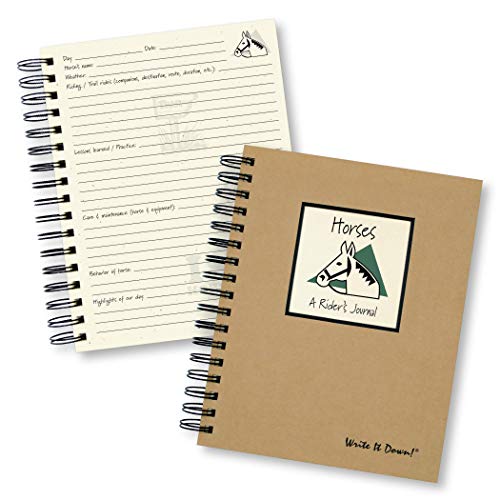
- Prompt-based pages for easy guided entries.
- Logs trail rides, shows, companions, and results.
- Made in the USA with recycled acid-free paper.
Best For: Horse riders who like guided prompts for logging shows, trail rides, and riding memories.
Goal-Setting Riding Journal

- Goal-focused pages for riding progress and milestones.
- Structured training planning and reflection space.
- Built for consistency, accountability, and routine.
Best For: Riders who want a focused journal for goals, training plans, and progress reflection.
Confidence & Resilience Journal

- Guided prompts for confidence and focus.
- Includes reset exercises and monthly reflection pages.
- Built for riders at any level, from hobby to competition.
Best For: Riders who want a mindset journal for confidence, focus, and resilience in the saddle.
Lesson Progress Log
Horseback Riding Journal for Lessons & Goals

- Pre-formatted lesson and schooling pages
- Tracks horse attitude, focus areas, and goals
- Spiral-bound with a durable 2-ply cover
Best For: Riders who want a structured training log and keepsake
Mindset Boost Journal
Horse Rider’s Gratitude Journal

- Gratitude-based prompts for riders
- Supports confidence and positive reflection
- Compact 6 x 9 format with 132 pages
Best For: Riders looking to build confidence and a positive mindset
Competition Record Keeper

- Records show results, judge notes, and feedback
- Includes space for special competition moments
- Matte-cover 6 x 9 logbook
Best For: Horse owners and trainers tracking show performance
Cute Everyday Pick

- Wide-ruled pages for easy writing
- 6 x 9 size for portability
- 102 pages with horse-themed details
Best For: horse lovers wanting a simple daily journal
Portable Rider Pick
Equestrian Training Spiral Notebook

- 164 lined pages for everyday use
- Compact 5.5 x 8.3 inch size
- Smooth acid-free paper
Best For: riders and trainers who need a portable write-in notebook
Roomy Classroom Choice

- Large 8 x 10 writing space
- 110 college-ruled lined pages
- Equestrian cover with riding scene
Best For: students and writers who want a larger horse-themed journal
Training & Care Log – Horseback Riding Diary
If you want equestrian journals that keep both riding and horse care organized, this logbook gives you a practical all-in-one layout. It is built for riders who want to record training sessions, horse-riding adventures, and key equine details like feeding, health, vet visits, vaccinations, and farrier appointments.
Best For: Riders who want one journal for training logs, horse care records, and riding memories.
Pros:
- Includes dedicated sections for training sessions and riding adventures.
- Tracks horse care details such as feeding schedules and health records.
- Compact 6 x 9 inch format with 120 pages for easy daily use.
- Fits recreational riders, competitive athletes, and trainers.
Cons:
- Shorter 120-page length than some guided journals.
- No detailed mention of built-in prompts or reflection pages.
This is a straightforward choice if you want a functional riding journal that emphasizes organization over extras. It is especially appealing for horse owners who prefer keeping training and care notes in one place.
Guided Riding Prompt Journal – Horses
For shoppers comparing equestrian journals, this guided horse-themed title stands out for its prompt-driven format. It is designed to help riders record trail rides, show competitions, terrain, destinations, riding companions, performance, and prizes in a structured way.
Best For: Horse riders who like guided prompts for logging shows, trail rides, and riding memories.
Pros:
- Guided writing prompts make it easy to start each entry.
- Covers both trail riding and horse show competition notes.
- Made in the USA with recycled, acid-free 70 lb ivory paper.
- Durable kraft hard cover with a lay-flat design.
Cons:
- More focused on journaling and memories than training tracking.
- Binding is listed as unknown in the provided details.
This is a strong pick if you want a keepsake-style journal that still gives practical structure. The prompts make it easier to capture experiences without having to design your own format.
Goal-Setting Riding Journal – Track Progress
Horseback Riding Journal: Track Progress, Set Intentions, and Ride With Purpose
Check Price On AmazonIf you are shopping equestrian journals to stay consistent and intentional, this riding journal is built around progress tracking. It offers structured space to set goals, plan training sessions, and reflect on milestones so riders can stay organized from week to week.
Best For: Riders who want a focused journal for goals, training plans, and progress reflection.
Pros:
- Includes space to set clear riding goals and track milestones.
- Supports planning, reflection, and adjustment of training routines.
- Designed to help with consistency and accountability.
- Timeless layout suited to riders who want an organized routine.
Cons:
- Does not emphasize horse care records like some logbooks.
- At 117 pages, it is relatively compact.
This journal makes sense for riders who want a practical, reflective tool rather than a broad stable record book. Its focus on intention and progress is ideal for building better habits over time.
Confidence & Resilience Journal – Mental Strength
Among equestrian journals, this guided mindset title is aimed at the mental side of riding. It gives horse riders a structured place to work on confidence, focus, reset after difficult rides, and reflect on growth over time.
Best For: Riders who want a mindset journal for confidence, focus, and resilience in the saddle.
Pros:
- Includes mindset frameworks and mental warm-up prompts.
- Offers confidence-building pages and rider reset exercises.
- Monthly reflection pages support ongoing awareness and resilience.
- Useful for riders at any level, including competitors and hobby riders.
Cons:
- Not designed as a training log or horse care record.
- More focused on mindset work than ride-by-ride notes.
This is the best fit if your main goal is to strengthen confidence rather than track stable details. It is especially helpful for riders who want a guided way to reflect, reset, and stay mentally prepared.
Lesson Progress Log – Horseback Riding Journal for Lessons & Goals
If you want equestrian journals that do more than just capture a date and a ride, this horseback riding journal is built for tracking real progress. It includes pre-formatted pages for lesson notes, focus areas, the horse’s attitude, how the session went, and goals for the next ride, making it useful for riders who like structured reflection.
Best For: Riders, trainers, and horse lovers who want a clear logbook for lessons, schooling sessions, and long-term improvement.
Pros:
- Pre-formatted pages make it easy to record each ride consistently.
- Tracks focus areas, horse attitude, and lesson outcomes in one place.
- Includes a notes page on the reverse for extra journaling or photos.
- Durable 2-ply cover and spiral binding suit regular use.
Cons:
- Focused on training logs, so it is less flexible than a blank journal.
- 100 pages may fill up quickly for frequent riders.
- Best suited to structured tracking rather than freeform writing.
This is a practical pick if you want an equestrian journal that can double as a keepsake, while still giving you a simple system for reviewing progress over time.
Mindset Boost Journal – Horse Rider’s Gratitude Journal
Among equestrian journals, this gratitude-focused option stands out for riders who want to build confidence and stay positive after imperfect rides. It is designed to help you notice small wins, reflect on what went well, and shift your mindset away from overthinking mistakes.
Best For: Equine riders who want a confidence-building journal for reflection, gratitude, and a healthier mindset in the saddle.
Pros:
- Built around gratitude and positive reflection for riders.
- Helps users focus on progress instead of replaying mistakes.
- Useful for confidence, focus, and mindset work after rides.
- Compact 6 x 9 inch size with 132 pages.
Cons:
- Not designed as a lesson or competition tracker.
- May feel too reflective for riders who want a purely practical log.
- Less suitable if you need detailed training metrics.
If your priority is mental approach rather than ride-by-ride data, this journal offers a simple way to build a more encouraging habit around your riding.
Competition Record Keeper – Equestrian Show Journal
If you need equestrian journals for show season, this competition logbook is designed to record results, judge notes, feedback, and special moments from each event. It gives horse owners and amateur trainers a simple way to keep competition details organized and easy to review later.
Best For: Riders, horse owners, and amateur trainers who want a dedicated log for shows and competition results.
Pros:
- Tracks competition results and judge feedback in one place.
- Includes space for special moments from each show.
- Handy 6 x 9 inch size with a matte cover.
- Works well as a memento for reviewing show progress.
Cons:
- More specialized for shows than everyday schooling.
- 101 pages may be limited for heavy competition calendars.
- Less useful for riders who want a broader all-purpose journal.
This is a solid choice if your main goal is keeping a clean record of show performance, feedback, and memorable competition moments in one place.
Cute Everyday Pick – Cute Horse Lined Journal
This is a simple, practical choice for equestrian journals if you want a cute horse-themed notebook for everyday writing. It offers wide-ruled lined pages, a matte cover, and a clean 6 x 9 size that works well for notes, journaling, school, or stable use.
Best For: Horse lovers who want a straightforward lined journal for notes, journaling, or everyday carry.
Pros:
- Wide-ruled lined pages make it easy to write in neatly.
- Compact 6 x 9 size is practical for bags, desks, or stable use.
- 102 carefully formatted pages with a decorative first page for personalization.
- Matte finish cover and printed horse details add a playful equestrian touch.
Cons:
- Simple notebook format, so it does not include specialized planning features.
- Only 102 pages, which may fill up quickly with heavy use.
Overall, this notebook is a solid pick if you want an affordable-looking, horse-themed writing space without extra bells and whistles. It’s best for everyday jotting rather than structured training logs or long-form record keeping.
Portable Rider Pick – Equestrian Training Spiral Notebook
For equestrian journals that need to travel easily, this spiral notebook is a practical option with a compact size and 164 lined pages. The smooth, acid-free paper is designed to help keep writing clear, while the hardback-style notebook format makes it suitable for school, office, home, or travel use.
Best For: Riders, horse trainers, and horse lovers who want a compact notebook for note-taking and journaling.
Pros:
- 164 lined pages provide more room than many smaller notebooks.
- 5.5 x 8.3 inch size is easy to carry in a bag or backpack.
- Smooth, acid-free paper helps reduce ink bleed.
- Useful for note-taking, journaling, drawing, sketching, and meetings.
Cons:
- The notes do not specify a featured interior design beyond lined pages.
- Size may feel small if you prefer a larger writing surface.
This is a versatile everyday notebook with an equestrian theme, especially useful if portability matters more than decorative extras. It works well as a basic write-in journal for riders who want something functional and easy to carry.
Roomy Classroom Choice – Horse Composition Notebook
Horse Composition Notebook: Equestrian Themed College Rule Lined Journal; 8x10"
Check Price On AmazonThis horse composition notebook is a strong fit for equestrian journals if you want a larger writing area and a themed cover. With 110 pages of college-ruled lined paper in an 8 x 10 format, it gives you plenty of room for notes, journaling, or creative ideas.
Best For: Students, writers, and horse enthusiasts who prefer a larger college-ruled notebook.
Pros:
- Large 8 x 10 size offers generous writing space.
- 110 pages of college-ruled lined paper suit note-taking and journaling.
- Matte cover paperback format has an equestrian riding scene design.
- Works well for back-to-school use or everyday horse-themed writing.
Cons:
- Larger size is less convenient to carry than compact notebooks.
- No extra organizational features beyond standard lined pages.
If you want a roomy notebook with a more polished equestrian look, this one stands out for its size and themed artwork. It’s a practical choice for writing at a desk, in class, or at home when portability is not the top priority.
How We Picked These Equestrian Journals
We focused on journals that are practical for real riding routines, not just themed stationery. The strongest picks offer useful prompts, enough space for daily notes, and formats that fit common rider needs such as lesson tracking, show results, goal setting, and equine care. We also considered binding style, page count, portability, and whether the layout feels helpful for beginners or more experienced riders.
Quick Comparison
Some Equestrian Journals are best for structured tracking, while others are better for mindset work or casual note-taking. Guided journals suit riders who want prompts and accountability. Training logs work well for lesson-by-lesson progress. Gratitude and confidence journals are a smart fit for riders focusing on mental performance. Simpler lined notebooks are the most flexible option if you want to customize every page.
Key Buying Factors for Equestrian Journals
Layout and Prompts
Look for a layout that matches your riding style. Prompts can help you record goals, horse behavior, tack notes, competition outcomes, and what to practice next. If you prefer freedom, a plain lined notebook may be better than a guided format.
Paper Size and Portability
Smaller journals are easier to carry to the barn, arena, or showgrounds. Larger books give you more writing space, which is useful for detailed training analysis or multi-horse records.
Binding and Durability
Because Equestrian Journals are often used around dust, boots, and tack trunks, sturdy covers and reliable binding matter. Spiral-bound options lie flat, while hardcover books tend to hold up well in bags and barns.
Purpose: Training, Mindset, or Show Tracking
Choose the format that matches your main goal. Training logs help you spot patterns over time. Mindset journals support confidence and focus. Show journals are ideal if you want a clean history of scores, placings, and competition notes.
Who Should Buy Which Equestrian Journals?
Riders who want measurable improvement should choose a training-focused journal. Riders working on nerves, motivation, or consistency may get more value from a confidence or gratitude format. Students, amateur competitors, and casual horse lovers often prefer a flexible notebook for mixed notes, while organized competitors usually benefit most from a dedicated show journal or guided log.
If you are buying a gift, think about the rider’s routine first. The best Equestrian Journals are the ones they will actually use before and after every ride, not just admire on a shelf.