If you want to sharpen your jump training, improve rider position, or build a smarter schooling plan, the right book can make a big difference.
This roundup of horse jumping books focuses on practical, rider-friendly titles for beginners through serious competitors.
Best 10 Horse Jumping Books Picks for 2026
Jump-Start Training
101 Jumping Exercises for Horse & Rider

- 101 progressive jumping exercises
- Clear arena maps and instructions
- Read-and-ride format for arena use
Best For: Riders seeking a practical jumping drill book
Foundation Skills
40 Fundamentals of English Riding

- Covers 40 core riding fundamentals
- Focuses on seat, leg, and hand position
- Helps build basics that support jumping
Best For: Beginners building English riding fundamentals
Pro-Level Grids

- 52 grids and jumping exercises
- Advice from top international riders
- Easy-to-adapt diagrams and explanations
Best For: Riders and coaches wanting advanced jumping grids
Youth Riding Guide
Judy Richter's Riding for Kids

- Step-by-step guide for young riders
- More than 150 instructional photos
- Covers jumping, showing, and stable care
Best For: Preteens and teens learning English riding
Polework Training Pick
151 Polework Exercises for Horses

- 151 polework exercises for varied arena sessions
- Works from beginner to advanced levels
- Supports rhythm, straightness, and accuracy
Best For: Riders wanting a versatile polework-focused training book
Classic Jumper Insight
Reflections on Riding and Jumping

- Classic show-jumping guidance from a top rider
- Focuses on winning techniques and horsemanship
- Short, serious read at 240 pages
Best For: Serious riders seeking a classic jumping technique reference
Youth Show-Jump Story Pick

- Show-jumping fiction with competition drama
- Follows Emily and her pony Bluebird
- Book 11 of a long series
Best For: Readers who want a horse-show story instead of a training guide
Distance-Focused Training
Show Jumping Guide to Seeing Distances

- 4-week plan centered on distance judgment
- Progress trackers and goal-setting tools included
- Warmups, jump exercises, and mindset work
Best For: Riders improving takeoff timing and consistency
Position & Habit Building
Show Jumping Guide to Rider Position
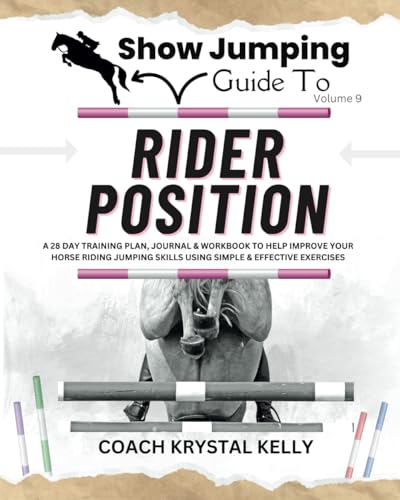
- 4-week position-focused training plan
- Journal pages and progress trackers built in
- Includes mindset tasks and theory videos
Best For: Riders wanting structured position improvement
Level-Up Training Plan
Show Jumping Guide to Jumping Bigger

- 4-week plan for bigger jumping goals
- Journal, tracker, and goal-setting tools included
- Bonus videos plus optional audio lessons
Best For: Riders working toward bigger fences and new levels
Jump-Start Training – 101 Jumping Exercises for Horse & Rider
If you want horse jumping books that are easy to use in the arena, this read-and-ride format is built for practical training. It offers a logical progression of jumping exercises with clear arena maps, straightforward instructions, and rider reminders, so you can work through skills step by step while keeping the session focused.
Best For: Riders who want a hands-on jumping workbook with progressive exercises they can reference while training.
Pros:
- Includes 101 exercises with progressively difficult variations.
- Clear arena maps make each drill easy to set up.
- Designed to be hung on a pole and referenced from the saddle.
- Offers encouraging rider guidance alongside each exercise.
Cons:
- Focused on jumping drills rather than broader riding theory.
- Best suited to riders who already have access to an arena.
Overall, this is a strong pick if you want a practical, structured way to build jumping confidence through repeatable exercises. It is especially useful for riders who like clear diagrams and a steady training progression.
Foundation Skills – 40 Fundamentals of English Riding
For shoppers comparing horse jumping books, this title is a strong foundation-first choice. It covers seat, leg, and hand position, the walk-trot-canter basics, halt and half-halt, and correct horse direction, with an emphasis on proper technique and avoiding common errors.
Best For: Beginners and developing riders who want to strengthen the core English riding skills that support jumping.
Pros:
- Explains 40 riding fundamentals in a clear, defined format.
- Covers essential position and aid basics for English riding.
- Includes tips for proper technique and avoiding common errors.
- Useful as a groundwork companion to jumping-focused training.
Cons:
- Not a dedicated jumping exercise book.
- May feel too basic for advanced riders.
This book makes sense if you want to improve the riding basics that underpin better jumping. It is less specialized than a pure jump-training manual, but it can be valuable for building a cleaner seat and more effective aids.
Pro-Level Grids – Grid Pro Quo
If you want horse jumping books with a clinic-style feel, this one delivers a wide range of grid work and jumping exercises from top riders. It is designed to improve adjustability, connection, performance over fences, and confidence, with diagrams and guidance that make it easy to adapt lessons at home.
Best For: Riders, trainers, and coaches looking for a modern collection of grid exercises from elite equestrians.
Pros:
- Contains 52 jumping exercises and grids.
- Features lessons and insights from top international riders.
- Diagrams and explanations make home setup straightforward.
- Exercises can be adjusted for arena size and experience level.
Cons:
- More specialized than a beginner overview.
- Best value depends on having enough space to set up grids.
This is a strong training resource if you want fresh exercises from accomplished riders in one compact reference. It stands out for versatility, making it useful for regular schooling as well as coach-led lesson planning.
Youth Riding Guide – Judy Richter's Riding for Kids
Among horse jumping books for younger riders, this beginner-friendly guide stands out for its step-by-step approach and safety-first tone. It covers stable care, tack, clothing, longeing, lessons, jumping, and showing, with more than 150 photos to help preteens and young teenagers follow along.
Best For: Young English riders who need a clear, photo-rich introduction to jumping and basic horsemanship.
Pros:
- Designed specifically for preteens and young teenagers.
- Includes more than 150 step-by-step photographs.
- Covers a full learn-to-ride progression, including jumping.
- Stresses safety throughout the instruction.
Cons:
- Geared toward younger readers, not adult riders.
- Less focused on advanced jumping technique.
This is a practical choice for a young rider starting out and needing a broad, confidence-building introduction. It works especially well for families looking for a structured book that connects riding basics with early jumping and showing.
Polework Training Pick – 151 Polework Exercises for Horses
If you’re looking for horse jumping books that can improve flatwork and jumping foundations, this guide offers a huge range of polework patterns to keep schooling fresh. The exercises use 1 to 8 poles, with some layouts going up to 14–16 poles, and they’re designed for everything from beginner to advanced riders.
Best For: Riders who want a practical, exercise-heavy polework book for improving rhythm, straightness, suppleness, and accuracy.
Pros:
- Includes 151 creative polework exercises.
- Covers walk, trot, canter, groundwork, and in-hand work.
- Useful for improving straightness, bending, rhythm, impulsion, lateral work, and collection.
- Suitable for beginner through advanced levels.
Cons:
- Focused on polework rather than full jumping theory.
- Not a traditional show-jumping technique manual.
As a training resource, this book stands out for variety and practicality. It’s a strong choice if you want jump-schooling exercises that can be adapted to many horses and levels, especially when you need structure without repeating the same patterns.
Classic Jumper Insight – Reflections on Riding and Jumping
Among horse jumping books, this classic focuses on winning techniques and riding insight from one of show jumping’s most acclaimed riders. It’s a concise, serious-rider title that suits readers who want a thoughtful perspective on jumping performance rather than a step-by-step exercise manual.
Best For: Serious riders looking for a respected classic on riding and jumping technique.
Pros:
- Written by one of the most acclaimed riders in show jumping history.
- Offers winning techniques and horsemanship insight.
- A compact 240-page read.
Cons:
- Older publication from 1997.
- Less focused on drills or modern training layouts.
This is the kind of book to choose when you want foundational jumping philosophy and experience-driven guidance. It’s a strong fit for riders who value classic instruction and broad horsemanship perspective over a workbook-style format.
Youth Show-Jump Story Pick – Trick Pony
If you’re browsing horse jumping books for a younger reader or a horse-loving fan of show-jump stories, this novel follows Emily, Bluebird, and the pressures of competition. The plot centers on an open jumper class, confidence after missing the jumping team, and the emotional stakes around a community show.
Best For: Readers who want a show-jumping fiction series entry with competition drama and emotional stakes.
Pros:
- Built around a show-jumping competition storyline.
- Explores confidence, dreams, and pressure to win.
- Part of a long series: Book 11 of 45.
Cons:
- Fiction, so it’s not a training or technique book.
- Best suited to readers already interested in the series format.
This title is a good pick if the goal is horse-centered entertainment rather than instruction. It brings jumping into a dramatic story arc, making it more appealing for readers who enjoy character-driven equestrian fiction.
Distance-Focused Training – Show Jumping Guide to Seeing Distances
If you’re shopping for horse jumping books to improve your eye for takeoff points, this 28-day workbook focuses tightly on seeing distances. It uses structured exercises, progress trackers, and coaching guidance to help riders build timing, accuracy, and confidence over fences.
Best For: Riders who want a practical, step-by-step plan to improve distance judgment and jumping consistency.
Pros:
- Targets the specific skill of seeing distances rather than offering generic drills.
- Includes a 4-week training plan, exercises, progress trackers, and goal-setting tools.
- Offers warmups, pole work, jumping variations, cooldowns, and mindset activities.
- Includes optional audio lessons and theory videos for extra support.
Cons:
- Requires steady follow-through and regular practice to get the most from it.
- Not aimed at readers looking for a quick fix or a simple reference book.
This is a focused training workbook for riders who want a clearer eye to the jump and a more confident rhythm in the ring. Its strength is the practical, guided format that keeps the work specific and measurable.
Position & Habit Building – Show Jumping Guide to Rider Position
Among horse jumping books, this workbook is built for riders who want to improve position over fences through a simple training plan. It combines riding exercises, journaling, progress tracking, and mindset work into a 4-week curriculum designed to be followed step by step.
Best For: Jumpers who want a structured workbook to improve position, focus, and riding habits over jumps.
Pros:
- Includes a clear 4-week plan with warmup, jumping, and cool-down sections.
- Has journal prompts, progress trackers, and goal-setting exercises.
- Adds mindset work and non-riding homework for days away from the barn.
- Offers bonus theory videos and optional audio lessons for added instruction.
Cons:
- Best suited to riders willing to do the exercises rather than skim the content.
- Its direct, no-nonsense style may not appeal to readers wanting a casual overview.
This book works well for riders who want accountability built into their training. It is especially useful if you like tracking progress and prefer a workbook that turns position work into an organized routine.
Level-Up Training Plan – Show Jumping Guide to Jumping Bigger
If you’re comparing horse jumping books for moving up a level, this workbook is aimed at riders who want to jump bigger with a practical plan. Like the other books in the series, it focuses on simple, effective exercises, structured tracking, and a 4-week training format that builds consistency.
Best For: Riders looking for a step-by-step workbook to support bigger jumping goals and level progression.
Pros:
- Built around a 4-week curriculum with warmup, jump work, and cooldown.
- Includes journal entries, progress trackers, and goal-setting exercises.
- Adds mindset activities and non-riding homework for off-days.
- Comes with bonus classroom theory videos and optional audio lessons.
Cons:
- Not designed for riders who want a quick fix without doing the work.
- Shares the same workbook-style approach as the series, so it is less of a standalone theory text.
This is a solid choice if you want a guided process rather than a pile of random exercises. The format is practical and disciplined, with tools to help you measure progress as you work toward larger jumps.
How We Picked These Horse Jumping Books
We looked for books that offer clear instruction, repeatable exercises, and useful takeaways for riders working on jumping fundamentals, course riding, and overall horse-and-rider coordination. Priority went to titles with structured drills, progressive training plans, and guidance that can be applied in the arena, not just read once and set aside.
We also favored a mix of formats so readers can choose between exercise-driven manuals, technical training guides, and more accessible picks for younger riders or developing students.
Quick Comparison
If you want a fast-reference training book, choose a title built around exercises or a 28-day plan. If your goal is broader horsemanship, look for books that cover rider position, distances, polework, and jump preparation together. Riders who are new to the sport may benefit from more foundational English riding material before moving into advanced jumping strategy.
Key Buying Factors for Horse Jumping Books
Skill Level
Match the book to the rider’s current experience. Some Horse Jumping Books are best for beginners learning basics, while others assume a working knowledge of jumping, schooling, and competition terms.
Training Focus
Choose a book based on what needs improvement most: eye for distance, position over fences, polework, gymnastic exercises, or confidence-building. The strongest guides are specific about the problem they solve.
Exercise Structure
Look for step-by-step drills, arena setups, and progressive sessions. Books that include measurable exercises are more useful for weekly training than broad motivational reading.
Workbook or Plan Format
Many riders prefer a training plan or workbook because it turns reading into action. These formats are especially helpful if you want a simple routine you can follow without building every session from scratch.
Clarity and Practicality
The best Horse Jumping Books explain ideas in plain language and give riders specific corrections they can test right away. Clear diagrams, organized chapters, and realistic training advice are all strong signs of a worthwhile purchase.
Who Should Buy Which Horse Jumping Books?
Beginners and younger riders should look first for foundational riding and horse-care titles that cover the basics before jumping intensively. Riders focusing on technique will usually get the most value from exercise-based books, rider-position guides, and distance-training workbooks. More experienced competitors may prefer books that challenge them with advanced grids, technical exercises, and performance-minded insights.
If your main goal is steady improvement, the best choice is usually the book that matches your current weak point rather than the one with the most dramatic title. That approach makes Horse Jumping Books far more useful in daily training.