Choosing the right dressage training books can make daily schooling more structured, more accurate, and far less frustrating. The best titles translate training theory into practical steps you can use in the arena.
Whether you are building a foundation, refining movements, or looking for exercise ideas, this roundup focuses on books that help riders train with more clarity and confidence.
Best 10 Dressage Training Books Picks for 2026
Scale-Focused Training Guide
Understanding and Using The Dressage Scales of Training

- Deep dive into the dressage scales of training
- Practical exercises for home, warm-up, and troubleshooting
- Aims to build a healthy, willing horse over time
Best For: Riders who want a structured explanation of the dressage scales
Beginner-Friendly Basics

- Clear beginner guide to dressage fundamentals
- Covers flatwork, suppling, and troubleshooting
- Includes photos, diagrams, and drawings
Best For: New riders and horse owners who want an easy introduction
Exercise Builder Workbook
The BIG Book of Dressage Exercises
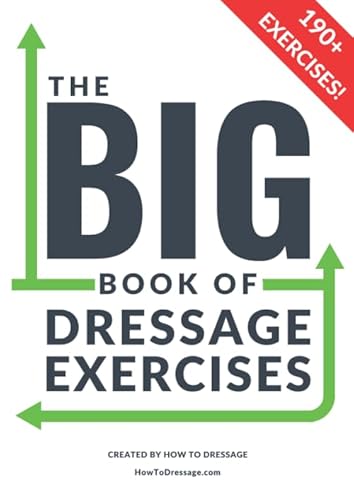
- 190+ exercises with over 40 floorplans
- Works for 20x40 and 20x60 arenas
- Includes notes space and progress tracking
Best For: Riders who want a hands-on workbook of schooling patterns
Movement Reference Guide

- Explains more than 100 dressage movements
- Uses color photos and clear movement definitions
- Covers mistakes, benefits, and the bigger picture
Best For: Riders who want a detailed reference on dressage movements
Read & Ride Arena Drills
101 Dressage Exercises for Horse & Rider

- Full arena diagrams
- Step-by-step exercise instructions
- Made for reference from the saddle
Best For: Riders who want a practical arena exercise book they can use while schooling
Dressage Theory Made Simple

- Simple dressage theory explanations
- Covers basics through Grand Prix
- Includes judge's perspective and common faults
Best For: Riders who want a clear theory-led guide for training dressage at any level
Beginner Collection & Test Prep
Dressage Training and Competition Exercises for Beginners

- Groundwork, flatwork, and collection exercises
- Test-day checklists and memorization tips
- Kind approach to beginner dressage
Best For: Beginners who want help with schooling, collection, and competition preparation
Official Dressage Federation Guide

- Official overview of basic dressage techniques
- Helpful exercises plus equipment and instructor advice
- Emphasizes harmonious communication between horse and rider
Best For: Riders wanting a broad, beginner-friendly dressage reference
Classical Riding System Guide
Training Strategies for Dressage Riders

- Complete system for horse and rider training
- Practical advice on seat, aids, and classical equitation
- Covers gaits, gymnastic improvement, clinics, and judging
Best For: Riders who want a detailed manual focused on rider technique
Young Horse Training Primer

- Focused on training the young horse for dressage
- Compact 128-page guide for quick reference
- Aims at dressage or high-level competition preparation
Best For: Riders and trainers developing young horses for dressage
Scale-Focused Training Guide – Understanding and Using The Dressage Scales of Training
If you want dressage training books that explain the foundation of the system in a clear, practical way, this one stays tightly focused on the scales of training. It breaks down what each scale means, how to achieve it, and how the scales connect into a logical framework for training the equine athlete, with exercises to help you apply the ideas at home.
Best For: Riders who want a structured explanation of the dressage scales and practical exercises for warm-up and troubleshooting.
Pros:
- Explains each scale in depth and shows how they work together
- Includes practical exercises for home riding
- Useful for warming up and troubleshooting training issues
- Focuses on keeping the horse healthy, sound, and willing
Cons:
- Centered on fundamentals rather than advanced choreography
- May feel too theory-heavy for riders wanting mostly arena patterns
This is a strong pick if you want the building blocks of dressage organized into one clear system. It’s especially helpful when you want a book that connects theory to everyday schooling instead of treating the scales as abstract concepts.
Beginner-Friendly Basics – Jane Savoie's Dressage 101
Jane Savoie's Dressage 101: The Ultimate Source of Dressage Basics in a Language You Can Understand
Check Price On AmazonAmong dressage training books for newcomers, this one stands out for its clear, friendly approach to the basics. It starts with forward, straight, rhythm, gait, and contact, then walks riders through simple flatwork, suppling, troubleshooting, and sample schooling sessions in language designed to be easy to understand.
Best For: New riders and all-purpose horse owners who want a simple, well-illustrated introduction to dressage fundamentals.
Pros:
- Explains basics in an easy-to-follow, beginner-friendly style
- Covers flatwork, suppling, and troubleshooting
- Includes photos, diagrams, and drawings
- Useful for riders outside the dressage arena too
Cons:
- Primarily aimed at beginners and early-stage riders
- Not designed as an advanced competition manual
This is a practical starting point if you want dressage explained without heavy jargon. It keeps the emphasis on clarity, consistency, kindness, and horse welfare, making it a solid foundational read.
Exercise Builder Workbook – The BIG Book of Dressage Exercises
If you’re looking for dressage training books that give you plenty of schooling ideas, this workbook is built around volume and flexibility. It offers more than 190 exercises, over 40 floorplans, and room to take notes, modify patterns, and track progress as you work through 20×40 and 20×60 arena diagrams.
Best For: Riders who want a hands-on workbook full of arena patterns, pole work, and space to plan their own sessions.
Pros:
- Includes 190+ exercises and over 40 floorplans
- Covers both 20×40 and 20×60 arena layouts
- Has space for notes, modifications, and progress tracking
- Includes directives and tips about what judges look for
Cons:
- Designed as a workbook, so it is less of a narrative read
- Most useful for riders who want to actively write and plan
This book is best viewed as a practical schooling tool rather than a traditional text. If you want a large library of patterns you can adapt to your training level, it offers a lot of usable material.
Movement Reference Guide – Dressage School
For riders comparing dressage training books by how thoroughly they explain individual movements, this sourcebook is especially strong. It covers more than 100 movements and explains the what, how, and why, with color photographs, common mistakes, and practical notes on how each exercise fits into the larger training scale.
Best For: Riders who want a detailed reference for dressage movements and the reasons behind them.
Pros:
- Explains more than 100 dressage movements
- Shows correct execution with color photographs
- Includes common mistakes and how to avoid them
- Connects movements to the overall training scale
Cons:
- More reference-driven than step-by-step training plan
- May be best for riders who already want to study specific movements
This is a strong choice if you want a movement-by-movement resource that also explains purpose and context. The emphasis on adapting lessons to each horse makes it especially useful for thoughtful, individualized schooling.
Read & Ride Arena Drills – 101 Dressage Exercises for Horse & Rider
If you want dressage training books that are easy to use while you ride, this one is built for practical arena work. It includes full arena diagrams and step-by-step instructions, so you can reference exercises from the saddle while working on position, balance, looseness, suspension, and flying changes.
Best For: Riders who want a hangable, diagram-driven exercise book for hands-on arena schooling.
Pros:
- Full arena diagrams make each exercise easier to follow
- Step-by-step format is useful during live schooling sessions
- Covers rider position, looseness, balance, suspension, and flying changes
- Sturdy design is made to hang on a hook for quick reference
Cons:
- Focused on exercises rather than broad theory
- Best suited to riders who like working from diagrams
Overall, this is a strong pick if you want a practical dressage training book that feels like an arena coach in book form. Its biggest advantage is the on-horse usability, which makes it especially appealing for riders who want clear, repeatable schooling exercises.
Dressage Theory Made Simple – How To Dressage
If you want dressage training books that explain not just what to ride but why it works, this guide takes a straightforward approach. It breaks down dressage theory into practical steps and covers rider position, aids, transitions, general movements, lateral exercises, and the judge’s perspective from beginner level through Grand Prix.
Best For: Riders who want a theory-first, all-levels dressage guide with clear explanations and practical training advice.
Pros:
- Explains dressage theory in clear, practical language
- Covers rider position, aids, technique, and movement training
- Includes the judge’s perspective and common faults to watch for
- Spans from basics to Grand Prix, making it useful across levels
Cons:
- More theory-driven than drill-heavy
- Best for readers who want explanations alongside training guidance
As a dressage training book, this one stands out for riders who want a fuller understanding of correct movement and common mistakes. It looks especially useful if you prefer a structured, explanation-led guide rather than a quick exercise reference.
Beginner Collection & Test Prep – Dressage Training and Competition Exercises for Beginners
For riders looking for dressage training books that combine schooling with competition prep, this title offers a practical beginner-friendly mix. It covers groundwork, riding exercises, collection, and test-day planning, along with checklists and tips for memorizing your dressage test.
Best For: Beginner riders who want a kind, practical guide to collection, groundwork, and dressage test preparation.
Pros:
- Combines groundwork, flatwork, and collection exercises
- Includes checklists for the week before, day before, and day of competition
- Offers tips for memorizing tests and handling nerves
- Addresses common beginner mistakes and competition questions
Cons:
- Geared mainly toward beginners rather than advanced riders
- Broad coverage may be more helpful than deep technical detail
This is a solid choice if you want a beginner-focused dressage training book that supports both schooling and show-day confidence. The mix of exercises and competition checklists makes it particularly practical for riders building skills and preparing for their first tests.
Official Dressage Federation Guide – The USDF Guide to Dressage
The USDF Guide to Dressage: The Official Guide of the United States Dressage Federation
Check Price On AmazonIf you’re looking for dressage training books that start with the fundamentals, this official guide offers a practical overview of basic techniques, training exercises, equipment, and the instructor selection process. It’s written to help riders build better awareness and a more harmonious connection with the horse while learning the graceful movements of dressage.
Best For: Riders who want a broad, beginner-friendly dressage reference with official guidance.
Pros:
- Explains basic dressage techniques in a clear, structured way
- Includes helpful training exercises for rider and horse
- Covers equipment considerations and how to find qualified instructors
- Focuses on harmonious communication between horse and rider
Cons:
- More of an overview than a deeply specialized training manual
- Best suited to riders seeking foundational guidance rather than advanced drill work
As a roundup choice, this book stands out for its official perspective and well-rounded introduction to dressage. It’s a solid pick if you want a training book that balances practical exercises with big-picture riding awareness.
Classical Riding System Guide – Training Strategies for Dressage Riders
Among dressage training books, this title is aimed at riders who want a complete system with practical, in-the-saddle advice. It covers classical equitation, seat and aids development, basic gaits, gymnastic improvement, horse insubordination, and even clinics, competitions, and judging.
Best For: Riders who want a detailed training manual with strong focus on rider technique.
Pros:
- Offers a complete training system for horse and rider
- Gives practical advice on seat, aids, and classical equitation
- Covers a wide range of topics from gaits to judging
- Useful for riders preparing for competition or improving fundamentals
Cons:
- More technical than a general introductory dressage guide
- Likely better suited to committed riders than casual readers
This is a strong choice if you want a dressage book that goes beyond basics and focuses on how rider actions affect the horse. Its breadth makes it especially useful for riders who want structured, practical training guidance.
Young Horse Training Primer – The Elements of Dressage
If your search for dressage training books is centered on bringing a young horse along, this concise guide is built for that purpose. It promises the essentials for training a horse for dressage or high-level competition in a compact format.
Best For: Riders and trainers wanting a short, focused guide for developing young horses.
Pros:
- Dedicated to training the young horse for dressage
- Compact 128-page format for quick reference
- Targets preparation for dressage or high-level competition
- Simple, focused scope for readers who want essentials only
Cons:
- Much shorter than many competing dressage guides
- Limited detail compared with larger, more comprehensive books
This book is a good fit if you want a concise primer instead of a long, broad reference. Its focused scope makes it appealing for riders who need a direct guide to the early stages of dressage training.
How We Picked These Dressage Training Books
We prioritized books that are useful at the barn, not just informative on the shelf. Selection focused on clear instruction, logical training progressions, practical exercises, and value for riders working at different stages of development. We also favored titles that address real-world dressage needs such as flatwork, collection, schooling patterns, young-horse development, and competition fundamentals.
Quick Comparison: What Each Type of Book Does Best
Some Dressage Training Books are best for understanding the basics and training scale, while others are stronger for exercise ideas, rider education, or official reference material. In general, theory-heavy books help you understand why movements work, exercise books help you build rideable sessions, and beginner-focused guides are best for riders who need a simpler entry point.
Key Buying Factors for Dressage Training Books
Skill Level
Match the book to your current level. Beginners usually need straightforward explanations of contact, rhythm, and suppleness. Intermediate and advanced riders often benefit more from books that explain movement development, schooling patterns, and problem-solving.
Training Focus
Choose based on your goals. If you want daily schooling ideas, look for exercise collections. If you need stronger fundamentals, select books centered on theory and the training scale. If you ride young horses, prioritize books that explain long-term development and correct basics.
Clarity and Structure
The best Dressage Training Books present concepts in a way that is easy to apply. Clear chapter organization, diagrams, and step-by-step progressions can make a major difference when you are trying to use the book during actual training sessions.
Reference Value
Some titles are better as ongoing references than as one-time reads. Official guides, theory books, and movement references can stay useful for years, especially when you want a dependable source to revisit as your riding evolves.
Who Should Buy Which Dressage Training Books?
Newer riders should look for beginner-friendly books that explain the basics in plain language and help build good habits early. Riders who want more rideable variety should lean toward exercise collections and schooling books. Those focused on theory, biomechanics, or long-term progress may prefer deeper instructional titles. If you want one dependable foundation for the bigger picture, choose a book that explains the training scale and connects it to practical arena work. If you need inspiration for sessions, choose a title with lots of exercises and patterns you can adapt immediately.
In short, the best choice depends on whether you need foundational understanding, more ride ideas, or a clearer roadmap for improving horse and rider together.