Choosing the right bird guide can make all the difference in the field. The best bird identification books help you narrow down similar species quickly, read range maps with confidence, and spot key field marks before the bird flies off.
In this roundup, we focused on practical guides for beginners, backyard birders, and experienced observers, with options for both eastern and western North America.
Best 10 Bird Identification Books Picks for 2026
Most Up-to-Date North American Guide
National Geographic Field Guide to the Birds of North America, 7th Edition

- 1,023 species with 37 new additions
- Updated to latest AOS taxonomy
- 250 fresh illustrations and revised maps
Best For: Birders wanting a current, all-around North American field guide
Premium All-Purpose Classic
The Sibley Guide to Birds, 2nd Edition

- Nearly 7,000 remastered paintings
- Expanded habitat and voice info
- 700+ updated range maps
Best For: Birders who want a detailed, comprehensive North American guide
Photo-Forward Eastern Region Handbook
Smithsonian Handbooks: Birds of North America — Eastern Region

- 706 eastern North America species covered
- Photo and artwork profiles with comparisons
- Includes behavior, vocalizations, and maps
Best For: Eastern North America birders who prefer a photo-based guide
Pocket-Friendly Western Photo Guide
The New Stokes Field Guide to Birds: Western Region

- 636 species with 2,000+ photos
- Pocket-size and easy to carry
- Flight, song, and range identification help
Best For: Western birders wanting a portable photographic field guide
Backyard Birding Favorite
National Geographic Backyard Guide to the Birds of North America, 2nd Edition

- Covers 150 common and interesting North American species
- Includes ID tips, vocal descriptions, range maps, and artwork
- Adds Backyard Basics advice for attracting and feeding birds
Best For: Casual and experienced birdwatchers focused on common backyard birds
Beginner-Friendly Starter
North America Bird Watching for Beginners

- Full-color beginner guide with high-quality photos
- Covers ID basics, calls, behavior, and attraction tips
- Short 102-page format for quick learning
Best For: New birdwatchers who want a simple, visual introduction
Classic Eastern Field Guide
National Audubon Society Field Guide to North American Birds: Eastern Region, Revised Edition

- Hundreds of all-new full-color photographs
- Includes habitats, ranges, and ID tips
- Large 800-page guide for Eastern Region birds
Best For: Birders in the Eastern Region who want broad photo-based coverage
Classic Field Guide
Peterson Field Guide To Birds Of Eastern & Central North America
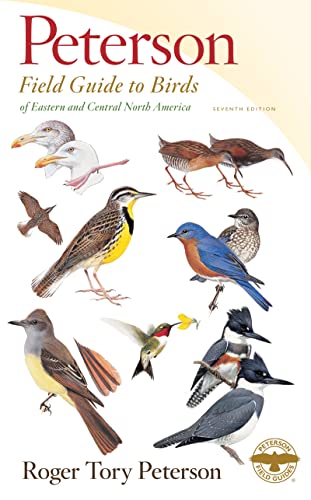
- Peterson Identification System for fast field marks
- Updated text and range maps
- Revised illustrations reflect current ornithology
Best For: Birders who want a trusted classic for eastern and central North America
All-in-One North America Guide
National Geographic Field Guide to the Birds of North America

- Subspecies maps and migration info on species maps
- Field-mark labels on artwork
- Updated for new species and taxonomic changes
Best For: Birders who want a detailed, map-heavy guide for North America
Large Print Field Guide
Peterson Birds of Eastern and Central North America

- Large-print format for easier field reading
- Classic Peterson identification system
- Updated range maps beside species accounts
Best For: Birders who want a larger, easier-to-read Peterson guide
Most Up-to-Date North American Guide – National Geographic Field Guide to the Birds of North America, 7th Edition
If you want bird identification books that reflect the newest North American taxonomy, this updated National Geographic guide is a strong choice. It covers 1,023 species, adds new species and illustrations, and includes revised maps and banding codes to help you match birds in the field more confidently.
Best For: Birders who want a current, all-around North American field guide with broad species coverage.
Pros:
- Fully revised 7th edition with taxonomy matched to the latest American Ornithological Society system.
- Includes 1,023 species, 37 new species, 80 new maps, and 350 map revisions.
- Hand-painted illustrations from top nature artists, with 250 fresh illustrations added.
- Vetted by birding experts for reliable field use.
Cons:
- At nearly 2 pounds, it is not the lightest guide to carry.
- Its broad scope may feel more than you need if you only bird a small region.
For birders who want one of the most frequently updated bird identification books on the market, this edition is easy to recommend. It is built for practical field use while staying current with modern birding taxonomy and range information.
Premium All-Purpose Classic – The Sibley Guide to Birds, 2nd Edition
Among bird identification books for North America, The Sibley Guide to Birds is a classic for a reason. This second edition expands the artwork, updates the maps and names, and adds habitat and voice notes for every species, making it especially useful when you want a more detailed reference in hand.
Best For: Birders who want a comprehensive, well-illustrated guide with expanded detail and expert-level coverage.
Pros:
- Nearly 7,000 paintings digitally remastered for improved print quality.
- All illustrations reproduced 15 to 20 percent larger for better detail.
- Expanded text includes habitat and voice descriptions for every species.
- More than 700 updated maps and revised taxonomic order.
Cons:
- At 3 pounds, it is relatively heavy for a carry-along field guide.
- Its depth may be more than casual birdwatchers need.
If you want a fuller, more detailed reference rather than a lightweight pocket guide, this edition stands out. It combines broad coverage with richer species accounts and a design focused on making identification easier in the field.
Photo-Forward Eastern Region Handbook – Smithsonian Handbooks: Birds of North America — Eastern Region
Smithsonian Handbooks: Birds of North America -- Eastern Region (Smithsonian Handbooks)
Check Price On AmazonIf you prefer bird identification books that lean on photographs and clear comparisons, this Smithsonian handbook is built for practical use in the Eastern Region. It covers 706 species and uses full-page profiles, annotated photos, and artwork to make similar birds easier to separate.
Best For: Birders in eastern North America who want a photo-based identification guide with detailed species profiles.
Pros:
- Covers 706 species breeding east of the 100th meridian in the U.S. and Canada.
- Full-page profiles combine photographs, artwork, and precise descriptions.
- Similar species are shown together with distinguishing characteristics noted.
- Includes behavior, vocalizations, nesting, conservation, and range maps.
Cons:
- Region-specific, so it is not a single-guide solution for all of North America.
- At 752 pages, it is fairly substantial to carry in the field.
This is a strong choice if you like learning birds from images and side-by-side comparisons. It gives you a lot of practical identification detail without sacrificing the broader life-history information that many birders appreciate.
Pocket-Friendly Western Photo Guide – The New Stokes Field Guide to Birds: Western Region
For bird identification books aimed at western species, this Stokes guide emphasizes photos, field marks, and portability. It covers 636 North American bird species with more than 2,000 color photographs, while still being compact enough to fit in a pocket.
Best For: Western birders who want a portable photographic field guide with practical identification clues.
Pros:
- Includes 636 North American bird species and more than 2,000 color photographs.
- Portable enough to fit in a pocket.
- Provides help with birds in flight through behavior, plumage, and shape clues.
- Includes song and call descriptions plus updated range maps.
Cons:
- Limited to the Western Region rather than all of North America.
- Photo-based layout may not suit everyone as well as painted-plate guides.
This guide is a smart pick if portability matters and you like using photographs to narrow down IDs. It combines up-to-date names, field clues, and range information in a format that is easy to take along.
Backyard Birding Favorite – National Geographic Backyard Guide to the Birds of North America, 2nd Edition
If you want bird identification books that help you recognize the birds most likely to visit your yard, this revised National Geographic guide is a strong, practical choice. It covers 150 common and interesting North American species with clear family organization, identification tips, behavior notes, vocal descriptions, range maps, and updated artwork.
Best For: Casual and experienced birdwatchers who want a compact, reliable guide to common backyard birds in North America.
Pros:
- Covers 150 of the most common and interesting North American birds.
- Includes identification tips, behavior descriptions, vocal notes, and range maps.
- Features a new “Backyard Basics” section with tips on attracting and feeding birds.
- Modern redesign with lush identification artwork and bite-sized facts.
Cons:
- Focuses on common species rather than an exhaustive field reference.
- Smaller format may be less convenient for extended study sessions.
This is a good pick if you want a user-friendly bird book that balances identification help with practical backyard birding advice. It is especially useful for readers who want a guide they can keep close at hand while learning familiar species.
Beginner-Friendly Starter – North America Bird Watching for Beginners
Among bird identification books for newcomers, this full-color beginner guide is designed to make the first steps feel simple and engaging. It promises clear photos and straightforward explanations, plus practical help with identifying birds, reading behavior and calls, attracting birds to your yard, and spotting harder-to-find species.
Best For: New birdwatchers who want a visually rich, easy-entry field guide with practical learning tips.
Pros:
- Full-color edition with high-quality pictures and illustrations.
- Covers bird ID basics, songs, calls, behavior, and attraction tips.
- Includes guidance on owls, hawks, and other elusive birds.
- Compact 102-page format that is easy to browse quickly.
Cons:
- Very brief compared with more established field guides.
- Claims in the description are broad, so experienced birders may want more depth.
This book makes sense if you want an approachable introduction rather than a dense reference. It leans heavily on visuals and simple birding advice, which can help beginners build confidence faster.
Classic Eastern Field Guide – National Audubon Society Field Guide to North American Birds: Eastern Region, Revised Edition
National Audubon Society Field Guide to North American Birds: Eastern Region, Revised Edition
Check Price On AmazonIf you need bird identification books with a more traditional field-guide feel, this revised Audubon title is built for the eastern half of North America. It includes hundreds of all-new full-color photographs along with species characteristics, habitats, ranges, and identification tips to support on-the-spot birding.
Best For: Birders in the Eastern Region who want a photo-based field guide with broad species coverage.
Pros:
- Revised edition with hundreds of all-new full-color photographs.
- Covers species characteristics, habitats, ranges, and identification tips.
- Large 800-page reference offers substantial birding coverage.
- Designed specifically for the Eastern Region of North America.
Cons:
- Heavier and less pocket-friendly than smaller field guides.
- Regional focus means it is not ideal for birders outside the East.
This is the strongest choice if you want a detailed regional guide with photo-based identification support. Its depth makes it useful for fieldwork, though the size is better suited to car, pack, or home use than a tight pocket.
Classic Field Guide – Peterson Field Guide To Birds Of Eastern & Central North America
If you want a trusted bird identification book for eastern and central North America, this Peterson field guide focuses on quick, practical ID in the field. It combines the famous Peterson Identification System with updated text, revised art, and current range maps, making it a solid choice for everyday birdwatching.
Best For: Birders who want a classic, reliable field guide with updated range maps and a proven identification approach.
Pros:
- Uses the Peterson Identification System to highlight key field marks.
- Includes updated range maps and revised text.
- Features illustrations updated to reflect current ornithology.
- Suitable for both beginners and experienced birders.
Cons:
- Covers only Eastern & Central North America.
- At 392 pages, it is not the lightest field carry.
This is a dependable pick if you value a traditional guide that still reflects recent updates. It is built for fast identification and field use rather than broad, all-in-one coverage.
All-in-One North America Guide – National Geographic Field Guide to the Birds of North America
This National Geographic option is a strong pick if you want a detailed bird identification book with broad North American coverage. It adds subspecies maps, migration information layered onto species maps, and field-mark labels on the artwork, helping you compare birds more precisely.
Best For: Birders who want a detailed, feature-rich guide with extensive mapping and taxonomy updates.
Pros:
- Includes unique subspecies maps not commonly found in field guides.
- Overlays migration information on species maps.
- Uses field-mark labels on all artwork for easier comparison.
- Updated for new species and taxonomic changes.
Cons:
- Heavier and larger than some field guides at 576 pages.
- May feel more detailed than needed for casual users.
If you want one of the more information-rich bird identification books in this roundup, this guide stands out for its mapping and organization. It is especially useful when you want extra context beyond basic visual ID.
Large Print Field Guide – Peterson Birds of Eastern and Central North America
A Peterson Field Guide To The Birds Of Eastern And Central North America: Large Format Edition
Check Price On AmazonIf you prefer bird identification books that are easier to read in the field, this large-format Peterson edition is built for comfort and clarity. It keeps the classic Peterson approach, but the larger size and clear layout make it a practical option when you do not want to bring reading glasses along.
Best For: Birders who want a larger-format guide with easier-to-read text and classic Peterson content.
Pros:
- Large-print format improves readability outdoors.
- Retains Peterson’s well-known identification system.
- Updated range maps are placed next to the species accounts.
- Reproduced color illustrations support quick comparison.
Cons:
- Still limited to Eastern and Central North America.
- Larger size may be less convenient to pack than a standard field guide.
This edition is a sensible pick if readability matters more than compactness. It offers the same trusted Peterson foundation in a format that is easier to handle and scan quickly.
How We Picked These Bird Identification Books
We looked for Bird Identification Books that are easy to use outdoors, accurate enough for serious birding, and useful across common learning levels. Priority went to clear photos or illustrations, strong range maps, durable field-friendly formats, and coverage that matches where most readers actually bird.
Quick Comparison
If you want the fastest ID help, photo-heavy and backyard-focused guides are usually the easiest starting point. If you want broader species coverage and more detail, classic field guides with range maps and illustrated plates tend to be the better long-term choice. Region-specific books are best when you bird mostly in the East or West.
Key Buying Factors for Bird Identification Books
Photos Vs. Illustrations
Photo-based guides are often more intuitive for beginners because they show birds as you’re likely to see them in real life. Illustrated guides can be better for comparing plumage variations, field marks, and similar species, especially when artists show the ideal shape and posture of each bird.
Range Maps and Seasonal Coverage
Good range maps are essential in Bird Identification Books because many species look similar. Check whether the guide includes breeding, winter, and migration ranges, and make sure the edition is current enough to reflect recent distribution changes.
Region and Habitat Focus
A regional book can be more useful than a massive national one if you bird in a specific area. Backyard and beginner guides are ideal for everyday sightings, while eastern or western field guides are better when you need deeper regional coverage.
Portability and Readability
Field use matters. A compact book is easier to carry, but larger-format editions may be easier to read and compare species at home. Pick the balance that fits how often you’ll use the guide in the field versus on the couch.
Who Should Buy Which Bird Identification Books?
Beginners usually do best with a photo-rich or backyard-focused guide that emphasizes common species and quick visual cues. Intermediate birders often prefer a classic illustrated field guide with updated maps and broader coverage. Serious birders and listers may want a detailed reference that handles tricky identification challenges and regional differences.
If you mostly bird in one part of North America, choose a regional edition first. If you want one all-around reference, go with a widely respected national field guide. The right choice is the one you’ll actually bring along and use often.