If you are new to beading, the right book can save time, reduce frustration, and make your first projects more successful. The best beginner guides explain tools, stitches, and finishing basics in a way that is easy to follow.
We focused on books that help new crafters build skills step by step, whether you want simple jewelry, loom work, or foundational technique training.
Best 10 Beading Books for Beginners Picks for 2026
Beginner Jewelry Guide
Bead Jewelry Making for Beginners

- Covers beads, tools, and core techniques
- Includes 21 step-by-step jewelry projects
- Also shares tips for selling finished work
Best For: Beginners who want to make necklaces, earrings, and bracelets
Comprehensive Beading Reference

- Covers many bead types, tools, and techniques
- Includes over 30 projects across several styles
- Strong diagrams and step-by-step photography
Best For: Beginners who want broad coverage in one reference
Peyote Stitch Starter
Learn To Make Peyote Stitch Bracelets and Rings

- Teaches even, odd, and decreasing peyote stitch
- Includes 18 original bracelet and ring patterns
- Adds blank templates and video support
Best For: Beginners focused on peyote stitch jewelry
Technique Troubleshooter
200 Beading Tips, Techniques & Trade Secrets

- Packed with 200 practical tips and fixes
- Covers stringing, wiring, beadweaving, and knotwork
- Includes diagrams, photos, and finishing advice
Best For: Beginners who want troubleshooting help and quick technique tips
Beginner-Friendly Loom Jewelry

- 19 step-by-step loom projects
- Clear charts, diagrams, and photos
- Covers core loom-weaving basics
Best For: Beginners who want an easy loom-jewelry starting point
Simple Beading Foundations
Beading: A beginner's guide to beading techniques
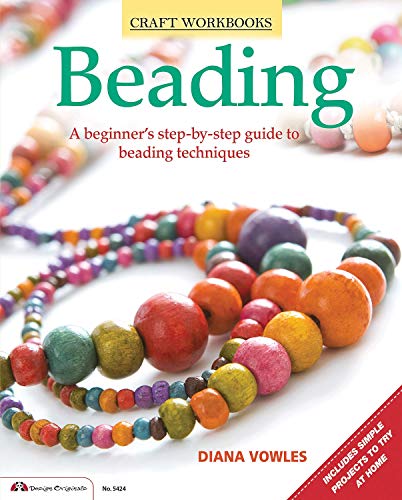
- Clear step-by-step diagrams
- Three beginner practice projects
- Includes a loom-beading overview
Best For: Absolute beginners seeking a compact techniques primer
Technique-Building Beadwork
Brick Stitch, Peyote, and Other Bead-Weaving Techniques

- Covers peyote, brick stitch, and loom work
- 11 projects for wearable jewelry
- Detailed photos, diagrams, and finishing tips
Best For: Beginners ready to learn several bead-weaving methods
Beginner Beading Fundamentals
Beading Projects for Beginners

- Step-by-step coverage of tools, materials, and setup
- Teaches stitches, wire wrapping, and finishing methods
- Includes multiple beginner projects and design basics
Best For: Complete beginners who want a practical jewelry-making guide with projects.
Loom Beading Starter Guide

- Focused guide to loom setup and warping
- Explains basic bead weaving techniques and supplies
- Includes FAQs and practice patterns for beginners
Best For: New loom beaders who want a focused, easy-start reference.
Step-by-Step Loom Projects

- Covers loom basics, setup, weaving, and finishing
- Includes 10 guided beginner projects
- Shows how to read patterns and create simple designs
Best For: Beginners who want a project-rich loom beading guide.
Beginner Jewelry Guide – Bead Jewelry Making for Beginners
Bead Jewelry Making for Beginners: Step-by-Step Instructions for Beautiful Designs
Check Price On AmazonIf you’re looking for beading books for beginners that start with the basics and still lead to finished jewelry, this guide is a practical pick. It walks you through selecting beads, learning core techniques, and even making your own findings, then lets you practice with 21 step-by-step designs.
Best For: New crafters who want a beginner-friendly path from first beads to wearable necklaces, earrings, and bracelets.
Pros:
- Covers bead selection, tools, and essential beading techniques for beginners.
- Includes 21 stylish projects with detailed instructions and required supplies.
- Explains how to make your own findings, like clasps and earring wires.
- Offers advice on promoting and selling finished pieces.
Cons:
- Focuses mainly on jewelry projects rather than broader beadwork styles.
- At 144 pages, it is more of a starter guide than an exhaustive reference.
This book is a strong fit if you want a hands-on introduction with clear project goals. It balances technique, practice, and a little business guidance in one compact beginner resource.
Comprehensive Beading Reference – The Beading Bible
Among beading books for beginners, this is the broadest all-around reference in the group. It explains bead types, tools, and a wide range of techniques, then supports learning with over 30 projects, clear diagrams, and step-by-step photography.
Best For: Beginners who want a single reference book that covers many beadwork methods and project styles.
Pros:
- Explains how to choose beads, tools, and equipment before moving into techniques.
- Covers loom weaving, off-loom stitches, threading, wire work, bead embroidery, and more.
- Includes over 30 projects across jewelry, bags, scarves, and accessories.
- Uses clear diagrams, step-by-step instructions, and strong visual guidance.
Cons:
- Its broad scope may feel less focused if you only want one simple beginner technique.
- At 176 pages, it serves as an overview rather than a deep masterclass in any single method.
This is the most encyclopedia-like option, which makes it useful if you want to explore several beading styles before choosing a favorite. It is a smart pick for learners who value variety and reference value.
Peyote Stitch Starter – Learn To Make Peyote Stitch Bracelets and Rings
If you’re shopping beading books for beginners and want a narrow, skill-focused option, this peyote stitch guide is easy to target. It teaches flat peyote stitch through 18 original patterns for bracelets and rings, with full-color photos, written instructions, and blank templates for your own ideas.
Best For: Beginners who want to learn peyote stitch and create bracelets or rings with pattern-based projects.
Pros:
- Walks beginners through even count, odd count, and decreasing peyote stitch.
- Includes 18 original patterns with full-color photos and clear instructions.
- Provides 15 pages of blank templates for custom designs.
- References video tutorials on the author’s YouTube channel for extra support.
Cons:
- Stays focused on flat peyote stitch rather than a broad range of beading methods.
- Projects use size 11 Miyuki Delica beads, which may limit flexibility for some crafters.
This book is a good choice if you prefer a focused learning curve and want to build one technique well. The combination of pattern projects and templates makes it especially useful for hands-on practice.
Technique Troubleshooter – 200 Beading Tips, Techniques & Trade Secrets
For shoppers comparing beading books for beginners, this title stands out as a practical troubleshooting guide. It covers stringing, wiring, beadweaving, knotwork, and finishing tips in an easy reference format, so you can find answers quickly while you work.
Best For: Beginners who want a compact reference for solving beading problems and improving technique.
Pros:
- Offers 200 tips, techniques, and trade secrets in a quick-reference format.
- Uses step-by-step photos, diagrams, and clear instructions.
- Covers tools, materials, knotwork, stringing, wire work, and finishing.
- Includes advice for gifts, selling, and designing your own patterns.
Cons:
- It is more of a technique compendium than a project-heavy beginner course.
- Readers looking for one structured path may prefer a more guided starter book.
This is the best pick if you want a desk-side problem solver rather than a step-by-step curriculum. Its strength is breadth of tips and practical know-how for improving your beadwork.
Beginner-Friendly Loom Jewelry – Beautiful Bead Weaving
If you’re looking for beading books for beginners that focus on loom work, this guide keeps things simple and visual. It walks you through setup, warping, and basic bead weaving with clear diagrams, bead placement charts, and color photos, then reinforces the skills with 19 step-by-step projects for jewelry and small accessories.
Best For: New bead weavers who want an easy entry into loom jewelry with guided projects.
Pros:
- Beginner-friendly diagrams and bead placement charts make setup easier to follow.
- Includes 19 projects for necklaces, bracelets, earrings, pins, pendants, bookmarks, and sets.
- Covers core loom techniques like continuous warp, multiple warp, increasing, decreasing, and joining ends.
- Designed for use with Clover standard and Mini Looms.
Cons:
- Looms are sold separately.
- At 48 pages, it is a compact guide rather than an in-depth reference.
For beginners who want a hands-on loom-focused book, this one is practical and project driven. It is a strong pick if you want to start making polished bead-weaving pieces quickly without a steep learning curve.
Simple Beading Foundations – Beading: A beginner's guide to beading techniques
Among beading books for beginners, this workbook-style guide is a straightforward introduction to basic techniques. It offers clear step-by-step diagrams and a small set of practice projects, making it useful if you want a simple way to learn the fundamentals of bead jewelry making without a large commitment.
Best For: Absolute beginners who want a compact, low-pressure introduction to beading basics.
Pros:
- Step-by-step diagrams keep the instruction easy to follow.
- Includes three simple practice projects: earrings, a necklace, and scarf fringing.
- Also provides a guide to weaving beads on a loom.
- Short, workbook-style format is approachable for first-time crafters.
Cons:
- Only three practice projects are included.
- The 48-page length limits how deep the instruction can go.
This is a practical starter book if you want the basics laid out clearly and don’t need an extensive project library. It works best as a quick first step into bead jewelry techniques before moving on to more advanced books.
Technique-Building Beadwork – Brick Stitch, Peyote, and Other Bead-Weaving Techniques
If you want beading books for beginners that also help you grow into more advanced bead weaving, this project-based guide is a strong option. It covers brick stitch, peyote variations, circular peyote, cross-weave, and loom work with detailed photos and diagrams, then applies those techniques across 11 jewelry projects.
Best For: Beginners ready to learn several bead-weaving methods in one visually guided book.
Pros:
- Covers multiple techniques, including peyote, brick stitch, circular peyote, cross-weave, and loom weaving.
- 11 jewelry projects provide hands-on practice with earrings, bracelets, rings, brooches, and necklaces.
- Detailed photos and diagrams support the instructions for both techniques and assembly.
- Includes materials guidance and jewelry-finishing tips like working with jump rings.
Cons:
- It is more technique-rich than a true basics-only beginner book.
- Publication is listed for 2026, so availability may depend on release timing.
This book is best if you want to learn beyond the simplest starter projects and explore a wider range of bead-weaving methods. It offers a good balance of instruction and project practice for beginners who are ready to build skills.
Beginner Beading Fundamentals – Beading Projects for Beginners
If you want beading books for beginners that start with the basics and build toward finished jewelry, this guide offers a clear, practical path. It covers workspace setup, material selection, essential tools, and foundational techniques like stringing, Peyote stitch, brick stitch, right-angle weave, herringbone stitch, square stitch, fringing, wire wrapping, and bead embroidery, then reinforces each skill with beginner-friendly projects.
Best For: Complete beginners who want a step-by-step jewelry-making book with technique lessons and hands-on projects.
Pros:
- Covers a wide range of beginner techniques, from stringing to bead embroidery.
- Includes practical projects such as a pearl choker, cuff, earrings, bracelet, lariat, and brooch.
- Explains finishing methods like hiding knots, crimp covers, and wire guardians.
- Also teaches design, pricing, photographing, and presenting finished pieces.
Cons:
- At 132 pages, it is concise rather than deeply exhaustive.
- Focuses on jewelry-making basics more than highly advanced artistry.
Overall, this is a strong all-around starting point if you want one beginner beading book that balances tools, techniques, and real projects. It is especially useful for crafters who want to move from basic materials to polished handmade pieces with confidence.
Loom Beading Starter Guide – Loom Beading for Beginners
For readers specifically looking for beading books for beginners with a loom-focused approach, this guide keeps the learning curve straightforward. It explains how to set up and warp a loom, introduces basic bead weaving techniques, and walks through supplies, FAQs, and practice patterns so you can start creating jewelry with just needles, thread, beads, and a simple loom.
Best For: Beginners who want to learn loom bead weaving from the ground up with a focused, easy-start guide.
Pros:
- Focused on loom beading, so the instruction stays targeted and beginner-friendly.
- Covers setup, warping, supplies, FAQs, and basic weaving techniques.
- Includes practice patterns to help you get started quickly.
- Uses a compact format that is easy to work through.
Cons:
- Specialized on loom weaving rather than broader beading techniques.
- Less project-heavy than some other beginner beading books.
This is a solid pick if your main goal is loom bead weaving rather than general jewelry making. It gives beginners a practical foundation and enough guidance to move from setup to simple finished designs with confidence.
Step-by-Step Loom Projects – Loom Beading For Beginners
If you are comparing beading books for beginners and want one that leans heavily into projects, this loom-beading guide is a practical option. It explains loom basics, essential tools, materials, setup, weaving techniques, pattern reading, finishing, and troubleshooting, then reinforces the lessons with 10 beginner-friendly projects like bracelets, earrings, bookmarks, keychains, and a mini wall hanging.
Best For: Complete beginners who want a loom beading book with plenty of guided projects and pattern practice.
Pros:
- Walks beginners from first loom setup through finishing and troubleshooting.
- Includes 10 projects that gradually build skill and confidence.
- Covers how to read patterns and create simple original designs.
- Uses clear, simple language suited to first-time learners.
Cons:
- Dedicated to loom beading, so it does not cover other beadwork styles.
- Best suited to readers who want a project-based learning style.
This book stands out for combining core instruction with a strong lineup of beginner projects. If you want to practice as you learn and prefer a hands-on approach, it is a sensible loom-beading choice.
How We Picked the Best Beading Books for Beginners
For this roundup, we prioritized books that are approachable for first-time crafters and useful beyond the first project. That means clear explanations, visual instruction, practical troubleshooting, and a progression from basic tools to finished pieces. We also looked for books that cover different learning styles, including project-based guides, technique references, and pattern-led books.
We favored titles that help readers build confidence quickly while still teaching proper methods for stringing, weaving, stitch choice, and finishing. For Beading Books for Beginners, readability and step-by-step structure matter just as much as project variety.
Quick Comparison: Which Type of Beginner Beading Book Fits You?
If you want a broad foundation, choose a general beginner guide that explains beads, tools, and core techniques. If you learn best by doing, a project-based book with simple jewelry makes it easier to practice immediately. If you are drawn to woven jewelry, look for loom or stitch-specific books with photos and patterns. And if you want a long-term reference, a technique compendium can be useful after you finish your first few projects.
Best for Absolute Beginners
Look for books with basic terminology, tool explanations, and very simple first projects.
Best for Pattern Learners
Choose books that include repeatable patterns, diagrams, and enough guidance to complete each piece without guessing.
Best for Future Skill-Building
Pick a title that covers troubleshooting, finishing, and multiple stitches so it remains useful as your skills grow.
Key Buying Factors for Beading Books for Beginners
Start with clarity: photos, diagrams, and step-by-step instructions are essential. Then check whether the book explains supplies in a realistic way, since beginner-friendly projects should not require hard-to-find materials. Also consider the focus of the book. Some titles emphasize basic jewelry making, while others center on peyote stitch, brick stitch, loom work, or bead weaving.
Another important factor is project difficulty. The best Beading Books for Beginners usually begin with simple designs and gradually introduce more advanced skills. Finally, make sure the style matches your goal—bracelets, rings, necklaces, loom work, or general technique mastery.
Who Should Buy Which Beading Books for Beginners?
If you want a simple all-around introduction, buy a general beginner guide. If you prefer learning through projects, choose a book with step-by-step jewelry designs. If you are interested in bead weaving or loom work, go with a focused technique book that teaches stitches and finishing methods in detail. If you already know the basics and want to improve faster, a tips-and-techniques reference is the smartest pick.
In short, the best choice depends on how you like to learn and what you want to make first. The right beginner beading book should help you create something usable early, while building skills you can keep using on more advanced projects later.