Scientific botanical illustration books blend art, observation, and plant science into a single rewarding category. Whether you want historical masterpieces or practical drawing references, the best titles balance visual beauty with dependable detail.
This roundup focuses on books that help readers study form, structure, and natural color with confidence, while also offering standout value for collectors and gift buyers.
Best 10 Scientific Botanical Illustration Books Picks for 2026
Botanical Technique Guide
Botanical Art with Scientific Illustration

- Covers materials, research, and field trips
- Explains monochrome and color theory
- Includes 200+ illustrations by the author
Best For: Beginners and experienced artists wanting a practical technique guide
Historic Masterwork

- Contains 367 copperplate engravings
- Organized by the four seasons
- A landmark in botanical literature
Best For: Collectors and readers seeking a classic botanical reference
Vintage Wall Chart Collection

- Collects botanical wall charts from around the world
- Adds historical and artistic context
- Focuses on the golden age of discovery
Best For: Naturalists and vintage illustration fans who prefer a visual historical survey
Kew Learning Classic
Kew Book of Botanical Illustration

- Written by Kew's foremost botanical artist
- Covers collecting, drawing, and painting
- Includes beginner subjects and a glossary
Best For: Learners seeking a compact, practical introduction from Kew
Historic Herbal Masterpiece

- 500 full-color plates from the original herbal
- First modern edition of Elizabeth Blackwell’s work
- Strong historical context on plants and women’s history
Best For: Readers seeking a landmark botanical art volume with historical depth
Artist's Practical Guide
The Kew Book of Botanical Illustration
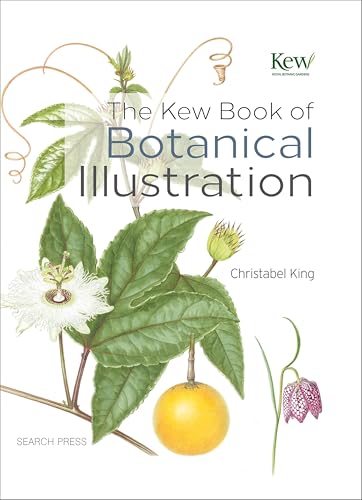
- Step-by-step botanical art instruction from specimen to painting
- Covers leaves, flowers, cacti, and travel drawing
- Includes plates from Curtis’s Botanical Magazine
Best For: Beginners and developing artists seeking a practical botanical drawing guide
Botanical Art Treasury

- Over 200 paintings from major Kew and Sherwood collections
- Covers botanical art from the 15th century to today
- Includes artist biographies and plant-focused context
Best For: Readers wanting a wide-ranging survey of botanical painting with museum-quality images
Skill-Building Guide

- Step-by-step lessons for realistic botanical art
- Covers anatomy, perspective, and color theory
- Good for beginners through advanced artists
Best For: Learners who want a practical botanical drawing workbook
Classic Survey
The Art of Botanical Illustration

- Covers more than 3,000 years of plant art
- Includes 123 color plates and 148 B/W images
- Classic reference for specialists and flower lovers
Best For: Readers who want a broad historical reference
History and Science Focus

- Explores nearly 700 years of botanical illustration
- Highlights the scientific purpose behind plant images
- Features rare archival images and specialist content
Best For: Readers interested in the history and science of plant imagery
Botanical Technique Guide – Botanical Art with Scientific Illustration
If you’re comparing scientific botanical illustration books for a hands-on learning resource, this title stands out for bridging botanical art and scientific illustration in one practical guide. It covers materials, field trips, research, monochrome, and color theory, while the author’s many illustrations help show how meticulous observation and precise rendering come together.
Best For: Beginners and experienced artists who want a technique-focused guide that connects botanical art with scientific illustration.
Pros:
- Explains core techniques for botanical artists and scientific illustrators
- Covers materials, research, and field-trip preparation
- Includes practical guidance on monochrome and color theory
- Features more than 200 of the author’s illustrations for reference
Cons:
- Focuses more on instruction than on historical overview
- May feel geared toward learners who want process and technique
This is a strong all-around choice if you want an approachable book that emphasizes how to make accurate, polished plant studies. It is especially useful when you want one volume that supports both artistic development and scientific precision.
Historic Masterwork – Basilius Besler’s Florilegium
For buyers browsing scientific botanical illustration books with a strong historical and visual focus, this volume is an exceptional showpiece. It presents Basilius Besler’s famous 1613 florilegium with 367 copperplate engravings, organized by seasons and reflecting a remarkably broad range of plant families and genera.
Best For: Readers who want a lavish botanical reference and a landmark work from the history of botanical illustration.
Pros:
- Features 367 copperplate engravings from the original 1613 florilegium
- Organized according to the four seasons for easy browsing
- Captures plants across 90 families and 340 genera
- Widely regarded as one of the finest treasures of botanical literature
Cons:
- Primarily a historical pictorial volume rather than a how-to manual
- Large, detailed collection may be less focused on step-by-step instruction
This edition is best treated as a visual and historical reference rather than a teaching book. If you want a beautiful survey of classic botanical engraving and a major name in the genre, it is hard to beat.
Vintage Wall Chart Collection – The Art of Botanical Painting
This pick is ideal if you want scientific botanical illustration books that celebrate the meeting point of art, science, and education. It gathers botanical wall charts from around the world and adds historical, botanical, and artistic context, making it a rich visual survey of how plant imagery reached classrooms and homes.
Best For: Naturalists, botanists, and vintage illustration fans who want a visually driven historical collection.
Pros:
- Showcases botanical wall charts from around the world
- Provides historical, botanical, and artistic context
- Highlights the scientific discovery era and the rise of botanical drawing
- Appeals to both plant lovers and vintage illustration collectors
Cons:
- More of a curated collection than a technical drawing guide
- Appears to be geared toward appreciation and context over instruction
If you’re drawn to botanical art as a cultural artifact as much as a scientific tool, this book fits well. It offers a visually appealing overview of a distinctive era in plant illustration without losing its educational angle.
Kew Learning Classic – Kew Book of Botanical Illustration
Among scientific botanical illustration books, this one is especially useful if you want instruction from a respected working artist at Royal Botanic Gardens Kew. It covers collecting and preserving plant material, drawing and painting techniques, magnification, and subjects ranging from succulents to wildflowers, with examples from Curtis’s Botanical Magazine.
Best For: Learners who want a compact, practical introduction to botanical illustration from Kew expertise.
Pros:
- Written by Kew’s foremost botanical artist
- Covers collecting, preserving, drawing, and painting techniques
- Includes magnification and travel drawing guidance
- Offers beginner-friendly subjects plus a glossary of terms
Cons:
- At 128 pages, it is relatively concise
- May leave advanced readers wanting deeper coverage
This is a smart choice if you want a straightforward entry point with practical instruction and authoritative credentials. Its compact format makes it especially appealing for readers who want to start learning without getting overwhelmed.
Historic Herbal Masterpiece – A Curious Herbal
A Curious Herbal: Elizabeth Blackwell's Pioneering Masterpiece of Botanical Art
Check Price On AmazonIf you’re comparing scientific botanical illustration books, this complete edition of Elizabeth Blackwell’s A Curious Herbal stands out for its historical importance and its sheer visual scope. It reproduces all 500 plates from the first herbal published by a woman artist, with medicinal plants presented in a format that was valued by doctors and apothecaries.
Best For: Readers who want a landmark botanical art volume with deep history, women’s history, and science context.
Pros:
- Includes all 500 full-color illustrations from Blackwell’s herbal.
- Shows the first modern edition of a pioneering work by a woman artist.
- Features introductory essays that place the book in botanical and historical context.
- Contains Blackwell’s handwritten plant descriptions and a previously unknown preface.
Cons:
- Its focus is historical rather than step-by-step instruction.
- The large, substantial format may be less convenient for casual browsing.
This is an excellent pick if you want a reference-quality botanical art book that combines scientific usefulness with a major art-historical story. It is especially appealing for readers who value classic herbal illustration and the broader history of botanical knowledge.
Artist's Practical Guide – The Kew Book of Botanical Illustration
For shoppers looking for scientific botanical illustration books that also teach technique, The Kew Book of Botanical Illustration is a practical, artist-focused guide. Christabel King covers the workflow from collecting and preserving specimens through magnification, drawing from life, and painting a range of plant subjects, with examples drawn from her work at Kew and Curtis’s Botanical Magazine.
Best For: Beginners and developing artists who want a hands-on guide to accurate botanical drawing and painting.
Pros:
- Explains the process from specimen collection to finished illustration.
- Covers a wide range of subjects, including leaves, flowers, and cacti.
- Includes a chapter on travel drawing and a useful glossary.
- Features plates from Curtis’s Botanical Magazine and guidance from a leading Kew artist.
Cons:
- At 129 pages, it is more concise than a large reference encyclopedia.
- Best suited to practical learning rather than broad historical survey.
This book is a strong fit if you want clear instruction paired with elegant examples and scientific accuracy. It balances inspiration and technique well, making it a sensible choice for artists who want to improve their plant rendering.
Botanical Art Treasury – Treasures of Botanical Art
If you want scientific botanical illustration books that blend art history with plant knowledge, Treasures of Botanical Art is built for that purpose. Drawing from the Kew and Shirley Sherwood collections, it presents more than 200 botanical paintings spanning from the fifteenth century to contemporary work, with text that explains the genre’s origins, relevance, and the plants shown.
Best For: Readers who want a broad survey of botanical painting with strong museum-style visuals and context.
Pros:
- Showcases more than 200 botanical paintings from Kew and Sherwood collections.
- Spans the history of botanical art from the fifteenth century to the present.
- Includes biographies of more than 120 artists.
- Balances informative text with striking images and plant background.
Cons:
- More of a survey and showcase than a hands-on instructional manual.
- Some readers may want a deeper technique-focused guide.
This is a compelling choice for anyone who wants a curated overview of botanical art as both beauty and science. It works especially well as an inspirational reference or coffee-table-style book with serious scholarly grounding.
Skill-Building Guide – Botanical Drawing in Color
Botanical Drawing in Color: A Basic Guide to Mastering Realistic Form and Naturalistic Color
Check Price On AmazonIf you want scientific botanical illustration books that also teach you how to draw, this guide is a practical place to start. Wendy Hollender breaks the process into clear, progressive lessons focused on realistic form, naturalistic color, plant anatomy, perspective, and colored pencil technique, making it useful for learners who want both accuracy and finished artwork.
Best For: Beginners to advanced artists who want a step-by-step botanical drawing workbook with a strong technical foundation.
Pros:
- Step-by-step lessons that increase in complexity
- Covers plant anatomy, perspective, color theory, and single-light-source toning
- Balances scientific accuracy with finished, artful studies
- Suitable whether you’re starting out or refining existing skills
Cons:
- Focused specifically on colored pencil and drawing techniques
- More instructional than historical or survey-based
This is a strong choice if you want hands-on practice rather than a broad overview of the field. It works especially well for readers who want botanical illustration guidance they can apply immediately to their own drawings.
Classic Survey – The Art of Botanical Illustration
For readers exploring scientific botanical illustration books from a historical and visual angle, this classic survey offers a broad, well-illustrated look at the art form. It traces plant portraiture across more than three thousand years and includes a large number of color plates and black-and-white illustrations, making it useful for anyone who wants context as well as inspiration.
Best For: Readers who want a comprehensive reference on the history and major artists of botanical illustration.
Pros:
- Wide-ranging survey spanning over three thousand years
- Includes 123 color plates and 148 black-and-white illustrations
- Considered a classic work on the subject
- Accessible to specialists and general flower lovers alike
Cons:
- Less of a hands-on how-to guide
- Heavier and larger than a casual carry-around book
This is the strongest pick if your priority is learning the story and standards of botanical illustration rather than practicing technique. It offers substantial visual depth and historical perspective in a single volume.
History and Science Focus – The Beauty of the Flower
If you are comparing scientific botanical illustration books and want one that explains why these images matter, this title takes a strong art-and-science approach. It explores nearly seven hundred years of botanical illustration, highlighting how technically accurate plant depictions were created, used, and shared by artists, scientists, and publishers.
Best For: Readers who want the historical backstory and scientific purpose behind botanical illustration.
Pros:
- Examines nearly seven hundred years of botanical illustration
- Emphasizes the scientific role of accurate plant imagery
- Includes rare archival images and specialist material
- Explains collaborations among artists, scientists, and publishers
Cons:
- More about history and context than drawing instruction
- Likely most rewarding for readers interested in art history or science communication
This book stands out if you want a deeper understanding of botanical illustration as a scientific medium, not just a decorative one. It is especially appealing for readers who value archival images and the evolution of how plant knowledge has been recorded and transmitted.
How We Picked These Scientific Botanical Illustration Books
We prioritized books with strong visual fidelity, clear plant anatomy, credible scholarly or archival value, and broad usefulness for both artists and readers. We also favored titles that offer either exceptional historical significance or practical learning value.
Because Scientific Botanical Illustration Books serve different goals, we included a mix of museum-quality references, instructional guides, and richly reproduced volumes. That makes it easier to choose based on whether you want to study, display, or collect.
Quick Comparison
Some books in this roundup are best for technique and drawing practice, while others are better suited to art history, reference, or coffee-table display. If you want to learn fundamentals, choose a teaching-focused title. If you want inspiration or archival depth, go for a historically important volume with high-quality reproductions.
Best for Different Buyers
Artists may prefer books that emphasize structure, proportion, and color accuracy. Collectors may lean toward facsimiles and classic works. Gift buyers often want editions with strong presentation and broad visual appeal.
Key Buying Factors for Scientific Botanical Illustration Books
First, check the level of accuracy in the illustrations. Strong botanical books show leaves, stems, flowers, and reproductive structures clearly enough to support real observation. Second, look at reproduction quality, since color fidelity and print clarity matter a great deal in this category.
Next, consider whether the book is instructional, historical, or archival. Instructional titles help with drawing practice, while historical works offer context and prestige. Also pay attention to binding, page size, and paper quality if you plan to use the book frequently at a desk or easel.
Finally, think about your purpose. A working artist may want practical guidance and step-by-step examples. A botanist or collector may care more about provenance, editions, and faithful facsimiles. The best Scientific Botanical Illustration Books match the reader’s goal as closely as they match the plants they depict.
Who Should Buy Which Scientific Botanical Illustration Books?
Beginners should look for accessible guides that explain form, color, and observational technique in plain language. Intermediate and advanced artists may get more value from classic reference works and high-detail reproductions. Collectors and design-minded buyers should focus on presentation, historic importance, and print quality.
If you want one book to do everything, choose the title that combines practical instruction with beautiful plates. If you are building a reference library, a mix of foundational guides and landmark botanical art volumes will give you the best long-term value.