Looking for organic gardening books that actually help you grow better food and manage a healthier garden? The best titles go beyond inspiration and give you practical, proven methods you can use right away.
Whether you want beginner-friendly basics, deeper soil-building guidance, or season-spanning harvest strategies, this roundup focuses on books that offer real value for home gardeners and small growers in 2026.
Best 10 Organic Gardening Books Picks for 2026
Natural Pest Control Guide
The Organic Gardener's Handbook

- Covers 200+ plants and common garden ailments
- Hundreds of photos aid pest and disease ID
- Science-based natural control and prevention tips
Best For: Gardeners who need a detailed, photo-rich pest and disease reference
Small-Scale Growing Guide

- Updated 30th anniversary edition with new photos
- Strong focus on tools and productive techniques
- Best suited to small farms and serious home gardens
Best For: Serious growers and new farmers working on small acreage
Beginner's Organic Starter
Rodale's Basic Organic Gardening

- Beginner-friendly language and clear explanations
- Covers planning, planting, soil, compost, and weeds
- Includes troubleshooting, no-dig methods, and plant finders
Best For: New gardeners looking for a clear, confidence-building guide
Vegetable Garden Handbook
The Old Farmer's Almanac Guide

- Step-by-step guidance for 32 vegetables
- Covers soil, seed starting, and seed saving
- Includes charts, photos, and practical reference tools
Best For: Vegetable gardeners wanting a compact, trusted handbook
Classic Organic Gardening Reference
Rodale's Ultimate Encyclopedia of Organic Gardening

- Comprehensive coverage for garden and landscape topics
- Updated organic pest, fertilizer, and soil guidance
- Includes climate-friendly techniques and habitat advice
Best For: Gardeners who want a deep, all-in-one organic reference
Season-Extending Vegetable Guide

- Teaches chemical-free vegetable growing through all seasons
- Explains cold frames, tunnels, and greenhouse methods
- Covers composting, storage, and garden planning
Best For: Vegetable gardeners who want a year-round harvest plan
Practical Wildlife-Friendly Guide
- Revised guide with Monty Don’s latest approach
- Centers organic methods and wildlife habitat creation
- Highly illustrated with many new garden photos
Best For: Gardeners who want a practical, image-rich organic guide
Market-Farming Blueprint

- Small-scale organic farming and market garden methods
- Focuses on crop selection, layout, and efficiency
- Includes direct marketing and financial planning
Best For: Growers aiming to make a profit from limited acreage
Beginner No-Dig Guide

- No-dig method for easier soil building
- Covers raised beds, containers, and companion planting
- Beginner-friendly planting and pest control guidance
Best For: New gardeners who want a simple organic growing plan
High-Yield Garden System
The Vegetable Gardener's Bible

- Uses the W-O-R-D system for high-yield growing
- Covers many vegetable varieties and regions
- Strong focus on organic methods and deep soil
Best For: All-purpose vegetable gardeners seeking a trusted reference
Natural Pest Control Guide – The Organic Gardener's Handbook
If you want one of the most practical organic gardening books for solving real garden problems, this handbook is built for that job. It focuses on keeping plants healthy first, then offers science-based, low-impact ways to respond when pests or disease show up across flowers, vegetables, fruit, shrubs, and trees.
Best For: Gardeners who want a detailed, photo-rich reference for identifying and managing pests and diseases organically.
Pros:
- Covers more than 200 plant types, including vegetables, fruits, flowers, shrubs, and trees.
- Includes hundreds of photos to help identify pests, diseases, and beneficial insects.
- Focuses on preventative care and natural control methods.
- Offers science-based recommendations and home remedies for common garden issues.
Cons:
- More of a problem-solving reference than a beginner’s step-by-step starter book.
- Best suited to gardeners who want a deep troubleshooting guide.
This is a strong choice if you want a dependable organic gardening book for diagnosing issues and choosing safe treatments. Its main strength is breadth: it helps you understand both healthy-garden basics and specific remedies when things go wrong.
Small-Scale Growing Guide – The New Organic Grower
Among organic gardening books, this one stands out if you want to grow more seriously on a small piece of land. Eliot Coleman’s 30th anniversary edition blends practical tools, updated methods, and market-gardening ideas for home gardeners and small-scale growers working in close harmony with nature.
Best For: Serious home gardeners, market growers, and new farmers who want an in-depth small-scale growing manual.
Pros:
- Ideal for gardeners working on 2.5 acres or less.
- Includes updated information, new photos, and new material from Barbara Damrosch.
- Focuses on tools and techniques for productive organic growing.
- Useful for both home gardens and small market farms.
Cons:
- More advanced and specialized than a basic beginner’s guide.
- Leans toward productive growing systems rather than casual gardening tips.
This book is a smart pick if you want a deeper, more ambitious organic gardening reference. It is especially valuable for readers who are ready to move beyond hobby gardening and explore efficient, nature-based growing methods.
Beginner's Organic Starter – Rodale's Basic Organic Gardening
Rodale's Basic Organic Gardening: A Beginner's Guide to Starting a Healthy Garden
Check Price On AmazonIf you’re shopping for organic gardening books that explain the basics without overwhelming you, this is a very approachable place to start. It walks through planning, planting, soil, compost, seeds, watering, weeds, and pest control in growing-season order, using simple language and confidence-building sidebars.
Best For: Beginners and gardeners new to organic methods who want a clear, friendly starting guide.
Pros:
- Explains core gardening tasks in simple, beginner-friendly language.
- Organized in growing-season order from planning to harvest.
- Includes troubleshooting help, no-dig methods, and simple layouts.
- Defines common terms and offers easy plant finders for flowers, vegetables, and herbs.
Cons:
- May feel too basic for experienced gardeners.
- Best for foundational learning rather than advanced techniques.
This is a practical starter book for anyone who wants to build confidence quickly. Its strength is clarity: it gives new organic gardeners a straightforward path from first steps to a functioning garden.
Vegetable Garden Handbook – The Old Farmer's Almanac Guide
For readers focused on edible crops, this is one of the more practical organic gardening books for vegetable success. It gives step-by-step guidance on 32 vegetables, plus soil improvement, seed starting, crop companions, and flexible growing methods for in-ground gardens and alternatives like straw bales.
Best For: Vegetable gardeners who want a concise, easy-to-use handbook with trusted advice and reference tools.
Pros:
- Step-by-step advice for growing 32 vegetables.
- Covers soil testing, seed saving, and seed starting.
- Includes alternatives to raised beds, such as straw bale growing.
- Features reference tables, charts, photos, and notes space.
Cons:
- More focused on vegetables than on broader ornamental gardening.
- Shorter than some more comprehensive gardening references.
This handbook is a good fit if you want a compact, useful vegetable guide with a friendly style. It combines practical instruction with the Old Farmer’s Almanac’s signature mix of wisdom, humor, and reference material.
Classic Organic Gardening Reference – Rodale's Ultimate Encyclopedia of Organic Gardening
If you want one of the most comprehensive organic gardening books for building a chemical-free garden from the ground up, this updated Rodale reference is hard to beat. It covers fruit and vegetables, herbs, trees, shrubs, perennials, annuals, lawns, and even wider topics like community gardening and edible landscaping, with revised guidance on soil, pest control, fertilizer products, and changing-climate techniques.
Best For: Gardeners who want a deep, all-in-one organic reference with practical guidance for many garden types and climates.
Pros:
- Very broad coverage across the garden and landscape
- Updated advice on organic pest control, fertilizers, and soil practices
- Includes climate-conscious techniques like water management and habitat building
- Trusted Rodale Organic Gardening brand with long-standing credibility
Cons:
- Large, encyclopedia-style format may feel more reference-heavy than instructional
- Focuses on American growing conditions, so some advice may be region-specific
This is a strong pick if you prefer a single, authoritative guide you can return to throughout the season. Its depth and breadth make it especially useful for gardeners who want detailed answers instead of a quick overview.
Season-Extending Vegetable Guide – Four-Season Harvest
Four-Season Harvest: Organic Vegetables from Your Home Garden All Year Long, 2nd Edition
Check Price On AmazonFor gardeners looking to get more from organic gardening books, this title focuses on one of the most useful skills: growing vegetables through more of the year. Eliot Coleman explains how to use cold frames, high tunnels, mobile greenhouses, composting, mineral amendments, and planning techniques to raise chemical-free produce well beyond summer.
Best For: Vegetable gardeners who want practical season extension and a year-round harvest plan.
Pros:
- Clear focus on growing vegetables all four seasons
- Covers cold frames, tunnels, and mobile greenhouse basics
- Includes composting, mineral amendments, and storage ideas
- Written by a highly respected organic farmer
Cons:
- Best suited to vegetable growers rather than general gardeners
- More specialized than broad how-to gardening guides
If your main goal is extending the harvest and keeping the kitchen supplied longer, this book offers highly targeted guidance. It is especially appealing for gardeners who are ready to move beyond basic summer growing and experiment with season-extending structures.
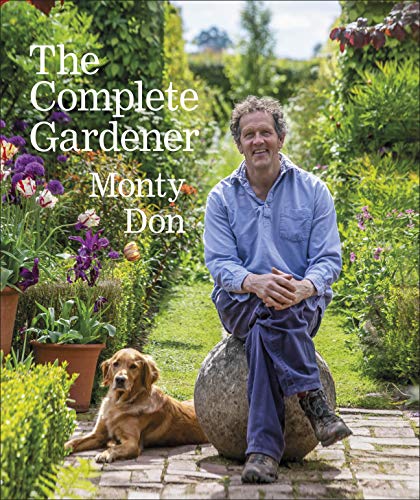
Practical Wildlife-Friendly Guide – The Complete Gardener
The Complete Gardener: A Practical, Imaginative Guide to Every Aspect of Gardening
Check Price On AmazonThis is a strong choice if you want organic gardening books that balance practical growing advice with a more modern, wildlife-friendly approach. Monty Don’s revised edition covers the most important aspects of gardening, with organic techniques at its core and added emphasis on creating habitats for local wildlife, backed by extensive photography from his Long Meadow garden.
Best For: Gardeners who want a visually rich, practical guide rooted in organic methods and wildlife habitat.
Pros:
- Extensively revised to reflect Monty Don’s current approach
- Strong focus on organic techniques and wildlife habitat
- Highly illustrated with many new photographs
- Covers a wide range of core gardening topics
Cons:
- Not as specialized as a focused vegetable or pest-control guide
- Large format may be less convenient as a quick reference in the garden
Overall, this book works well for gardeners who want inspiration as well as instruction. Its mix of practical guidance and habitat-minded thinking makes it a versatile addition to an organic gardening library.
Market-Farming Blueprint – The Market Gardener
The Market Gardener: A Successful Grower's Handbook for Small-Scale Organic Farming
Check Price On AmazonIf you’re comparing organic gardening books with a practical, income-focused angle, The Market Gardener stands out for small-scale growers who want to turn limited land into a productive system. It focuses on low-tech, high-yield methods, efficient layouts, and direct marketing ideas built from real-world market gardening experience.
Best For: Growers who want to learn profitable small-scale organic farming on limited acreage.
Pros:
- Shows how to maximize yields per square foot with intensive methods.
- Includes crop selection guidance, farm layout ideas, and tool/equipment advice.
- Covers four-season production and direct marketing through CSA and farmers markets.
- Built around proven experience from a working market garden operation.
Cons:
- More focused on small-scale farming than casual backyard gardening.
- May feel business-oriented if you only want basic home garden tips.
This is a strong pick if your goal is not just growing food, but building a productive organic system with a plan for profitability. It offers a clear, practical framework for gardeners ready to think beyond hobby plots.
Beginner No-Dig Guide – Year-Round Vegetable Garden
If you’re shopping for organic gardening books that make starting simple, this beginner-friendly guide keeps the process approachable and low-stress. It centers on a no-dig method, raised beds, companion planting, pest control, and growing fresh food for your family year-round.
Best For: First-time gardeners who want a simple, step-by-step organic plan for home food growing.
Pros:
- Explains a no-dig approach designed to build soil with less work.
- Covers raised beds, containers, and smaller growing spaces.
- Includes planting guidance for common vegetables and a planting calendar.
- Offers organic pest and disease management advice for families.
Cons:
- Publication details indicate a very recent release, so long-term reader feedback may be limited.
- Geared more toward beginners than advanced gardeners.
This book is a good fit if you want a friendly roadmap instead of dense theory. Its step-by-step structure and practical focus make it especially useful if you’re starting from zero and want an organized way to grow food organically.
High-Yield Garden System – The Vegetable Gardener's Bible
Among organic gardening books, this title is a classic choice for gardeners who want a proven, high-yield system with room to experiment. It focuses on Ed Smith’s W-O-R-D approach, combining wide rows, organic methods, raised beds, and deep soil to help gardeners grow more successfully across North American regions.
Best For: Gardeners who want a broad, high-yield vegetable-growing reference with organic methods.
Pros:
- Explains the W-O-R-D system: wide rows, organic methods, raised beds, and deep soil.
- Covers a wide range of North American gardening regions.
- Includes profiles of hundreds of popular vegetable varieties.
- Offers guidance for extending the growing season and handling fussy plants.
Cons:
- Longer and more reference-heavy than a quick-start beginner guide.
- May be more than you need if you only want a narrow topic or small project book.
This is a solid all-around resource if you want one book that blends practical technique with variety guidance. It’s especially appealing for gardeners who want to improve yields while keeping an organic, soil-first approach.
How We Picked These Organic Gardening Books
We prioritized books with clear, practical guidance, strong reputations among gardeners, and coverage that matches common buyer needs. That means useful instruction on soil health, pest management, planning, planting, harvesting, and sustainable growing methods—not just general gardening inspiration.
We also looked for a balanced mix of beginner, intermediate, and advanced options so readers can choose a book that fits their experience level and goals.
Quick Comparison
If you want a fast way to narrow the list, think in terms of your main gardening goal. Some Organic Gardening Books focus on starting a first garden, others on growing vegetables more efficiently, and others on season extension, no-dig methods, or market-scale production. The best match is the one that solves your current problem first.
Key Buying Factors for Organic Gardening Books
Skill Level
Beginners should look for step-by-step setup, simple language, and basic planning advice. More experienced gardeners may want deeper coverage of soil biology, crop rotation, pest control, or high-yield systems.
Garden Type
Choose a book that fits your setup: raised beds, in-ground beds, container gardens, home vegetable plots, or small market gardens. A book that matches your space will feel much more actionable.
Core Topics
Strong picks usually cover composting, feeding soil, watering, disease prevention, beneficial insects, and seasonal timing. If you struggle with pests or limited growing time, prioritize books with those subjects front and center.
Growing Philosophy
Some readers want traditional backyard advice, while others want no-dig, intensive, or market-garden approaches. Pick a method you can realistically maintain, especially if you are trying to build long-term habits.
Who Should Buy Which Organic Gardening Books?
New gardeners should start with the most approachable, foundation-building titles. Vegetable growers who want more production from smaller spaces should favor books on raised beds, succession planting, and year-round harvests. If pest pressure is your biggest issue, choose a book focused on natural control and disease prevention.
For ambitious growers, the best Organic Gardening Books are the ones that teach systems, not just tips. If you want practical results in 2026, buy the book that matches your current challenge, then use it as a reference through the growing season.