The best hardcover thesauruses make it easier to find precise, varied, and age-appropriate words without relying on a screen. This year’s selections cover everything from serious writing and broad reference use to schoolwork, test preparation, and children’s vocabulary development.
Use the guide below to match the right format, editorial depth, and intended age range to your needs before choosing a durable desk or bookshelf reference.
Best 10 Hardcover Thesauruses Picks for 2026
Editor's Choice
Oxford American Writer's Thesaurus
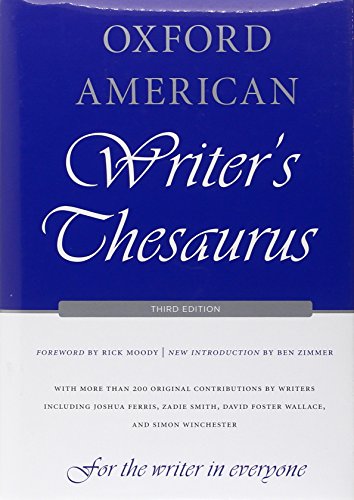
- 300,000+ synonyms and 10,000 antonyms
- Examples, usage notes, and word-selection guidance
- Includes Word Finder and graphical word toolkit
Best For: Writers seeking context-rich vocabulary help
Best for Idea Organization
Roget's International Thesaurus

- Groups language by meaning and concept
- Adds current words, slang, and expressions
- Useful for writing, speaking, and brainstorming
Best For: Concept-based browsing and idea development
Best Comprehensive Oxford Reference

- Updated and redesigned third edition
- 1,072 pages for broad reference use
- Covers writing, puzzles, and general interest
Best For: A substantial home or office vocabulary reference
Best for Fast Lookup
Merriam-Webster's Collegiate Thesaurus

- More than 275,000 word choices and examples
- Alphabetical format supports quick searches
- Includes definitions, phrases, and antonyms
Best For: Accurate everyday word selection
Best for School Writing
Oxford English Thesaurus for Schools

- Curriculum-focused vocabulary
- Contextual example sentences
- Writing toolkit with creative-writing support
Best For: Students developing school and creative writing skills
Best All-in-One Reference
Merriam-Webster's Dictionary and Thesaurus

- Dictionary and thesaurus in one volume
- More than 60,000 dictionary entries
- Over 13,500 thesaurus entries with usage examples
Best For: General-purpose home and study reference
Best for Middle and High School
American Heritage Student Thesaurus

- Designed for grades 7–10
- More than 70,000 synonyms
- Sample sentences guide word choice
Best For: Students ages 11–16 building vocabulary and writing skills
Best for High School Test Prep
Merriam-Webster’s School Thesaurus
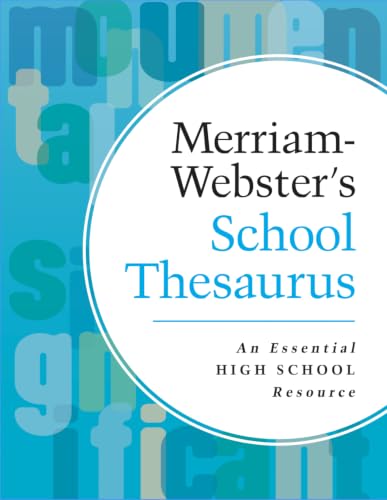
- 154,000-plus word choices
- 37,000 contextual usage examples
- Designed for grades 9–12 and test prep
Best For: High school writers and SAT or ACT preparation
Best Illustrated Pick for Young Readers
Children’s Illustrated Thesaurus

- More than 4,000 illustrated entries
- Definitions and example sentences included
- Synonyms and antonyms for young learners
Best For: Children, educators, and vocabulary practice
Best Dictionary-Thesaurus Combo
Webster’s All-In-One Dictionary and Thesaurus

- 68,000-plus dictionary definitions
- 130,000 synonyms and antonyms
- Updated third edition for school, home, or office
Best For: General-purpose word lookup for students and households
Editor's Choice – Oxford American Writer's Thesaurus
For writers seeking more than a basic list of alternatives, this hardcover thesaurus combines extensive synonym coverage with examples, usage guidance, and idea-generating features. Its 300,000-plus synonyms and 10,000 antonyms make it a substantial reference for drafting and revising.
Best For: Writers who want context, usage notes, and vocabulary inspiration alongside broad coverage.
Pros:
- Includes more than 300,000 synonyms and 10,000 antonyms.
- Provides real-life example sentences and guidance for choosing among similar words.
- Adds a subject-organized Word Finder, language guide, quotations, and graphical word toolkit.
Cons:
- At 1,128 pages and 3.8 pounds, it is a substantial desk reference.
- Its writer-focused features may be more extensive than casual users need.
This is a strong all-around pick for serious writing projects, especially if you value explanations and inspiration rather than simple synonym lookup.
Best for Idea Organization – Roget's International Thesaurus
This hardcover thesaurus uses Roget’s distinctive concept-based organization instead of conventional A-to-Z entries. By grouping words and phrases by meaning, it helps writers and students explore related language and develop ideas broadly.
Best For: Writers, students, and speakers who prefer browsing by concept rather than searching alphabetically.
Pros:
- Arranges words and phrases according to their meanings.
- Includes thousands of updated words and phrases, including newer slang and everyday expressions.
- Supports word finding, idea development, and clearer writing and speaking.
Cons:
- The concept-based format may take adjustment if you are accustomed to alphabetical thesauruses.
- Its 1,200-page format is designed for comprehensive reference rather than portability.
Choose this edition when exploring a concept and surveying its associated language matters more to you than the fastest alphabetical lookup.
Best Comprehensive Oxford Reference – Oxford Thesaurus of English
This large-format hardcover thesaurus is designed as a broad, updated reference for expanding vocabulary, finding precise wording, solving puzzles, and general-interest browsing. Its 1,072 pages provide substantial coverage in a redesigned edition.
Best For: Readers who want a large Oxford reference for writing, puzzles, vocabulary building, and everyday consultation.
Pros:
- Completely updated and redesigned for this edition.
- Supports writing, puzzle solving, and general interest.
- Offers a substantial 1,072-page reference format.
Cons:
- At 5.28 pounds, it is notably heavy for frequent carrying.
- The supplied description provides fewer feature details than some competing entries.
This is a sensible choice for a home or office reference shelf when you want Oxford’s top-range thesaurus in a sizable, broad-purpose format.
Best for Fast Lookup – Merriam-Webster's Collegiate Thesaurus
Merriam-Webster's Collegiate Thesaurus - Synonyms, Antonyms, & More: Second Edition
Check Price On AmazonFor quick, practical word selection, this hardcover thesaurus combines alphabetical organization with concise definitions, examples, and related language. Its updated second edition offers more than 275,000 word choices while helping distinguish meanings among synonyms.
Best For: Readers and writers who want fast alphabetical searching with enough context to choose accurately.
Pros:
- Provides more than 275,000 word choices, examples, and explanations.
- Uses concise definitions to clarify meanings shared by synonyms.
- Includes sample sentences, idiomatic phrases, related words, near antonyms, and antonyms.
Cons:
- Its alphabetical format is less suited to concept-based browsing than Roget’s system.
- At 1,162 pages, it remains a substantial desk reference.
This is a practical everyday option for readers and writers who prioritize quick lookup but still want definitions and usage context before choosing a word.
Best for School Writing – Oxford English Thesaurus for Schools
For students seeking hardcover thesauruses, the Oxford English Thesaurus for Schools combines an accessible layout with curriculum-focused vocabulary and practical writing guidance. Its age-appropriate example sentences and school-oriented features make it useful for both homework and independent study.
Best For: Students preparing school assignments, studying at home, or developing creative and academic writing skills.
Pros:
- Includes broad coverage of curriculum words, plus vocabulary related to technology, health, and the environment.
- Uses age-appropriate example sentences to show how words work in context.
- Offers word webs, synonym guidance, overused-word panels, writing tips, usage notes, and a creative-writing section.
- Provides 704 pages of reference material in the sixth edition.
Cons:
- Its school-focused content may be less suitable for adult or highly specialized reference needs.
- At 2.31 pounds, it is substantial for carrying between locations.
This is a strong choice when the priority is guided word selection rather than simply listing synonyms. The writing toolkit and context-based examples give students practical support as they build vocabulary and revise their work.
Best All-in-One Reference – Merriam-Webster's Dictionary and Thesaurus
Among hardcover thesauruses, Merriam-Webster’s Dictionary and Thesaurus stands out for combining two reference tools in one large volume. Its alphabetical format lets readers move between definitions, synonyms, antonyms, and usage guidance without switching books.
Best For: Readers who want a comprehensive combined dictionary and thesaurus for general language reference.
Pros:
- Combines more than 60,000 dictionary entries with over 13,500 thesaurus entries.
- Includes synonym and antonym lists alongside clear definitions.
- Provides usage examples to clarify meanings and word application.
- Adds newer terms such as airplane mode, bucket list, dystopia, parkour, and truther.
Cons:
- Its 992 pages and 3.4-pound weight make it less portable than a compact reference.
- Because the dictionary and thesaurus are integrated, it may be more volume than shoppers seeking only synonyms need.
This option offers the broadest general-purpose coverage of the three products. Choose it if having definitions and thesaurus information together is more valuable than a student-specific layout or writing instruction.
Best for Middle and High School – American Heritage Student Thesaurus
For shoppers comparing hardcover thesauruses for students, The American Heritage Student Thesaurus focuses on grades 7–10 and teaches word choice through relatable context. It pairs a large synonym collection with sample sentences, antonyms, and related-word groupings.
Best For: Middle-school and early high-school writers ages 11–16 who need structured vocabulary and word-choice support.
Pros:
- Contains 6,000 main entries and more than 70,000 synonyms.
- Lists synonyms according to how well they fit each sample sentence, encouraging thoughtful word choice.
- Includes antonyms, parts-of-speech guidance, and Word Group features for related terms.
- Targets reading and writing development for grades 7–10.
Cons:
- Its grade-specific design may not meet the needs of younger children or advanced adult writers.
- With 384 pages, it has less overall print length than the larger general reference volumes.
This is the most focused pick for students who need help selecting the right synonym, not merely finding a long list of alternatives. The sentence-based ordering makes vocabulary practice more deliberate and useful for school writing.
Best for High School Test Prep – Merriam-Webster’s School Thesaurus
For students comparing hardcover thesauruses, Merriam-Webster’s School Thesaurus is a substantial reference built around word choice, context, and standardized-test preparation. Its 154,000-plus word choices and extensive usage examples make it useful for school writing and vocabulary development.
Best For: High school students in grades 9–12, especially those preparing for the SAT, ACT, or other standardized tests.
Pros:
- Includes more than 154,000 synonyms, antonyms, related and contrasted words, and idiomatic phrases.
- Offers 37,000 usage examples to clarify meanings in context.
- Concise shared-meaning statements help students distinguish among synonyms.
- Revised edition with 1,024 pages and coverage aimed at grades 9–11.
Cons:
- At 2.95 pounds, it is relatively heavy for carrying between classes.
- The cover design may vary from the pictured version.
- Its high-school focus may be more advanced than needed for younger children.
This is a strong choice when depth and test-oriented vocabulary support matter more than portability. Pair it with a school dictionary for a broader student reference setup.
Best Illustrated Pick for Young Readers – Children’s Illustrated Thesaurus
Among hardcover thesauruses for children, DK’s Children’s Illustrated Thesaurus stands out for its visual presentation and accessible entry format. Definitions, example sentences, illustrations, synonyms, and antonyms give young readers several ways to understand and remember new vocabulary.
Best For: Children roughly ages 9 and older, elementary and middle-grade learners, and educators seeking an engaging vocabulary tool.
Pros:
- Provides synonyms and antonyms for more than 4,000 main entries.
- Each entry includes a word type, definition, example sentence, synonyms, advanced synonyms, and antonyms.
- Colorful photography and illustrations make vocabulary exploration more approachable.
- Includes vocabulary from Australia, New Zealand, Scotland, South Africa, and the U.S.
Cons:
- Its 256-page scope is smaller than that of comprehensive adult or high-school thesauruses.
- The large 8.69-by-11.13-inch format may be less convenient for small desks or travel.
- Its primary audience is younger readers, so advanced students may outgrow it.
This illustrated volume is best when presentation and confidence-building are priorities. It offers a friendly introduction to choosing stronger words without overwhelming young learners.
Best Dictionary-Thesaurus Combo – Webster’s All-In-One Dictionary and Thesaurus
For shoppers seeking hardcover thesauruses that also define words, Webster’s All-In-One Dictionary and Thesaurus combines both functions in one reference. Its integrated layout, updated vocabulary, and usage examples suit school, home, and office use.
Best For: Students, households, and offices that want dictionary definitions and synonym support in a single book.
Pros:
- Combines more than 68,000 dictionary definitions with 130,000 synonyms and antonyms.
- Integrated dictionary and thesaurus entries make word lookup more direct.
- Usage examples help clarify meaning and application.
- Third edition adds words and senses including crowdfunding, long COVID, and social distancing.
Cons:
- A combined reference may be less specialized than a dedicated student thesaurus.
- At 768 pages and 2.35 pounds, it is substantial for everyday carrying.
- The listed reading and grade guidance begins at age 12 and grade 7.
This is the most versatile option of the three for shared spaces because it handles definitions and word alternatives together. Choose it when convenience and broad general-purpose coverage outweigh a child-focused or test-prep design.
How We Picked the Best Hardcover Thesauruses
We evaluated these Hardcover Thesauruses by considering scope, organization, clarity, durability, and intended audience. A useful thesaurus should do more than provide long synonym lists: it should help readers understand differences in meaning, tone, usage, and context. We also considered whether each book is better suited to professional writing, general reference, school assignments, standardized-test preparation, or younger readers.
Because no single reference work fits everyone, this list includes traditional thesauruses, combined dictionary-thesaurus volumes, student editions, and an illustrated children’s reference.
Quick Comparison
| Best For | Look For | Recommended Type |
|---|---|---|
| Professional and creative writers | Extensive entries and nuanced word guidance | Writer-focused or comprehensive reference |
| General household use | Dictionary and thesaurus coverage in one volume | Combined dictionary-thesaurus |
| Middle and high school students | Clear definitions, examples, and accessible organization | School or student thesaurus |
| SAT, ACT, and vocabulary study | Word-choice support and practical review value | High-school or collegiate edition |
| Children | Visual explanations and age-appropriate vocabulary | Illustrated children’s thesaurus |
Key Buying Factors for Hardcover Thesauruses
Audience and Reading Level
Start with the intended user. Adult writers generally benefit from broader coverage and detailed distinctions, while younger students need simpler definitions, examples, and guidance on choosing the right synonym. A school-focused edition can be more useful than a larger adult reference for homework and test preparation.
Coverage and Organization
Some thesauruses arrange words alphabetically, while others group related concepts or provide both approaches. Alphabetical entries are fast for lookups; conceptual organization can help when you know the idea but not the exact word. Check whether the book includes antonyms, usage notes, example sentences, and word-choice advice.
Single-Purpose Versus Combination Reference
A dedicated thesaurus typically offers more synonym detail. A dictionary-thesaurus combination saves shelf space and works well for everyday questions, but it may provide less depth for serious editing or creative writing.
Physical Usability
Hardcover construction is valuable for a reference book that stays on a desk or receives frequent use. Consider page size, print readability, binding quality, weight, and whether the volume can remain open while you write.
Who Should Buy Which Hardcover Thesauruses?
Writers and editors should prioritize comprehensive or writer-oriented references with nuanced synonym distinctions and usage guidance. Students should choose an edition aligned with their grade level, especially when clarity and examples matter more than maximum word count. Test-takers will benefit from high-school or collegiate references that support vocabulary growth and precise word choice.
Families and home offices may prefer a combined dictionary-thesaurus for broad everyday utility. Children and early independent readers are usually best served by an illustrated, visually organized volume that makes new words approachable. Before buying, verify the edition, format, and age range, since similarly named references can differ substantially in content and intended use.