The best illustrated field guide books make outdoor exploration more rewarding by helping you identify what you see quickly and accurately. This roundup covers practical references for birdwatchers, foragers, naturalists, travelers, and anyone curious about the built or natural world.
Because the right guide depends heavily on subject, region, and experience level, we’ve included beginner-friendly introductions alongside detailed references for serious identification and field use.
Best 10 Illustrated Field Guide Books Picks for 2026
Classic Birding Pick
Peterson Birds of Eastern & Central North America
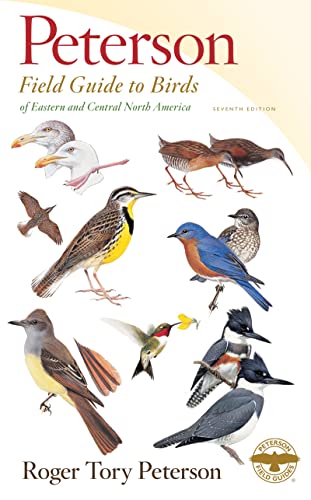
- Peterson identification system
- Updated range maps and text
- Revised bird illustrations
Best For: Regional birders at any experience level
Built-World Explorer

- Illustrated infrastructure guide
- Accessible engineering explanations
- Covers roads, bridges, utilities, and more
Best For: Curious travelers and non-engineers
Medicinal Plant Specialist
Peterson Medicinal Plants & Herbs

- Covers 530+ medicinal plants
- 700+ identification images
- Includes uses, habitats, and warnings
Best For: Regional plant enthusiasts and careful field study
Costa Rica Birding Companion

- Covers 903 Costa Rican species
- Full-color plumage and flight illustrations
- Updated maps and quick-find index
Best For: Birders traveling or birding in Costa Rica
Top Mushroom Pick
Peterson Field Guide to Mushrooms

- Beginner-friendly visual identification
- Covers common edible and poisonous species
- Portable format with expanded illustrations
Best For: Mushroom hunters and naturalists seeking a North American field reference
Top Architecture Reference
A Field Guide to American Houses

- Extensive 880-page revised edition
- 600 new photos and line drawings
- Adds neighborhoods and modern construction
Best For: Readers identifying American house styles and architectural details
Top Moth-Watching Guide

- Covers thousands of northeastern species
- Includes photos, range maps, and season graphs
- Uses the Peterson arrow identification system
Best For: Moth-watchers exploring northeastern North America
Best Comprehensive Foraging Guide
Sam Thayer's Edible Wild Plants Guide

- 700 edible species with color photos and range maps
- Covers harvest, habitat, preparation, and toxic plants
- Detailed 736-page regional reference
Best For: Beginning and advanced foragers in Eastern and Central North America
Best Illustrated Bird Reference

- Covers over 800 species across North America
- Features illustrations, range maps, and sonograms
- Includes check boxes and color tabs for field use
Best For: Beginning and experienced birders needing broad coverage
Best Beginner Insect Guide
Peterson First Guide to Insects

- Simplifies identification for new naturalists
- Focuses on common North American insects
- Compact 128-page format for young readers
Best For: Children, families, and first-time insect observers
Classic Birding Pick – Peterson Birds of Eastern & Central North America
For shoppers comparing illustrated field guide books, this seventh-edition Peterson guide is a practical choice for identifying birds across Eastern and Central North America. Its identification system, updated range maps, revised text, and refreshed illustrations make it useful for both casual backyard birding and more advanced study.
Best For: Birders who want a region-specific guide with a well-known identification system and updated distribution information.
Pros:
- Uses Peterson’s established identification system to emphasize key markings.
- Includes updated range maps covering distribution and migration routes.
- Features revised text and illustrations reflecting current ornithological knowledge.
- Suitable for beginners through expert birders.
Cons:
- Its coverage is focused on Eastern and Central North America rather than the entire continent.
- At 392 pages, it may be more substantial than a minimalist pocket guide.
This is a strong all-purpose option for regional bird identification, especially if clear visual cues and current range information matter most.
Built-World Explorer – Engineering in Plain Sight
Engineering in Plain Sight: An Illustrated Field Guide to the Constructed Environment
Check Price On AmazonAmong illustrated field guide books, this title takes an unusual approach by applying the field-guide format to infrastructure. It explains recognizable features of roads, bridges, railways, tunnels, waterways, and electrical grids through accessible text and colorful illustrations, making it a useful companion for curious travelers and everyday observers.
Best For: Readers who want to understand how constructed environments work without needing an engineering background.
Pros:
- Explains human-made structures in approachable, nontechnical language.
- Uses colorful illustrations to show how infrastructure is designed and constructed.
- Covers varied subjects, including roadways, railways, bridges, tunnels, waterways, and electrical grids.
- Works well as an engaging road trip companion.
Cons:
- Its focus is the built environment rather than plants, animals, or natural history.
- At 8.31 by 10.31 inches and 2.14 pounds, it is less portable than a small pocket guide.
This is an especially distinctive pick for readers who enjoy learning from what they see around them and want a visually rich introduction to everyday engineering.
Medicinal Plant Specialist – Peterson Medicinal Plants & Herbs
For readers seeking illustrated field guide books focused on useful plants, this third-edition Peterson guide combines concise identification details with more than 700 images. It covers over 530 medicinal plants in Eastern and Central North America, while including habitats, uses, and warnings to support careful field reference.
Best For: Nature enthusiasts who want a regional medicinal-plant reference with visual identification aids and safety information.
Pros:
- Covers more than 530 significant medicinal plants, including native and introduced species.
- Includes over 700 images and a color-based organization system.
- Provides key traits, habitats, uses, and warnings for each subject.
- Designed to make identification fast and easy.
Cons:
- Its geographic coverage is limited to Eastern and Central North America.
- The subject matter includes medicinal uses and warnings, so it requires careful reading rather than casual identification alone.
- At 480 pages, it is a detailed reference rather than a lightweight booklet.
This guide stands out for combining broad plant coverage with visual organization and warnings, making it a useful reference for informed nature study.
Costa Rica Birding Companion – The Birds of Costa Rica
Travelers comparing illustrated field guide books for Costa Rica will find this compact guide tailored to the country’s varied habitats. It describes and illustrates all 903 species known from Costa Rica, with updated range maps, flight views where useful, and plumage details for males, females, and juveniles.
Best For: Novice and experienced birders identifying Costa Rican birds in the field.
Pros:
- Covers all 903 species definitely known from Costa Rica, including pelagics and Cocos Island species.
- Features detailed full-color illustrations showing important identification features.
- Includes more than 360 new illustrations, including 64 species illustrated for the first time in this edition.
- Offers updated range maps, nomenclature, organization, and a quick-find index.
Cons:
- Its coverage is specialized for Costa Rica rather than general North American birding.
- With 440 pages, it may be more guide than a casual traveler needs.
This is a particularly strong destination guide for Costa Rica, balancing comprehensive species coverage with portable dimensions and field-oriented visual detail.
Top Mushroom Pick – Peterson Field Guide to Mushrooms
For readers comparing illustrated field guide books for mushroom hunting, this second-edition Peterson guide combines portable sizing with broad North American coverage. Its identification method focuses on visible key features rather than microscopes or technical vocabulary, making it a practical reference for beginners and experienced naturalists alike.
Best For: Mushroom hunters, naturalists, and cooks who want a portable identification guide with coverage of common edible and poisonous species.
Pros:
- Covers toadstools, truffles, boletes, morels, corals, puffballs, earthstars, and other mushroom groups.
- Uses a beginner-friendly identification approach based on observable features.
- Includes original watercolors plus hundreds of additional illustrations.
- Portable 4.5-by-7.25-inch format fits easily in a backpack.
Cons:
- At 416 pages, it may be more detail than casual readers need.
- Its North American focus may be less useful for readers foraging elsewhere.
This is a strong all-around choice when visual identification, portability, and safe-foraging context matter. As with any mushroom reference, use the book as an identification aid rather than relying on a single source before eating wild fungi.
Top Architecture Reference – A Field Guide to American Houses
Among illustrated field guide books, this expanded guide stands out for readers interested in identifying and understanding American domestic architecture. It combines descriptions with 600 new photographs and line drawings, while adding neighborhood coverage, more house-style categories, and discussion of modern construction approaches.
Best For: Architecture enthusiasts, homeowners, preservationists, and travelers who want a comprehensive reference to American houses and neighborhoods.
Pros:
- Provides extensive coverage in an 880-page revised edition.
- Adds expanded and entirely new categories of house styles.
- Includes 600 new photographs and line drawings for visual comparison.
- Covers neighborhoods and approaches to construction in the 20th and 21st centuries.
Cons:
- At 4.16 pounds, it is substantially less portable than a typical trail guide.
- Its depth may feel excessive for readers seeking only a quick style overview.
This is the most comprehensive option in the group for studying built environments, but its large format and weight make it better suited to home or car-based reference than casual backpacking.
Top Moth-Watching Guide – Peterson Field Guide to Moths
For moth enthusiasts seeking illustrated field guide books, this Peterson guide offers coverage of thousands of species in northeastern North America. Clear photographs, range maps, season graphs, and the Peterson arrow system help readers compare species and understand when and where to look.
Best For: Beginning and experienced moth-watchers in the northeastern United States and adjacent areas who want a detailed identification aid.
Pros:
- Covers the region’s wide variety of moth species, from colorful large moths to tiny species.
- Uses clear photographs and the Peterson arrow system for identification.
- Includes range maps and season graphs showing where and when species may be found.
- Offers tips for attracting and identifying moths.
Cons:
- Its geographic focus limits usefulness outside northeastern North America.
- At 624 pages, it may be bulky for lightweight field trips.
This is a detailed regional choice for moth observation, especially if you value seasonal and range information alongside photographic identification. It is most useful when paired with regular nighttime observation in the covered region.
Best Comprehensive Foraging Guide – Sam Thayer's Edible Wild Plants Guide
Sam Thayer's Field Guide to Edible Wild Plants: of Eastern and Central North America
Check Price On AmazonFor readers seeking illustrated field guide books with serious foraging depth, Sam Thayer’s guide covers edible wild plants across Eastern and Central North America. Its everyday-language identification system, range maps, and sharp color photos make this a substantial resource for both newer and experienced foragers.
Best For: Foragers who want detailed regional coverage, practical harvest information, and help identifying edible and toxic plants.
Pros:
- Covers 700 edible species with sharp color photos and range maps.
- Includes habitat, conservation, harvest seasons, edible parts, and preparation guidance.
- Uses accessible descriptions and can complement phone-based identification apps.
Cons:
- At 736 pages and 3.4 pounds, it is relatively substantial for carrying outdoors.
- Its focus is Eastern and Central North America rather than nationwide coverage.
This is the strongest choice here for readers who want a comprehensive, food-focused reference rather than a lightweight pocket guide. Use its identification information carefully and confirm positive identification before eating any wild plant.
Best Illustrated Bird Reference – Birds of North America
Birds of North America: A Guide To Field Identification (Golden Field Guide from St. Martin's Press)
Check Price On AmazonThis classic option among illustrated field guide books is designed for identifying North American birds in the field. It combines Arthur Singer’s illustrations with range maps, plumage details, sonograms, and notes on migration, feeding, and flight patterns.
Best For: Birders who want one compact reference covering more than 800 North American species.
Pros:
- Covers all of North America in one volume.
- Includes over 800 species, 600 range maps, and male, female, and juvenile plumage illustrations.
- Sonograms, color tabs, and check boxes support identification and record-keeping.
Cons:
- Published in 2001, so readers may prefer to check whether classifications remain current.
- Its 360-page format offers less space than a larger specialist reference.
With broad coverage and a portable 4.5-by-7.5-inch format, this is a practical general birding companion. The combination of visual identification, song information, and checklists gives beginners and experienced birders several ways to narrow down a sighting.
Best Beginner Insect Guide – Peterson First Guide to Insects
For young naturalists and first-time explorers, this compact choice among illustrated field guide books simplifies insect identification without the bulk of a full-sized reference. It focuses on common North American insects and is designed to make getting started in the field approachable.
Best For: Children, families, and beginner naturalists learning to recognize common insects.
Pros:
- Condensed format focuses on insects beginners are most likely to see.
- Small, lightweight design is easy to carry outdoors.
- Grade level of 5–7 makes it suitable for young naturalists.
Cons:
- Its simplified coverage is less comprehensive than a full-sized Peterson guide.
- At 128 pages, it may not cover less common insects in depth.
This is a sensible starter guide when portability and ease of use matter more than exhaustive coverage. It can help a new observer build confidence before moving on to a more advanced field guide.
How We Picked These Illustrated Field Guide Books
We selected books that offer a useful balance of identification accuracy, visual clarity, regional relevance, portability, and practical field value. The list spans birds, insects, moths, mushrooms, medicinal plants, edible wild plants, architecture, and engineering so shoppers can choose a guide suited to their interests rather than settling for a general reference.
We also considered whether each book is designed for beginners or experienced users, how clearly it organizes species or subjects, and whether features such as range maps, comparison illustrations, habitat notes, and identification keys support real-world use.
Quick Comparison
- Best for general birding: Peterson’s eastern and central North America bird guide.
- Best for beginners: Peterson First Guide to Insects and the Golden bird guide.
- Best for foraging: The mushroom and edible or medicinal plant references.
- Best for regional travel: The Costa Rica bird guide.
- Best for built environments: Engineering in Plain Sight and A Field Guide to American Houses.
- Best for specialized study: The moth guide, with its extensive northeastern coverage.
Key Buying Factors for Illustrated Field Guide Books
Subject and Geographic Coverage
Start with what you want to identify and where you’ll use the book. A regional guide is usually more useful than a broad national reference because it limits the number of likely species and provides more relevant range information.
Illustrations and Identification Details
Look for accurate illustrations or photographs, clear labels, comparison plates, habitat descriptions, seasonal information, and distinguishing features. For birds and insects, visual details such as shape, markings, posture, and flight pattern can matter as much as color.
Experience Level and Layout
Beginners benefit from simplified entries, common-species coverage, and straightforward organization. More advanced readers may prefer comprehensive species lists, technical terminology, detailed keys, and notes on variation. A logical layout reduces the time spent searching in the field.
Portability and Durability
Consider trim size, weight, binding, and whether you’ll carry the book on hikes. A compact guide is easier to use outdoors, while a larger volume may provide more illustrations and detail for home study. A book that stays open easily can also be more practical than one with a smaller footprint.
Safety and Responsible Identification
For mushrooms, medicinal plants, and edible wild plants, treat any book as an identification aid—not a substitute for expert confirmation. Avoid consuming or using a specimen unless you are completely certain of its identity and understand relevant safety risks.
Who Should Buy Which Illustrated Field Guide Books?
Choose the eastern and central bird guide or the Golden bird guide for everyday birdwatching. Beginners should start with the simplified insect reference, while dedicated moth enthusiasts will get more value from the specialized northeastern volume. Foragers and plant learners should compare the edible, medicinal, and mushroom guides according to their intended use and region.
Travelers visiting Costa Rica should prioritize the region-specific bird guide. Readers interested in cities, structures, and cultural landscapes should choose the engineering or American houses guide. If you want one of the most useful Illustrated Field Guide Books for a focused hobby, match the book’s regional scope and subject depth to how—and where—you plan to use it.