The best guided creative writing workbooks turn a blank page into a manageable next step. With prompts, exercises, planning tools, and craft lessons, they help writers build a regular practice while developing stronger ideas and storytelling skills.
This roundup includes options for fiction writers, poets, screenwriters, children, and anyone who wants structured creative practice. Whether you need help generating ideas or organizing a complete novel, there is a workbook here to match your goals.
Best 10 Guided Creative Writing Workbooks Picks for 2026
Best Overall Guided Practice
The Ultimate Creative Writing Workbook

- 100 original prompts with guided exercises
- Two blank pages after every prompt
- Suitable for fiction, memoir, and more
Best For: Flexible daily writing practice and creative breakthroughs
Best for Story Structure
The Only Plotting Workbook You'll Ever Need

- Covers 10 plotting methods
- Includes 55 scene worksheets
- Useful from planning through editing
Best For: Organizing novels or screenplays with detailed plot tools
Best Comprehensive Course
The Creative Writing Coursebook

- Advice and exercises from 40 authors
- Covers gathering, shaping, and finishing
- Includes fiction and poetry guidance
Best For: Structured learning and skill development across the writing process
Best for Quick Daily Practice
5-Minute Daily Writing Prompts

- Includes 501 short writing prompts
- Designed for five-minute sessions
- Optional prompts expand promising ideas
Best For: Building a simple, consistent writing habit
Best for Screenplay Structure

- Step-by-step screenplay exercises
- Covers structure, character, dialogue, and revision
- Includes analysis of notable screenplays
Best For: Aspiring and working screenwriters
Best for Prompt-Driven Practice
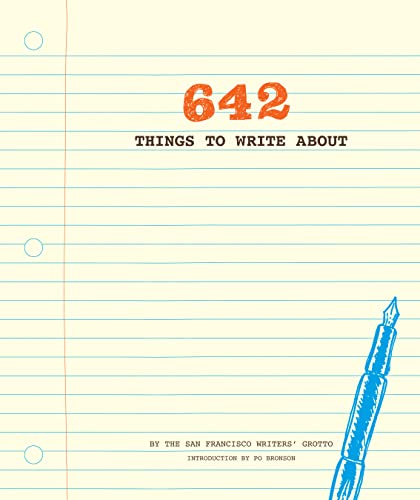
- Includes 642 creative writing prompts
- Offers humorous, imaginative, and philosophical exercises
- Provides space to write responses
Best For: Writers overcoming blocks or building a regular practice
Best for Novel Planning

- Guides a novel from idea to first draft
- Covers setting, characters, and story building
- Created by a fiction editor
Best For: Writers planning a complete novel manuscript
Playful Craft Builder

- 50+ exercises for ideas and craft
- Covers character, structure, and technique
- Includes writer-mindset guidance
Best For: Screenwriters, playwrights, and fiction writers seeking structured craft practice
Kid-Friendly Story Starter

- Includes 100 short-fiction prompts
- Designed for ages 8 to 12
- Builds plots, characters, and settings
Best For: Young writers who want guided short-fiction practice
Creative Variety Pick
The Big Creative Writing Activity Book

- Covers poetry, comics, journaling, and stories
- Adds word games and viewpoint challenges
- Designed to build confidence and expression
Best For: Ages 8 to 12 who enjoy varied, interactive writing activities
Best Overall Guided Practice – The Ultimate Creative Writing Workbook
For writers seeking guided creative writing workbooks with room to actually draft, this 209-page workbook combines 100 original prompts with a specific exercise for each one. Its two blank pages after every prompt make it practical for building a regular writing habit, developing ideas, or working through writer’s block.
Best For: Beginners, experienced writers, students, teachers, and anyone practicing fiction, memoir, journaling, or creative nonfiction.
Pros:
- Includes 100 distinct writing prompts without repeats or filler.
- Guided exercises address character, setting, voice, and narrative structure.
- Two pages of writing space follow each prompt.
- Works for self-study or classroom use.
Cons:
- Its broad genre coverage may feel less specialized for writers focused only on one form.
- The 6-by-9-inch format may provide less workspace than a larger workbook.
This is a well-rounded choice when you want structured inspiration without giving up flexibility. The combination of prompts, exercises, and dedicated space makes it especially useful for consistent daily practice.
Best for Story Structure – The Only Plotting Workbook You'll Ever Need
The Only Plotting Workbook You'll Ever Need: Your Story Arc Journal (Series Bibles for Writers)
Check Price On AmazonAmong guided creative writing workbooks, this option is designed specifically for planning and auditing a novel or screenplay. It brings together 10 plotting methods, timelines, calendars, and 55 scene worksheets, giving writers a centralized place to organize plot threads from brainstorming through editing.
Best For: Novelists and screenwriters who want detailed help with story arcs, scene planning, timelines, and plot continuity.
Pros:
- Supports 10 different plotting methods.
- Includes timeline charts, calendar sheets, and scene maps.
- Provides 55 worksheets for developing purposeful scenes.
- Can be used before, during, and after drafting.
Cons:
- Its plot-centered format is less suited to freewriting or general prompt practice.
- The number of worksheets may feel extensive for writers who prefer minimal planning.
This workbook stands out for writers who need a robust planning system rather than a collection of standalone prompts. Its combination of structured methods and free-form space can help maintain direction while a story evolves.
Best Comprehensive Course – The Creative Writing Coursebook
The Creative Writing Coursebook: 40 Authors Share Advice and Exercises for Fiction and Poetry
Check Price On AmazonFor readers who prefer guided creative writing workbooks with broader instruction, this 416-page coursebook combines advice and exercises from 40 authors. It moves through gathering ideas, shaping fiction and poetry, and finishing work, making it suitable for both new writers and those refining completed pieces.
Best For: Aspiring fiction and poetry writers who want a structured, course-like approach for independent study or writing groups.
Pros:
- Contributions from 40 authors offer varied advice and experience.
- Organized around gathering, shaping, and finishing stages.
- Covers notes, observation, memory, structure, point of view, character, and setting.
- Includes guidance on critique, workshops, and finding publishers.
Cons:
- It is more instructional and reference-oriented than a blank-page journal.
- The wide range of contributors may create a less uniform learning experience.
This is a strong pick if you want a substantial learning resource rather than quick daily prompts. Its staged format gives writers a path from initial observations to revision and potential publication.
Best for Quick Daily Practice – 5-Minute Daily Writing Prompts
5-Minute Daily Writing Prompts: 501 Prompts to Unleash Creativity and Spark Inspiration
Check Price On AmazonIf you want guided creative writing workbooks that fit into a busy schedule, this prompt journal offers 501 short activities designed for five-minute sessions. The open-ended exercises cover varied genres and topics, while optional follow-up prompts let you expand an initial idea when you have more time.
Best For: Busy writers, beginners, and anyone building a consistent, low-pressure daily writing routine.
Pros:
- Provides 501 prompts for extensive variety.
- Exercises are designed to take about five minutes.
- Covers genres including poetry, science fiction, and dialogue.
- Optional continuation prompts support deeper exploration.
Cons:
- Short exercises may not provide the depth of a full story-planning workbook.
- Open-ended prompts offer less step-by-step instruction for writers seeking detailed guidance.
This journal is best when consistency matters more than long sessions. Its large prompt collection and optional extensions make it easy to start small while leaving room to develop the ideas that have potential.
Best for Screenplay Structure – The Screenwriter's Workbook
For writers specifically interested in film, television, or streaming scripts, this is one of the more structured guided creative writing workbooks in the roundup. Syd Field combines explanations, screenplay analysis, exercises, and step-by-step instruction around story structure, character, dialogue, and revision.
Best For: Aspiring and working screenwriters who want a systematic workbook focused on building and revising a screenplay.
Pros:
- Uses a hands-on, step-by-step approach to screenplay creation.
- Covers central ideas, narrative structure, characters, dialogue, and rewriting.
- Includes analysis of notable screenplays to clarify the core concepts.
- Addresses film, television, streaming, and related visual storytelling.
Cons:
- Its focus is screenwriting rather than general fiction or journaling.
- The systematic structure may feel less suitable for writers seeking an open-ended prompt book.
Choose this workbook if you want a guided process with a clear emphasis on screenplay fundamentals and revision. Its 320 pages provide room for a substantial, focused study of visual storytelling.
Best for Prompt-Driven Practice – 642 Things to Write About
642 Things to Write About: (Guided Journal, Creative Writing, Writing Prompt Journal)
Check Price On AmazonIf you want guided creative writing workbooks that make it easy to start writing immediately, 642 Things to Write About offers a large collection of playful prompts. Its exercises range from humorous and imaginative scenarios to philosophical reflections, with space to write directly in the journal.
Best For: Beginners and experienced writers who want varied prompts for overcoming writer’s block and practicing regularly.
Pros:
- Provides 642 prompts in a wide range of styles and moods.
- Includes space to respond directly in the book.
- Exercises can stretch imagination and encourage consistent writing.
- Works across writing levels and genres.
Cons:
- It is prompt-focused rather than a step-by-step guide to completing a novel or screenplay.
- The playful prompts may not suit writers looking for a highly technical curriculum.
This is the most flexible pick for short, low-pressure writing sessions. Consider it when variety and volume of prompts matter more to you than instruction in a single long-form writing format.
Best for Novel Planning – The Novel Writing Blueprint
For writers looking for guided creative writing workbooks centered on completing a novel, The Novel Writing Blueprint provides a focused planning path from initial idea to first draft. Created by a fiction editor, it addresses settings, believable characters, and story development in a 201-page workbook.
Best For: First-time novelists and experienced writers who want a structured plan for developing a complete manuscript.
Pros:
- Guides writers step by step from idea to first draft.
- Covers setting, character development, and story construction.
- Designed to help turn an idea into a complete manuscript.
- Suitable for both beginners and seasoned writers.
Cons:
- Its focus is novel writing, so it may be less useful for screenplay or short-prompt practice.
- At 201 pages, it offers less total material than some longer workbooks in this roundup.
This is a practical choice when your goal is a novel rather than general creative exploration. Its fiction-editor perspective and planning emphasis make it particularly useful for organizing story ideas before drafting.
Playful Craft Builder – Creative Writing Exercises
Creative Writing Exercises: Improve Your Craft Through Play (Screen and fiction writing craft)
Check Price On AmazonFor writers seeking guided creative writing workbooks beyond basic prompts, Creative Writing Exercises uses more than 50 themed activities to shake up the writing process. Its coverage of ideas, character, story world, stakes, structure, technique, and the writer’s mindset makes it a practical option for developing screen, stage, or fiction projects.
Best For: Beginner and experienced screenwriters, playwrights, and fiction writers who want structured exercises and fresh inspiration.
Pros:
- Includes more than 50 creative writing exercises.
- Covers core craft areas such as character, motivation, structure, and technique.
- Includes general tips and discussion of the writer’s mental health.
Cons:
- Its focus on screen and fiction craft may be less suitable for writers seeking poetry or nonfiction activities.
- Published in 2025, so its long-term reception may still be developing.
This is a strong pick when you want guided practice tied directly to storytelling craft rather than a workbook aimed only at generating random ideas.
Kid-Friendly Story Starter – Secrets of Storytelling
Secrets of Storytelling is one of the more accessible guided creative writing workbooks for children ages 8 to 12. It combines 100 short-fiction prompts with writing space, brainstorming activities, fill-in exercises, and practical tips for plots, characters, settings, writer’s block, and editing.
Best For: Children in roughly grades 3–7 who enjoy imaginative stories and need an inviting way to practice writing.
Pros:
- Offers 100 creative short-fiction prompts.
- Includes space for children to write directly in the workbook.
- Covers brainstorming, plot, character, setting, editing, and writer’s block.
- Uses fun activities and inspirational quotes to encourage creativity.
Cons:
- It is specifically designed for children, not advanced teen or adult writers.
- The focus is short fiction, so it may not suit children primarily interested in poetry or nonfiction.
Choose this workbook when a young writer benefits from abundant prompts and clear, age-appropriate support instead of an open-ended writing manual.
Creative Variety Pick – The Big Creative Writing Activity Book
For children who need variety to stay engaged, The Big Creative Writing Activity Book expands guided creative writing workbooks beyond standard prompts. Its activities span letters, journaling, poetry, comics, storytelling, word games, lists, and perspective challenges, combining structured guidance with room for personal expression.
Best For: Kids ages 8 to 12 who are building confidence and want to explore multiple forms of creative writing.
Pros:
- Includes activities across journaling, poetry, comics, letters, and storytelling.
- Uses perspective challenges to introduce different narrators and viewpoints.
- Features word games, puzzles, lists, and open-ended creative challenges.
- Encourages experimentation, confidence, and self-expression.
Cons:
- Its broad mix may feel less focused for children seeking a dedicated fiction-writing curriculum.
- The supplied details do not specify a separate answer key or parent teaching guide.
This is a flexible choice for reluctant or multi-interest writers who may respond better to changing formats than to a book built around traditional story prompts alone.
How We Picked These Guided Creative Writing Workbooks
We focused on workbooks that provide more than collections of inspirational quotes or unstructured prompts. Each selection offers a clear way to participate, whether through daily exercises, story-planning pages, craft instruction, guided questions, or age-appropriate creative challenges.
We also considered the writer’s likely goal: developing a habit, learning fundamentals, outlining a novel, shaping a screenplay, improving technique, or encouraging a child’s imagination. Variety matters because the best workbook is the one whose format fits how and why you write.
Quick Comparison
| Best For | Look For |
|---|---|
| Daily practice | Short prompts and repeatable exercises |
| Novel planning | Story arcs, character development, and outlining pages |
| Screenwriting | Script structure and step-by-step screenplay exercises |
| General craft | Lessons paired with practical fiction or poetry activities |
| Children | Simple instructions, playful prompts, and age-appropriate challenges |
Key Buying Factors for Guided Creative Writing Workbooks
Format and Time Commitment
Choose a workbook that suits your routine. Five-minute prompts are useful for consistent warmups, while a full planning workbook may require longer sessions. If you are easily overwhelmed, prioritize short, clearly defined activities.
Writing Focus
General prompt books encourage experimentation, but specialized workbooks can solve a particular problem. Look for plotting and blueprint resources when you need structure, craft-focused exercises when you want to improve technique, and screenwriting instruction when you are working in screenplay format.
Level of Guidance
Some books leave room for free exploration; others provide detailed explanations and sequential exercises. Beginners often benefit from explicit instruction, while experienced writers may prefer prompts that spark ideas without prescribing a process.
Age and Usability
For younger writers, confirm the recommended age range and look for readable directions, varied activities, and plenty of space to respond. Adult workbooks may assume familiarity with narrative terms such as conflict, scenes, or story arcs.
Who Should Buy Which Guided Creative Writing Workbooks?
Choose a daily prompt workbook if your main goal is building momentum or overcoming writer’s block. A plotting workbook or novel blueprint is better for writers developing a long-form project who need to organize characters, structure, and major story beats. Screenwriters should choose a resource specifically designed around screenplay conventions rather than adapting a general fiction guide.
For broad skill development, a coursebook or exercises collection can provide a useful mix of instruction and practice. Creative prompt journals suit writers who want low-pressure experimentation. Children and families should choose an age-appropriate activity workbook with playful challenges and clear instructions.
Before buying, check the page layout, writing space, edition details, and whether the exercises are intended to be completed in order. The right guided creative writing workbook should make writing easier to start and practical to continue.