The best illustrated adventure books turn memorable stories into immersive reading experiences, pairing strong narratives with artwork that helps readers picture every setting, character, and peril.
This roundup covers fantasy epics, classic children’s adventures, abridged introductions, collector-worthy editions, and illustrated stories suited to different ages and reading goals.
Best 10 Illustrated Adventure Books Picks for 2026
Classic Fantasy Gift Pick
The Hobbit Illustrated Edition

- Full-color art by Jemima Catlin
- Complete 384-page Tolkien adventure
- Substantial hardcover gift edition
Best For: Tolkien fans and fantasy gift buyers
Reading Practice Adventure

- Abridged language for young readers
- Includes questions and a glossary
- Illustrated hardback for ages 8–12
Best For: Classroom learning and guided reading
Collector’s Tolkien Set
Hobbit and Lord of the Rings Box Set

- Four hardcover books in one box
- Watercolors by Alan Lee
- Covers the complete Ring quest
Best For: Tolkien collectors and premium gift giving
Magical Series Starter
Harry Potter Illustrated Edition

- Over 100 full-color illustrations
- Deluxe hardcover with ribbon bookmark
- First book in the illustrated series
Best For: Young series starters and Harry Potter gifts
Best All-Around Collection

- Five classic adventure retellings
- Colorful illustrations for ages 7–10
- Includes author biographies
Best For: Younger readers exploring classic adventure stories
Best Collector's Set
Tom Sawyer and Huckleberry Finn

- Two unabridged Mark Twain novels
- Norman Rockwell illustrations
- Clothbound set with slipcase
Best For: Collectors and older readers of American classics
Best for Guided Reading
Illustrated Classics: Robinson Crusoe

- Abridged survival adventure
- Includes chapter review questions
- Designed for ages 8–13
Best For: Classroom reading and comprehension practice
Classic Mischief

- Abridged classic for ages 7+
- Adventure, mystery, and humor
- Illustrations and review questions
Best For: Young readers exploring classic adventure fiction
Earthbound Expedition
Journey to the Center of the Earth

- Abridged classic for ages 8–12
- Science fiction and exploration
- Illustrations and review questions
Best For: Middle-grade readers who enjoy thrilling expeditions
Detective Deduction
The Adventures of Sherlock Holmes
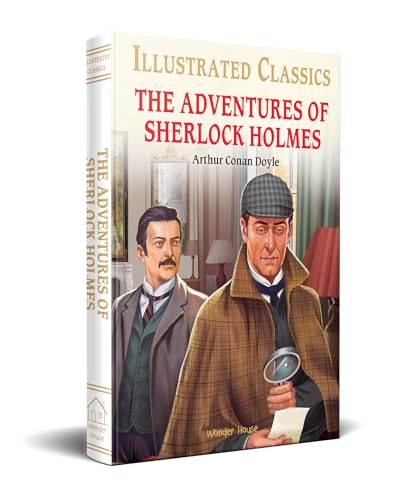
- Twelve abridged detective stories
- Clues, suspense, and deductions
- Designed for ages 8–12
Best For: Young readers who enjoy classic mystery fiction
Classic Fantasy Gift Pick – The Hobbit Illustrated Edition
The Hobbit: Illustrated Edition: An Illustrated Edition of Tolkien's Classic Epic Fantasy Adventure
Check Price On AmazonFor readers seeking illustrated adventure books with a timeless fantasy story, this hardcover edition of The Hobbit combines Tolkien’s complete tale with full-color artwork by Jemima Catlin. It follows Bilbo Baggins from his quiet life in the Shire to a dangerous quest involving dwarves, Gandalf, and Smaug.
Best For: Families, Tolkien fans, and readers looking for a substantial illustrated fantasy gift.
Pros:
- Full-color illustrations bring Middle-earth and its characters to life.
- Includes the complete classic adventure in a substantial 384-page edition.
- Hardcover gift format with an heirloom-style presentation.
Cons:
- At 2.65 pounds, it is relatively heavy for younger readers.
- The reading-age information supplied by customers is broad, so independent reading suitability may vary.
This is a strong choice when presentation matters as much as the story. Choose it for a collectible single-volume edition of Tolkien’s adventure rather than a compact or abridged retelling.
Reading Practice Adventure – Illustrated Robin Hood
Illustrated Classics - The Adventures of Robin Hood: Abridged Novels With Review Questions
Check Price On AmazonThis edition suits families and teachers comparing illustrated adventure books for children. It presents Robin Hood’s classic exploits in abridged, accessible language, supported by illustrations, chapter-end questions, and a glossary for reading practice.
Best For: Children ages 8–12, classroom use, independent reading, and school libraries.
Pros:
- Child-friendly abridged retelling of the Robin Hood adventures.
- Chapter-end comprehension questions encourage reflection and discussion.
- Includes illustrations and a glossary to support engagement and vocabulary building.
- Hardback construction is designed for repeated reading.
Cons:
- Because it is abridged, it does not provide the full original text.
- The educational features may feel less suitable for readers seeking an uninterrupted story.
For a young reader’s first introduction to Robin Hood, this edition offers more guidance than a standard storybook. Its questions and glossary make it particularly practical for schoolwork or supported reading.
Collector’s Tolkien Set – Hobbit and Lord of the Rings Box Set
The Hobbit & The Lord of the Rings Illustrated by Alan Lee Box Set: Illustrated by Alan Lee
Check Price On AmazonReaders building a premium collection of illustrated adventure books may prefer this four-book boxed set. It brings together The Hobbit and the three Lord of the Rings novels, each illustrated throughout with Alan Lee’s watercolor artwork.
Best For: Dedicated Tolkien readers, collectors, and gift buyers seeking the complete illustrated journey.
Pros:
- Includes four hardcover books covering both Tolkien stories.
- Features watercolor illustrations by acclaimed artist Alan Lee.
- Follows the story from Bilbo’s adventure through the quest for the Ring.
- Boxed-set format creates a strong display and gift presentation.
Cons:
- At 9.27 pounds, the set is heavy and not especially portable.
- Its premium boxed format may be more than casual readers need.
- The supplied listing gives a one-page print-length detail, so exact pagination is unclear.
This is the most comprehensive option in the roundup for Tolkien enthusiasts. Select it when you want the full four-book collection and artwork in one coordinated set, rather than a single illustrated novel.
Magical Series Starter – Harry Potter Illustrated Edition
Harry Potter and the Sorcerer's Stone: The Illustrated Edition (Harry Potter, Book 1)
Check Price On AmazonFor families choosing illustrated adventure books that can launch a longer series, this edition of Harry Potter and the Sorcerer’s Stone pairs the opening story with more than 100 full-color illustrations by Jim Kay. The deluxe hardcover follows Harry from his difficult home life to his first invitation into the wizarding world.
Best For: Children beginning the Harry Potter series, longtime fans, and memorable book gifts.
Pros:
- More than 100 full-color illustrations add visual depth to the story.
- Deluxe jacketed hardcover includes illustrated endpapers and a ribbon bookmark.
- Works as an accessible entry point to the six-book illustrated-edition series.
- Suitable as a keepsake gift for children and fans of different ages.
Cons:
- This volume contains only the first book in the series.
- Its 2.31-pound hardcover format is less convenient for travel.
- The lavish presentation may be unnecessary for readers who only want a basic reading copy.
This edition is a compelling starting point for readers who value artwork and gift-worthy design. It is especially practical when you want to introduce the series with a visually rich first volume.
Best All-Around Collection – Illustrated Adventure Stories
For readers seeking illustrated adventure books with variety, Illustrated Adventure Stories offers five classic tales retold for younger readers. Colorful Usborne illustrations, accessible storytelling, and author biographies make this a practical introduction to classic adventure literature for children ages 7–10.
Best For: Children ages 7–10 who enjoy varied classic adventures and illustrated chapter books.
Pros:
- Includes five adventure classics, including Don Quixote, The 39 Steps, and The Three Musketeers.
- Colorful illustrations support younger readers.
- Author biographies add useful literary context.
Cons:
- These are retellings rather than the complete original texts.
- The collection may be less suitable for older readers seeking unabridged classics.
This is a strong value for families wanting several illustrated adventures in one volume, particularly when reading accessibility matters more than original-text completeness.
Best Collector's Set – Tom Sawyer and Huckleberry Finn
For collectors and older readers comparing illustrated adventure books, this Norman Rockwell edition presents Mark Twain’s The Adventures of Tom Sawyer and The Adventures of Huckleberry Finn in a two-volume clothbound set. It combines unabridged texts with full-color paintings, pen-and-ink drawings, and a slipcase.
Best For: Teen readers, collectors, and families seeking a presentation-quality edition of two American classics.
Pros:
- Includes both Twain novels in unabridged, unedited form.
- Features Norman Rockwell’s full-color paintings and pen-and-ink illustrations.
- Clothbound two-volume format with slipcase suits display and gifting.
- Introductions include rarely seen preliminary sketches.
Cons:
- The complete texts may be demanding for younger or less experienced readers.
- Its collector-focused format is less portable than a single-volume edition.
This set is the premium choice for readers who want authentic classic texts alongside substantial American artwork, rather than an abridged children’s adaptation.
Best for Guided Reading – Illustrated Classics: Robinson Crusoe
For children who enjoy survival stories, Illustrated Classics – Robinson Crusoe is one of the more study-friendly illustrated adventure books. This abridged edition uses accessible language, vivid illustrations, and chapter-based review questions to support comprehension for readers ages 8–13.
Best For: Children ages 8–13, classroom reading, home libraries, and literature study.
Pros:
- Focuses on shipwreck, survival, exploration, and discovery.
- Illustrations help bring Crusoe’s island experience to life.
- Review questions support comprehension and discussion.
- Introduces themes including resilience, problem-solving, and perseverance.
Cons:
- It is an abridged retelling, not Defoe’s complete original novel.
- Review questions may feel less engaging for purely recreational reading.
This edition is a practical pick when an adventure book needs to serve both entertainment and learning, especially for guided reading or classroom use.
Classic Mischief – The Adventures of Tom Sawyer
For readers seeking illustrated adventure books, this abridged edition of Mark Twain’s classic offers an accessible introduction to Tom Sawyer’s mischievous world. Its combination of humor, friendship, mystery, suspense, and illustrations makes it a practical choice for independent reading, classroom use, or a young reader’s home library.
Best For: Children ages 7+ who enjoy classic adventures, mystery, coming-of-age stories, and illustrated editions.
Pros:
- Abridged storytelling is designed for young readers.
- Blends adventure, humor, friendship, and suspense.
- Illustrations help bring Tom Sawyer’s world to life.
- Review questions support reading comprehension and discussion.
Cons:
- The abridged format leaves out material from the full novel.
- The murder-witnessing plot may suit readers comfortable with mild suspense.
With 240 pages and an accessible presentation, this hardback is a strong pick for introducing middle-grade readers to an American literary classic without requiring the full original text.
Earthbound Expedition – Journey to the Center of the Earth
Illustrated Classics - Journey To The Center of The Earth: Abridged Novels With Review Questions
Check Price On AmazonThis illustrated adventure book retells Jules Verne’s Journey to the Centre of the Earth for middle-grade readers. The fast-moving expedition combines science fiction, fantasy, dangerous obstacles, and discoveries, while illustrations and review questions make the classic easier to approach.
Best For: Ages 8–12, classroom or independent reading, and young readers interested in exploration, science fiction, and classic literature.
Pros:
- Action-packed plot follows an expedition beneath the Earth.
- Combines science, mystery, fantasy, and suspense.
- Illustrations make the imaginative settings more accessible.
- Review questions can support comprehension and classroom discussion.
Cons:
- The abridged edition is not the complete original novel.
- Its perilous expedition may be intense for more sensitive readers.
At 240 pages, this edition offers enough substance for middle-grade reading while keeping Verne’s underground journey focused and approachable for young adventure fans.
Detective Deduction – The Adventures of Sherlock Holmes
Among illustrated adventure books, this abridged Sherlock Holmes collection is a mystery-focused option for young readers. It presents twelve cases involving clues, disguises, thefts, murders, and deductions, introducing the detective duo of Holmes and Dr. Watson in an accessible classic format.
Best For: Readers ages 8–12 who enjoy detective fiction, suspense, logic-based mysteries, and classic literature.
Pros:
- Includes twelve separate detective stories.
- Builds suspense through clues, puzzles, and deductions.
- Introduces memorable characters and Victorian London.
- Abridged presentation suits young classic-fiction readers.
Cons:
- The abridged format omits details from the original stories.
- Murder and crime themes may not appeal to every young reader.
This 240-page collection works well when a reader prefers shorter mysteries over one continuous adventure, offering repeated opportunities to follow clues and consider Holmes’s solutions.
How We Picked These Illustrated Adventure Books
We selected books that combine a recognizable adventure story with meaningful visual presentation. The list includes illustrated editions of major fantasy titles, classic novels adapted for younger readers, collections of shorter adventures, and premium formats intended for display or gifting.
We also considered reading level, artwork, edition format, story length, educational features, and audience. Review questions and abridged text can make classic literature more approachable, while complete editions and illustrated box sets are better suited to experienced readers and collectors.
Quick Comparison
- Best overall fantasy experience: The Hobbit: Illustrated Edition
- Best premium collection: The Hobbit & The Lord of the Rings Illustrated by Alan Lee Box Set
- Best for younger fantasy readers: Harry Potter and the Sorcerer’s Stone: The Illustrated Edition
- Best for classic introductions: The abridged Robin Hood, Robinson Crusoe, and Journey to the Center of the Earth editions
- Best for classic American adventure: The Norman Rockwell collector’s edition of Tom Sawyer and Huckleberry Finn
- Best for mystery fans: The illustrated abridged edition of The Adventures of Sherlock Holmes
Key Buying Factors for Illustrated Adventure Books
Age and Reading Level
Check whether the book is complete, abridged, or adapted. Abridged classics with review questions are often useful for children, reluctant readers, classroom assignments, and English-language learners. Older or advanced readers may prefer unabridged text and longer narratives.
Artwork and Illustration Style
Illustrations vary from occasional spot art to full-page paintings and collector-quality plates. Look for a visual style that matches the reader’s taste: cinematic fantasy art, traditional storybook drawings, historical artwork, or highly detailed character and setting illustrations.
Format, Size, and Durability
Hardcovers and boxed sets make attractive gifts and are generally better for long-term collections. Consider shelf space, page size, binding quality, and portability. Large illustrated editions offer a richer visual experience but may be less convenient for travel.
Educational Value
Review questions can support comprehension and discussion, while classic stories introduce readers to historical settings, vocabulary, moral choices, and literary themes. Choose supporting features that fit the reader’s purpose rather than assuming every edition is equally instructional.
Who Should Buy Which Illustrated Adventure Books?
Choose The Hobbit or the Alan Lee box set for readers who want expansive fantasy worlds and richly rendered Middle-earth artwork. The Harry Potter illustrated edition is a strong choice for younger fantasy fans who benefit from visual storytelling and a familiar coming-of-age adventure.
For first introductions to classic literature, the abridged Robin Hood, Robinson Crusoe, Journey to the Center of the Earth, and Sherlock Holmes editions offer more accessible entry points. Readers interested in American classics should consider the Norman Rockwell Tom Sawyer and Huckleberry Finn collection, while a general anthology such as Illustrated Adventure Stories suits readers who prefer variety.
Ultimately, the right illustrated adventure book depends on the reader’s age, attention span, preferred genre, and whether the priority is independent reading, family sharing, school use, or collecting. Match the edition to that purpose, then prioritize artwork and format that will encourage the book to be read repeatedly.