The best storytelling card sets for language learning turn vocabulary practice into an active speaking, sequencing, and comprehension activity. With the right deck, children can build sentences, retell events, interpret pictures, and gain confidence using new words.
This roundup compares 10 options for classrooms, ESL instruction, speech therapy, special education, homeschooling, and early literacy. We focus on card design, age suitability, sequencing support, storytelling flexibility, and how easily each set fits into real lessons or guided practice.
Best 10 Storytelling Card Sets for Language Learning Picks for 2026
Best Overall
Creative Storytelling Cards for Classrooms

- 100 cards with 80 illustrated and 20 blank prompts
- 65+ activities for vocabulary and narrative practice
- Useful for ESL, speech therapy, and diverse classrooms
Best For: Teachers needing a flexible, reusable language-learning set
Best for Preschool Story Play

- 36 illustrated cards for characters and story settings
- Designed for ages 3+ and pre-literacy development
- Made with 90% recycled materials
Best For: Young children developing early vocabulary and narrative skills
Best for Speech Therapy

- Picture sequences support structured storytelling practice
- Targets language, reasoning, and sentence-building skills
- Laminated cards work with dry-erase markers
Best For: Therapy and education settings with specific language goals
Best Themed Option
Fairytale Mix Ups Create a Story

- 36 cards feature fairytale characters and story elements
- Encourages narrative sequencing and conversation
- Suitable for ages 3+ and screen-free play
Best For: Fairytale-loving children and family or classroom storytelling
Versatile Therapy Pick
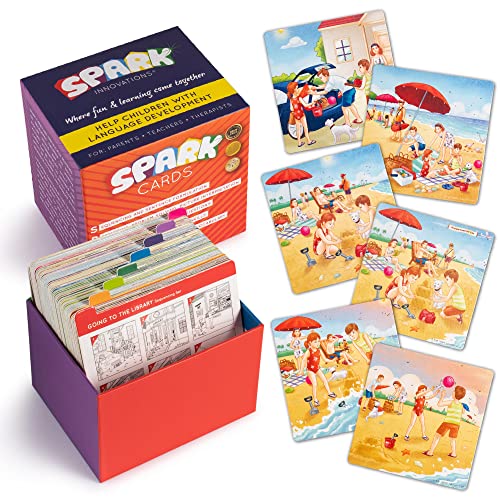
- Targets sequencing, vocabulary, and sentence building
- Large laminated cards with dry-erase compatibility
- Includes adaptable prompts and a user manual
Best For: Speech therapy, ESL practice, classrooms, and homeschooling
Creative Storytelling Choice

- 36 illustrated cards support open-ended stories
- Builds imagination, vocabulary, and narrative skills
- Uses 90% recycled materials and vegetable-based inks
Best For: Preschool learners, family storytelling, and classroom discussion
Independent Learning Pick
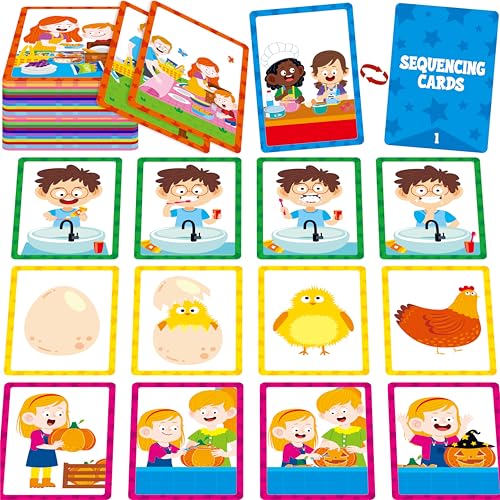
- 72 cards create 18 four-step sequences
- Color coding and numbered backs aid self-checking
- Laminated cards suit preschool and therapy use
Best For: Preschool sequencing, ESL, speech therapy, and autism support
Creative Story Starter

- 36 illustrated story-building cards
- Supports sequencing and verbal storytelling
- Made with 90% recycled materials
Best For: Pre-literacy storytelling and imaginative language practice
Everyday Vocabulary Builder
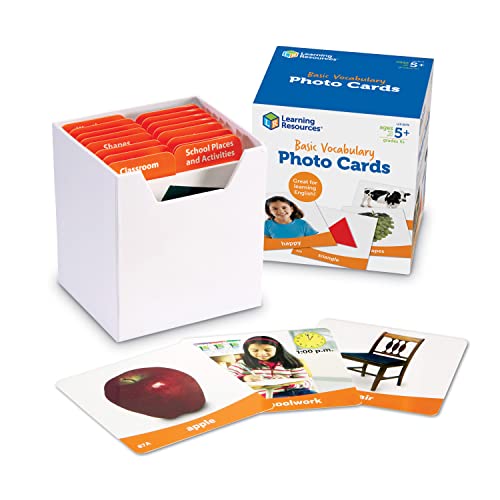
- 156 cards across 16 everyday themes
- Double-sided picture and writing practice
- Supports ESL, speech, and early literacy
Best For: Structured vocabulary and language development practice
Guided Sequencing Practice

- 50 cards forming 10 five-card stories
- Builds sentences, retelling, and inferencing
- Includes a 36-page instructional manual
Best For: Speech therapy and structured story sequencing
Best Overall – Creative Storytelling Cards for Classrooms
For educators seeking storytelling card sets for language learning, this 100-card collection offers a particularly flexible classroom option. It combines 80 illustrated prompts with 20 customizable blank cards, making it easy to adjust activities for different language levels, lesson goals, or group sizes.
Best For: ESL classrooms, speech therapy, multilingual groups, and teachers who want a reusable, low-prep storytelling resource.
Pros:
- Includes 80 illustrated cards plus 20 blank cards for customization.
- Supports vocabulary, grammar, narrative skills, communication, empathy, and comprehension.
- Offers 65+ ready-to-play activities for short practice sessions or full lessons.
- Linen-finish cardstock is designed for repeated classroom use.
Cons:
- The set may offer more cards and activities than very young learners need.
- Its 3-by-5-inch format may be less convenient for large-group viewing than oversized cards.
This is the most adaptable choice in the group, especially when one set needs to serve multiple learners and teaching contexts. The blank cards and broad language-learning focus give it more long-term classroom versatility than a themed preschool deck.
Best for Preschool Story Play – Animal Village Create a Story
Animal Village is a simple, approachable option among storytelling card sets for language learning, particularly for preschoolers. Its 36 illustrated cards feature animals, settings, and props that children can connect into original stories during individual play, family activities, or classroom discussions.
Best For: Preschool learners ages 3 and up who are building vocabulary, conversation skills, imagination, and early narrative abilities.
Pros:
- Large illustrated cards provide characters, locations, and props for open-ended stories.
- Supports conversation, social interaction, sequencing, and pre-literacy development.
- Works for solo play, family storytelling, or classroom narrative activities.
- Uses 90% recycled materials and vegetable-based inks.
Cons:
- With 36 cards, it offers less customization and variety than larger classroom sets.
- The animal-village theme may be less suitable for older students or advanced language goals.
This deck is best viewed as an early storytelling prompt rather than a structured speech-therapy program. The clear illustrations and familiar animal theme make it easy for young children to start talking without needing extensive instructions.
Best for Speech Therapy – Spark Cards Sequence Set 2
Spark Cards Set 2 is a more structured pick among storytelling card sets for language learning. The picture-sequencing activities and included question prompts help children practice putting events in order, describing images, building sentences, and working on expressive and receptive language.
Best For: Speech therapists, special-education teachers, educators, and parents targeting sequencing, vocabulary, sentence structure, inferencing, and pragmatic language.
Pros:
- Targets sequencing, verbal communication, vocabulary, verbs, pronouns, and sentence structure.
- Includes a manual with adaptable prompts for storytelling and conversation practice.
- Laminated 4.5-by-4.5-inch cards can be marked with dry-erase pens.
- Suitable for individual therapy, classrooms, centers, or home use from age 4.
Cons:
- The set contains six story sequences, so it is more focused than open-ended card decks.
- Its therapy-oriented format may feel less natural for purely recreational storytelling.
This is the strongest choice when the goal is measurable language practice rather than unrestricted story creation. The sequence format and question guide give adults a clear way to adjust difficulty and target specific communication skills.
Best Themed Option – Fairytale Mix Ups Create a Story
Fairytale Mix Ups brings a familiar fantasy theme to storytelling card sets for language learning. Children combine 36 illustrated characters, locations, and objects to create unexpected narratives, making the deck useful for vocabulary practice, conversation, and early discussions of story structure.
Best For: Young children, families, and classrooms that want imaginative, screen-free storytelling with fairytale vocabulary and flexible play.
Pros:
- Fairytale characters and objects provide an accessible starting point for imaginative stories.
- Supports verbal storytelling, narrative sequencing, creativity, and social interaction.
- Can be used for solo play, family storytime, or classroom discussion.
- Includes English and Spanish language information and uses 90% recycled materials.
Cons:
- The 36-card format provides less breadth than a 100-card language-learning set.
- Fairytale imagery may be less relevant for learners who prefer everyday settings.
This deck is a good fit when themed prompts help children engage more readily. It keeps the activity non-competitive and open-ended, while still giving adults opportunities to discuss characters, settings, sequencing, and vocabulary.
Versatile Therapy Pick – Spark Cards Sequencing Set 1
For shoppers comparing storytelling card sets for language learning, Spark Cards Set 1 offers large, laminated picture cards designed for sequencing, conversation, and language practice. Its prompts and adaptable card use make it suitable for structured lessons or flexible activities.
Best For: Speech therapy, ESL learning, homeschooling, classroom activities, and family storytelling with children ages 4 and up.
Pros:
- Targets sequencing, vocabulary, sentence structure, WH questions, predicting, and problem solving.
- Large 4.5-by-4.5-inch laminated cards support repeated handling and dry-erase highlighting.
- Includes a manual with adaptable storytelling and conversation prompts.
- Works for individual, small-group, classroom, therapy, and home settings.
Cons:
- The product is focused on picture sequencing rather than open-ended story prompts.
- The supplied details identify English as the card language, which may limit use for some target languages.
This is the most explicitly therapy-oriented option of the three, with broad language goals and durable construction. Choose it when you want guided sequencing practice that can be adjusted to different ability levels.
Creative Storytelling Choice – eeBoo Mystery in the Forest
eeBoo Mystery in the Forest is a creative option among storytelling card sets for language learning, using illustrated characters, locations, and props to encourage children to build original narratives. The open-ended format supports conversation without requiring a fixed sequence.
Best For: Preschool storytelling, pre-literacy activities, family play, classroom discussions, and vocabulary-building through imaginative narratives.
Pros:
- Includes 36 illustrated cards for many story combinations.
- Encourages imagination, conversation, narrative sequencing, and character development.
- Suitable for solo play, family storytelling, and classroom use.
- Made with 90% recycled materials and vegetable-based inks.
Cons:
- Its open-ended design may provide less direct sequencing practice than numbered sequence-card sets.
- The supplied information does not indicate lamination or dry-erase compatibility.
This set stands out for imaginative language use rather than step-by-step logic practice. It is a strong fit when the goal is to get young learners talking, inventing characters, and experimenting with story structure.
Independent Learning Pick – 4-Scene Sequencing Cards
These 4-Scene Sequencing Cards offer a straightforward choice for storytelling card sets for language learning, with 18 four-card sequences covering everyday actions and logical events. Color coding and numbered backs make the activity easier for children and instructors to organize and check.
Best For: Preschool sequencing, ESL instruction, speech therapy, autism support, social-skills practice, and early sentence building.
Pros:
- Provides 72 cards arranged into 18 four-step story sequences.
- Color coding helps group cards, while numbered backs support self-checking.
- Double-sided lamination is designed for frequent classroom, therapy, or home use.
- Bright illustrations show actions, emotions, and logical steps without relying on text.
Cons:
- The recommended age range is narrower, listed as 36 months to 5 years.
- The fixed four-scene format offers less open-ended storytelling than a creative prompt deck.
This is a practical choice for learners who benefit from clear structure and independent checking. Select it for foundational sequencing, cause-and-effect, and sentence-building exercises rather than free-form storytelling.
Creative Story Starter – Volcano Island
For families, classrooms, and young learners seeking storytelling card sets for language learning, eeBoo Volcano Island uses illustrated characters and scenes to prompt imaginative, screen-free narratives. Children can select and connect cards in flexible combinations while practicing sequencing, vocabulary, and verbal expression.
Best For: Ages 3 and up, including pre-literacy learners, family storytime, solo creative play, and classroom narrative activities.
Pros:
- Includes 36 colorful cards featuring tigers, children, and volcanic-island scenes.
- Encourages storytelling, conversation, imagination, and narrative sequencing.
- Non-competitive play works for solo use or shared adult-child activities.
- Made with 90% recycled materials and vegetable-based inks.
Cons:
- Its open-ended format may require an adult to guide younger children.
- Designed for early storytelling rather than structured vocabulary drills.
This is a strong pick when you want picture prompts that make language practice feel like creative play. Choose it for imaginative narration and early language confidence rather than a traditional flash-card curriculum.
Everyday Vocabulary Builder – Basic Vocabulary Photo Cards
Learning Resources Basic Vocabulary Photo Cards are a practical option among storytelling card sets for language learning when the priority is building word knowledge before creating longer narratives. The 156 double-sided cards cover 16 everyday themes and provide picture-based prompts for vocabulary, spelling, reading, and language practice.
Best For: Preschool through elementary learners ages 5–9, bilingual or ESL support, speech practice, homeschool, and classroom vocabulary work.
Pros:
- Includes 156 cards across 16 everyday vocabulary themes.
- Picture side supports recognition, while the reverse provides space for writing.
- Useful for bilingual learning, ESL activities, speech practice, and early literacy.
- Suitable for home, classroom, and homeschool routines.
Cons:
- Focuses on vocabulary development rather than complete story sequencing.
- The paper construction may be less durable than thick cardboard cards.
This set is best viewed as a broad vocabulary foundation rather than a dedicated narrative game. It works well for learners who need everyday words and visual reinforcement before moving into sentence and story building.
Guided Sequencing Practice – Story Cues
Story Cues is a structured choice for shoppers comparing storytelling card sets for language learning, especially when sequencing, sentence building, and retelling are key goals. Created by a speech therapist, the set combines ten illustrated five-card stories with a manual and sample question cards for guided practice.
Best For: Children ages 6 and up, speech therapy, elementary classrooms, English language learners, and social-skills activities.
Pros:
- Includes 50 cards forming 10 brightly colored five-card stories.
- Supports vocabulary, sentence formation, inferencing, problem solving, and retelling.
- Manual provides step-by-step guidance, including sample question cards.
- Thick cardboard cards and color-coded backs support repeated, organized use.
Cons:
- The advanced story level may be challenging for younger or beginning learners.
- Its therapy and sequencing focus may feel less open-ended than creative story prompt cards.
Choose Story Cues when you want a more directed learning activity with clear sequences and built-in instructional support. It is particularly well suited to educators and therapists who need repeatable practice for language and social communication skills.
How We Picked the Best Storytelling Card Sets for Language Learning
We evaluated these sets by looking at the skills they support and the teaching situations they suit. Strong options provide clear, engaging visual prompts that encourage children to name objects, describe actions, connect events, and create complete stories. We also considered whether the cards work for open-ended storytelling, structured sequencing, vocabulary drills, or speech and language intervention.
Age range and developmental level were important factors. Preschool learners often benefit from simple images and familiar scenarios, while older children and English language learners may need richer prompts, flexible story combinations, or picture-based discussion. We also noted practical details such as card count, repeat-play potential, and whether the deck can support one child, a small group, or a full classroom.
Quick Comparison
- For open-ended creativity: Choose illustrated prompt cards or mix-and-match story decks that allow multiple possible narratives.
- For early literacy: Look for simple scenes, familiar characters, and clear beginning-to-end story structure.
- For speech therapy: Sequencing cards with distinct actions can make sentence building and retelling easier to guide.
- For vocabulary practice: Photo cards are useful when accurate object recognition and word retrieval are the main goals.
- For group activities: Larger decks with varied scenes offer more turns and reduce repetition among learners.
Key Buying Factors for Storytelling Card Sets for Language Learning
Visual Clarity and Vocabulary Range
Choose images that are easy to identify and not overloaded with distracting details. Photo cards may help learners connect words to real objects, while illustrated cards can make imaginative storytelling more inviting. Check whether the vocabulary matches the learner’s age and language level.
Sequencing and Story Complexity
Some decks are designed around a fixed order, making them suitable for practicing first, next, and last. Others are deliberately flexible and better for describing, predicting, or inventing stories. If the learner struggles with narrative structure, start with short sequences before moving to open-ended combinations.
Teaching Flexibility
The most useful sets support more than one activity. Cards may be used for naming, question-and-answer practice, grammar prompts, retelling, problem solving, social communication, or collaborative storytelling. Versatility helps one deck remain useful as skills improve.
Durability and Classroom Practicality
Frequent handling calls for sturdy cards, readable printing, and a manageable storage format. For group work, consider whether the cards are large enough to see across a table and whether there are enough prompts for several learners to participate.
Who Should Buy Which Storytelling Card Sets for Language Learning?
Preschool and early-literacy learners are usually best served by simple picture sequences and familiar settings. ESL and English language learners may benefit from photo vocabulary cards combined with flexible storytelling prompts. Speech therapists should prioritize clear sequences, sentence-building opportunities, and cards that support repeated practice. Homeschool and classroom teachers may prefer versatile decks that can shift from individual vocabulary work to group storytelling. For children who enjoy imaginative play, choose mix-and-match or open-ended cards rather than only fixed sequences.