The best illustrated storytelling card sets turn pictures into opportunities for children to build vocabulary, sequence events, and create original narratives. They can support classroom instruction, speech therapy, homeschool lessons, or relaxed family play.
This roundup compares ten options across age ranges, themes, card formats, and learning goals so you can choose a set that matches the child, setting, and type of storytelling practice you need.
Best 10 Illustrated Storytelling Card Sets Picks for 2026
Best Classroom Pick
Creative Storytelling Cards for Kids

- 80 illustrated prompts plus 20 customizable blanks
- Supports language, speech, literacy, and SEL goals
- Includes 65+ ready-to-play activities
Best For: Classrooms, ESL, speech therapy, and literacy practice
Best for Preschool Story Play

- 36 colorful character, location, and prop cards
- Builds imagination, vocabulary, and narrative confidence
- Made with 90% recycled materials
Best For: Preschool storytelling, family play, and classroom discussions
Best for Emotional Learning

- Combines characters, feelings, problems, and settings
- Builds empathy, creativity, and problem-solving
- Portable tin is convenient for travel
Best For: Family play, emotional learning, and screen-free travel fun
Best Fairytale Theme
Fairytale Mix Ups Create a Story

- 36 illustrated fairytale characters and story elements
- Supports imagination, language, and narrative sequencing
- Non-competitive play for ages 3 and up
Best For: Fairytale storytime, preschool play, and classroom narrative activities
Hands-On Story Builders

- 75 double-sided dominoes with illustrated story elements
- Color-coded categories support sequencing and language practice
- Includes activity guide and portable storage bucket
Best For: Ages 3 to 6 and hands-on early storytelling practice
Illustrated Imagination Play

- 36 illustrated scene and character cards
- Open-ended combinations encourage narrative creativity
- Uses 90% recycled materials and vegetable-based inks
Best For: Preschool storytelling, family play, and classroom discussion
Structured Language Practice
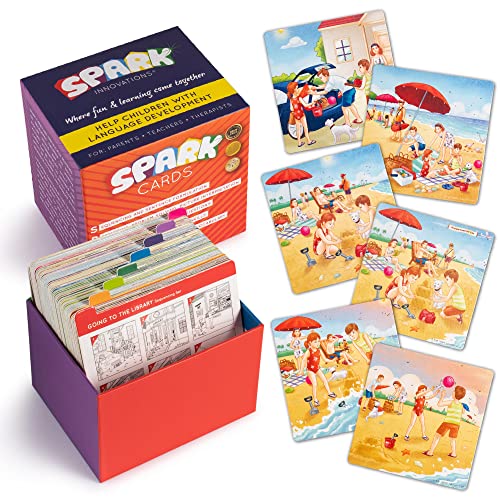
- Large laminated 4.5-inch picture cards
- Adaptable difficulty for home, classroom, and therapy use
- Includes prompts for sequencing and language goals
Best For: Speech therapy, special education, and guided language practice
Community Story Builders

- 36 wordless, color-coded storytelling cards
- 30+ games for stories, writing, and problem-solving
- Supports screen-free individual or group play
Best For: Children ages 3–10 building storytelling and community-minded skills
Everyday Sequence Practice

- Eight six-card stories for sequencing practice
- Adaptable by using fewer cards
- Targets narratives, WH questions, and sentence building
Best For: Learners practicing structured storytelling and event order
Community Helper Sequencing

- 12 four-card community-helper stories
- Large, laminated, marker-friendly cards
- No-prep activities for 1–4 players
Best For: Young children practicing sequencing and sentence building
Best Classroom Pick – Creative Storytelling Cards for Kids
For teachers, speech-language professionals, and language-learning settings, this 100-card set is one of the most adaptable illustrated storytelling card sets available. It combines 80 illustrated prompts with 20 customizable blanks, making it easy to adjust activities for different ages, language levels, and learning goals.
Best For: Classrooms, ESL instruction, speech therapy, literacy practice, and social-emotional learning activities.
Pros:
- Includes 80 illustrated cards plus 20 blank cards for customization.
- Supports vocabulary, grammar, narrative skills, communication, empathy, and peer connection.
- Offers 65+ ready-to-play activities for quick breaks or full lessons.
- Linen-finish cardstock is designed for repeated classroom use.
Cons:
- The educational focus may feel more structured than a purely open-ended family game.
- Its 3-by-5-inch cards may be less convenient for very young children to handle independently.
This is the strongest choice when flexibility and classroom utility matter most. The blank cards and broad learning objectives give educators room to reuse the set across subjects, ability levels, and group sizes.
Best for Preschool Story Play – Animal Village Create a Story
Animal Village is a simple, preschool-friendly option among illustrated storytelling card sets. Its 36 cards feature colorful animals, locations, and props that children can connect into stories during solo play, family activities, or classroom conversations.
Best For: Preschoolers ages 3 and up who are building vocabulary, narrative skills, and confidence through imaginative play.
Pros:
- Clear character, location, and prop cards encourage open-ended story combinations.
- Supports imagination, conversation, social interaction, and pre-literacy development.
- Features award-winning illustrations by Stephanie Graegin.
- Uses 90% recycled materials and vegetable-based inks.
Cons:
- With 36 cards, it offers less customization than larger storytelling sets.
- Its animal-village theme may be narrower than a general-purpose prompt deck.
Choose Animal Village when you want an approachable first storytelling set for young children. The straightforward visual categories make it easy for adults to guide a story without turning play into a formal lesson.
Best for Emotional Learning – Kids Feelings Story Game
This compact game stands out among illustrated storytelling card sets by combining story choices with feelings, problems, characters, settings, and items. It is designed for cooperative, screen-free play and gives children a playful way to explore empathy, communication, and emotional intelligence.
Best For: Children ages 4–12, family game time, travel, and conversations about feelings and problem-solving.
Pros:
- Uses illustrated choices to create varied stories and scenarios.
- Encourages empathy, critical thinking, problem-solving, creativity, and emotional intelligence.
- Diverse characters and situations support conversations about acceptance and self-expression.
- Portable tin case suits travel, vacations, and on-the-go play.
Cons:
- The set is designed for two players, which may limit larger-group use.
- Its focus on feelings and scenarios may be less suited to children seeking traditional fairytale prompts.
Pick this set when the storytelling activity should do more than build narratives. Its feelings- and problem-based prompts make it especially useful for cooperative family play and guided discussions about emotional experiences.
Best Fairytale Theme – Fairytale Mix Ups Create a Story
Fairytale Mix Ups is a focused choice for children who enjoy familiar storybook characters and magical settings. This 36-card set uses illustrated fairytale characters, locations, and iconic objects to inspire flexible, non-competitive storytelling.
Best For: Children ages 3 and up, family storytime, preschool or elementary activities, and fairytale-themed creative play.
Pros:
- Combines fairytale characters, locations, and objects into fresh narratives.
- Encourages imagination, language skills, sequencing, conversation, and social interaction.
- Works for solo play, family storytelling, and classroom discussions.
- Includes English and Spanish language information and uses 90% recycled materials.
Cons:
- The 36-card format provides fewer prompts than larger educational decks.
- The fairytale theme may be less versatile for children who prefer contemporary or realistic stories.
This is a good match for buyers looking for illustrated storytelling card sets with an immediately recognizable theme. It keeps the activity low-pressure and imaginative while giving adults natural openings to discuss characters, plot, and narrative structure.
Hands-On Story Builders – Storytelling Dominoes
Educational Insights Storytelling Dominoes offer a tactile alternative to illustrated storytelling card sets. Children combine 75 double-sided dominoes featuring story starters and illustrated elements to practice sequencing, vocabulary, creativity, and language skills.
Best For: Children ages 3 to 6, parents, and teachers looking for a portable, hands-on storytelling activity.
Pros:
- Includes 75 double-sided dominoes with story prompts and illustrated elements.
- Color-coding helps children distinguish settings, characters, feelings, events, and starters.
- Includes an activity guide and handled storage bucket for organized, portable play.
- Supports vocabulary, sequential thinking, creativity, and social-emotional learning.
Cons:
- The domino format may be less familiar than standard storytelling cards.
- Recommended for ages 3 to 6, so older children may outgrow it sooner.
This set stands out when tactile play and clear story-element categories are more useful than a conventional card deck. The color coding and guided activities make it a practical choice for early storytelling practice.
Illustrated Imagination Play – Mystery in the Forest Cards
eeBoo Mystery in the Forest is a traditional illustrated storytelling card set with 36 scene and character cards. Its recurring characters, locations, and props encourage children to create flexible narratives while practicing conversation, vocabulary, and narrative sequencing.
Best For: Preschoolers, family storytelling, solo creative play, and classroom discussions about characters and narrative structure.
Pros:
- Features 36 colorful cards with illustrated scenes and characters.
- Supports countless combinations using recurring characters, locations, and props.
- Encourages imagination, conversation, narrative skills, and social interaction.
- Made with 90% recycled materials and vegetable-based inks.
Cons:
- The set focuses on open-ended storytelling rather than a fixed game structure.
- Cardboard cards may require more care than laminated materials.
Choose this set if you want beautifully illustrated prompts and open-ended combinations instead of heavily structured sequencing exercises. Its sustainability features add appeal for environmentally conscious families and classrooms.
Structured Language Practice – Sequencing Cards Set 1
These sequencing cards provide a more structured option among illustrated storytelling card sets, with large 4.5-inch picture cards designed for story order, sentence building, and language practice. The included prompts make them suitable for home use, classrooms, and speech or ABA therapy settings.
Best For: Children beginning around age 4, speech therapy, special education, homeschooling, and targeted language activities.
Pros:
- Large, colorful 4.5-inch cards have a durable laminated finish.
- Cards can be adapted by trimming them or using the full set for different skill levels.
- Manual includes questions and prompts for storytelling, conversation, and early learning.
- Supports sequencing, vocabulary, sentence structure, WH questions, problem solving, and inferencing.
Cons:
- The product is more instructional and less open-ended than purely creative story cards.
- Its many targeted language goals may require adult guidance for younger children.
This is the strongest fit when storytelling is part of a broader communication or learning plan. The large laminated cards, adaptable difficulty, and included prompts give adults practical tools for guided practice.
Community Story Builders – Build-a-Story Cards
For families or educators seeking illustrated storytelling card sets with an open-ended format, this 36-card deck lets children create their own stories about community life. Its wordless, color-coded character, object, and setting cards support screen-free play, writing practice, and group activities.
Best For: Children ages 3–10 practicing storytelling, problem-solving, writing, teamwork, responsibility, and kindness.
Pros:
- Includes 36 wordless cards with 12 characters, 12 objects, and 12 settings.
- Provides instructions for more than 30 storytelling and writing games.
- Supports independent or group play and is designed for on-the-go use.
Cons:
- The wordless format may require adult guidance for younger children.
- Its community-helper theme may be less suitable for children seeking broader subject variety.
This is a flexible choice when you want one deck to support imaginative storytelling, language development, and collaborative discussion rather than fixed sequencing exercises.
Everyday Sequence Practice – Sequence Cards 1 and 2 Combo
This combo set is a practical option among illustrated storytelling card sets for practicing event order, sentence building, and narrative skills. It includes eight six-card stories covering familiar situations such as setting the table, visiting a vet, planting flowers, and going to the beach.
Best For: Children and learners working on sequencing, narratives, storytelling, WH questions, and English-language development.
Pros:
- Includes eight stories with six cards per story.
- Cards can be reduced in number to adapt activities for lower skill levels.
- Works for 1–4 players and offers multiple ways to practice sequencing and storytelling.
Cons:
- The supplied notes do not specify card durability or lamination.
- Its story selection is structured around specific everyday themes rather than fully open-ended storytelling.
Choose this set when a guided progression from pictures to ordered events is more useful than a purely imaginative card deck, especially for adaptable one-on-one or small-group practice.
Community Helper Sequencing – Kids Story Cards
These large illustrated storytelling card sets focus on community-helper scenarios, giving children a concrete way to arrange events, expand sentences, and discuss different jobs. The 48-card set contains 12 four-card stories and is designed for flexible classroom, homeschool, or parent-child activities.
Best For: Children ages 3 and up developing sequencing, storytelling, WH-question, and sentence-building skills.
Pros:
- Includes 12 community-helper stories with four cards each.
- Large, thick, durable, laminated cards can be used with markers to highlight details.
- Requires zero preparation and supports 1–4 players.
- Fewer cards can be used to adjust activities for lower skill levels.
Cons:
- The community-helper theme may feel narrow for learners wanting varied settings.
- Four-card stories provide less sequence complexity than longer story sets.
This is a strong fit for repeated language practice with young children, particularly when durable materials, quick setup, and a familiar educational theme matter.
How We Picked These Illustrated Storytelling Card Sets
We selected sets with a clear storytelling purpose, including picture prompts, sequencing activities, story-building games, and pre-literacy exercises. We considered the number and size of cards, stated age guidance, theme variety, ease of use, and how well each option may support language development or narrative practice.
Because these products serve different audiences, the list includes open-ended prompt cards for creative play, structured sequencing sets for speech and special education, and themed decks designed for preschool or elementary learners. Always check the current listing for exact contents, dimensions, and recommended ages.
Quick Comparison
| Best For | Look For | Typical Format |
|---|---|---|
| Open-ended creativity | Varied characters, settings, and objects | Prompt cards |
| Early learners | Simple images and familiar scenes | Pre-literacy story cards |
| Speech and language practice | Clear sequences and sentence-building prompts | Sequencing cards or games |
| Classrooms and groups | Durable cards and flexible activities | Larger multi-card sets |
| Family game time | Rules, turn-taking, and emotional themes | Storytelling card games |
Key Buying Factors for Illustrated Storytelling Card Sets
Age and Developmental Level
Preschool cards generally use recognizable images, short sequences, and simple story structures. Older children may benefit from less predictable prompts that encourage descriptive language, cause-and-effect reasoning, and more complex plots.
Open-Ended Prompts Versus Sequencing
Choose open-ended Illustrated Storytelling Card Sets when imagination and vocabulary are the priority. Choose sequencing cards when the goal is to practice beginning-middle-end structure, retelling, grammar, or logical order. Some sets can support both approaches when cards are used flexibly.
Theme and Engagement
Animal, fairy-tale, community-helper, and everyday-life themes can make participation easier. Consider the child’s interests, cultural fit, and whether the images provide enough detail to prompt discussion without making every story identical.
Card Quality and Usability
Look for readable illustrations, sturdy stock, rounded or easy-to-handle cards, and storage that keeps the set organized. For therapy rooms or classrooms, durable materials and a large card count may matter more than compact packaging.
Learning Goals
For speech therapy, prioritize cards that encourage sentence expansion, sequencing, retelling, and problem solving. For ESL or language learning, choose visual prompts that make vocabulary accessible and support repeated practice. For family play, rules and cooperative activities may be more important.
Who Should Buy Which Illustrated Storytelling Card Sets?
Parents of preschoolers: Start with a themed pre-literacy set featuring familiar pictures and short story sequences. These are approachable for children who are still developing verbal confidence.
Teachers and homeschoolers: Choose a larger, flexible prompt set that can support individual writing, group storytelling, vocabulary lessons, and imaginative play across multiple ability levels.
Speech-language professionals: Favor structured sequencing and sentence-building cards with clear visual order. Sets that can be rearranged or used for retelling provide more opportunities for targeted practice.
Families seeking screen-free play: Look for a game-style deck with simple rules, emotional or social themes, and enough variety to keep repeated sessions fresh.
Before buying, match the deck’s structure to your main goal. A highly open-ended set is ideal for creativity, while an ordered sequence is usually better for focused narrative instruction.