Choosing the right phonics materials can make first-grade reading practice more focused, engaging, and easier to fit into a busy school or homeschool routine. This roundup brings together games, decodable books, flash cards, spelling activities, and structured workbooks for different learning styles.
Use the guide below to compare practice formats, skill coverage, and age-appropriate features before choosing a kit that matches your child’s current reading level and goals.
Best 10 Phonics Learning Kits for First Grade Picks for 2026
Best Hands-On Pick
Blends & Digraphs Phonics Dominoes

- 84 tactile dominoes for word formation
- Practices blends, digraphs, and vowel phonograms
- Useful for home, classroom, or literacy centers
Best For: Hands-on phonics practice for ages 6–8
Best for Sentence Practice

- 86 interlocking cards for sentence construction
- Practices punctuation, capitalization, and grammar
- Includes picture cards and activity suggestions
Best For: Early reading and writing practice for ages 5–8
Best All-Around Set
Skill Builders! 1st Grade Reading

- 88 pieces for broad literacy practice
- Covers phonics, blends, and high-frequency words
- Includes a built-in storage case
Best For: Varied first-grade reading and spelling practice
Best for Independent Reading
First Little Readers Phonics Set 1

- 20 decodable books for beginning readers
- Covers short vowels, plurals, and blends
- Includes a how-to guide and worksheet links
Best For: Applying early phonics skills through short books
Hands-On Starter
Wooden CVC Word Spelling Games
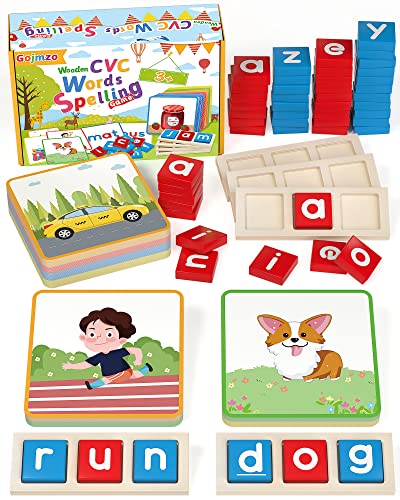
- 50 double-sided CVC flash cards
- Wooden letters and five spelling boards
- Durable, screen-free practice
Best For: Children beginning CVC word reading and spelling
Complete Lesson Path
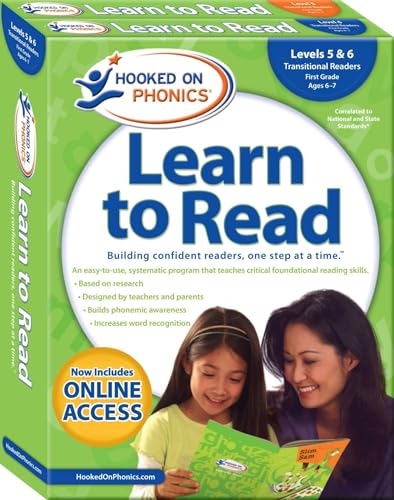
- Two first-grade reading levels
- Workbooks, stories, videos, and stickers
- Practices blends, suffixes, and sight words
Best For: Guided first-grade reading instruction
Portable Practice Pick

- 60 activities plus answer keys
- Reviews vowels and letter combinations
- Perforated, travel-friendly workbook
Best For: Supplemental phonics review at home or on the go
Best Workbook
Smart Start Phonics & Spelling Grade 1

- 10 units cover core first-grade phonics and spelling patterns
- Includes audio stories, stickers, and an answer key
- 128-page, full-color print workbook
Best For: Structured at-home Grade 1 reading and spelling practice
Best Spaced-Repetition Cards

- Uses a stated spaced-repetition learning sequence
- Includes words, sentences, and phonics games
- Thick cardboard cards support repeated use
Best For: Game-based review with adjustable difficulty
Best Sight-Word Expansion
Torlam 876 Sight Words Flash Cards

- Combines 520 Dolch words with 356 phonics words
- Organized into five levels for pre-K through Grade 3
- Includes games, rings, folders, and 50 blank cards
Best For: Growing sight-word and phonics practice across early grades
Best Hands-On Pick – Blends & Digraphs Phonics Dominoes
For families seeking phonics learning kits for first grade, these dominoes offer tactile practice with word formation. The 84-piece set focuses on blends, digraphs, and short- and long-vowel phonograms for learners ages 6–8.
Best For: First graders who benefit from visual, hands-on practice in a small-group, homeschool, or literacy-center setting.
Pros:
- Includes 84 dominoes covering r-, l-, and s-blends plus ch, sh, th, and wh.
- Supports word formation, phonemic awareness, and reading-fluency practice.
- Works for individual or two-player activities and guided reading practice.
Cons:
- Its main focus is blends, digraphs, and phonograms rather than sentence building.
- Recommended for ages 6–8, so it may not suit younger beginners.
This is a focused manipulative for reinforcing common phonics patterns. Choose it when interactive word-building is more useful than a broad reading curriculum.
Best for Sentence Practice – Sentence Building Game
Among phonics learning kits for first grade, this set is especially useful for moving from word recognition to early sentence construction. Interlocking cards combine sight words, picture prompts, punctuation, and parts of speech for ages 5–8.
Best For: Kindergarten through second-grade learners who need practice with sentence structure, capitalization, punctuation, and early writing.
Pros:
- Includes 86 cards, including 55 color-coded word cards, 27 photo cards, and four punctuation cards.
- Interlocking pieces let children construct simple sentence strips.
- Supports vocabulary, grammar, reading, writing, and fluency activities.
Cons:
- It emphasizes sentence building and language arts more than systematic phonics instruction.
- The cardstock cards may require careful handling during repeated use.
This is a strong companion for children who know some words but need structured practice combining them into sentences. It also fits guided instruction because the set includes activity ideas and teaching suggestions.
Best All-Around Set – Skill Builders! 1st Grade Reading
For shoppers comparing phonics learning kits for first grade, this 88-piece activity set provides a broader mix of reading tools. It combines Reading Rods, double-sided flashcards, and hands-on materials for phonics, blending, high-frequency words, spelling, and language skills.
Best For: First graders ages 6 and up who need varied reading, spelling, writing, and word-work activities at home or in the classroom.
Pros:
- Includes 88 pieces covering phonics, word blends, high-frequency words, and reading concepts.
- Supports reading, spelling, writing, and language-skill practice.
- Comes in a built-in carrying case for organized storage and portable learning.
Cons:
- The set may feel less specialized than a kit focused on one specific phonics skill.
- Its listed materials include paper and cardstock, which may need careful storage.
This is the most versatile option in the group for families wanting multiple literacy activities in one case. It can also support classroom centers, intervention work, and homeschool lessons.
Best for Independent Reading – First Little Readers Phonics Set 1
For children ready to apply phonics in context, this book set offers 20 decodable stories focused on short vowels, simple plurals, blends, and related beginning-reading skills. It is designed for reading ages 5–7 and spans kindergarten through second grade.
Best For: Beginning readers who need repeated practice using phonics patterns in short, engaging books.
Pros:
- Provides 20 decodable books covering several foundational phonics skills.
- Includes short vowels, simple plurals, blends, and other early-reading patterns.
- Comes with a how-to guide and links to skill-building worksheets.
Cons:
- As a book set, it does not provide manipulatives or flashcard-based activities.
- Its listed reading age is 5–7, which may be less suitable for older or more advanced first graders.
This set works well as a practical follow-up to phonics instruction because children can use targeted patterns while reading connected text. Choose it when decodable stories are more important than game-based practice.
Hands-On Starter – Wooden CVC Word Spelling Games
For families comparing phonics learning kits for first grade, this wooden CVC spelling set offers a tactile way to practice word building. Children use picture-backed flash cards, letter blocks, and spelling boards to connect sounds, letters, and simple words.
Best For: First graders beginning to read and spell CVC words, as well as preschool and kindergarten learners who already know basic letter sounds.
Pros:
- Includes 50 double-sided CVC flash cards, 53 wooden lowercase letter blocks, five spelling boards, and a storage box.
- Combines pictures, printed words, and movable letters for multisensory practice.
- Thick laminated cards and sturdy wooden tiles are designed for repeated use.
- Suitable for classroom, homeschool, or indoor learning activities.
Cons:
- The set focuses on CVC words rather than broader first-grade phonics patterns.
- Letters q, y, and z are not included because they are not used in the card words.
- It is a single-player, manually operated activity.
This is a practical pick when you want screen-free, hands-on phonics practice. Its scope is introductory, so it works best as a supplement rather than a complete first-grade reading curriculum.
Complete Lesson Path – Hooked on Phonics Levels 5&6
Among phonics learning kits for first grade, this Hooked on Phonics set is the most structured option. Levels 5 and 6 combine workbooks, storybooks, videos, and progress-focused activities to move children from phonics instruction to connected reading.
Best For: First graders ages 6–7 who need guided practice with blends, suffixes, two-syllable words, and sight words.
Pros:
- Covers beginning and ending consonant blends, four common suffixes, two-syllable words, and 36 new sight words.
- Includes two workbooks, six original storybooks, two bonus books, two DVDs, stickers, and online video access.
- Uses a learn, practice, read, and celebrate sequence to organize lessons.
- Designed with input from educators, authors, teachers, and parents.
Cons:
- It is specifically Levels 5 and 6, not the complete eight-level series.
- The program includes multiple components, which may require more setup than a simple workbook.
- Some content depends on DVD or online video access.
This set offers the broadest instructional progression of the three products. Choose it when your child benefits from a guided, multimedia routine and is ready for transitional-reader skills beyond basic CVC words.
Portable Practice Pick – School Zone Phonics Review
For shoppers seeking portable phonics learning kits for first grade, this School Zone workbook provides a compact paper-based option. Its puzzles, riddles, illustrations, and answer key reinforce foundational sound and spelling skills without requiring screens or extra pieces.
Best For: First through third graders ages 6–9 who need supplemental review of vowels, letter combinations, spelling, contractions, and compound words.
Pros:
- Provides 60 activity pages plus four answer-key pages.
- Practices vowels, consonants, spelling, contractions, letter combinations, and compound words.
- Perforated pages can be removed as individual worksheets.
- Compact format and glossy cover make it convenient for travel or on-the-go practice.
Cons:
- It is a workbook rather than a complete kit with manipulatives or storybooks.
- The listed range extends through third grade, so some activities may not be tailored specifically to first grade.
- It provides supplemental practice rather than a full sequential reading program.
This workbook is a sensible budget-conscious supplement for short practice sessions, travel, or extra review. Pick a more comprehensive kit if your child needs explicit lesson sequencing or extensive reading material.
Best Workbook – Smart Start Phonics & Spelling Grade 1
For families seeking phonics learning kits for first grade, Evan-Moor’s Smart Start workbook offers structured, print-based practice in a familiar workbook format. Its 10 units cover beginning sounds, blends, long-vowel patterns, word families, spelling, and short reading activities, with audio stories and stickers to add variety.
Best For: First graders who benefit from guided workbook lessons and parents or teachers who want built-in support.
Pros:
- Covers beginning sounds, blends, silent-e patterns, digraphs, word families, and spelling patterns.
- Includes audio stories, reward stickers, a phonics minibook, answer key, and parent-support pages.
- Provides 10 organized units in a 128-page full-color workbook.
Cons:
- Primarily a print workbook, so it may be less engaging for children seeking hands-on activities.
- Focuses on a Grade 1 skill range rather than offering the broader multi-grade format of some flash-card kits.
This is a practical choice when you want a clearly sequenced workbook with reading, spelling, and phonics practice in one resource. The audio stories and stickers can help break up written exercises without changing the workbook-centered approach.
Best Spaced-Repetition Cards – 20-Stage Phonics Flash Cards
These phonics flash cards are a flexible option among phonics learning kits for first grade, especially for families who prefer short practice sessions and games. The set uses a stated spaced-repetition sequence across 20 phonogram stages, with words, sentences, and activities spanning multiple difficulty levels.
Best For: Children in roughly the preschool-to-second-grade range who enjoy flash cards, games, and repeated review.
Pros:
- Organized into 20 phonogram family groups with four difficulty levels.
- Includes 1,300 words, 240 sentences, and more than 120 phonics examples according to the product description.
- Thick cardboard construction is designed for repeated handling.
Cons:
- The set contains 66 flash cards, so practice depends on reviewing cards repeatedly.
- Its preschool-to-third-grade range may require parents to select an appropriate starting level for a first grader.
The staged organization makes this a useful pick for parents who want a repeatable routine rather than an unstructured deck. It is best used interactively, with an adult choosing cards and games that match the child’s current reading level.
Best Sight-Word Expansion – Torlam 876 Sight Words Flash Cards
Torlam’s large flash-card system combines sight-word practice with phonics content, making it a broad option for phonics learning kits for first grade. The set is divided into five levels and 65 phonics categories, and it includes sorting folders, rings, teaching techniques, games, and blank cards for customization.
Best For: Families who want one expandable card system for sight words and phonics practice across several early-grade levels.
Pros:
- Includes 520 Dolch sight words and 356 phonics words across 365 double-sided cards.
- Covers short and long vowels, blends, beginning sounds, and grade levels from pre-K through third grade.
- Features level folders, six rings, six teaching techniques, three games, and 50 customizable blank cards.
Cons:
- The broad, 876-word scope may feel overwhelming without a consistent sorting and review routine.
- Its emphasis on flash cards and sight words may not replace a complete phonics workbook or decodable reading practice.
This kit stands out for households that want room to grow beyond first grade and the ability to customize practice. The folders and rings are particularly useful for separating levels, while the blank cards allow adults to add words or other learning prompts.
How We Picked These Phonics Learning Kits for First Grade
We selected materials that support core first-grade reading skills, including letter-sound relationships, short and long vowels, CVC words, blends, digraphs, spelling patterns, sight words, and early sentence building. We also considered how each format fits common learning situations: short daily practice, teacher-led instruction, independent review, travel, tutoring, and homeschool lessons.
Because “kit” can mean different things, this list includes both comprehensive sets and focused resources. Some provide a progression through phonics stages, while others concentrate on one skill or offer repeated practice through games, cards, books, or worksheets.
Quick Comparison
| Format | Best for | What to check |
|---|---|---|
| Decodable books | Applying phonics in connected text | Match the book level to current decoding ability |
| Games and puzzles | Motivation and family practice | Look for clear rules and targeted skills |
| Flash cards | Fast drills and review | Choose manageable stages rather than too many cards at once |
| Workbooks | Structured written practice | Confirm page difficulty and handwriting expectations |
| Spelling activities | Building words with sound patterns | Prioritize movable letters or hands-on feedback |
Key Buying Factors for Phonics Learning Kits for First Grade
Skill Sequence
Look for a logical progression from letter sounds and CVC words to blends, digraphs, vowel teams, multisyllabic words, and sentence reading. A resource should reinforce skills your child has been taught rather than introduce several advanced patterns at once.
Practice Format
Games can reduce resistance and encourage repetition, while workbooks provide visible progress and writing practice. Decodable books are especially useful because they let children apply recently learned sound patterns instead of guessing from pictures or memorized text.
Level and Age Fit
First grade covers a wide range of reading abilities. Check sample pages, recommended stages, and word complexity. A child who is still mastering short vowels may need a simpler resource than one already reading blends and digraphs confidently.
Usability and Durability
For frequent use, consider card organization, storage, print size, paper quality, and whether an adult needs to supervise every activity. Short, repeatable lessons are often more useful than an oversized set that feels difficult to manage.
Who Should Buy Which Phonics Learning Kits for First Grade?
Choose decodable book sets for children who need more reading fluency and confidence with controlled text. Games and sentence-building puzzles suit learners who respond well to interaction or need a less worksheet-heavy routine. Flash cards work well for brief daily review, but use them in small groups to prevent fatigue.
Workbooks are a practical choice for families wanting a clear, low-preparation sequence, while hands-on spelling games are better for children who learn by manipulating letters and building words. If skills are uneven, combine one structured resource with one motivating practice format rather than buying multiple materials that teach the same level in the same way.