Great teams do not happen by accident. They are built through clear expectations, trust, shared purpose, and habits that reinforce collaboration every day.
This roundup of team-building books focuses on titles that can help leaders improve culture, strengthen communication, and create more reliable team performance in 2026.
Best 10 Team-Building Books Picks for 2026
Ideal Team Player Framework
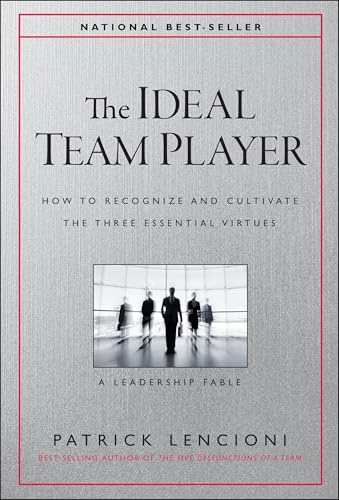
- Framework for the three essential virtues
- Practical hiring and development tools
- Strong fit for teamwork-centered culture
Best For: Leaders and hiring managers building a teamwork-centered culture
Culture-Building Playbook

- Shows how high-performing groups build cohesion
- Covers trust, collaboration, and positive change
- Backed by examples from top organizations
Best For: Leaders seeking research-backed culture-building ideas
Teamwork Field Guide
Overcoming the Five Dysfunctions

- Hands-on tools, exercises, and assessments
- Designed for leaders, managers, and facilitators
- Practical companion to the original framework
Best For: Teams and facilitators applying Lencioni’s model
Great Teammate Lessons

- True story with a memorable team legacy
- Includes 21 lessons and 21 exercises
- Highlights selflessness, loyalty, and compassion
Best For: Readers wanting an inspiring, easy-to-share team story
Team Trust & Accountability
The Five Dysfunctions of a Team

- Leadership fable format
- Addresses trust and accountability
- Practical for team discussion
Best For: Leaders and teams seeking a story-based guide to teamwork problems
Trust-First Leadership

- Explores the Circle of Safety
- True stories from multiple fields
- Unabridged audiobook narrated by Simon Sinek
Best For: Managers wanting an audiobook on trust, cooperation, and team culture
Teammate Ownership

- Teammate-first approach to teamwork
- Built for workshops and training
- Includes questions and a Teammate Assessment
Best For: Teams and organizations that want a practical accountability-focused book
Fast-Paced Team Builder
15-Minute Exercises for Busy Teams

- 50 activities with only minutes of prep
- Uses everyday office items
- Includes options for virtual teams
Best For: Busy managers needing quick, practical team-building activities
Culture and Cohesion Guide
Proven Principles for Stronger Teams

- Focuses on positivity, trust, and commitment
- Includes practical tools and team exercises
- Written for teams to read together
Best For: Teams working on culture, connection, and performance
Large Activity Collection

- Offers 70 games and activities
- Aims to improve morale, trust, and communication
- Good for staff meetings and work groups
Best For: Managers wanting a wide range of team-building games
Ideal Team Player Framework – The Ideal Team Player
If you’re comparing team-building books that go beyond inspiration, The Ideal Team Player gives you a practical way to define and develop the people you want on your team. Patrick Lencioni focuses on the individual side of teamwork and offers a clear framework for recognizing the three essential virtues of an ideal team player, plus tools for hiring and development.
Best For: Leaders, hiring managers, and anyone building a teamwork-centered culture.
Pros:
- Introduces a simple, memorable framework for identifying ideal team players.
- Includes practical tools for hiring and developing people around teamwork values.
- Uses a fable plus actionable guidance, making the ideas easy to apply.
Cons:
- Focused more on individual virtues than on broader team process.
- Best fit for readers who want a structured framework rather than general motivation.
Overall, this is a strong pick if your goal is to build a team culture by improving who gets hired and how people are developed. It’s especially useful when you need actionable team-building books with a direct workplace application.
Culture-Building Playbook – The Culture Code
Among team-building books, The Culture Code stands out if you want to understand why some groups click and others don’t. Daniel Coyle looks at highly successful organizations like SEAL Team Six, IDEO, and the San Antonio Spurs and breaks down the specific skills and behaviors that build cohesion, trust, and collaboration.
Best For: Leaders who want research-backed ideas for strengthening group culture.
Pros:
- Draws on examples from well-known high-performing groups and organizations.
- Explains three key skills that help generate cohesion and cooperation.
- Offers specific strategies for building trust, collaboration, and positive change.
Cons:
- Less of a step-by-step workbook than some hands-on team guides.
- Best suited to readers interested in culture and behavior patterns.
This is a strong choice if you want a book that connects practical leadership ideas with real-world examples. It’s particularly helpful for teams that need a better culture, stronger trust, and a clearer path to working as one.
Teamwork Field Guide – Overcoming the Five Dysfunctions
If you already know Lencioni’s The Five Dysfunctions of a Team and want the implementation side, this field guide is one of the more practical team-building books to consider. It focuses on hands-on tools, exercises, assessments, and real-world examples to help leaders, managers, and facilitators put the model to work.
Best For: Teams and facilitators who want practical exercises to apply Lencioni’s ideas.
Pros:
- Provides exercises and assessments for immediate team use.
- Built to help leaders and consultants implement the core ideas quickly.
- Concise format makes it easy to work through with a group.
Cons:
- More of an implementation guide than a standalone theory book.
- Works best if you are already familiar with the original Five Dysfunctions framework.
For teams that need a practical companion to a proven framework, this book is a solid pick. It’s especially useful when you want structured activities instead of just high-level advice.
Great Teammate Lessons – The Hard Hat
For readers looking for team-building books with a memorable story, The Hard Hat combines a true account with clear lessons on what makes a great teammate. Jon Gordon highlights George Boiardi’s legacy and turns it into 21 lessons, 21 exercises, and practical insights that emphasize selflessness, loyalty, joy, hard work, competitiveness, and compassion.
Best For: Readers who want an inspiring true story with straightforward teammate lessons.
Pros:
- Based on a true story with a strong human and team legacy.
- Includes 21 lessons and 21 exercises for practical application.
- Focuses on qualities that support selfless, compassionate teamwork.
Cons:
- Very short, so it offers less depth than longer team-building books.
- More inspirational and lesson-driven than analytical.
This is a good fit if you want something concise, motivational, and easy to share with a group. It works well when you need simple teamwork lessons rooted in a story people can remember.
Team Trust & Accountability – The Five Dysfunctions of a Team
If you’re comparing team-building books that tackle real workplace friction, The Five Dysfunctions of a Team is a straightforward pick. It frames teamwork through a leadership fable, making it easier to understand common breakdowns like trust and accountability in a practical way.
Best For: Leaders and teams that want a story-driven book for improving collaboration and team health.
Pros:
- Uses a leadership fable format, which can make team issues easier to grasp.
- Focuses on common team breakdowns, including trust and accountability.
- Well suited to readers who want a practical teamwork discussion in a readable format.
Cons:
- The supplied details are limited, so there’s little information about chapter structure or exercises.
- It appears to be an older edition listing, which may matter to buyers checking format details.
Overall, this is a classic-style team-building book for readers who want a clear framework around why teams struggle and how leadership can help. The fable approach makes it approachable for group discussion or individual study.
Trust-First Leadership – Leaders Eat Last
Among team-building books, Leaders Eat Last stands out if you want a big-picture look at why some teams pull together while others fall apart. This audiobook edition is built around Simon Sinek’s idea of a “Circle of Safety,” with examples drawn from the military, business, government, and investment banking.
Best For: Managers and listeners who want a leadership-focused audiobook about building trust and cooperation.
Pros:
- Explains team cooperation through the “Circle of Safety” concept.
- Includes true stories from several different environments.
- Available as an unabridged audiobook narrated by Simon Sinek.
- Includes an expanded chapter and appendix on leading millennials.
Cons:
- The audiobook format may not suit buyers who prefer a print reading experience.
- The focus is more on leadership and culture than on step-by-step team activities.
This is a strong choice if your team-building goal is to understand the leadership behaviors that create trust. The audiobook format and real-world examples make it easy to absorb on a commute or while multitasking.
Teammate Ownership – You Are The Team
If you’re shopping for team-building books that emphasize personal responsibility, You Are The Team takes a teammate-first approach. It argues that stronger teams start with individual habits, mindset, and accountability, and it’s positioned for use in meetings, workshops, onboarding, retreats, and training programs.
Best For: Teams, trainers, and organizations that want a practical book centered on teammate ownership and accountability.
Pros:
- Focuses on teammate behavior, not just leadership.
- Designed for use in workshops, onboarding, retreats, and training.
- Includes relatable examples, introspective questions, and a Teammate Assessment.
- Covers ownership, trust, accountability, and team culture.
Cons:
- At 129 pages, it’s relatively short, so readers wanting a deep reference may want more.
- The core approach is very practical, which may feel less narrative-driven than some other team books.
This book is a solid fit for groups that want a hands-on resource rather than a purely theoretical read. Its emphasis on daily habits and self-assessment makes it especially useful for team development settings.
Fast-Paced Team Builder – 15-Minute Exercises for Busy Teams
Quick Team-Building Activities for Busy Managers: 50 Exercises That Get Results in Just 15 Minutes
Check Price On AmazonIf you need team-building books that work in real offices with limited time, this guide is built for speed and practicality. It focuses on short exercises that use everyday office items, with activities designed to improve collaboration, communication, problem-solving, and team spirit in just minutes of prep.
Best For: Busy managers who want quick, low-prep activities for in-person or virtual teams.
Pros:
- 50 activities that each take only minutes to prep
- Uses everyday office items, so there is little resource overhead
- Covers collaboration, change, communication, creativity, and trust
- Includes activities for virtual teams
Cons:
- More exercise-driven than theory-heavy
- Focused on short activities rather than deep team strategy
This is a strong pick if you want immediate, easy-to-run team exercises without formal training. It is especially useful when morale, communication, or group cohesion needs a quick reset.
Culture and Cohesion Guide – Proven Principles for Stronger Teams
Among team-building books, this one stands out for teams that want a more positive, united, and connected culture. It combines research, stories, and practical tools to help teams improve communication, trust, commitment, and performance while addressing common problems like negativity and complacency.
Best For: Teams that want to read together and work on culture, trust, and performance as a group.
Pros:
- Built around proven principles and practices for better teams
- Includes practical tools and team building exercises
- Covers common team issues such as complaining, selfishness, and unaccountability
- Designed for teams to read together and apply together
Cons:
- Less of a quick activity guide than some other team-building books
- Best suited to groups willing to reflect and take action together
This is a solid choice if your team wants more than icebreakers and needs a shared framework for becoming more cohesive and positive. It blends motivation with practical guidance in a format teams can use together.
Large Activity Collection – 70 Team Spirit Activities
If you are comparing team-building books for hands-on group activities, this title is geared toward managers who want a large library of games. It offers 70 stimulating activities aimed at boosting morale, communication, trust, and collaboration in staff meetings or day-to-day team settings.
Best For: Managers looking for a broad set of games to raise morale and improve teamwork.
Pros:
- Includes 70 games and activities
- Targets morale, communication, trust, and collaboration
- Useful for staff meetings and ongoing team interaction
- Designed for work groups that need a morale boost
Cons:
- Published in 1997, so the approach may feel dated to some readers
- More activity-focused than strategic
This book makes sense if you want a deep bench of team games rather than a theory-led leadership resource. It is especially appealing for managers who need plenty of options to keep sessions fresh.
How We Picked These Team-Building Books
We prioritized books that offer practical takeaways for real workplaces, not just theory. The strongest picks combine clear frameworks, leadership value, and actionable exercises or principles that can be applied quickly by managers, facilitators, and HR teams.
We also looked for a balanced mix of options: strategic titles for leaders, team-culture books for long-term development, and activity-based books for workshops and meetings.
Quick Comparison
Some Team-Building Books are best for diagnosing team problems and improving leadership habits, while others are designed for interactive sessions or fast team morale boosts. If you need a book for a book club, leadership retreat, or onboarding program, choose a title with structured exercises. If your goal is to improve trust, accountability, or communication, a framework-driven book will usually be more useful.
Key Buying Factors for Team-Building Books
1. Your Team’s Biggest Challenge
Match the book to the problem you need to solve. For example, books centered on culture and trust are ideal when collaboration is weak, while activity-based books are better for bringing energy into workshops and offsites.
2. Depth Versus Usability
Some readers want a leadership model they can study in detail; others need short, practical ideas they can put into action immediately. Choose accordingly if the book will be used by busy managers or circulated across a broader team.
3. Format and Audience
Not every book fits every setting. Facilitators may prefer exercise-heavy guides, while executives and team leads may benefit more from titles that connect team behavior to performance, accountability, and culture.
4. Ease of Discussion
If the book will be used in a group setting, look for chapters, concepts, or activities that are easy to discuss and apply. The best Team-Building Books give teams a shared vocabulary for trust, roles, and results.
Who Should Buy Which Team-Building Books?
Leaders and managers should gravitate toward books that focus on culture, accountability, and team dynamics. Facilitators and trainers will usually get more value from books with ready-to-use exercises and activities. If you are trying to improve morale or kickstart a new initiative, choose a title that is easy to read and simple to implement across the team.
For organizations building a long-term development library, a mix of leadership frameworks and practical activity guides is the smartest approach. That way, your Team-Building Books can support both strategic conversations and hands-on engagement.