Sock knitting can be wonderfully simple or beautifully technical, depending on the book you choose. The best guides help you master fit, heel construction, and finishing without making the process feel intimidating.
Whether you want a beginner-friendly walkthrough, custom sizing advice, or a pattern collection full of colorwork and creative designs, this roundup highlights the strongest options for every kind of sock knitter.
Best 10 Sock Knitting Books Picks for 2026
Complete Sock-Making Reference

- Technique-focused guide to sock knitting basics and methods
- Covers toe-up, cuff-down, two-at-a-time, and colorwork
- Includes 10 projects plus yarn and tool guidance
Best For: Knitters who want a broad, technique-first guide
Beginner-Friendly Sock Primer
Getting Started Knitting Socks

- Clear step-by-step sock instructions with photos and drawings
- Five sizes and five gauges help you practice fit
- Includes 16 designs and a stitch dictionary
Best For: New knitters who want a clear introduction to sock making
Beginner Sock Confidence Builder

- Tutorial-style guide based on a popular video series
- Explains core sock methods clearly for beginners
- Includes eight beginner-friendly sock patterns
Best For: Beginners who want a calm, tutorial-style guide
Fit-Focused Sock Guide

- Teaches sock fit and sizing skills for better results
- Useful for knitters of all levels
- Includes 15 customizable original patterns
Best For: Knitters who want socks that fit properly and can be customized easily
Whimsical Colorwork Picks

- 25 whimsical colorwork sock patterns
- Helpful tips for stranded colorwork
- Quick, giftable projects with personality
Best For: Knitters who want playful colorwork socks and practical technique help
Skill-Building Sock Book

- 12 levels guide sock skill progression
- Covers basics through stranded knitting
- 18 patterns with bright, bold colors
Best For: Beginners and improving knitters who want a guided sock-making progression
Theme-Lover Colorwork Choice

- 25 themed colorwork sock patterns
- Covers pets, food, hobbies, and more
- Encouraging guidance for sock construction
Best For: Knitters who want playful themed socks and supportive instruction
No-Heel Sock Design Pick
Knitted Tube Socks: 31 Delightful No-Heel Sock Designs

- 31 no-heel sock patterns
- Child-to-adult sizing help
- Clear instructions and photos
Best For: Knitters who want an easier way to learn socks
Year-Round Pattern Pick
52 Weeks of Socks: Beautiful patterns for year-round knitting

- 52 patterns from 46 designers
- Options for all skill levels
- Nordic-inspired photography and styling
Best For: Knitters who want a big, varied sock pattern collection
Classic Sock Pattern Pick
Knit Socks!: 17 Classic Patterns for Cozy Feet
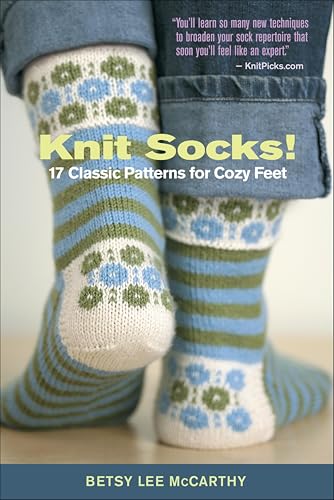
- 17 classic sock patterns
- Helpful yarn and fiber advice
- Includes substitution charts
Best For: Knitters who want timeless patterns and material guidance
Complete Sock-Making Reference – The Sock Knitting Bible
If you want one of the most comprehensive sock knitting books for learning technique, this title is built as a full reference rather than just a pattern collection. It walks through the essentials from casting on through colorwork, toe-up and cuff-down methods, two-at-a-time knitting, yarn choices, tools, and finishing, then adds 10 projects to put the lessons into practice.
Best For: Knitters who want a broad, technique-first guide that covers almost every part of sock knitting.
Pros:
- Covers a wide range of sock-knitting methods, including toe-up, cuff-down, and two-at-a-time.
- Includes step-by-step instructions for beginner sock basics and core techniques.
- Explains yarn selection and tools, with options like DPNs, magic loop, and small circulars.
- Adds 10 projects across different styles, from stripes and fair isle to cables and lace.
Cons:
- More of a reference guide than a pure pattern book.
- May be more information than an absolute beginner wants in a single sitting.
This is a strong pick if you want one sock knitting book that can grow with you, since it combines teaching, troubleshooting, and patterns in a single volume.
Beginner-Friendly Sock Primer – Getting Started Knitting Socks
Among sock knitting books for newer knitters, this guide keeps things practical with step-by-step instruction, photos, drawings, and a stitch dictionary. It breaks sock construction into manageable pieces, then offers five sizes, five gauges, and 16 designs so you can build skills without feeling boxed in.
Best For: New knitters who want a clear, approachable introduction to sock making.
Pros:
- Step-by-step instructions make sock construction easier to follow.
- Helpful photographs and instructional drawings support the learning process.
- Includes five sizes and five gauges for more flexible fitting.
- Offers 16 designs plus rib, cable, and lace pattern options.
Cons:
- Older publication compared with some newer sock knitting books.
- Less of an advanced technique reference than some alternatives.
If you want a straightforward sock-knitting entry point with enough variety to keep practicing, this is an easy book to recommend.
Beginner Sock Confidence Builder – No Fear Sock Knitting
No Fear Sock Knitting: Take the worry out of sock knitting with this beginner's guide
Check Price On AmazonIf circular needles and sock shaping have felt intimidating, this is one of the more approachable sock knitting books for absolute beginners and beyond. Based on Denise DeSantis’ tutorial series, it explains the main techniques clearly and adds eight beginner-friendly patterns so you can move from learning to knitting right away.
Best For: Beginners who want a calm, tutorial-style guide to start knitting socks.
Pros:
- Designed to remove fear from learning sock knitting basics.
- Clear explanations cover major techniques like toe-up, cuff-down, and heel variations.
- Based on a popular online tutorial series for a practical teaching style.
- Includes eight beginner-friendly sock patterns.
Cons:
- Publication date is listed as 2025, so it may be harder to find immediately depending on release timing.
- Focused on beginners, so advanced sock knitters may want more depth.
This is a good fit if you want a gentle, confidence-building approach rather than a dense technical manual.
Fit-Focused Sock Guide – Custom Socks
For knitters who already know the basics and want better results from sock knitting books, this title stands out for its focus on fit. It teaches the skills and tools needed to understand sock sizing, then pairs that knowledge with 15 original patterns that can be customized and used with any needle configuration.
Best For: Knitters who want socks that fit properly and can be customized easily.
Pros:
- Strong focus on understanding sock fit and making better-fitting socks.
- Useful for knitters of all levels who want to improve sizing skills.
- Includes 15 original patterns that are easily customizable.
- Patterns work with any needle configuration.
Cons:
- Less of a beginner basics book than some other sock knitting books.
- More focused on fit and customization than broad technique coverage.
If your main goal is better-fitting handmade socks, this book offers a focused, practical path without limiting how you knit.
Whimsical Colorwork Picks – Charming Colorwork Socks
Charming Colorwork Socks: 25 Delightful Knitting Patterns for Colorful, Comfy Footwear
Check Price On AmazonIf you want sock knitting books that keep things playful, this one is built around 25 colorful colorwork patterns with a strong focus on whimsy. Charlotte Stone includes helpful tips, tricks, and techniques, making it a practical pick if you want cheerful socks that are still approachable for knitters working with stranded colorwork.
Best For: Knitters who want whimsical colorwork sock patterns with clear guidance and giftable designs.
Pros:
- 25 delightfully themed sock patterns
- Includes best tips, tricks, and techniques for colorwork and sock knitting
- Designs cover animals, seasonal motifs, and outdoor-inspired looks
- Great for quick projects you can make for yourself or gifts
Cons:
- Best suited to knitters interested in colorwork socks
- Those wanting very plain basics may find the designs too playful
Overall, this is a lively choice if you want a sock knitting book that prioritizes personality and variety. The patterns are clearly aimed at knitters who enjoy colorful results and want enough guidance to feel confident starting in.
Skill-Building Sock Book – The Sock Project
Among sock knitting books, this one stands out for its structured, skill-building approach and bright, high-energy designs. Summer Lee organizes the book into 12 levels of sock knitting, so it works well whether you are learning the basics or moving into lace, cables, Estonian inlay, and stranded knitting.
Best For: Beginners and improving knitters who want a colorful, step-by-step sock book with room to grow.
Pros:
- 12 levels of sock knitting create a clear learning path
- Covers basic, lace, cabled, Estonian inlay, and stranded socks
- Includes 18 fresh patterns plus variations on favorite designs
- Features colorful, high-impact sock ideas
Cons:
- Adventurous styling may not suit knitters looking for understated socks
- Best value is for readers who want to build skills over time
This is a strong option if you want more than just a pattern collection. The book combines a cheerful palette with a progression that makes it useful for practice, improvement, and inspiration.
Theme-Lover Colorwork Choice – Joyful Colorwork Socks
If you are comparing sock knitting books for fresh theme ideas, this follow-up from Charlotte Stone leans hard into playful motifs and colorwork fun. The 25 patterns cover pets, food, hobbies, and seasonal moments, and the author’s encouraging instruction is designed to make stranded colorwork and sock construction feel manageable.
Best For: Knitters who want themed colorwork socks with fun motifs and encouraging instruction.
Pros:
- 25 new whimsical sock patterns
- Themes include pets, games, food, hobbies, and celebrations
- Encouraging instruction supports stranded colorwork and sock construction
- Good source of gift ideas and personality-driven projects
Cons:
- Very theme-focused, so it may not suit knitters who want plain essentials
- Primarily aimed at readers interested in colorwork socks
As a companion to a colorful sock library, this book is all about variety and personality. It is a smart pick if you want the next batch of projects to feel more expressive without losing the practical support needed to knit them.
No-Heel Sock Design Pick – Knitted Tube Socks: 31 Delightful No-Heel Sock Designs
If you want sock knitting books that keep the process simple without giving up variety, this guide is built around continuous tube socks with no heel turning. It focuses on beginner-friendly construction, but still includes enough pattern range and sizing help to keep more experienced knitters interested.
Best For: Knitters who want an easier entry into sock knitting, especially if heel construction feels like a hurdle.
Pros:
- Includes 31 no-heel sock patterns in one compact book.
- Offers patterns for both children and adults, with a chart to adjust for other sizes.
- Notes difficulty levels, which helps you choose projects as your skills grow.
- Uses clear written instructions and includes color photos of finished pieces.
Cons:
- Focused specifically on tube socks, so it is less useful if you want traditional heel construction.
- Designed around light fingering to fingering weight yarn and specific needle setups.
This is a practical choice if you want sock knitting books that remove some of the most frustrating steps while still offering enough pattern variety to stay engaging.
Year-Round Pattern Pick – 52 Weeks of Socks: Beautiful patterns for year-round knitting
Among sock knitting books, this collection stands out for sheer range: it gathers 52 sock patterns from 46 designers, with projects meant to suit every week of the year. The book leans modern and visual, with Nordic styling, varied yarns, and techniques that make it useful whether you are after a simple pair or something more intricate.
Best For: Knitters who want a large, inspiration-heavy sock collection with options across different skill levels.
Pros:
- Contains 52 patterns from 46 leading knitwear designers.
- Suitable for knitters of all abilities, with projects ranging from classic slippers for beginners to more detailed socks.
- Includes stunning photography and Nordic-inspired styling.
- Varied yarns and techniques keep the projects from feeling repetitive.
Cons:
- At 256 pages, it is a larger, heavier book than a basic sock pattern guide.
- The wide range of designs may be more than you need if you only want a few straightforward patterns.
If you like sock knitting books that feel collectible and creative, this is the kind of volume you will keep returning to for fresh ideas and seasonal knitting.
Classic Sock Pattern Pick – Knit Socks!: 17 Classic Patterns for Cozy Feet
If you are comparing sock knitting books and want a straightforward classic, this guide focuses on 17 timeless patterns with practical yarn advice. It is especially helpful if you want to understand what different fibers do before you commit to a pair.
Best For: Knitters who want classic sock patterns plus useful guidance on yarn choice and substitutions.
Pros:
- Includes 17 classic sock patterns.
- Explains the qualities of different yarns, including comfort, durability, and shape retention.
- Provides fiber substitution charts for making your own variations.
- Built for knitters who want dependable, cozy results.
Cons:
- Older title, so the presentation is more traditional than newer visually driven sock books.
- Contains fewer patterns than some larger collections.
This is a solid practical pick if you want sock knitting books that prioritize evergreen designs and helpful material guidance over trend-driven extras.
How We Picked These Sock Knitting Books
We focused on Sock Knitting Books that offer clear instruction, practical pattern support, and real value for different skill levels. Priority went to titles with strong technique coverage, helpful fit guidance, and enough pattern variety to stay useful beyond the first pair.
We also looked for books that serve distinct buyer needs, from absolute beginners to knitters who want more advanced colorwork, custom-fit methods, or seasonal pattern collections.
Quick Comparison
If you are brand new, choose a foundational guide that explains sock construction step by step. If fit matters most, look for books centered on custom sizing and foot measurements. If you want inspiration, pattern-led collections are a better match than technique-heavy manuals.
For knitters who already know the basics, colorwork and themed design books can offer more challenge and variety. No-heel and tube-sock options are also worth considering if you want faster, simpler construction.
Key Buying Factors for Sock Knitting Books
Skill Level
Match the book to your current experience. Beginner books should explain cast-ons, heel shaping, gusset construction, and finishing in plain language. More advanced books can assume you already understand the basics and focus on pattern execution or fit refinement.
Fit and Sizing
Good Sock Knitting Books should address gauge, negative ease, and foot measurements. If you struggle with socks that slip, sag, or feel tight, prioritize books that teach custom fitting rather than only offering standard sizes.
Pattern Style
Some knitters want classic ribbed socks, while others prefer bold colorwork, novelty themes, or no-heel construction. The best choice depends on whether you want practical everyday socks or more visually striking projects.
Instruction Style
Look for books with clear photos, charts, and diagrams if you learn visually. If you prefer a quick reference, pick a book with concise explanations and repeatable formulas.
Who Should Buy Which Sock Knitting Books?
Beginners should start with a clear fundamentals guide or a book designed to remove fear from the process. Intermediate knitters often benefit most from custom-fit or classic-pattern collections that sharpen technique while expanding project options.
If you want creative socks for gifting or display, choose themed or colorwork-heavy Sock Knitting Books. If speed and simplicity matter more than construction details, a tube-sock or no-heel book may be the most satisfying pick.
Ultimately, the best book is the one that matches how you like to knit: learn first, fit first, or patterns first.