If you’re just getting started, the best quilting books for beginners should teach the basics clearly and help you build confidence with every project. That means simple instructions, approachable patterns, and guidance you can actually follow.
In this roundup, we focus on books that make learning easier, whether you want handwork fundamentals, machine quilting help, or quick wins with pre-cut fabric.
Best 10 Quilting Books for Beginners Picks for 2026
Beginner-Friendly All-Around Guide

- Starts from the very beginning with tools and materials
- Includes step-by-step guidance and more than a dozen patterns
- Covers hand quilting, machine quilting, and basic design help
Best For: New quilters wanting a broad, easy-to-follow starter guide
Lesson-Based Starter Pick
First-Time Quiltmaking, Second Edition

- Built around six beginner lessons from basics to finishing
- Uses photos and diagrams for clear, guided instruction
- Includes seven simple projects to practice new skills
Best For: First-time quilters who like structured, class-style instruction
Most Comprehensive Beginner Guide
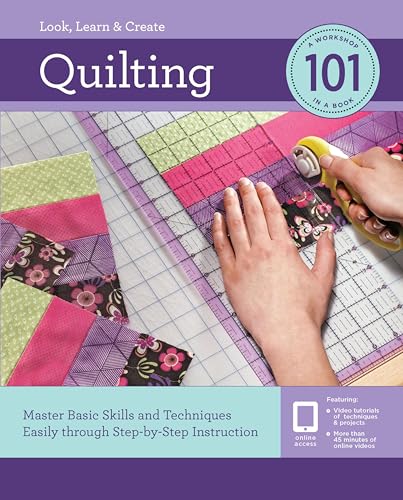
- Teaches basics through progressive projects
- Includes step-by-step photos plus online videos
- Covers fabric choice, cutting, seams, and quilting methods
Best For: Beginners who want a thorough, video-supported guide
Quick Project Pattern Collection
Simple Quilts from Me and My Sister Designs

- Includes 12 simple quilt patterns
- Moves from basic shapes to beginner-friendly techniques
- Ideal for retreats, weekend gifts, and quick makes
Best For: Beginners who want fast, colorful pattern projects
Beginner-Friendly Quilting Essentials
A Beginner's Guide to Quilting

- 6 starter projects build skills step by step
- Full-color photos and diagrams explain techniques
- Includes templates, charts, and quilt labels
Best For: New quilters who want a visual, approachable starting point
Machine Stitching Made Simple
Machine Quilting for Beginners

- Teaches quilting on a domestic machine
- Covers pattern, fabric selection, piecing, and quilting
- Short, focused 81-page introduction
Best For: Beginners who want to quilt on a domestic machine at home
Scrap-Friendly Skill Builder

- 12 beginner-friendly quilt patterns
- Uses pre-coordinated fat quarter bundles
- Includes diagrams, tips, and video links
Best For: Quilters who want simple, organized projects using fat quarter bundles
Quilting Reference Guide
All-in-One Quilter's Reference Tool

- Expanded edition adds 20 extra pages of charts, blocks, and techniques.
- Quick answers for yardage, cutting, bindings, and quilt settings.
- Compact 72-page reference for keeping beside your sewing machine.
Best For: New quilters who need a fast, practical reference
Precut Block Patterns
10-Inch Square Quilt Block Book

- Over 40 quilt block designs plus 13 full-size quilt projects.
- Step-by-step photos, diagrams, and instructions support learning.
- Covers pre-cut basics, squaring blocks, and color placement tips.
Best For: Beginners who want precut-focused quilt projects
Layer Cake Starter Patterns

- 11 beginner-friendly patterns built for Layer Cake precuts.
- Uses step-by-step diagrams and color photos for guidance.
- Big block quilts are designed to sew up quickly.
Best For: Beginners who want fast projects with precut fabric
Beginner-Friendly All-Around Guide – Quilting For Dummies
If you’re looking for quilting books for beginners that start at square one, Quilting For Dummies is a practical place to begin. It walks through tools, fabric, thread, design basics, and both hand and machine stitching, making it easy to follow even if your sewing experience is limited.
Best For: New quilters who want a broad, easy-to-read intro with projects, patterns, and fundamentals.
Pros:
- Starts with the basics: tools, fabrics, thread, and simple stitching maneuvers
- Includes step-by-step instructions, illustrated examples, and more than a dozen patterns
- Covers both hand and machine quilting plus helpful timesavers and resources
- Useful for learning design, applique, and quilting software basics
Cons:
- Its broad scope may feel less focused than a lesson-by-lesson beginner workbook
- At 384 pages, it may be more reading than some first-time quilters want
Overall, this is a strong all-purpose beginner guide if you want one book that explains the process from start to finish and offers plenty of project ideas along the way.
Lesson-Based Starter Pick – First-Time Quiltmaking, Second Edition
For readers comparing quilting books for beginners, First-Time Quiltmaking, Second Edition stands out for its six lesson structure and clearly illustrated instructions. It is built around the actual flow of learning to quilt, from preparing fabric to finishing the quilt with binding, a sleeve, and a label.
Best For: True beginners who want a structured, teach-me/show-me approach with simple projects.
Pros:
- Organized into six easy lessons that build skills step by step
- Uses photos, diagrams, and clear instructions to explain each stage
- Includes seven simple projects for practice
- Covers core skills like rotary cutting, seam accuracy, layering, and finishing
Cons:
- Focused on beginner fundamentals, so experienced quilters may outgrow it quickly
- Only 128 pages, so it is concise rather than deeply expansive
This is a smart pick if you want a straightforward learning path and prefer a book that feels like a beginner class in print.
Most Comprehensive Beginner Guide – Quilting 101
If you want quilting books for beginners with a little more depth, Quilting 101 is designed to take you from novice to confident starter through step-by-step instruction and progressive projects. It opens with all the essentials—fabric selection, quick cutting, seams, layering, basting, and hand or machine quilting—then builds skills through increasingly difficult patterns.
Best For: Beginners who want a thorough introduction plus online video support.
Pros:
- Covers the basics in depth, including cutting, seams, basting, and quilting methods
- Uses projects that start easy and gradually increase in difficulty
- Includes step-by-step instructions and photographs
- Comes with accompanying online videos demonstrating basics and projects
Cons:
- Its more comprehensive approach may be more than a casual hobbyist needs
- Digital extras may not appeal to buyers who want a purely print-only reference
Choose this one if you want a beginner book that feels especially complete and you like learning with both photos and video support.
Quick Project Pattern Collection – Simple Quilts from Me and My Sister Designs
Among quilting books for beginners, Simple Quilts from Me and My Sister Designs: Easy as 1, 2, 3 is a good choice if you want fast, satisfying projects rather than a long lesson plan. It offers 12 simple quilt patterns with skill-building steps that move from squares and strips into techniques like stitch-and-flip corners, half-square triangles, pinwheels, and a Rail Fence layout.
Best For: Beginners who want quick, colorful projects for retreats or weekend gifts.
Pros:
- Features 12 strikingly simple quilt projects
- Builds skills gradually with accessible techniques and layouts
- Well suited to quick makes, retreats, and weekend gifting
- Focuses on easy quilts with a strong color-driven style
Cons:
- Only 32 pages, so it is more of a small pattern collection than a full teaching guide
- Lacks the step-by-step beginner curriculum found in more instructional books
This is best for new quilters who already know they want simple projects and prefer a compact pattern book over a detailed classroom-style manual.
Beginner-Friendly Quilting Essentials – A Beginner's Guide to Quilting
If you’re looking for quilting books for beginners, this guide is designed to make the first steps feel clear and manageable. It covers the basics with full-color photos, detailed diagrams, and six starter projects that help you build skills gradually while creating useful and decorative pieces.
Best For: New quilters who want a friendly, visual step-by-step introduction with small projects before moving into full-size quilts.
Pros:
- Includes 6 starter projects, from placemats and table runners to four full-size quilts.
- Uses full-color photos and diagrams to explain cutting, piecing, and finishing.
- Offers quick-reference charts, fabric tips, and troubleshooting help.
- Includes templates and quilt labels for easy personalization.
Cons:
- Focused on beginner basics, so experienced quilters may want more advanced techniques.
- Only 128 pages, which leaves limited room for deep theory.
This is a practical entry point if you want a hands-on quilting book that teaches by showing, not just telling. The project progression and visual format make it easier to gain confidence as you go.
Machine Stitching Made Simple – Machine Quilting for Beginners
For shoppers comparing quilting books for beginners, this title focuses specifically on learning to quilt on a domestic machine. It walks you through the process from pattern and fabric selection to piecing and quilting, making it a practical pick if you want to finish an entire quilt at home on your own schedule.
Best For: Beginners who want to learn machine quilting at home and practice on a domestic sewing machine.
Pros:
- Targets machine quilting from start to finish, including quilting as the finishing touch.
- Lets you learn at your own pace on a domestic machine at home.
- Short, focused format with 81 pages for a streamlined introduction.
- Supported by enhanced typesetting and page flip features in the digital edition.
Cons:
- Very brief compared with more project-heavy beginner quilting books.
- Appears focused on machine quilting rather than broader quilting fundamentals.
This is a good fit if your main goal is to get comfortable with machine quilting rather than learn every aspect of quilting at once. Its narrow focus can be helpful when you want a straightforward, practical next step.
Scrap-Friendly Skill Builder – Fat Quarter Workshop
If you want quilting books for beginners that also help you use fabric efficiently, this workshop-style guide is a smart choice. It uses fat quarter bundles, so the color coordination is already done for you, and the book walks you through 12 step-by-step quilt projects with diagrams and beginner-friendly technique explanations.
Best For: Beginner and early-intermediate quilters who want easy-to-plan projects using fat quarter bundles.
Pros:
- Includes 12 step-by-step quilt patterns to build skills gradually.
- Uses fat quarter bundles, which simplify fabric selection.
- Covers piecing, making a quilt sandwich, and finishing techniques.
- Provides detailed diagrams, expert tips, and video tutorial links.
Cons:
- Requires fat quarter bundles, so it is less suited to quilters who want fully freestyle fabric planning.
- At 96 pages, it is more project-focused than comprehensive.
This book works well if you like structure and want projects that are easier to start without spending a lot of time choosing fabrics. The included tutorials and clear steps make it especially approachable for confidence-building practice.
Quilting Reference Guide – All-in-One Quilter's Reference Tool
If you want quilting books for beginners that answer common questions fast, this reference guide is built for exactly that job. It gives you charts, tables, illustrations, yardage requirements, cutting conversions, quilt settings, and block information in one compact book, making it a practical desk-side helper while you learn.
Best For: New quilters who want a quick-reference guide for measurements, cutting, binding, and basic quilt construction.
Pros:
- Expanded second edition adds 20 pages of new blocks, cutting charts, and piecing techniques.
- Fast answers to common quilting questions, from quilt sizes to bias binding.
- Compact 72-page format is easy to keep nearby while sewing.
- Written by well-known quilting authors Alex Anderson, Harriet Hargrave, Sharyn Craig, and Liz Aneloski.
Cons:
- It is a reference guide rather than a step-by-step beginner project book.
- Very short compared with full quilting instruction manuals.
This is a strong pick if you want a practical support book instead of a pattern collection. It works best as a go-to helper for measurements and technique questions while you build quilting confidence.
Precut Block Patterns – 10-Inch Square Quilt Block Book
For quilting books for beginners that focus on precut-friendly projects, this title makes the process easier by removing a lot of guesswork. It centers on 10-inch squares, offering more than 40 block designs and 13 full-size quilt projects with step-by-step photos, diagrams, and tips for squaring up blocks, choosing color placement, and finishing cleanly.
Best For: Beginners who want to use 10-inch precut squares and follow clear, project-based instructions.
Pros:
- Features over 40 quilt block designs and 13 full-size quilt projects.
- Includes step-by-step photos, instructions, and diagrams for easier learning.
- Gives practical tips on pre-cuts, squaring up blocks, and color placement.
- Designed to help quilters create cohesive projects with minimal waste.
Cons:
- Focuses specifically on 10-inch squares, so it is less flexible than a general quilting book.
- Best suited to readers who already have or want precut fabric packs.
This book is a solid choice if you like structured projects and want a straightforward way to start quilting with pre-cuts. The combination of block variety and finishing guidance makes it especially useful for confident first projects.
Layer Cake Starter Patterns – Big Blocks, Big Quilts
If you are comparing quilting books for beginners and want something that helps you finish quilts quickly, this book is built around Layer Cake 10″ x 10″ precut fabric packs. It includes 11 beginner-friendly quilt patterns with diagrams, color photos, and simple instructions, making it easier to jump into sewing without heavy cutting and measuring.
Best For: Beginner quilters who want quick, easy quilt patterns using Layer Cake precuts.
Pros:
- 11 quilt patterns designed specifically for Layer Cake precuts.
- Beginner-friendly instructions are paired with step-by-step diagrams and color photos.
- Big block designs help quilts come together quickly.
- Includes pattern variations for more creative options.
Cons:
- Only 52 pages, so it is more of a focused pattern book than a deep instruction manual.
- Most useful if you already like working with precut fabric packs.
This is a good pick if you want fast progress and a low-stress entry into quilting. Its simple pattern format and precut approach make it easy to start stitching with confidence.
How We Picked These Quilting Books for Beginners
We looked for books that are genuinely beginner-friendly: clear step-by-step instructions, helpful visuals, manageable projects, and a learning path that does not assume much prior experience. We also favored titles that explain core quilting terms, tools, and techniques in a way new quilters can use right away.
Quick Comparison: What These Books Do Best
Some Quilting Books for Beginners focus on foundational skills and terminology, while others are better for learning through projects. A few emphasize machine quilting, and others are built around pre-cuts like fat quarters, layer cakes, or 10-inch squares. If you want the easiest entry point, look for books with diagrams, fabric guides, and small, confidence-building patterns.
Key Buying Factors for Quilting Books for Beginners
Skill Level and Teaching Style
Choose a book that matches how you learn. Some readers prefer a structured lesson format, while others do better with project-based instruction. If you are brand new, a book that explains both tools and technique is often the safest choice.
Project Complexity
Start with books that use simple blocks, fewer seams, and straightforward layouts. Easy projects help you practice cutting, piecing, pressing, and finishing without getting overwhelmed.
Visual Clarity
Good illustrations, charts, and photographs matter a lot. Clear visuals can make quilting techniques easier to understand than text alone, especially when you are learning measurements, block assembly, and machine setup.
Fabric and Material Focus
Some books are more useful if you already own pre-cuts or want to buy fabric efficiently. If you like minimizing waste or working from bundles, a pre-cut-focused guide can be a smart pick.
Reference Value
An all-in-one reference book is helpful when you want yardage charts, cutting tables, and quick answers you can revisit later. That kind of book is especially useful as a companion to a project-based guide.
Who Should Buy Which Quilting Books for Beginners?
If you want a broad foundation, choose a general beginner manual. If you learn best by doing, pick a book with simple projects and repetitive skills practice. If you plan to quilt on a sewing machine, choose a machine-specific title. If you already have fat quarters or layer cakes, a pre-cut project book may give you the fastest path to finished quilts. For most new quilters, the best approach is pairing one technique-focused book with one project-focused book so you can learn and practice at the same time.