Modular origami turns simple sheets of paper into striking geometric forms, from elegant polyhedra to intricate kusudama and mandala designs.
Below, we’ve narrowed the field to 10 standout books for beginners, enthusiasts, and advanced folders who want clear instructions and inspiring projects.
Best 10 Modular Origami Books Picks for 2026
Polyhedral Showpieces

- 22 geometric modular models
- Clear step-by-step diagrams
- Bold polyhedral wire-frame style
Best For: folders seeking challenging, display-ready geometric projects
Kusudama Collection

- 40+ elaborate modular figures
- Kusudama, stars, and flowers
- Good for beginners and experienced folders
Best For: readers wanting a kusudama-heavy book with lots of project variety
Mathematical Models

- Over a dozen geometric models
- Clear polyhedra and symmetry focus
- Step-by-step diagrams throughout
Best For: folding enthusiasts drawn to math, symmetry, and polyhedral designs
Modern Kusudama
Designs for Modular Origami Lovers

- 30+ step-by-step projects
- Easy stars to intricate kusudamas
- Many models are brand new
Best For: modular origami fans who want modern kusudama designs in a range of difficulties
Mindful Geometry Starter
The Art and Craft of Geometric Origami
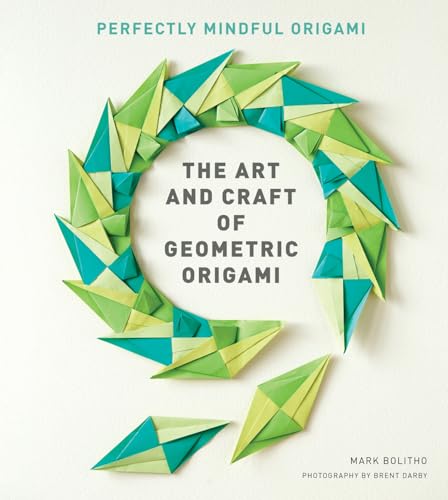
- 27 geometric shapes from pyramids to starbursts
- Illustrated step-by-step instructions
- Includes 32 sheets of origami paper
Best For: Folders seeking a mindful, varied intro to modular geometric origami
Beginner Polyhedra Pick
Beginner's Book of Modular Origami Polyhedra

- 17 projects based on the Platonic solids
- Easy diagrams with detailed assembly views
- Includes photos and background on the solids
Best For: Beginners who want clear instructions for classic modular polyhedra
Advanced Mandala Builder

- 32 original models with octagonal structures
- Hand-drawn diagrams with step-by-step progression
- Includes tips for creating variations
Best For: Experienced folders who want original radial modular designs
Mind-Blowing Kusudama Pick
Mind-Blowing Kusudama Origami: The Art of Modular Paper Folding

- 30 original Kusudama models
- Clear diagrams and step-by-step photos
- Approachable for beginners
Best For: Folders who want dramatic Kusudama spheres and guided modular instruction
Kid-Friendly Modular Pick
Modular Origami for Kids: Full Color Printing. 20 Models with Assembly Units. Online Video

- 20 playable modular models
- Full-color pages with photos and symbols
- Online videos for extra help
Best For: Kids 6+ and families wanting simple modular projects with video support
Expert Geometric Pick

- 64 geometric modular models
- By Tomoko Fuse
- Best for experienced folders
Best For: Experienced folders seeking a broad, geometry-focused modular origami reference
Polyhedral Showpieces – Mind-Blowing Modular Origami
If you want modular origami books that push beyond simple beginner projects, this volume focuses on complex geometric constructions and polyhedral paper folding. The instructions walk you through folding small paper units and assembling them into 22 finished models, with diagrams designed to make the process approachable even when the results look highly advanced.
Best For: folders who want challenging, desk-worthy geometric models and enjoy learning through clear step-by-step diagrams.
Pros:
- Includes 22 modular origami models with step-by-step instructions.
- Emphasizes striking polyhedral and wire-frame geometric designs.
- Easy-to-follow diagrams support the folding and assembly process.
- Creates impressive display pieces for a desk or shelf.
Cons:
- The models are described as complex, so they may not suit absolute beginners.
- Only 96 pages, so the collection is focused rather than broad.
This is a strong pick if you want modular origami books that prioritize ambitious geometry and finished-model impact. It stands out for its distinctive open, linear style and the sheer visual complexity of the included projects.
Kusudama Collection – Dover Kusudama Origami Book
Among modular origami books, this guide is centered on kusudama paper spheres and related decorative forms. It offers instructions for more than 40 elaborate models, ranging from stars and flowers to traditional kusudamas, making it a practical choice if you want a wide selection of eye-catching projects.
Best For: folders who want a broad kusudama-focused collection with decorative, giftable models.
Pros:
- Features over 40 modular origami figures.
- Focuses on kusudama spheres, stars, and flowers.
- Suitable for beginning and experienced folders.
- Traditional models make it useful for decorations or gifts.
Cons:
- The book is centered on kusudama shapes, so it is less varied outside that theme.
- Some figures may still feel elaborate for casual folders.
This book is a good value if you want modular origami books that lean into classic kusudama design. The mix of beginner-friendly access and a large model count makes it easy to keep folding without running out of options.
Mathematical Models – Exquisite Modular Origami
If you like modular origami books that connect folding with geometry, this step-by-step guide focuses on polyhedra, symmetry, and mathematical structure. It presents over a dozen proven-favorite models and uses clear diagrams to show how ordinary paper can become intricate three-dimensional forms.
Best For: origami fans who enjoy polyhedra, symmetry, and math-friendly model building.
Pros:
- Step-by-step instructions for over a dozen models.
- Strong emphasis on polyhedra, symmetry, and geometry.
- Clear diagrams support the folding process.
- Includes models that have been popular with fans worldwide.
Cons:
- At 68 pages, it is a relatively short book.
- The subject matter is specialized toward geometric modular origami.
This is a focused choice for readers who want modular origami books with a mathematical edge. It works especially well if you enjoy learning structure through folding and prefer books built around proven, admired designs.
Modern Kusudama – Designs for Modular Origami Lovers
For shoppers comparing modular origami books, this digital guide offers a large set of kusudama and star-based projects with a modern feel. It includes step-by-step instructions for over 30 figures, with difficulty ranging from easy stars to intricate kusudamas, and many of the models are described as brand new.
Best For: modular origami hobbyists who want a mix of approachable projects and newer kusudama designs.
Pros:
- Step-by-step instructions for over 30 figures.
- Difficulty ranges from easy stars to intricate kusudamas.
- Many models are brand new and not widely published.
- Built for readers who enjoy modular construction-style folding.
Cons:
- Digital format may not suit buyers who prefer a printed book.
- Some of the more intricate models may be challenging for newer folders.
This is a solid option if you want modular origami books with fresh designs and a wide difficulty range. The mix of accessibility and novelty makes it appealing for folders who want to keep their project list moving forward.
Mindful Geometry Starter – The Art and Craft of Geometric Origami
If you want modular origami books that blend calm folding with visually striking results, this collection is a strong pick. It focuses on geometric origami with 27 inventive shapes, ranging from simple one-piece pyramids to intricate starbursts, and includes illustrated step-by-step instructions plus 32 sheets of origami paper to get started.
Best For: Folders who want a mindful introduction to geometric and modular origami with a mix of approachable and more intricate projects.
Pros:
- 27 inventive geometric shapes offer good variety.
- Illustrated step-by-step instructions support learning.
- Includes 32 sheets of origami paper.
- Ranges from simple pyramids to detailed starbursts.
Cons:
- Only a single-level introduction is implied, not a broad curriculum.
- Some designs may be more demanding than the simplest starter books.
This is a practical choice if you want a book that feels both creative and calming, with enough project variety to keep you engaged as your folding skills grow.
Beginner Polyhedra Pick – Beginner's Book of Modular Origami Polyhedra
For shoppers comparing modular origami books, this one stands out for a clear beginner-friendly path into classic polyhedra. It uses 17 projects based on the Platonic solids and pairs them with easy step-by-step diagrams, detailed assembly views, photos of the finished models, and short background on the solids themselves.
Best For: Beginners and returning folders who want simple instructions for iconic geometric models.
Pros:
- 17 projects based on the Platonic solids.
- Easy step-by-step diagrams and detailed assembly views.
- Complete model photos help with visual reference.
- Includes background on the Platonic solids.
Cons:
- Only 64 pages, so it is a relatively compact guide.
- Focus is narrow if you want broader modular origami variety.
This book is a solid entry point if you want accessible instructions and classic forms that look more complex than they are, making it especially friendly for first-time modular folders.
Advanced Mandala Builder – Magnificent Origami Mandalas
If you’re shopping modular origami books for more ambitious designs, this title leans into radial, mandala-like models with a strong visual payoff. It includes 32 original models, all built around octagonal structures made from eight units, and uses hand-drawn diagrams with clear step-by-step progression.
Best For: Folders with some experience who want original modular models and room to experiment with structure.
Pros:
- 32 original modular models by Matthew Green.
- Focused on eye-catching mandala-like radial designs.
- Hand-drawn diagrams aim for clear step-by-step instruction.
- Includes tips and design insights that may inspire variation.
Cons:
- Target audience is folders with at least moderate experience.
- All models are based on octagonal structures, so the focus is specialized.
This is the most design-forward option in the group, making it a smart pick if you want modern-looking modular projects and appreciate a book that also hints at the creative process behind them.
Mind-Blowing Kusudama Pick – Mind-Blowing Kusudama Origami: The Art of Modular Paper Folding
If you want modular origami books that focus on showpiece results, this volume is built around kusudama spheres and other striking geometric forms. Byriah Loper presents 30 original models, and the step-by-step photos and clear diagrams are meant to make the folding process approachable even if you are new to the craft.
Best For: Folders who want dramatic kusudama sculptures and a guided introduction to modular paper folding.
Pros:
- Includes 30 original Kusudama creations
- Clear diagrams plus detailed step-by-step photos
- Accessible for beginners with no prior origami experience
- Offers a wide range of ornate spherical and geometric designs
Cons:
- Focused specifically on Kusudama rather than general origami
- Assembling the models is still an involved challenge
This is a strong pick if you value finished display pieces and want a modular origami book that balances ambitious designs with helpful instruction. The emphasis here is on visual impact, making it especially appealing for crafters who enjoy building decorative paper sculptures.
Kid-Friendly Modular Pick – Modular Origami for Kids: Full Color Printing. 20 Models with Assembly Units. Online Video
Modular Origami for Kids: Full Color Printing. 20 Models with Assembly Units. Online Video
Check Price On AmazonThis is one of the more approachable modular origami books if you are shopping for a child or a beginner who likes hands-on projects. The book includes 20 playable models, organized from simple to complex, with full-color printing, step-by-step photos, symbols, comments, and online video support.
Best For: Kids age 6+ and families looking for simple modular origami projects with video guidance.
Pros:
- 20 models designed to play with and manipulate
- Projects are arranged from simple to complex
- Includes step-by-step photos, symbols, and comments
- Online videos add extra guidance
Cons:
- Video files are online rather than included on a disc
- Some projects may require glue, scissors, or other tools
If you want a kid-oriented entry point into modular folding, this book is designed to keep the learning curve manageable while still offering variety. Its color printing and online support make it a practical choice for families or classrooms.
Expert Geometric Pick – The Complete Book of Origami Polyhedra: 64 Ingenious Geometric Paper Models (Learn Modular Origami from Japan's Leading Master!)
For buyers comparing modular origami books by depth and range, this title stands out with 64 geometric paper models from Tomoko Fuse, one of Japan’s leading masters of the art. It focuses on polyhedral constructions made from multiple folded sheets locked together without glue or tape, with sections covering stackable modules, 3-D stars, manifold modulars, cubes, and boxes.
Best For: Experienced folders who want a broad, geometry-focused modular origami reference.
Pros:
- Includes 64 modular origami models
- Covers stackable modules, stars, cubes, boxes, and more
- Written by Tomoko Fuse, a major name in modular origami
- Offers a strong mix of decorative and structural designs
Cons:
- Recommended for experienced folders, not absolute beginners
- Very geometry-focused, so it is less varied in theme than some books
This is the most technical pick in the group, and it will appeal to folders who want to go beyond simple assemblies. If you are looking for a substantial modular origami book with many models and a master teacher, this is the most advanced option here.
How We Picked These Modular Origami Books
We focused on books that offer reliable diagrams, clear assembly guidance, strong project variety, and a sensible progression from easier models to more advanced constructions. Since Modular Origami Books can vary a lot in difficulty, we also looked for titles that match different goals: learning fundamentals, building a collection of decorative models, or tackling challenging geometric forms.
Quick Comparison: What to Expect
At a high level, the selection breaks into a few useful categories. Some books are built for beginners and families, with fuller instructions and approachable assemblies. Others emphasize polyhedra, kusudama, or mandala-style modules, which usually require more patience but produce highly displayable results. A few lean heavily into mathematical or structural thinking, making them better suited to confident folders who want precision and depth.
Key Buying Factors for Modular Origami Books
Difficulty Level
Check whether the book is truly beginner-friendly or better suited to experienced folders. In modular origami, complexity comes from both the fold itself and the assembly process, so even simple units can become challenging in large numbers.
Clarity of Diagrams and Assembly Steps
The best Modular Origami Books break each model into manageable stages and show how modules fit together. Look for books that explain not just how to fold a unit, but how to join them securely and consistently.
Model Variety
If you want long-term value, choose a book with a mix of polyhedra, decorative kusudama forms, and other geometric builds. If you already know your preferred style, a focused title can be a better fit than a broad overview.
Paper and Printing Considerations
Some books work best with square paper and standard origami paper, while others benefit from included color printing, online video support, or repeated module patterns that make assembly easier to follow. These extras can matter a lot for visual learners.
Who Should Buy Which Modular Origami Books?
Beginners and younger folders should prioritize books with straightforward instructions, fewer parts, and strong visual guidance. Hobbyists looking to expand their skills may prefer titles centered on polyhedra or kusudama because they offer a satisfying balance of challenge and display value. Advanced readers and math-minded makers will likely get the most from books that explore geometric structure, complex modules, and a deeper modular origami approach.
If you’re shopping for a gift, think about the recipient’s patience level and interest in decorative paper art versus technical folding. The right modular origami book should match both skill and motivation, making it easier to finish projects and enjoy the process.