The best literary criticism books make complex ideas easier to understand while giving readers practical ways to analyze poems, fiction, drama, and culture.
This 2026 roundup covers accessible introductions, scholarly reference works, classical criticism, and influential studies of literary judgment.
Best 10 Literary Criticism Books Picks for 2026
Best All-Round Theory Guide

- Clear introduction to literary and cultural theory
- Covers major approaches and technical language
- Fourth edition includes expanded, updated material
Best For: Students building a foundation in literary theory
Best Landmark Framework

- Influential theory by Northrop Frye
- Examines archetypes, genres, and poetic language
- Builds a broad structure for understanding literature
Best For: Readers seeking an ambitious, systematic theory of literature
Best for Beginners
How to Read Literature Like a Professor

- Accessible guide to symbols, themes, and patterns
- Lively explanations for new literary readers
- Third edition adds modern and diverse examples
Best For: Beginners, AP students, and general readers
Best Comprehensive Reference
Norton Anthology of Theory and Criticism

- Contains 191 selections by 157 authors
- Adds 48 largely modern and contemporary selections
- Extensive 2,848-page reference volume
Best For: University study, teaching, and long-term research
Best Classical Foundations

- Primary texts from Plato, Aristotle, Horace, and Longinus
- Includes notes, chronology, bibliography, and introduction
- Compact 188-page Penguin Classics edition
Best For: Classicists, students, and writers studying foundational criticism
Best Broad Theory Survey

- Surveys criticism from antiquity to the twenty-first century
- Covers formalist, historicist, political, and psychoanalytic approaches
- Applies theories to Hamlet and Frankenstein
Best For: Undergraduates and readers seeking an accessible theory overview
Best Expanded Classical Reader
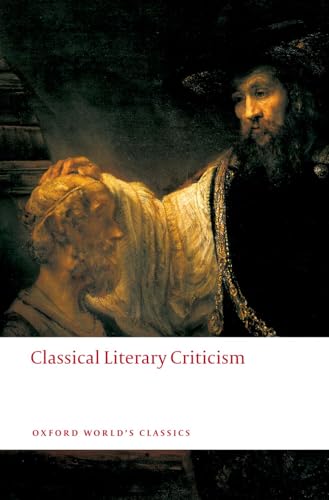
- Includes Aristotle, Horace, Longinus, Tacitus, Plato, and Plutarch
- Offers translations of principal classical criticism texts
- Adds expert introduction, notes, and bibliography
Best For: Readers wanting a broader scholarly collection of ancient criticism
Best Theory Primer
Literary Criticism: An Introduction

- Surveys 13 major twentieth-century schools
- Explains philosophical and historical contexts
- Offers theory-based essay-writing guidance
Best For: Students building a foundation in literary theory
Best Foundational Close-Reading Study

- A twentieth-century criticism landmark
- Examines standards for literary judgment
- Explores the psychology of criticism
Best For: Readers interested in classic critical methods
Best Contemporary Defense of Close Reading

- Defends close reading as literary method
- Discusses quotation, summary, and reading practices
- Makes a concise case for literary studies
Best For: Readers seeking a modern argument for criticism
Best All-Round Theory Guide – Beginning Theory
Beginning theory: An introduction to literary and cultural theory: Fourth edition
Check Price On AmazonFor readers comparing literary criticism books, Beginning Theory is a practical single-volume introduction to literary and cultural theory. Its fourth edition explains major approaches, theorists, and technical language in a lucid way while leaving room for readers to form their own views.
Best For: Students and independent readers who want a broad, approachable foundation in literary and cultural theory.
Pros:
- Covers a wide range of approaches, theorists, and concepts.
- Explains difficult terminology clearly.
- Updated with expanded chapters and an overview of newer theoretical movements.
Cons:
- Its broad scope may feel less detailed than a specialist study.
- It focuses on theory and cultural theory rather than extended close readings of individual texts.
With 378 pages and a deliberately open-minded approach, this is a strong starting point for building the vocabulary needed to explore more advanced literary criticism books.
Best Landmark Framework – Anatomy of Criticism
Among literary criticism books, Northrop Frye’s Anatomy of Criticism stands out as a substantial theoretical work that looks beyond individual close readings. It examines archetypes, genres, poetic language, and the connections among literature, readers, and society.
Best For: Advanced students and serious readers interested in literary form, genre, archetypes, and broad theories of literature.
Pros:
- Presents a comprehensive framework for understanding literary forms.
- Explores archetypes, genres, poetic language, and reader-text-society relationships.
- Uses a wide range of examples to develop its arguments.
Cons:
- Its theoretical scope may be demanding for beginners.
- Readers seeking practical, step-by-step analysis may prefer a more introductory guide.
This 408-page Princeton Classics edition is best approached as a landmark work of literary theory rather than a quick reference, especially if you want a systematic account of literature as a total structure.
Best for Beginners – How to Read Literature Like a Professor
For newcomers browsing literary criticism books, Thomas C. Foster’s How to Read Literature Like a Professor offers an accessible way to recognize symbols, themes, patterns, and narrative devices. Its lively format connects classic and contemporary works to practical questions about how stories create meaning.
Best For: Beginning readers, AP English students, teachers, and anyone who wants to make everyday reading more analytical and rewarding.
Pros:
- Explains literary devices and recurring patterns in an approachable style.
- Uses examples from both classic and modern, diverse works.
- The third edition adds new material and updated teaching points.
Cons:
- Its introductory approach is not intended as a comprehensive history of literary theory.
- Readers seeking highly specialized criticism may find the treatment broad.
This is a practical first step for learning how to spot literary codes, from quests and shared meals to symbolism and narrative form, without requiring prior academic background.
Best Comprehensive Reference – Norton Anthology of Theory and Criticism
Readers seeking the widest selection among literary criticism books should consider The Norton Anthology of Theory and Criticism. The third edition brings together 191 pieces by 157 authors, offering an extensive record of the development and current state of literary theory.
Best For: University students, instructors, researchers, and readers who need a substantial reference anthology spanning historical and contemporary criticism.
Pros:
- Includes 191 selections from 157 authors.
- Adds 48 new selections, concentrated largely in twentieth- and twenty-first-century theory.
- Provides an exceptionally broad overview in one volume.
Cons:
- At 2,848 pages, it is exceptionally large and heavy.
- The anthology format may be less approachable for readers wanting continuous, guided explanation.
This third edition is a reference-library choice rather than a casual introduction, but its breadth makes it particularly useful for coursework, comparison, and sustained research across periods and critical approaches.
Best Classical Foundations – Classical Literary Criticism
For readers seeking literary criticism books grounded in the classical tradition, this Penguin Classics anthology brings together influential works by Plato, Aristotle, Horace, and Longinus. Its introduction, chronology, bibliography, and notes make it a practical choice for studying how foundational ideas about poetry and prose developed.
Best For: Classicists, students, and writers building a foundation in Western literary criticism.
Pros:
- Includes major texts such as Aristotle’s Poetics and Longinus’s On the Sublime.
- Shows contrasting views on poetry, craftsmanship, ethics, inspiration, and literary value.
- Features an introduction, chronology, bibliography, and comprehensive notes.
Cons:
- Its focus is limited to classical and early Western critical texts.
- The 188-page edition offers a focused anthology rather than a broad modern survey.
This is a compact, focused pick for readers who want primary classical sources with scholarly support rather than a chronological overview of later literary theory.
Best Broad Theory Survey – Literary Theory and Criticism
Among literary criticism books for students, this second edition offers a broad, accessible survey from antiquity through twenty-first-century theory. It covers historical periods and major approaches, then demonstrates how different concepts can be applied to Hamlet and Frankenstein.
Best For: Undergraduate students and readers who want an organized introduction to major literary theories and movements.
Pros:
- Traces literary theory and criticism from antiquity to the twenty-first century.
- Covers formalist, historicist, political, and psychoanalytic approaches.
- The updated edition expands coverage of Marxist theory, disability studies, affect theory, and Critical Race Theory.
Cons:
- Its introductory breadth may provide less depth on individual theorists or movements.
- At 320 pages, it is a more substantial study text than a quick reference.
With its chronological structure and applied final chapter, this is the strongest option here for readers who want a textbook-style map of literary theory alongside concrete examples.
Best Expanded Classical Reader – Classical Literary Criticism
This Oxford World’s Classics volume is a strong choice for readers comparing literary criticism books focused on antiquity. Alongside Aristotle, Horace, and Longinus, it includes Tacitus, extracts from Plato, and Plutarch, with an expert introduction, notes, and bibliography to support further study.
Best For: Readers wanting a wider translated selection of classical criticism in a scholarly reference edition.
Pros:
- Includes principal texts by Aristotle, Horace, Longinus, and Tacitus.
- Adds extracts from Plato and Plutarch for broader classical coverage.
- Provides an expert introduction, extensive notes, and an up-to-date bibliography.
Cons:
- Concentrates on classical criticism rather than modern literary theory.
- Its scholarly apparatus may be more than casual readers need.
Compared with a narrower classical anthology, this edition offers a broader selection of ancient material and more pages, making it useful for comparative reading and follow-up research.
Best Theory Primer – Literary Criticism: An Introduction
For readers comparing literary criticism books, Literary Criticism: An Introduction to Theory and Practice offers a structured survey of thirteen major twentieth-century schools. Its historical and philosophical context, paired with guidance for writing theory-based essays, makes it a practical academic reference.
Best For: Students who want a broad introduction to literary theory and a clear framework for applying different critical approaches in essays.
Pros:
- Covers thirteen basic schools of twentieth-century literary theory and criticism.
- Explains the historical and philosophical assumptions behind each school.
- Includes methodology for writing essays according to different critical approaches.
Cons:
- Its focus on twentieth-century schools may provide less coverage of newer approaches.
- The 352-page format may feel extensive for readers seeking only a brief overview.
Choose this fifth edition if you want one organized volume that connects theory, context, and practical essay writing. It is especially useful as a course companion or foundational reference.
Best Foundational Close-Reading Study – Practical Criticism
Among literary criticism books, I. A. Richards’s Practical Criticism is a landmark study of literary judgment and the psychology of examining literature. Its emphasis on standards and techniques makes it a strong choice for readers interested in the foundations of practical critical analysis.
Best For: Readers studying the history and psychology of literary judgment or seeking a classic account of how literature can be examined.
Pros:
- Recognized as a twentieth-century landmark in literary criticism.
- Introduces standards and techniques for examining literature.
- Focuses on the psychology involved in criticism.
Cons:
- Its 1956 publication date may make it less aligned with contemporary critical schools.
- It offers a specialized historical perspective rather than a broad survey of modern theory.
This is a worthwhile pick when you want a classic, historically important study rather than a modern introductory textbook. Its compact 384-page edition centers on literary judgment and critical method.
Best Contemporary Defense of Close Reading – Criticism and Truth
For readers seeking literary criticism books with a contemporary focus, Jonathan Kramnick’s Criticism and Truth makes the case for close reading as a method of pursuing arguments and advancing knowledge. The concise volume also considers quotation, summary, and reading as forms of humanistic expertise.
Best For: Students, instructors, and humanities readers who want a focused defense of literary studies and the value of close reading.
Pros:
- Centers close reading as the distinctive method of literary studies.
- Explains how quotation, summary, and other reading practices support analysis.
- Offers a concise, contemporary defense of literature and criticism in higher education.
Cons:
- At 137 pages, it is not a comprehensive survey of literary theory.
- Its focus on defending literary studies may be narrower than a practical introductory textbook.
Select this book for a short, idea-driven treatment of why criticism matters and how close reading produces knowledge. It works well as a focused supplement to broader theory or methods texts.
How We Picked the Best Literary Criticism Books
We selected these Literary Criticism Books to cover the main ways readers encounter the subject: introductory theory, historical criticism, close reading, practical analysis, and advanced debates about method. We also considered the intended audience, clarity of explanation, breadth of coverage, scholarly importance, and usefulness for independent study or coursework.
Because no single title suits every reader, the list includes approachable guides alongside dense anthologies and foundational works. Check the edition details before buying, since revised editions may include updated terminology, expanded reading lists, or different introductions and notes.
Quick Comparison
- Best for beginners: Look for a clearly structured introduction with examples and explanations of major schools of thought.
- Best for broad reference: Choose an anthology containing primary essays, historical context, and editorial notes.
- Best for classical foundations: Select a volume focused on Greek and Roman writers such as Plato, Aristotle, Longinus, or Horace.
- Best for close reading: Choose a practical guide that demonstrates how literary devices and patterns create meaning.
- Best for advanced study: Consider historically influential works that examine critical judgment, interpretation, or scholarly method.
Key Buying Factors for Literary Criticism Books
Level and Purpose
Beginners usually benefit from a guided overview before tackling specialist essays. Students writing papers may prefer a book that defines terminology, explains major movements, and provides examples. Advanced readers may prioritize original arguments, historical significance, or comprehensive source material.
Scope and Organization
Some books concentrate on one period or method, while others range from formalism and structuralism to feminism, psychoanalysis, Marxism, postcolonial theory, and cultural studies. A chronological structure helps with intellectual history; a thematic structure can be faster for research.
Primary Texts Versus Explanation
Anthologies offer direct access to influential criticism but can assume prior knowledge. Introductory books provide more context and commentary, making them easier to use independently. If you are building a long-term reference shelf, owning one of each type can be more useful than choosing several similar introductions.
Edition, Notes, and Usability
Compare editions for translations, introductions, bibliographies, indexes, page layout, and supplementary material. For academic work, reliable citations and an index are especially valuable. A portable paperback may suit reading on the go, while a larger reference edition is often easier to consult at a desk.
Who Should Buy Which Literary Criticism Books?
New students should start with an accessible introduction or an example-led guide to literary analysis. Readers interested in the origins of criticism should choose a classical collection. Those who need a wide academic reference will get the most value from a substantial anthology of theory and criticism.
Readers focused on interpreting individual works should favor practical close-reading instruction, while experienced students and researchers may prefer landmark studies of critical judgment or arguments about scholarly method. If your course has a required reading list, match the book’s terminology and edition to the syllabus first; otherwise, choose the format and level that you are most likely to use consistently.