Japanese ceramics blend technique, tradition, and visual beauty, which makes choosing the right book especially important. Whether you want hands-on guidance, historical context, or collector insight, the best titles can save time and sharpen your focus.
This roundup highlights a balanced mix of beginner-friendly guides, studio references, and specialty books for readers who want to learn, collect, or appreciate Japanese pottery more deeply.
Best 10 Japanese Pottery Books Picks for 2026
Classic Beginner's Manual

- Step-by-step guide to Japanese pottery basics
- Covers tools, glazes, kilns, and workshop setup
- Revised edition with updated illustrations and text
Best For: Potters and students wanting a practical first guide
Artist Biography Pick
Shoji Hamada: A Potter's Way and Work

- In-depth portrait of Shoji Hamada's life and work
- Over 200 color photos show techniques and process
- Updated edition includes a new legacy chapter
Best For: Readers drawn to studio pottery history and artist biography
Technical Primer Choice

- Hands-on primer covering tools, materials, and firing
- Introduces Bizen, Mino, Karatsu, Hagi, and Kyoto
- Illustrated with color plates, photos, and drawings
Best For: Potters and collectors seeking a practical ceramics primer
Contemporary Art Survey

- Shows 36 Japanese women ceramists and their work
- Emphasizes innovative, technically inventive pieces
- Large-format exhibition catalogue with strong visuals
Best For: Readers interested in contemporary Japanese ceramic art
Curator’s Pick

- Lavishly illustrated reference
- Geographic kiln-by-kiln organization
- Strong on history and regional style
Best For: Readers who want an artful reference for exploring Japanese ceramics by region
Beginner’s Studio Pick

- Covers clay, tools, forms, glazes, and firing
- Includes kintsugi, raku, and wabi-sabi
- Designed as a practical beginner guide
Best For: Beginners seeking a hands-on introduction with tradition and philosophy
Classic Reference
The World of Japanese Ceramics

- 268-page English reference
- Published by Kodansha
- Good for broad background study
Best For: Readers who want a classic English-language overview from an established publisher
Utsuwa Spotlight

- Gorgeously photographed ceramic vessels
- Focuses on clay, glaze, and kiln effects
- 160 pages for visual study
Best For: Readers who want a visual study of Japanese vessel form
Export Ceramics Reference
Imari, Satsuma and Other Japanese Export Ceramics

- 600 full-color photos of export wares
- Covers Imari, Satsuma, Fukagawa, Sumida, and Banko
- Includes marks, variations, and values reference
Best For: Collectors needing a reference on Japanese export ceramics
Beginner Studio Guide
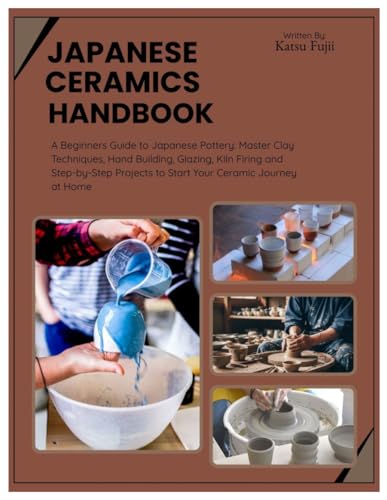
- Covers hand-building through wheel throwing
- Explains glazing, firing, and kiln selection
- Includes step-by-step home projects
Best For: Beginners wanting a hands-on Japanese ceramics guide
Classic Beginner's Manual – The Japanese Pottery Handbook
If you’re looking for Japanese pottery books that explain the craft in a clear, practical way, this revised handbook is a strong starting point. It walks through how pots are made in Japan, along with forms, decorations, tools, materials, glazes, workshop setup, and kiln basics, while keeping the presentation friendly and approachable.
Best For: Potters and students who want a step-by-step introduction to traditional and modern Japanese pottery methods.
Pros:
- Step-by-step manual format makes techniques easy to follow.
- Covers tools, materials, glazes, kilns, and workshop setup.
- Updated edition adds refreshed illustrations and expanded sections.
- Bilingual pottery terms can help cross-reference Japanese expressions.
Cons:
- At 128 pages, it is concise rather than exhaustive.
- More of a practical handbook than a deep historical survey.
As a buying choice, this book stands out for its hands-on usefulness and classic reputation. It is especially appealing if you want a compact reference that balances tradition, technique, and a very accessible teaching style.
Artist Biography Pick – Shoji Hamada: A Potter's Way and Work
Among Japanese pottery books, this one is ideal if you want a focused portrait of a major 20th-century ceramist rather than a general technique manual. It explores Shoji Hamada’s life, his energetic working style, his kiln-firing practices, and his legacy in studio pottery, with more than 200 color photographs supporting the narrative.
Best For: Readers interested in Shoji Hamada, studio pottery history, and the East-West connection in ceramics.
Pros:
- In-depth biographical portrait of a seminal Japanese potter.
- More than 200 new color photographs add visual depth.
- Includes details on techniques, processes, and kiln firing.
- Updated edition adds a new concluding chapter on Hamada’s legacy.
Cons:
- Less useful as a how-to manual for beginners.
- Focuses on one artist rather than broad coverage of Japanese ceramics.
This is a strong pick if you want context, history, and inspiration from a landmark figure in ceramics. The book’s value lies in its combination of biography, technical detail, and firsthand insight into Hamada’s world.
Technical Primer Choice – Inside Japanese Ceramics
If you want Japanese pottery books that read like a workshop primer, this title is built for hands-on learning. It focuses on the essentials of tools, materials, forming, decoration, glazes, kilns, and firing, while also introducing representative wares such as Bizen, Mino, Karatsu, Hagi, and Kyoto.
Best For: Potters, collectors, and connoisseurs who want a practical introduction to Japanese ceramic methods and traditions.
Pros:
- Comprehensive primer on materials, techniques, and traditions.
- Explains workshop setup, pot-forming, decoration, glazing, and firing.
- Covers major Japanese wares and styles in one volume.
- Richly illustrated with color plates, photos, and line drawings.
Cons:
- More technical than narrative-driven.
- At 192 pages, it gives an overview rather than extreme depth on each ware.
This is the best fit if your priority is practical understanding rather than coffee-table browsing. Its strength is that it connects traditional methods with modern materials and shows how Western potters can adapt Japanese approaches.
Contemporary Art Survey – Radical Clay
This title stands out among Japanese pottery books if you’re interested in contemporary ceramic art rather than traditional technique. It presents thirty-six Japanese women artists working across the past fifty years, highlighting technically innovative pieces and a range of sculptural approaches that challenge expectations.
Best For: Readers who want a visually rich overview of contemporary Japanese women ceramists and their work.
Pros:
- Focuses on contemporary Japanese women artists in ceramics.
- Showcases thirty-six ceramists with diverse styles and approaches.
- Highlights innovative, technically accomplished work.
- Large-format presentation with exhibition-level visual material.
Cons:
- Not a how-to book for learning ceramic techniques.
- More of an exhibition catalogue than a practical studio guide.
For buyers seeking inspiration, context, and strong visuals, this is a compelling choice. It offers a focused look at artists who expanded the conversation around Japanese ceramics through original, often boundary-pushing work.
Curator’s Pick – Modern Japanese Ceramics
If you’re comparing Japanese pottery books and want a richly illustrated guide to the country’s ceramic regions, this volume is a strong fit. It draws on more than 30 years of study and collecting, then organizes the material geographically so you can follow kiln by kiln and see how local traditions shaped each area’s work.
Best For: Readers who want an artful, region-by-region reference for exploring Japanese ceramics and planning studio visits.
Pros:
- Lavishly illustrated and based on the authors’ own collection
- Organized geographically for easy browsing by region and kiln
- Explains the history, development, and stylistic traits of each area
- Useful for devotees who want a museum-guide style resource
Cons:
- More reference-oriented than step-by-step instructional
- Better suited to readers already interested in ceramics history and collecting
This is a strong choice if you want a visually rich overview that connects pottery traditions to the places they come from. It works best as a guide for exploration, study, and inspiration rather than a beginner’s how-to manual.
Beginner’s Studio Pick – Clay & Flame Guide
Among Japanese pottery books for newcomers, this guide is aimed squarely at learning the basics in a practical way. It moves from raw clay to finished vessels and covers tools, forms, glazes, firing, repair, and creative style, while framing the craft through wabi-sabi and traditional Japanese techniques.
Best For: Beginners who want a clear, hands-on introduction to Japanese pottery with both technique and philosophy.
Pros:
- Step-by-step coverage of clays, hand-building, and wheel-throwing foundations
- Includes beginner-friendly guidance on glazes, firing, and repair
- Covers classic forms like tea bowls, yunomi cups, plates, and sake vessels
- Introduces kintsugi, raku firing, and wabi-sabi in an accessible way
Cons:
- As a 2025 release, it may be less proven than long-established titles
- Focuses on fundamentals, so advanced potters may want deeper technical detail
If you want an approachable starting point that blends practical instruction with Japanese pottery tradition, this is a compelling pick. It should appeal to readers who want to learn by doing while still understanding the philosophy behind the craft.
Classic Reference – The World of Japanese Ceramics
If you’re shopping for Japanese pottery books with a classic reference feel, this older title is a straightforward option. It offers a substantial 268-page look at Japanese ceramics from a respected publisher, making it a solid choice for readers who want a traditional overview rather than a modern how-to format.
Best For: Readers who want a classic English-language reference on Japanese ceramics from an established source.
Pros:
- Substantial 268-page hardcover-style reference
- Published by Kodansha, a well-known name in Japanese arts publishing
- Useful for readers seeking a broad ceramics overview
- Simple, direct title and format for library-style study
Cons:
- Very limited description, so specifics are sparse
- An older 1972 title may feel dated compared with newer books
This is best treated as a classic background reference rather than a contemporary instructional guide. If you value established publishing and an older overview of the field, it can still earn a place on your shelf.
Utsuwa Spotlight – Japanese Ceramics And Forms
If you’re comparing Japanese pottery books for inspiration and visual reference, Utsuwa Katachi: Japanese Ceramics And Forms stands out for its focus on the vessel as an object of form, material, and moment. The book centers on beautifully photographed pieces by specialized ceramists, making it useful for readers who want to study how clay, glaze, and kiln conditions come together in finished work.
Best For: Readers who want a visually driven look at Japanese vessels and ceramic aesthetics.
Pros:
- Features gorgeously photographed pieces by specialized ceramists
- Explains the idea of utsuwa as vessel, container, cup, plate, dish, or pot
- Highlights how clay, glaze thickness, and kiln conditions shape each piece
- Compact 160-page format for focused browsing
Cons:
- Leans more toward appreciation than hands-on instruction
- Multilingual text may not suit readers looking for a dense technique manual
Overall, this is a strong pick if you want Japanese pottery books that emphasize the singular beauty of finished forms rather than step-by-step ceramic methods.
Export Ceramics Reference – Imari, Satsuma and Other Japanese Export Ceramics
Among Japanese pottery books for collectors and researchers, Imari, Satsuma and Other Japanese Export Ceramics offers a detailed look at the history and variety of Japanese export wares. With hundreds of variations shown in 600 full-color photographs, it is especially practical if you want to identify styles, compare decoration, and understand marks and design differences across major export categories.
Best For: Collectors and enthusiasts who want a reference-style guide to Japanese export ceramics.
Pros:
- Includes 600 full-color photographs
- Covers Imari, Satsuma, Fukagawa, Sumida, and Banko wares
- Provides makers’ and decorators’ marks plus design variation guidance
- Offers historical context for Japanese ceramics in the West
Cons:
- Best suited to reference and collecting rather than beginner instruction
- Focuses on export ceramics, so it is narrower than broader pottery overviews
This is one of the more practical Japanese pottery books if your goal is identification and collecting support, especially for export pieces from the late 19th century onward.
Beginner Studio Guide – Japanese Ceramics Handbook
If you want Japanese pottery books that focus on making, Japanese Ceramics Handbook is aimed squarely at beginners and home studio readers. It walks through hand-building, coil work, slab construction, wheel throwing, glazing, kiln firing, and step-by-step projects, while also introducing traditional styles such as Raku, Bizen, Shigaraki, Shino, Oribe, Hagi, Mashiko, and Kutani.
Best For: Beginners who want a practical introduction to Japanese ceramics techniques and studio workflow.
Pros:
- Covers hand-building, coil work, slab construction, and wheel throwing
- Includes glazing, kiln firing, and kiln selection guidance
- Introduces traditional Japanese styles like Raku, Bizen, and Shigaraki
- Uses step-by-step projects to support learning at home
Cons:
- Only 107 pages, so coverage is likely concise rather than exhaustive
- Publication date is 2026, which may matter for availability timing
For readers seeking a hands-on entry point, this is the most instruction-focused option in the roundup and a solid fit for building practical ceramic skills.
How We Picked These Japanese Pottery Books
We focused on books that offer real value to different kinds of readers: beginners looking for clear instruction, makers who want practical ceramic knowledge, and collectors or enthusiasts interested in history and style. We also looked for strong editorial quality, useful structure, and topics that complement one another instead of repeating the same material.
Quick Comparison: What Each Type of Book Does Best
Some Japanese Pottery Books are built for hands-on learning, with coverage of clay, forming, glazing, and firing. Others lean into cultural history, regional traditions, notable potters, or decorative forms. A few are best for inspiration and visual study, especially if you want to understand how Japanese ceramics evolved from functional ware into modern artistic practice.
Key Buying Factors for Japanese Pottery Books
Skill Level
If you are a beginner, prioritize books that explain tools, materials, and process in plain language. More advanced readers may prefer titles that dive into kiln theory, stylistic lineages, or the work of specific artists and workshops.
Focus Area
Choose based on your goal. For studio use, look for technique-heavy titles. For cultural study, choose books on traditions, regional pottery, and historical development. For collectors, export wares, decorative styles, and artist monographs can be especially useful.
Visual Quality
Good photography matters in Japanese ceramics. Clear images help you study vessel shape, glaze variation, surface texture, and finishing details, which are often central to understanding the medium.
Depth Vs. Accessibility
Some readers want an approachable primer; others want a more specialized reference. The strongest Japanese Pottery Books strike a balance between usable explanations and enough detail to remain useful after the first read.
Who Should Buy Which Japanese Pottery Books?
Beginners should start with practical handbooks and introductory guides that cover core techniques and terminology. Intermediate potters may benefit most from books that connect tradition to experimentation, while collectors and design-focused readers may prefer titles on modern ceramics, export ware, or influential makers. If you want one broad library-building purchase, choose a general handbook first, then add specialized titles based on your interests.
In short, the best Japanese Pottery Books are the ones that match your current skill level and your next goal. A well-chosen mix can support studio work, deepen appreciation, and make the world of Japanese ceramics much easier to navigate.