Folk horror turns isolated landscapes, old customs, and buried beliefs into sources of dread. The best examples make local legends and community traditions feel as threatening as any supernatural monster.
This roundup brings together 10 standout folk horror books, including anthologies, historical tales, Indigenous dark fiction, Viking horror, and unsettling British novels. Whether you prefer short stories or immersive long-form scares, there is a chilling starting point here.
Best 10 Folk Horror Books Picks for 2026
Best New Folk Horror Anthology

- Teen-focused anthology of haunting folk-horror stories
- Covers curses, monsters, rituals, and liminal spaces
- 272 pages with stories by acclaimed authors
Best For: Teen readers and anthology fans
Best Folk Horror Audiobook
Slewfoot: A Tale of Bewitchery

- Set in Colonial New England in 1666
- Centers on an ancient spirit and a vulnerable widow
- Unabridged audiobook runs 14 hours 28 minutes
Best For: Listeners who enjoy historical supernatural fiction
Best Classic Folk Horror Collection

- Nine stories focused on rural and ritual horror
- Includes Bram Stoker Award ballot recognition
- Explores isolation, paranoia, and ancient ceremonies
Best For: Readers seeking varied short folk-horror fiction
Best Historical Folk Horror Fantasy

- Reimagines the 1785 Beast of Gévaudan hunt
- Blends monsters, demons, romance, and revolution
- A substantial 544-page historical fantasy
Best For: Readers who prefer expansive supernatural historical fiction
Best Giftable Collection

- International myths and unsettling landscapes
- Stories from acclaimed and emerging writers
- Decorative hardcover presentation
Best For: Gift buyers and readers wanting varied contemporary folk horror
Best Indigenous Dark Fiction

- Indigenous-centered supernatural stories
- Edited by Shane Hawk with an introduction by Stephen Graham Jones
- Unabridged audiobook over 13 hours
Best For: Listeners seeking culturally grounded dark fiction
Best Classic-and-Modern Mix
The Mammoth Book of Folk Horror

- 552 pages of folk-horror fiction
- Classic and contemporary contributors
- Atmospheric place-based supernatural themes
Best For: Readers wanting breadth across folk-horror traditions
Coalfield Dread

- Five timelines from 1865 to 2025
- Coal mining, community loss, and supernatural horror
- Red Clogs legend and missing children
Best For: Readers who enjoy historically layered British folk horror
Viking Nightmares

- Set in Viking-age Sweden
- Missing missionary and haunted wilderness
- Features pagan sorcery and the walking dead
Best For: Readers seeking grim Viking-era supernatural horror
Pagan Village Terror
- Dual timeline across London and rural Lancashire
- Amnesia, captivity, and threatening messages
- Pagan traditions and a major twist
Best For: Readers who prefer psychological, twist-driven folk horror
Best New Folk Horror Anthology – Gathering Dark
For readers seeking folk horror books with a contemporary young-adult focus, Gathering Dark offers a varied collection of haunting stories. Its settings include cemeteries, isolated bridges, dangerous towns, and a lake touched by death, creating a broad survey of liminal rural horror.
Best For: Teen readers and anyone who prefers accessible folk horror in short-story form.
Pros:
- Anthology format provides multiple takes on folk horror.
- Features stories from New York Times bestselling and critically acclaimed authors.
- Includes classic themes such as curses, monsters, hauntings, and isolated communities.
Cons:
- Its reading-age and grade-level details are aimed primarily at younger readers.
- Readers seeking one continuous novel may prefer a standalone story.
With 272 pages and a range of shadowy settings, this is a practical pick for sampling folk horror themes without committing to a single long narrative.
Best Folk Horror Audiobook – Slewfoot: A Tale of Bewitchery
Slewfoot: A Tale of Bewitchery is a strong choice for listeners looking for folk horror books rooted in historical conflict. Set in Colonial New England in 1666, it follows a vulnerable widow who turns to an ancient forest spirit as pagan and Puritan forces collide.
Best For: Audiobook listeners who enjoy colonial settings, supernatural bargains, and dark historical fantasy.
Pros:
- Offers a focused, single-narrative alternative to folk-horror anthologies.
- Combines magic, mystery, village conflict, and an ancient spirit.
- Unabridged production with a 14-hour, 28-minute listening length.
- Narrated by Barrie Kreinik.
Cons:
- This listing is an audiobook rather than a print edition.
- The story’s Colonial New England setting may not suit readers seeking modern folk horror.
Brom’s tale is especially suitable when you want immersive listening and a substantial supernatural story shaped by religious tension and an isolated community.
Best Classic Folk Horror Collection – The Fiends in the Furrows
The Fiends in the Furrows is a useful entry in any folk horror books roundup for readers who want a compact, multi-author collection. Its nine stories explore rural isolation, insularity, paranoia, monstrous ritual, and arcane ceremonies colliding with modern concerns.
Best For: Horror readers who want varied short fiction and earthy, rural supernatural themes.
Pros:
- Includes nine distinct folk-horror stories.
- Features themes of isolation, ritual, paranoia, and modern-versus-ancient tension.
- Recognized on the preliminary ballot for the 2018 Bram Stoker Awards.
- Includes stories later selected for The Best Horror of the Year Volume 11.
Cons:
- Short-story quality and style may vary across nine authors.
- The supplied listing requires selecting between hardcover formats.
At 220 pages, this anthology works well for readers who want several self-contained encounters with rural dread and enough stylistic variety to sample different voices.
Best Historical Folk Horror Fantasy – The Red Winter
Readers comparing folk horror books with darker historical fantasy should consider The Red Winter. This 544-page novel revisits the Beast of Gévaudan hunt in 1785, combining a blood-soaked monster mystery with demons, forbidden history, romance, religious scrutiny, and revolutionary unrest.
Best For: Readers who want an expansive historical fantasy with monster hunting, gothic atmosphere, and complex supernatural stakes.
Pros:
- Uses the historical Beast of Gévaudan as the foundation for a supernatural retelling.
- Combines monster hunting, romance, demonic forces, and political upheaval.
- Offers a substantial 544-page reading experience.
- Received recognition as an instant New York Times, USA Today, and Indie bestseller.
Cons:
- Its length and layered historical scope may feel demanding for readers seeking a quick folk-horror read.
- The story includes graphic, blood-drenched supernatural conflict.
This is the most expansive option in the group, best suited to readers who want folk-inflected dread woven through history, myth, romance, and a large-scale monster hunt.
Best Giftable Collection – Folk Horror Short Stories
For readers seeking folk horror books with a polished presentation, Folk Horror Short Stories (Beyond and Within) combines contemporary supernatural fiction with mythologies and unsettling settings from around the world. This hardcover anthology includes stories from established authors such as Neil Gaiman, John Connolly, Adam L.G. Nevill, Alison Littlewood, and Jen Williams, alongside five stories selected from open submissions.
Best For: Readers who want a varied, contemporary folk-horror anthology and gift-worthy hardcover design.
Pros:
- Broad range of mythologies and international settings.
- Includes both established contributors and new voices.
- Hardcover edition features foiled covers and printed edges.
Cons:
- Short-story format may feel less immersive than a novel.
- The anthology’s wide range may appeal unevenly to individual tastes.
With 416 pages and a strong contributor list, this is a versatile pick for exploring modern folk horror in manageable installments. Its presentation also makes it especially suitable for gifting.
Best Indigenous Dark Fiction – Never Whistle at Night
Among folk horror books, Never Whistle at Night offers a distinctly Indigenous dark-fiction perspective. Edited by Shane Hawk and introduced by Stephen Graham Jones, this audiobook brings together stories about ghosts, curses, hauntings, monstrous creatures, family legacies, and revenge, drawing on the shared warning that whistling at night can summon danger.
Best For: Audiobook listeners seeking Indigenous-centered horror, folklore, and unsettling supernatural stories.
Pros:
- Features a large lineup of Indigenous writers.
- Explores legends, survival, family history, and supernatural threats.
- Unabridged audio runs approximately 13 hours and 23 minutes.
Cons:
- Audio format is less suitable for readers who prefer print.
- Anthology structure means the stories vary in style and subject.
Its award recognition and broad author roster make this a compelling choice for listeners who want culturally grounded dark fiction rather than a conventional single-author folk-horror narrative.
Best Classic-and-Modern Mix – The Mammoth Book of Folk Horror
The Mammoth Book of Folk Horror is a substantial choice for readers comparing folk horror books across generations. Its 552 pages connect classic writers including Arthur Machen, Algernon Blackwood, H. P. Lovecraft, and M. R. James with later contributors such as Ramsey Campbell, Storm Constantine, Christopher Fowler, Alison Littlewood, Kim Newman, and Reggie Oliver.
Best For: Readers who want a deep anthology centered on ancient places, rituals, nature-linked supernatural forces, and literary folk-horror traditions.
Pros:
- Combines influential classic authors with modern writers.
- Focuses on landscapes, standing stones, abandoned buildings, wells, and rituals.
- Includes atmospheric photography by Michael Marshall Smith.
Cons:
- Its large page count may be more than casual readers need.
- The emphasis on older and newer traditions may produce an uneven reading experience.
This is the strongest option here for breadth and historical context, especially if you enjoy horror rooted in places, objects, ancient customs, and a gradually intensifying sense of dread.
Coalfield Dread – Scratch Moss
Scratch Moss: The most original folk horror novel of the year from the author of Withered Hill
Check Price On AmazonScratch Moss is a strong choice for readers seeking folk horror books rooted in community history, industrial decline, and buried supernatural menace. Its five timelines span 1865 to 2025, tracing how coal mining reshapes a northern town while disturbing deaths, missing children, and the legend of Red Clogs emerge.
Best For: Readers who want multigenerational British folk horror with mining-town atmosphere and a broad historical scope.
Pros:
- Five interconnected timelines cover 160 years of community history.
- Combines coal mining, social change, and supernatural horror.
- Offers a substantial 352-page reading experience with enhanced typesetting.
Cons:
- The shifting timelines may require close attention.
- Its themes of industrial loss and community devastation may feel heavy.
This is an especially appealing pick if you prefer folk horror where the landscape, local history, and collective memory are as important as the supernatural threat.
Viking Nightmares – Draugr
Draugr brings a Viking-age setting to folk horror books, following warriors searching for a missing missionary in the forests of Sweden. Pagan sorcery, religious conflict, visions, and an ancient walking dead presence create a grim survival narrative with a strong historical-fantasy atmosphere.
Best For: Readers who want Viking horror, dark wilderness adventures, and supernatural conflict between pagan and Christian worlds.
Pros:
- Uses Viking-age Sweden and its religious transition as a distinctive setting.
- Features warriors, a troubled foster daughter, and a missing missionary mystery.
- Centers on the aptrganga, or walking dead, with a dark and violent tone.
Cons:
- Its blood-and-butcheries approach may not suit readers seeking subtle horror.
- The historical and supernatural elements create a particularly grim atmosphere.
Choose this one for an action-forward folk horror experience that places ancient evil, wilderness isolation, and Viking-era tensions at the center of the story.
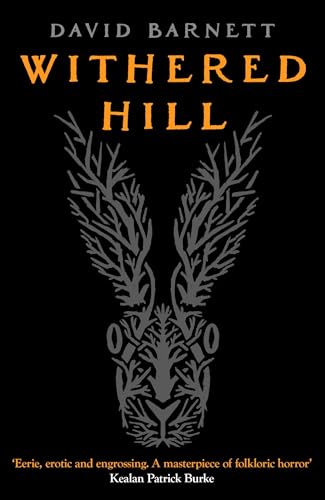
Pagan Village Terror – Withered Hill
Withered Hill is a practical pick for readers comparing folk horror books built around isolation, memory loss, and hostile rural traditions. Its dual timeline follows Sophie, who arrives in an isolated Lancashire village without her memory, while unsettling messages in London warn her toward the same mysterious place.
Best For: Readers who enjoy psychological suspense, pagan folklore, dual timelines, and villages where escape becomes increasingly difficult.
Pros:
- Combines an isolated Lancashire village with a contemporary London storyline.
- Builds tension through amnesia, failed escape attempts, and threatening messages.
- Offers a strongly folkloric atmosphere with a major twist.
Cons:
- The unsettling village setting and captivity themes may be intense for some readers.
- Readers who prefer straightforward chronology may not enjoy the dual timeline.
This is the most suitable choice here for readers who want folk horror filtered through psychological mystery, unreliable memory, and an increasingly claustrophobic village setting.
How We Picked These Folk Horror Books
We selected books that represent the breadth of folk horror rather than repeating one formula. The list includes single-author novels and anthologies, historical and contemporary settings, regional traditions, mythic creatures, witchcraft, rural isolation, and stories shaped by cultural memory.
We also considered atmosphere, variety, reader appeal, and how clearly each title delivers the central folk horror experience: fear rooted in land, ritual, belief, community, or the return of something supposedly forgotten. Because anthologies offer multiple voices while novels provide deeper immersion, both formats are included.
Quick Comparison
| Best For | Recommended Type | What to Expect |
|---|---|---|
| Exploring the genre | Anthology | Multiple styles, settings, and interpretations of folk horror |
| Atmospheric historical horror | Standalone novel | Detailed settings, slow-building tension, and period customs |
| Short reading sessions | Short-story collection | Compact scares with varied pacing and intensity |
| Myth and cultural tradition | Dark fiction anthology | Stories shaped by folklore, identity, history, and inherited fears |
| Modern British folk horror | Contemporary novel | Unsettling rural landscapes and old beliefs in a current setting |
Key Buying Factors for Folk Horror Books
Novel or Anthology
Choose a novel if you want sustained suspense, developed characters, and a world you can inhabit for several hundred pages. Anthologies are better for sampling different authors, themes, and interpretations, especially if you are new to the genre.
Setting and Historical Period
Consider whether you prefer colonial-era or early-modern settings, Viking-age landscapes, contemporary rural communities, or stories that move between past and present. Setting often determines the book’s tone as much as the supernatural threat.
Type of Folklore
Look for the elements that interest you most: witchcraft, seasonal rituals, local superstition, ancestral memory, pagan imagery, Indigenous storytelling, or creatures tied to a particular landscape. Descriptions and content notes can help identify the right fit.
Pacing and Intensity
Folk horror is frequently atmospheric and gradual rather than relentlessly action-driven. If you prefer fast, self-contained scares, start with short stories. If you enjoy ambiguity, mounting unease, and richly described settings, choose a novel.
Who Should Buy Which Folk Horror Books?
Readers new to folk horror should start with a broad anthology to experience several approaches before committing to a longer story. Fans of immersive historical horror may prefer Slewfoot, The Red Winter, or Draugr. Those seeking contemporary British unease should consider Scratch Moss or Withered Hill.
For readers who want wide genre coverage, Gathering Dark, The Fiends in the Furrows, or The Mammoth Book of Folk Horror offer varied collections. Anyone looking for folklore connected to cultural identity and community history should also consider Never Whistle at Night. Finally, Folk Horror Short Stories (Beyond and Within) is a practical choice for readers who prefer shorter, flexible reading sessions.