Choosing the right engine rebuilding books can save time, reduce mistakes, and make a teardown-to-reassembly project far less intimidating. Whether you’re rebuilding a classic small-block, a modern LS, or a VW air-cooled engine, the best guide should match your engine family and experience level.
This roundup focuses on practical, shop-friendly references that help with inspection, machining, parts selection, assembly, and break-in planning.
Best 10 Engine Rebuilding Books Picks for 2026
Shop-Ready Basics

- Simple explanations for core engine-building steps
- Covers blueprinting, machining, and assembly
- Useful for musclecars, classics, boats, and race cars
Best For: DIY builders wanting a broad, practical reference
Career-Track Reference
Automotive Engines: Diagnosis, Repair, Rebuilding

- Large textbook with diagnosis, repair, and rebuilding coverage
- Real-world case histories and universal repair methods
- Updated with hybrid and high-performance content
Best For: Students and technicians needing a deep technical text
Ford Focused How-To
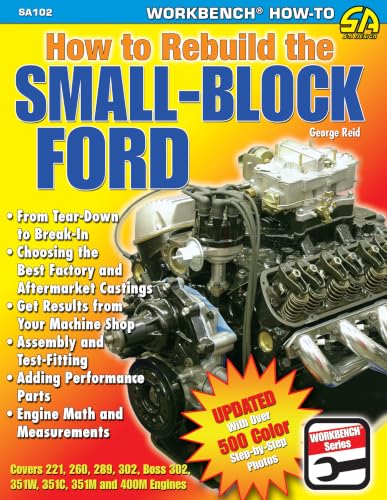
How to Rebuild the Small-Block Ford
- Step-by-step Workbench format
- Covers teardown, machine work, assembly, and break-in
- Includes performance upgrade tips and special-care notes
Best For: Ford builders who want a platform-specific guide
Modern Textbook Pick
Automotive Engines: Diagnosis, Repair, and Rebuilding

- Newest ninth edition with updated coverage
- Adds case histories, full-color images, and modern topics
- Broad instruction on diagnosis, repair, and rebuilding
Best For: Students and technicians wanting an up-to-date textbook
Small-Block Chevy Rebuild Guide
Small-Block Chevrolet: Stock and High-Performance Rebuilds

- 600+ color photos for step-by-step help
- Covers disassembly through final assembly
- Includes stock and performance rebuild tips
Best For: Small-block Chevy owners rebuilding stock or high-performance engines
General Engine Rebuild Manual
How to Rebuild Any Automotive Engine

- Covers nearly any automotive engine
- 400+ step-by-step photos
- Includes rebuild, install, and break-in steps
Best For: DIY mechanics who need a broad all-vehicle rebuild guide
LS Engine Rebuild Guide
How to Rebuild GM LS-Series Engines

- Dedicated guide for GM LS engines
- 600+ visuals for rebuild steps
- Covers stock and performance options
Best For: LS-series owners wanting a model-specific rebuild manual
Classic VW Air-Cooled Rebuild Guide
How to Rebuild Your Volkswagen air-Cooled Engine
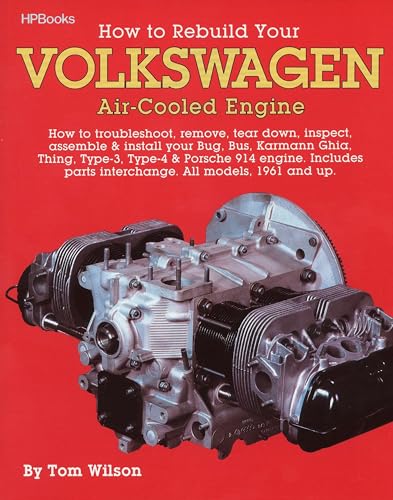
- Covers teardown, inspection, assembly, and installation
- Fits Bug, Bus, Karmann Ghia, Thing, Type-3, Type-4, and 914
- For 1961-and-up VW air-cooled engines
Best For: VW owners needing a step-by-step air-cooled rebuild manual
Gen III Hemi Rebuild Manual

- Covers testing, disassembly, machining, and final assembly
- Includes 5.7L, 6.1L, 6.2L supercharged, and 6.4L engines
- Written for 2003-present Chrysler Hemi platforms
Best For: Owners rebuilding modern Gen III Hemi engines
Modular Ford Rebuild Handbook

- Covers disassembly, machine work, assembly, start-up, and tuning
- Includes Romeo/Windsor differences and engine ID help
- Applies to 4.6L, 5.4L, and some Coyote coverage
Best For: Ford Modular engine owners rebuilding at home
Shop-Ready Basics – Engine Builder's Handbook
If you want engine rebuilding books that focus on practical fundamentals, this handbook is built for general engine-building work across musclecars, classics, hot rods, powerboats, and race cars. It keeps the language straightforward while covering the core steps you need for blueprinting, machining, short-block reconditioning, cam degreeing, cylinder-head work, valvetrain assembly, measuring tools, and final assembly.
Best For: DIY builders and hobbyists who want a broad, easy-to-follow engine rebuilding reference.
Pros:
- Covers a wide range of engine-building tasks in simple terms.
- Includes practical sections on blueprinting, machining, and assembly.
- Applies to multiple vehicle types, from street builds to race cars.
- Compact 169-page format is easy to keep on the bench.
Cons:
- Not as deep or detailed as a large textbook-style reference.
- Published in 1996, so it may not cover newer engine trends.
This is a solid pick if you want a hands-on guide that emphasizes the essential steps of engine building without getting overly technical. It works best as a practical companion while you tear down, measure, and reassemble an engine.
Career-Track Reference – Automotive Engines: Diagnosis, Repair, Rebuilding
For shoppers comparing engine rebuilding books with a strong technical foundation, this eighth edition is a full-length training resource that covers theory of operation, diagnosis, repair, and rebuilding. It is written for career success and leans into universal repair techniques, case histories, and real-world scenarios, with updated full-color images plus coverage of hybrid engines and high-performance components.
Best For: Students, aspiring technicians, and serious readers who want a detailed textbook on automotive engine rebuilding.
Pros:
- Extensive 729-page coverage of diagnosis, repair, and rebuilding.
- Uses real-world case histories and universal repair techniques.
- Updated with full-color images and newer topic coverage.
- Includes hybrid engines and high-performance components.
Cons:
- Heavy, textbook-style format may be more than casual hobbyists need.
- Its size and depth make it less convenient as a quick bench reference.
This is the most comprehensive option here if you want a structured learning resource rather than a short how-to manual. It suits readers who want broad technical coverage and a professional training angle.
Ford Focused How-To – How to Rebuild the Small-Block Ford
If your search for engine rebuilding books is centered on a specific platform, this Workbench-format guide focuses on the small-block Ford and walks you through the rebuild step by step. It covers planning, teardown, inspection, parts selection, machine work, assembly, and first firing and break-in, while also pointing out performance upgrade ideas and special-care areas.
Best For: Ford owners and first-time builders who want a step-by-step small-block rebuild guide.
Pros:
- Step-by-step Workbench format is easy to follow.
- Covers the full rebuild path from disassembly to break-in.
- Includes upgrade tips for cams, heads, ignition, and induction.
- Points out problem areas, special tools, and builder hints.
Cons:
- Limited to the small-block Ford platform.
- Shorter 144-page length means less depth than a large reference text.
This book is a strong choice if you want a platform-specific rebuild guide instead of a broad engine theory text. Its practical layout makes it especially useful for hands-on teardown and assembly work.
Modern Textbook Pick – Automotive Engines: Diagnosis, Repair, and Rebuilding
Among engine rebuilding books, this ninth edition stands out as a current, classroom-style reference with broad coverage of diagnosis, repair, and rebuilding. It is written by veteran instructors and adds new case histories, more full-color images, and updated information on hybrid engines and high-performance components, making it a strong fit for today’s automotive learning needs.
Best For: Students and technicians who want an up-to-date engine rebuilding textbook with modern examples.
Pros:
- Current ninth edition with updated technical coverage.
- Includes new case histories and full-color images.
- Covers theory, diagnosis, repair, and rebuilding in depth.
- Addresses hybrid engines and high-performance components.
Cons:
- Large 752-page format may be too much for casual use.
- Textbook style is less targeted than a vehicle-specific rebuild manual.
If you want the newest edition in a broad automotive-engine reference, this is an easy one to consider. It is best for readers who value current coverage and a strong instructional approach over a quick, specialized how-to.
Small-Block Chevy Rebuild Guide – Small-Block Chevrolet: Stock and High-Performance Rebuilds
If you’re shopping for engine rebuilding books focused on a classic V-8, this small-block Chevy guide is built for hands-on use. It walks through a street or racing rebuild in your own garage with step-by-step procedures, covering disassembly, inspection, parts selection, machine work, fit checks, and final assembly.
Best For: Small-block Chevrolet owners who want a practical rebuild manual for stock or performance builds.
Pros:
- Uses more than 600 color photos for visual step-by-step guidance
- Covers the full rebuild process from crankshaft to carburetor
- Includes both restoration and high-performance upgrade advice
- Explains how to inspect parts and choose machine work
Cons:
- Focused specifically on the small-block Chevrolet engine family
- At 160 pages, it is fairly concise for a deep technical subject
For anyone rebuilding a small-block Chevy, this title offers a focused, garage-friendly approach with clear coverage of the core steps. It’s a strong match if you want one of the more targeted engine rebuilding books for classic Chevy work.
General Engine Rebuild Manual – How to Rebuild Any Automotive Engine
If you want one of the most broadly useful engine rebuilding books, this guide covers the basics of rebuilding nearly any automotive engine. It explains the full process in practical steps, from prep and removal through machine work, short-block assembly, installation, start-up, and break-in.
Best For: DIY owners who need a general engine rebuild manual for most internal combustion engines.
Pros:
- Covers engine rebuild fundamentals for all cars with internal combustion engines
- Includes more than 400 step-by-step photos
- Walks through removal, disassembly, assembly, installation, and break-in
- Also discusses crate engines, remanufactured engines, and performance upgrades
Cons:
- Uses black-and-white photos in this edition
- Less specialized than model-specific rebuild books
This is a solid pick if you want a broad reference rather than a single-engine deep dive. It keeps the rebuild process approachable and practical, making it a useful starter choice among engine rebuilding books.
LS Engine Rebuild Guide – How to Rebuild GM LS-Series Engines
For GM enthusiasts looking for engine rebuilding books with a specific modern focus, this LS-series title is built around the family’s variations and rebuild needs. It uses more than 600 photos, charts, and illustrations to explain disassembly, cleaning, machining tips, pre-assembly fitting, final assembly, and performance-oriented upgrades.
Best For: GM LS-series owners who want a detailed stock or performance rebuild resource.
Pros:
- Dedicated to the GM LS-series engine family
- Includes more than 600 photos, charts, and illustrations
- Covers both stock and performance rebuild considerations
- Provides reference material, including conversions and abbreviations
Cons:
- Only useful if you’re working on an LS-series engine
- At 152 pages, it is compact for a highly technical topic
If you’re rebuilding an LS, this book gives you targeted, step-by-step help instead of generic advice. It stands out by combining rebuild procedures with performance component guidance and practical reference material.
Classic VW Air-Cooled Rebuild Guide – How to Rebuild Your Volkswagen air-Cooled Engine
If you’re looking for engine rebuilding books that focus on a specific classic platform, this guide walks through the full rebuild process for Volkswagen air-cooled engines from 1961 and up. It covers troubleshooting, removal, teardown, inspection, assembly, and installation for Bug, Bus, Karmann Ghia, Thing, Type-3, Type-4, and Porsche 914 engines.
Best For: VW owners and hobbyists who want a step-by-step rebuild manual for air-cooled engines.
Pros:
- Covers troubleshooting through final installation
- Includes multiple VW models plus Porsche 914 applications
- Focused on 1961-and-up air-cooled engines
Cons:
- Highly platform-specific, so it won’t suit non-VW engines
- Print length is relatively short at 176 pages
- Revised edition dates back to 1987
This is a practical choice if your project centers on classic Volkswagen air-cooled hardware and you want one book that follows the rebuild from start to finish.
Gen III Hemi Rebuild Manual – New Hemi Engines 2003-Present
Among engine rebuilding books for modern Mopar platforms, this title focuses on the third-generation Hemi from 2003 onward. It outlines compression and leak-down testing, disassembly, inspection, parts selection, machining coordination, cylinder head assembly, and final engine assembly for Gen III 5.7L, 6.1L, 6.2L supercharged, and 6.4L engines.
Best For: Chrysler, Dodge, Jeep, and Ram owners planning a professional-style Hemi rebuild.
Pros:
- Written by long-time Mopar engineer Larry Shepard
- Walks through testing, teardown, machining, and assembly
- Covers multiple Gen III Hemi displacements and applications
Cons:
- Strictly focused on 2003-present Hemi engines
- Only 144 pages, so it is concise rather than exhaustive
- Best suited to readers already committed to this engine family
If your rebuild involves a modern Hemi, this book is built around the real-world steps needed to assess, refresh, and reassemble the engine with confidence.
Modular Ford Rebuild Handbook – 4.6L & 5.4L Ford Engines
If you need engine rebuilding books for Ford’s Modular V-8 family, this revised guide breaks down the rebuild process for 4.6L and 5.4L engines in a clear, workshop-friendly format. It covers engine history, block and head identification, Romeo and Windsor differences, disassembly, machine work, assembly, start-up, break-in, and tuning, with added coverage of Coyote engines.
Best For: Ford enthusiasts rebuilding 4.6L or 5.4L Modular engines at home.
Pros:
- Explains the full rebuild process with detailed photos and captions
- Includes ID information and Romeo/Windsor component differences
- Covers two-valve, three-valve, and four-valve versions
Cons:
- Focused on Ford Modular engines rather than a broad mix of makes
- Only 144 pages, so it is a streamlined reference
- Most useful if you are working specifically with 4.6L or 5.4L engines
This is a strong pick for hands-on Ford builders who want a practical rebuild roadmap and useful identification guidance before ordering parts or starting machine work.
How We Picked These Engine Rebuilding Books
We favored books with clear procedures, solid technical depth, and a rebuild-focused structure that supports real garage work. Priority went to titles that cover diagnosis, teardown, measuring, machine work coordination, assembly, and final setup without burying the reader in theory.
We also looked for broad usefulness across common platforms, strong model-specific coverage where it matters, and books that are helpful for both first-time rebuilders and experienced DIY mechanics.
Quick Comparison
In general, the best choice depends on your engine family. Model-specific Engine Rebuilding Books are usually the smartest pick if you already know what you’re building, while broader handbooks are better if you want general principles before committing to a specific platform.
Classic V8 owners often benefit from Ford-, Chevy-, LS-, and Hemi-specific titles, while import and air-cooled owners need books written for those engines’ unique parts, tolerances, and procedures.
Key Buying Factors for Engine Rebuilding Books
Engine Platform Coverage
Match the book to your exact engine family whenever possible. A dedicated guide will usually provide better torque specs, measurement points, and component advice than a general repair manual.
Skill Level and Instruction Style
If you’re new to rebuilding, look for step-by-step explanations, photos, and clear inspection guidance. More advanced readers may prefer dense technical reference material with deeper coverage of machining and performance options.
Depth of Rebuild Detail
The best Engine Rebuilding Books cover the full process: disassembly, cleaning, measuring, checking tolerances, machine shop coordination, assembly, and startup. Avoid books that only skim over critical inspection or final setup steps.
Factory-Style Accuracy
Reliable specifications, procedures, and component notes matter. For a rebuild, accuracy beats general advice, especially when you’re deciding what can be reused, machined, or replaced.
Who Should Buy Which Engine Rebuilding Books?
If you want a broad foundation, choose a general engine rebuilding guide first. If you already know your platform, a model-specific title is usually the better investment because it speaks directly to your engine’s quirks, common failure points, and parts choices.
For classic domestic V8s, platform-specific books can be the fastest path to a successful rebuild. For modern engines like LS, Hemi, or Ford modular variants, pick a title that reflects newer tolerances and component layouts. For air-cooled Volkswagen engines, use a book written specifically for that architecture, since its rebuilding process differs significantly from water-cooled automotive engines.
In short, the best buy is the one that matches your engine, your experience, and the depth of help you need at the bench.