Home repairs can get expensive fast, but the right guide can help you tackle common fixes with more confidence and less wasted money. Whether you are replacing hardware, patching walls, or learning basic maintenance, a good book can save time and reduce mistakes.
This roundup of the best DIY home repair books focuses on clear instructions, practical project coverage, and helpful photos for real-world use.
Best 10 DIY Home Repair Books Picks for 2026
Ultimate Home Repair Manual
Ultimate Guide to Home Repair and Improvement

- 600-page manual with 325 DIY projects
- Covers plumbing, wiring, HVAC, roofing, siding
- Includes photos, drawings, and remodeling guidance
Best For: Homeowners who want one deep, all-purpose repair and improvement reference
Quick-Fix Field Guide
Popular Mechanics How to Fix Anything
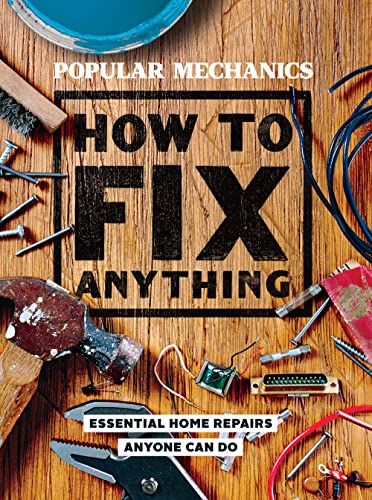
- Portable 192-page repair reference
- Room-by-room organization for fast lookup
- Covers common household fixes and handy hacks
Best For: Readers who want a compact guide for everyday home repairs
Step-by-Step DIY Manual
DIY: Repair, Renovate, and Decorate

- Over 450 step-by-step projects
- Photo-driven instructions with safety guidance
- Includes modern features like smart security and eco solutions
Best For: DIYers who want a broad, up-to-date visual repair and renovation guide
Practical Homeowner Handbook
100 Things Every Homeowner Must Know

- Home maintenance and money-saving advice
- Step-by-step fixes for common problems
- Covers emergencies, pests, and curb appeal
Best For: New homeowners, retirees, and practical gift buyers seeking everyday home guidance
Comprehensive Visual Repair Guide

- 350 repair projects in one volume
- Over 2,000 photos for visual guidance
- Updated for current plumbing and wiring guidelines
Best For: Homeowners needing a broad, photo-rich repair reference
Step-by-Step Whole-House Repairs
Family Handyman Whole House Guide

- Over 300 step-by-step repairs
- Covers floors, ceilings, paint, and plumbing
- Includes tips and tricks to simplify jobs
Best For: Readers who want clear, broad repair instructions
Beginner-Friendly DIY Basics
Beginner's Guide to DIY & Home Repair

- Built for DIY novices and first-time homeowners
- Covers painting, plumbing, locks, and power tools
- Uses easy instructions for simple renovations
Best For: Beginners looking for an approachable repair handbook
Photo-Rich Home Repair Reference
The Complete Photo Guide to Home Repair

- 2,000+ color photos for clear guidance
- 300+ projects with tools and materials lists
- Includes troubleshooting charts and checklists
Best For: Visual learners who want broad, practical repair coverage
All-in-One Remodel Manual
Ultimate Guide to Home Repair and Improvement
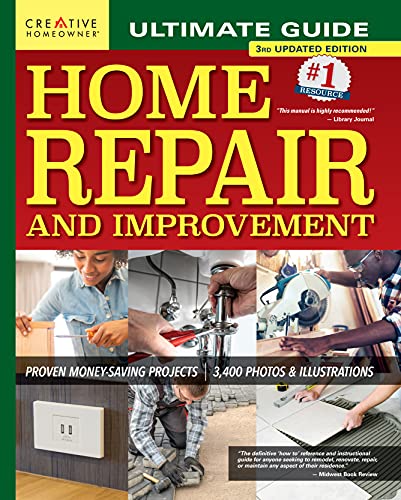
- 325 projects across plumbing, electrical, carpentry, and more
- 3,400 photos and illustrations for step-by-step learning
- Updated code info for modern home systems
Best For: Owners who want one comprehensive DIY reference
Project-Completion DIY Manual
The All-in-One DIY Home Repair & Improvement Manual

- Go/No-Go checklists before you start
- Built-in troubleshooting and practice labs
- Covers planning, costs, and weekend projects
Best For: DIYers who want step-by-step help finishing repairs
Ultimate Home Repair Manual – Ultimate Guide to Home Repair and Improvement
If you want one of the most thorough DIY home repair books available, this 600-page reference is built for broad coverage and detailed follow-through. It brings together step-by-step projects, photos, drawings, and practical guidance on the core jobs homeowners face, from plumbing and electrical repairs to roofing, siding, and remodeling basics.
Best For: Homeowners who want a single, comprehensive DIY reference for repairs, maintenance, and improvement projects.
Pros:
- 325 step-by-step projects with photo sequences
- Wide coverage including plumbing, wiring, HVAC, roofing, and more
- Includes tools, materials, basics, and remodeling guidance
- Large photo-heavy format with 3,400 photos and illustrations noted
Cons:
- Bulky 600-page book may be less portable than shorter guides
- Best suited to readers who want depth rather than a quick fix reference
This is the strongest pick for buyers who want an all-in-one home repair manual rather than a narrow specialty book. It looks especially useful for planning bigger projects and learning foundational skills you can keep using over time.
Quick-Fix Field Guide – Popular Mechanics How to Fix Anything
For shoppers comparing DIY home repair books, this one stands out as a compact, room-by-room troubleshooting guide. It focuses on common household problems and practical fixes, with advice that is easy to locate when you need a fast answer for a squeaky floor, a rattling door, or a stubborn sink issue.
Best For: Homeowners who want a portable, easy-to-use guide for common repairs and quick troubleshooting.
Pros:
- Organized room by room for easier lookup
- Covers common fixes like drywall patches, ceiling cracks, and sink odors
- Includes practical tips and unexpected hacks
- Compact 192-page format is easy to keep handy
Cons:
- Much narrower in scope than larger home repair manuals
- Less suited to big renovation planning or advanced project coverage
This is a strong choice if you value convenience and speed over encyclopedic depth. It reads like a go-to problem solver for everyday repairs rather than a full home improvement textbook.
Step-by-Step DIY Manual – DIY: Repair, Renovate, and Decorate
This updated DIY home repair book is aimed at readers who want clear, visual instruction for both quick fixes and larger projects. It emphasizes step-by-step photographs, safety guidance, and current home features, making it a practical option for homeowners who want a modern all-rounder.
Best For: DIYers who want a broad, photo-driven manual with updated guidance for repairs and home upgrades.
Pros:
- Over 450 step-by-step projects
- Photo-based instructions for techniques and processes
- Includes up-to-date safety guidance and modern home features
- Covers both repair and renovation topics in one volume
Cons:
- Large 512-page hardcover may be less convenient for quick reference
- Very broad scope may be more than casual fix-it readers need
For buyers who want a current, visually guided manual, this is a very balanced option. It should work well as a general-purpose handbook for homeowners who like having clear process shots and a wide project range.
Practical Homeowner Handbook – 100 Things Every Homeowner Must Know
If you are looking for DIY home repair books that focus on practical ownership skills, this Family Handyman title is built around everyday problem-solving and cost savings. It covers maintenance, emergency readiness, curb appeal, and common repairs in a friendly, confidence-building format.
Best For: New homeowners, retirees, and anyone who wants a practical guide to home maintenance and money-saving fixes.
Pros:
- Offers step-by-step guidance for common home issues
- Includes tips on saving on heating, cooling, and appliance upkeep
- Covers emergencies, security, pests, and outdoor care
- Clear, encouraging advice for homeowners at any skill level
Cons:
- At 288 pages, it is less exhaustive than larger repair manuals
- More focused on homeowner essentials than deep project detail
This book is a smart fit if you want a broad maintenance and prevention guide instead of a heavy technical manual. It feels especially useful as a gift for someone settling into homeownership and learning what to handle first.
Comprehensive Visual Repair Guide – Black & Decker Complete Guide
Black & Decker The Complete Photo Guide to Home Repair, 4th Edition (Black & Decker Complete Guide)
Check Price On AmazonIf you want one of the most practical DIY home repair books for handling everyday fixes, this edition is built as a visual, all-in-one manual. It covers a wide range of common household problems with 350 projects, more than 2,000 photos, and updated guidance for plumbing, wiring, structural, and mechanical systems.
Best For: Homeowners who want a broad, photo-heavy reference for common repairs around the house.
Pros:
- Includes 350 projects covering many common home repair tasks
- Uses over 2,000 photos to make instructions easier to follow
- Updated to reflect recent guidelines for plumbing, wiring, and structural systems
- Covers major trouble spots like doors, flooring, water heaters, and wall coverings
Cons:
- Compact format may feel dense if you want a very beginner-focused walkthrough
- Broad scope means it is more reference-style than project-specific
This is a strong choice if you want a single, up-to-date handbook for tackling a wide variety of home fixes. It is especially useful when you need visual guidance and a dependable reference for routine repair jobs.
Step-by-Step Whole-House Repairs – Family Handyman Whole House Guide
Among DIY home repair books, this guide is aimed at readers who want straightforward help with common household fixes from floors to ceilings. It promises over 300 step-by-step repairs and is designed to help you save money, avoid service calls, and work through both indoor and outdoor jobs.
Best For: Homeowners who want a broad repair guide with simple, step-by-step instructions.
Pros:
- Over 300 step-by-step repairs in one book
- Covers common jobs from paint and plumbing to floors and ceilings
- Designed to help readers save money and avoid service calls
- Includes tips and tricks to make projects simpler
Cons:
- Shorter page count may mean less depth on individual repairs
- Less visually dense than photo-heavy reference guides
This is a practical pick if you want a general home repair manual that focuses on clarity and confidence. It fits well for homeowners who need a wide-ranging guide without a lot of complexity.
Beginner-Friendly DIY Basics – Beginner's Guide to DIY & Home Repair
If you are searching for DIY home repair books that speak directly to first-timers, this practical handbook keeps the focus on basic skills and simple renovations. It is designed for DIY novices, first-time homeowners, and renters, with easy instructions covering painting, wallpapering, simple plumbing, changing a lock, using power tools, and more.
Best For: Complete beginners who want an approachable guide to household repairs and basic DIY skills.
Pros:
- Written specifically for DIY novices and first-time homeowners
- Covers foundational tasks like painting, wallpapering, and simple plumbing
- Includes guidance on power tools and changing a lock
- Positions itself as an easy-to-follow, confidence-building reference
Cons:
- Focused on basics, so it may not satisfy readers needing advanced repair coverage
- Shorter length means less room for deep technical detail
This book makes sense if you want a low-pressure introduction to home maintenance and simple repairs. It is best viewed as a starter guide for building confidence before moving on to more complex projects.
Photo-Rich Home Repair Reference – The Complete Photo Guide to Home Repair
If you’re comparing DIY home repair books, this one stands out for sheer visual clarity. With more than 2,000 color photos, over 300 projects, and detailed tools and materials lists, it’s built to help homeowners follow along step by step on common interior and exterior repairs.
Best For: DIYers who want a highly visual, easy-to-follow home repair reference with broad coverage.
Pros:
- Over 2,000 color photos make procedures easy to follow.
- Covers more than 300 home repair projects.
- Includes troubleshooting charts, maintenance checklists, and safety guidance.
- Uses numbered steps and labeled photos for quick reference.
Cons:
- Older edition, so some information may not reflect the newest standards.
- Heavy 512-page format may be less convenient to keep on hand during projects.
This is a strong pick if you want a practical, photo-led manual that feels more like a workshop reference than a theory book. It is especially useful for readers who learn best by seeing each step clearly before starting a repair.
All-in-One Remodel Manual – Ultimate Guide to Home Repair and Improvement
Among DIY home repair books, this updated guide is built for homeowners who want one large reference for fixing, maintaining, and improving the house. It covers plumbing, electrical, carpentry, roofing, flooring, and more, with 325 projects and 3,400 photos and illustrations to make complex jobs more approachable.
Best For: Homeowners and DIYers who want a single, comprehensive repair and improvement manual.
Pros:
- Massive 608-page reference with 325 step-by-step projects.
- 3,400 photos and illustrations support learning and execution.
- Updated code info covers USB outlets, AFCI/GFCI breakers, and tankless water heaters.
- Broad coverage includes maintenance, remodeling, and renovation for many house systems.
Cons:
- Very broad scope may be more than casual DIYers need.
- Its size and depth may feel overwhelming if you only need occasional fixes.
This is the best all-around choice if you want one book that can handle everything from minor fixes to bigger upgrades. The mix of project variety, updated code references, and clear visuals makes it especially useful for long-term homeownership.
Project-Completion DIY Manual – The All-in-One DIY Home Repair & Improvement Manual
If you want DIY home repair books that focus on actually finishing the job, this manual takes a more hands-on approach than many basics. It emphasizes readiness checklists, integrated troubleshooting, and skill-building practice so you can move from planning to completion with fewer surprises.
Best For: DIYers who want structured guidance, troubleshooting help, and project planning support.
Pros:
- Go/No-Go readiness checklists help you decide before starting a project.
- Integrated troubleshooting keeps you from getting stuck mid-repair.
- Skill Builder Labs let you practice on scrap materials first.
- Includes realistic cost analysis and material-sourcing guidance.
Cons:
- Some of the appeal comes from bonus-style extras rather than a classic reference format.
- Its marketing-heavy presentation may not suit readers who prefer a more traditional manual.
This book is a good fit if your biggest frustration is stalling halfway through a project. It is especially practical for cautious beginners and repeat DIYers who want a more organized process before they pick up the tools.
How We Picked These DIY Home Repair Books
We focused on books that are practical for everyday homeowners, not just hobbyists. The strongest picks offer step-by-step instructions, enough visual detail to follow along, and broad coverage of common repairs such as plumbing, electrical basics, walls, flooring, fixtures, and general maintenance. We also favored books with a reputation for clarity, beginner accessibility, and strong value for the number of projects covered.
Quick Comparison: Which Type of Guide Fits Your Needs?
Some DIY Home Repair Books are photo-heavy and ideal for visual learners, while others emphasize broad reference coverage for future troubleshooting. If you want a single go-to manual, choose a comprehensive all-in-one guide. If you are new to home repair, a beginner-focused book may be easier to use. If your priority is fast answers to common problems, look for books that organize repairs by task or room.
Key Buying Factors for DIY Home Repair Books
Project Scope
Check whether the book covers small fixes, preventative maintenance, and larger improvement projects. A wider scope is helpful if you want one reference for the whole house.
Photos and Illustrations
For visual learners, strong images matter. Clear photos and labeled diagrams make it easier to understand tools, part names, and correct technique.
Skill Level
Match the book to your experience. Some titles are built for first-time DIYers, while others assume you already know basic tools and safety practices.
Organization and Searchability
Good DIY Home Repair Books should be easy to scan when something breaks. Look for clear categories, practical indexing, and problem-based sections that help you find answers quickly.
Safety and Accuracy
Repair guidance should be current, especially for tasks involving electrical, plumbing, or structural work. A reliable book should explain when a job is safe to handle yourself and when a professional is the better choice.
Who Should Buy Which DIY Home Repair Books?
Beginners usually benefit most from straightforward, photo-rich books with basic repair lessons. Homeowners who want a long-term reference should choose a more comprehensive manual with broad coverage and detailed troubleshooting. If you are mainly looking to save money on common household fixes, prioritize books that focus on practical repairs over decorating or design-heavy content. The best choice depends on whether you want a teaching tool, a desk reference, or an all-purpose home maintenance companion.