Looking for calligraphy flourishing books that actually help you build cleaner swashes, more elegant letters, and better control? The right guide can make flourish practice feel less random and more rewarding.
In this roundup, we focus on books that teach structure, stroke planning, and practical drills so you can improve faster—whether you are just starting out or refining advanced penmanship.
Best 10 Calligraphy Flourishing Books Picks for 2026
Beginner Flourish Workbook
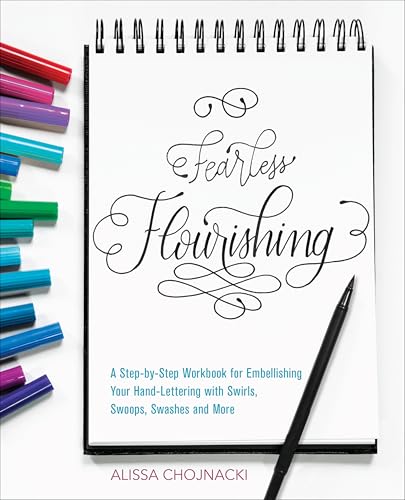
- Step-by-step workbook for embellishing hand lettering
- Covers swirls, swashes, borders, frames, and filigree
- Helps build a personal flourishing style
Best For: Letterers who want a guided workbook for stylish embellishments
Pictorial Flourish Guide

- Teaches flourishes through illustrated animal projects
- Covers pen, nib, ink, letters, and cartouches
- Includes a gallery of finished artwork
Best For: Readers who want flourish-based drawing projects
Classic Beginner Guide
Calligraphy in Ten Easy Lessons

- Teaches the Italic hand in ten steps
- Includes swash capitals and practical projects
- Covers tools, posture, and workspace setup
Best For: Beginners wanting foundational calligraphy with light flourishing
Advanced Penmanship Manual
Sull's Manual of Advanced Penmanship

- Advanced guide to cursive, ornamental penmanship, and flourishing
- Covers monograms, filigree, and composition techniques
- Includes illustrations and detailed technique breakdowns
Best For: Experienced learners seeking advanced ornamental penmanship
Modern Practice Pad
Copperplate Calligraphy Practice Book

- Tear-out worksheets for pointed pen practice
- Covers basic strokes and letter combinations
- Includes templates, tips, and blank practice space
Best For: Beginners practicing Copperplate-style modern calligraphy
Beginner Lettering Guide
The Lettering Workbook for Absolute Beginners

- Covers multiple styles with simple instructions
- Includes downloadable practice pages
- Features a 12-day lettering challenge
Best For: Absolute beginners learning hand lettering and decorative embellishments
Flourish-Friendly Starter

- Teaches nine basic strokes and letter joins
- Includes 10 alphabets plus worksheets
- Adds embellishments, flourishes, and projects
Best For: Beginners who want structured practice with decorative flourishes
Flourish Practice Guide
The Visual Calligrapher: Flourishes

- Built for intermediate flourish practice
- Includes drills, clinics, and word projects
- Focuses on balance, rhythm, and control
Best For: Intermediate learners refining decorative flourishes
Beginner Foundation Pick
The Ultimate Guide to Modern Calligraphy & Hand Lettering for Beginners

- Made for beginners starting modern calligraphy
- Clear, straightforward learning approach
- Large-format workbook with quality paper
Best For: New learners building a basic lettering foundation
Historical Reference Choice
The Essential Calligraphy & Lettering Reference Book

- 117 historical styles and ornaments
- Includes flourishes, alphabets, and borders
- Offers downloadable high-resolution image access
Best For: Reference seekers and designers wanting ornate inspiration
Beginner Flourish Workbook – Fearless Flourishing
If you want calligraphy flourishing books that help you move beyond basic letters, this workbook is a practical place to start. It walks you through the basics of embellishing hand lettering with swirls, swoops, swashes, borders, frames, and other decorative elements, with a focus on building confidence through step-by-step practice.
Best For: Letterers who already know the alphabet and want a structured workbook for adding stylish flourishes.
Pros:
- Step-by-step workbook format makes it easy to follow.
- Covers elegant embellishments, filigree, borders, frames, and artistic elements.
- Includes basic theory, practical practices, and more complex compositions.
- Helpful for developing a personal flourishing style.
Cons:
- Assumes you already have lettering basics down.
- More focused on flourish development than on full calligraphy instruction.
This is a strong pick if you want a guided workbook that balances technique and creativity. It is especially useful for letterers looking to make their work feel more ornate without guessing at the next step.
Pictorial Flourish Guide – Calligraphic Drawing
Calligraphic Drawing: A how-to guide and gallery exploring the art of the flourish
Check Price On AmazonAmong calligraphy flourishing books, this one stands out if you want to turn flourishes into illustrated compositions. It teaches how to create calligraphic flourishes and then apply them to 15 flourished animals, while also covering embellished letters and ornamental cartouches.
Best For: Calligraphers, doodlers, and designers who want to explore flourish-based drawing projects.
Pros:
- Step-by-step instructions for 15 flourished animals.
- Covers choosing pen, nib, and ink before starting.
- Includes guidance for embellishing letters and drawing cartouches.
- Ends with an artwork gallery for inspiration.
Cons:
- Leans more toward pictorial drawing than classic letter practice.
- May feel specialized if you only want traditional calligraphy drills.
If you like the idea of combining calligraphy with illustration, this guide offers a fresh and very visual approach. The numbered steps and animal projects make it easy to see how flourish strokes can grow into finished artwork.
Classic Beginner Guide – Calligraphy in Ten Easy Lessons
If you are shopping for calligraphy flourishing books that also teach solid fundamentals, this beginner guide is a dependable choice. It focuses on the Italic hand in ten lessons and includes practical coverage of basic strokes, letter formation, spacing, swash capitals, and common uses like invitations and envelopes.
Best For: Beginners who want a straightforward introduction to calligraphy with some flourish techniques included.
Pros:
- Teaches the basic Italic hand in ten easy steps.
- Covers swash capitals, spacing, punctuation, and letter connections.
- Includes practical projects like invitations and envelopes.
- Helpful sections on tools, posture, and workspace setup.
Cons:
- Focused on foundational calligraphy rather than advanced flourishing.
- Older title with a traditional, instructional style.
This book is a strong pick if you want a clear, low-pressure path into calligraphy before moving into more ornate work. It gives you the basics you need while still touching on swashes and decorative applications.
Advanced Penmanship Manual – Sull's Manual of Advanced Penmanship
For readers looking for calligraphy flourishing books with serious depth, this manual offers advanced instruction in American cursive, ornamental penmanship, and flourishing. It brings together a wide range of creative handwriting methods, from Spencerian capitals and monograms to negative space, line endings, filigree, and composition flourishing.
Best For: Experienced penmen and serious learners who want advanced ornamental techniques.
Pros:
- Covers advanced American cursive, ornamental penmanship, and flourishing.
- Includes many specialized techniques like monograms, filigree, and masterpiece flourishing.
- Explains movement, dexterity, muscularity, and pen manipulation.
- Provides illustrations to support the instruction.
Cons:
- Likely too advanced for complete beginners.
- More technical than a casual flourishes-only workbook.
This is the most technical and comprehensive option in the group, making it well suited to readers who want to study flourishing as part of a broader penmanship system. It rewards patience with a large toolkit of ornamental methods and design ideas.
Modern Practice Pad – Copperplate Calligraphy Practice Book
If you’re searching for calligraphy flourishing books that help you build real muscle memory, this practice book is a practical place to start. It focuses on pointed pen modern calligraphy with tear-out worksheets, basic stroke drills, letterforms, and space to repeat what you learn, making daily practice more structured and less overwhelming.
Best For: Beginners who want a tear-out practice pad for pointed pen modern calligraphy and Copperplate-style drills.
Pros:
- Includes calligraphy templates, tips, and repeatable drills for everyday practice
- Features perforated practice sheets with guidelines for easy tear-out use
- Covers lowercase and uppercase letters, basic strokes, and letter combinations
- Offers blank workspace alongside exercises for more flexible practice sessions
Cons:
- Focused on practice sheets rather than deep theory or history
- Best suited to pointed pen modern calligraphy, so it may feel narrow for some learners
Overall, this is a strong workbook-style option if you want a hands-on practice book that keeps you moving through drills instead of just reading about technique. It’s especially useful for building consistency in flourishing-adjacent script work and polished letterforms.
Beginner Lettering Guide – The Lettering Workbook for Absolute Beginners
The Lettering Workbook for Absolute Beginners: A Simple Guide to Hand Lettering & Modern Calligraphy
Check Price On AmazonFor shoppers comparing calligraphy flourishing books, this workbook is a straightforward starting point for modern calligraphy and hand lettering. It combines multiple lettering styles, easy instructions, downloadable practice pages, and a 12-day challenge, so beginners can learn the basics and keep practicing without needing a separate system.
Best For: Absolute beginners who want a structured introduction to hand lettering, embellishments, and practice habits.
Pros:
- Introduces multiple lettering styles, terms, and phrases in a beginner-friendly format
- Includes instructions for embellishments and designing your own artwork
- Offers downloadable practice pages to extend workbook use
- Builds routine with a 12-day lettering challenge
Cons:
- More broad lettering workbook than a dedicated flourishing-only guide
- Geared toward absolute beginners, so advanced users may outgrow it quickly
This is a useful pick if you want a guided workbook that covers lettering fundamentals first and then eases into decorative touches. It’s a practical choice for building confidence before moving to more specialized flourishing practice.
Flourish-Friendly Starter – Easy Creative Lettering
Easy Creative Lettering: A Step-by-Step Guide to Lettering, Flourishing, and More
Check Price On AmazonIf you want calligraphy flourishing books that go beyond basics, this step-by-step guide is built to help beginners create stylish letters and decorative finishes. It walks through nine basic lettering strokes, ten alphabets, worksheets, and additional online practice sheets, then adds embellishments and flourishes for original compositions.
Best For: Beginners who want a step-by-step lettering book with flourishes, alphabets, and practice projects.
Pros:
- Teaches nine basic lettering strokes with visual examples for tricky letter joins
- Covers 10 alphabets in script, serif, and sans serif styles
- Includes worksheets for capitals, lowercase letters, and numbers
- Adds embellishments, flourishes, and eight creative projects for hands-on practice
Cons:
- More of a beginner guide than an advanced flourishing reference
- Projects and supply suggestions may be more useful to new learners than experienced lettering artists
This book stands out for combining technique, practice, and decorative ideas in one approachable package. If you want a guided path into creative lettering with flourishes, it offers a balanced mix of instruction and projects.
Flourish Practice Guide – The Visual Calligrapher: Flourishes
If you’re comparing calligraphy flourishing books and already know the basics, this practice-focused workbook is designed to help you refine movement, balance, and control. It uses guided drills, visual explanations, and structured projects to help intermediate lettering artists create flourishes that feel intentional rather than crowded or overdone.
Best For: Intermediate calligraphy learners who want a more visual, project-based way to improve flourishes.
Pros:
- Focuses specifically on flourishes, not beginner alphabet instruction
- Includes guided drills for loops, spirals, rhythm, and control
- Covers entry and exit flourishes, ascenders, descenders, and word projects
- Offers a Flourish Clinic for fixing spacing, balance, and intersection issues
Cons:
- Not intended for complete beginners
- More practical workbook than broad reference guide
- Best value depends on whether you want flourish-specific practice rather than general lettering lessons
This is a strong pick if your main goal is to make flourishes look more polished and readable across real compositions. The visual teaching style and final application projects make it especially useful for hands-on practice.
Beginner Foundation Pick – The Ultimate Guide to Modern Calligraphy & Hand Lettering for Beginners
Among calligraphy flourishing books for new learners, this one is positioned as a straightforward starting point for modern calligraphy and hand lettering. It aims to reduce the trial and error of self-teaching by giving beginners a clear, easy-to-understand foundation, with the practical benefits of a large-format workbook and quality paper stock.
Best For: Beginners who want a simple, approachable introduction to modern calligraphy and hand lettering.
Pros:
- Written specifically for beginners
- Focuses on a straightforward, easy-to-understand learning process
- Large 8.5″ x 11″ format with 60lb paper stock
- Designed to help reduce research, mistakes, and trial and error
Cons:
- Not a dedicated flourishing workbook
- Doesn’t emphasize advanced decorative movement or ornamentation
- May feel too basic for experienced letterers
If you want a foundation-first book rather than a flourish-heavy reference, this is a practical place to start. It’s best suited to learners who need clarity and structure before moving on to more decorative techniques.
Historical Reference Choice – The Essential Calligraphy & Lettering Reference Book
If you want calligraphy flourishing books that double as a visual reference library, this Vault Editions collection offers a broad historical approach. It brings together 117 styles and ornaments from the 18th and 19th centuries, covering blackletter, cursive scripts, ornamental alphabets, flourishes, and decorative page elements in one large reference volume.
Best For: Artists and designers who want historical lettering inspiration and ornamental reference material.
Pros:
- Contains 117 historical styles and ornaments
- Covers blackletter, cursive scripts, ornamental alphabets, and flourishes
- Includes decorative elements like borders, frames, cartouches, and banners
- Provides instant digital access to high-resolution files of featured images
Cons:
- More reference-oriented than step-by-step instruction
- Historical focus may not suit buyers seeking modern practice drills
- Some content is decorative inspiration rather than hands-on workbook exercises
This is the strongest option if your priority is inspiration, style variety, and ornamental references rather than guided practice. It can support lettering, illustration, tattoo design, and decorative projects with a wide range of visual material.
How We Picked These Calligraphy Flourishing Books
We prioritized books that offer clear instruction, usable practice pages, and a sensible learning path from basic strokes to more decorative forms. The strongest picks balance theory with repetition, so you are not just copying ornaments—you are learning how flourishes are built and when to use them.
We also looked for variety. Some readers want beginner-friendly lettering support, while others need deeper coverage of Copperplate, ornamental penmanship, or reference-style material. A good roundup should give you options for different skill levels and goals.
Quick Comparison
For beginners, look for books that emphasize simple drills, guided exercises, and short lessons. If you already have some pen control, choose a workbook with more structured flourishes, word-level projects, and progressive challenges. For advanced learners, reference-heavy titles and manuals with historical or technical depth usually provide the most value.
Key Buying Factors for Calligraphy Flourishing Books
Skill Level Fit
The most important factor is whether the book matches your current ability. Beginners need clear foundations and manageable exercises, while intermediate and advanced readers benefit more from detailed exemplars, advanced stroke variations, and compositional guidance.
Practice Format
Some Calligraphy Flourishing Books are workbook-driven, with tracing and drill pages. Others are more like visual references or instructional manuals. If you learn by doing, choose a practice-heavy book. If you learn by studying examples, a reference book may suit you better.
Coverage of Flourishing Techniques
Look for books that explain entry strokes, exit strokes, swashes, loops, and spacing around letters. The best titles show how flourishes support the word shape rather than overpower it.
Alphabet Style and Lettering Focus
Not all books cover the same scripts. Some focus on modern calligraphy and hand lettering, while others lean into Copperplate, blackletter, or ornamental penmanship. Pick the style you want to practice most so the exercises stay relevant.
Who Should Buy Which Calligraphy Flourishing Books?
If you are a true beginner, choose a gentle, step-by-step workbook that teaches lettering first and flourishing second. If you want to improve consistency, pick a practice book with drills and guided exercises. If you are studying traditional penmanship or want a broader technical library, a more advanced reference book or manual is the better investment.
For most buyers, the best Calligraphy Flourishing Books are the ones you will actually use repeatedly. A clear teaching style, plenty of practice, and a layout that matches your skill level matter more than flashy examples alone.