Keeping a library collection in circulation takes more than replacing visibly damaged books. The right repair supplies can reinforce torn covers, stabilize loose pages, mend spines, and extend useful life while preserving a book’s appearance.
This roundup compares 10 options, from clear repair tapes and flexible PVA adhesives to complete bookbinding tool kits. Use the buying guide below to match each kit to your repair volume, materials, staff skill level, and preservation needs.
Best 10 Book Repair Kits for Libraries Picks for 2026
Best Clear Repair Tape

- Clear tape keeps text and barcodes visible
- 45-foot roll supports many repairs
- Useful for pages, spines, covers, and documents
Best For: Fast, general-purpose library repairs
Best Complete Repair Kit
Lineco Bookbinding Repair Tool Kit

- Includes tape, tissue, adhesive, and cleaning tools
- Archival, acid-free materials for simple repairs
- Bone folder supports precise mending work
Best For: Libraries building a basic repair and conservation station
Best Flexible Book Glue
pH-Neutral PVA Bookbinding Adhesive

- Acid-free, pH-neutral formula dries clear
- Flexible bond suits paper and curved surfaces
- Water-thinnable with easy wet cleanup
Best For: Targeted bookbinding and page repairs requiring liquid adhesive
Best Spine Protection

- Reinforces frayed or torn spine headcaps
- Clear polypropylene preserves book markings
- 24-piece pack suits repair days and circulation work
Best For: Protecting spine ends on heavily used books
Best All-in-One Adhesive Kit
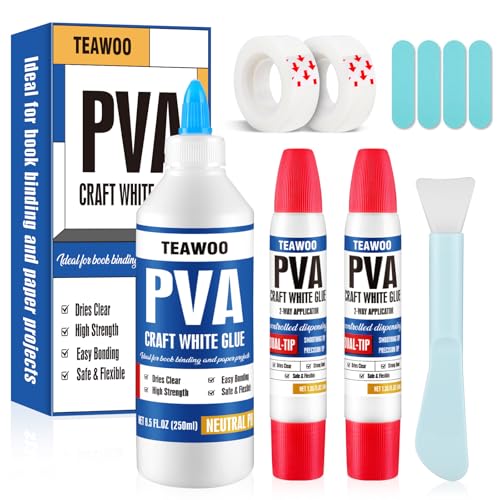
- Bulk and precision PVA bottles
- Acid-free, clear, flexible adhesive
- Includes brush, tape, and emery boards
Best For: Routine glue-based book repairs and binding projects
Best Reinforcement Tape
BookGuard Clear Book Repair Tape

- 2-inch by 10-yard archival-safe roll
- Matte finish reduces glare
- Printed grid liner aids precise cutting
Best For: Reinforcing frequently handled spines, covers, and hinges
Best Cloth Restoration Set
Book Repair and Binding Toolkit

- Includes archival acid-free book cloth
- Two bone folders support precise shaping
- Brush applies PVA evenly
Best For: Cloth-backed spine and cover restoration
Precision Repair Adhesive

- Strong, flexible bond for book repairs
- Dries clear without page distortion
- Includes precision tip and applicator
Best For: Detailed page, binding, and paper repairs
Archival Reinforcement
Cellulose Acetate Binding Tape

- 2 inches wide and 33 feet long
- Designed for spines and covers
- Cut-to-size, single-sided roll
Best For: Repeated spine and cover reinforcement
Flexible Archival Support

- Acid-free cloth for preservation work
- 2-inch width with paper backing
- Flexible and repositionable without residue
Best For: Spine, cover, corner, and page reinforcement
Best Clear Repair Tape – Scotch Book Repair Tape
For libraries that need a quick way to reinforce frequently handled materials, Scotch Book Repair Tape is a straightforward option among book repair kits for libraries. Its clear, 2-inch-wide format helps patch torn pages, loose spines, and worn covers while keeping text, images, and barcodes visible.
Best For: Routine repairs to book covers, pages, spines, maps, documents, and other paper materials.
Pros:
- Clear finish preserves the visibility of printed content and barcodes.
- Strong adhesive is designed for frequently handled books and documents.
- Roll provides 45 feet of tape for numerous repairs.
- Unwinds and cuts easily for efficient application.
Cons:
- Single-sided tape may not suit every structural bookbinding repair.
- It is not water resistant.
- The glossy finish may be more noticeable on some surfaces.
This is a practical choice for repair stations that prioritize speed, coverage, and a neat transparent finish. It is especially useful when staff need a versatile roll rather than a complete conservation toolkit.
Best Complete Repair Kit – Lineco Bookbinding Repair Tool Kit
Lineco’s Bookbinding Repair Tool Kit is a strong all-in-one choice for libraries seeking book repair kits for libraries with basic cleaning, mending, and adhesive needs. It combines repair tape, transparent mending tissue, a bone folder, adhesive, and cleaning tools in one set.
Best For: Simple book repairs, document cleaning, and conservation-oriented maintenance using archival materials.
Pros:
- Includes six useful repair and cleaning components.
- Water-activated, acid-free linen tape supports cover-to-signature repairs.
- Transparent mending tissue is neutral pH, non-yellowing, and removable with solvents.
- Bone folder helps burnish tissue and work adhesive into tears.
Cons:
- The water-activated tape requires moistening before use.
- Designed for simple repairs rather than every advanced conservation task.
- The kit does not include a warranty.
Because it includes both materials and basic tools, this kit can simplify a library’s repair setup. It is a better fit than tape alone when staff also need cleaning supplies, mending tissue, and a bone folder.
Best Flexible Book Glue – pH-Neutral PVA Bookbinding Adhesive
For libraries that prefer liquid adhesive for targeted repairs, this pH-neutral PVA is a focused alternative within book repair kits for libraries. The acid-free formula dries clear, remains flexible, and can be used on paper, photographs, journals, artwork, and other compatible materials.
Best For: Page repairs, bookbinding, mounting, framing, and projects where a clear, flexible adhesive is preferred.
Pros:
- Acid-free and pH neutral for archival-oriented projects.
- Dries clear with a flexible bond that remains suitable for curved surfaces.
- Can be thinned with water and cleaned up with water while wet.
- Works with paper, cardstock, photos, leather, and fabric.
Cons:
- The 4-ounce bottle offers less material variety than a complete repair kit.
- It is not water resistant once applied.
- Liquid adhesive requires controlled spreading and drying time.
This glue is a useful addition to a library repair bench when flexible bonding is more important than having multiple tools in one package. It complements tape and mending tissue for repairs that need an invisible adhesive layer.
Best Spine Protection – Demco Clear Book Repair Wings
Demco Clear Book Repair Wings offer a specialized way to reinforce vulnerable spine ends, making them a useful component of book repair kits for libraries. These polypropylene wings can rescue frayed headcaps or help protect new books before heavy circulation begins.
Best For: Reinforcing or preventing fraying at book spine ends on high-circulation library and classroom titles.
Pros:
- Clear polypropylene keeps titles, artwork, and call numbers visible.
- 3.5-mil material adds support without substantial bulk.
- Waterproof construction suits frequently handled materials.
- Pack includes 24 die-cut wings for repair-day efficiency.
Cons:
- Designed specifically for headcaps and spine ends, not broad page repair.
- Its specialized shape is less versatile than a roll of repair tape.
- Application may require careful alignment around the spine.
These wings are a targeted preventive and restorative solution rather than a complete repair system. They make sense for libraries managing circulation damage concentrated at the top and bottom of book spines.
Best All-in-One Adhesive Kit – TEAWOO Book Repair Kit
For libraries seeking versatile book repair kits for libraries, the TEAWOO kit combines bulk and precision PVA adhesive with tools for common spine, page, and cover repairs. Its acid-free, pH-neutral formula dries clear and flexible, while the multiple bottle sizes support both larger jobs and detailed applications.
Best For: Libraries and makers needing an adhesive-centered kit for routine book repairs, binding projects, and paper crafts.
Pros:
- Includes an 8.5-ounce bottle plus two smaller precision bottles.
- Acid-free PVA is designed to dry clear and remain flexible.
- Includes a brush, matte tape, and emery boards for a range of tasks.
Cons:
- The adhesive is not water resistant.
- The kit is more focused on glue-based repairs than cloth-based restoration.
This is a practical choice when a library wants one compact set for adhesive work and light finishing tasks. The large bottle suits recurring repairs, while the smaller bottles make controlled application easier.
Best Reinforcement Tape – BookGuard Clear Book Repair Tape
BookGuard is a focused option for libraries that primarily need dependable tape for worn spines, cover edges, and exterior hinges. This 2-inch archival-safe vinyl roll has a matte finish to reduce glare and a printed grid liner to help staff measure and cut consistent strips.
Best For: School, church, classroom, and public-library collections with frequently handled paperbacks, textbooks, hymnals, Bibles, and similar books.
Pros:
- Two-inch-wide, 10-yard roll provides material for repeated repairs.
- Clear matte vinyl keeps titles and artwork visible while reducing glare.
- Printed grid liner assists with measuring and cutting.
- Made in the USA and described as abrasion- and water-resistant.
Cons:
- The permanent adhesive requires careful alignment before application.
- It is a single-purpose tape product rather than a complete repair kit.
Choose BookGuard when exterior reinforcement is the main maintenance need. Its roll format and measuring liner make it especially useful for repeatable spine and cover-edge repairs, but staff should take care during placement.
Best Cloth Restoration Set – Book Repair and Binding Toolkit
This bookbinding toolkit suits libraries handling damaged spines and covers that need more than surface tape. It pairs archival acid-free cloth with two bone folders and a wooden stencil brush, giving users the basic materials for cutting, smoothing, creasing, and applying compatible PVA adhesive.
Best For: Librarians, students, and repair hobbyists restoring old books, documents, family Bibles, and magazines with cloth-backed binding work.
Pros:
- Includes a large sheet of acid-free, archival-grade book cloth.
- Two bone folders support accurate creasing and smoothing.
- Brush is designed for even application of PVA or similar adhesives.
- Cloth can be cut to fit projects of different sizes.
Cons:
- Adhesive is not included, so compatible PVA must be supplied separately.
- The provided details do not specify the cloth sheet’s width.
This set is a strong complement to an existing library repair station stocked with PVA glue. It provides the cloth and shaping tools needed for more substantial spine and cover restoration, rather than quick exterior reinforcement.
Precision Repair Adhesive – Clear Book Glue
For libraries building book repair kits for libraries, this liquid adhesive is a practical choice for small repairs, paper projects, and bookbinding work. It forms a strong, flexible bond, dries clear, and includes a precision metal nozzle for controlled application.
Best For: Repairing loose pages, bookbinding projects, and detailed paper or craft work where a clear, flexible adhesive is useful.
Pros:
- Dries clear and is designed not to wrinkle or distort pages.
- Flexible bond is intended to resist cracking and breaking.
- Precision metal tip supports controlled application and helps prevent clogs.
- Includes 60 ml of glue, an applicator, an emery board, and instructions.
Cons:
- It is a liquid adhesive, so careful application is still needed.
- The 60 ml volume may be better suited to targeted repairs than large-scale covering work.
This kit fits libraries that need a versatile glue for page, binding, and paper repairs. Its clear finish and included applicator make it especially useful for precise maintenance tasks.
Archival Reinforcement – Cellulose Acetate Binding Tape
When assembling book repair kits for libraries, a wide roll of binding tape can help reinforce spines, covers, and other vulnerable areas. This 2-inch cellulose acetate tape is designed to be cut to size and applied directly to books, paper, and other listed surfaces.
Best For: Reinforcing book spines and covers, protecting damaged areas, and handling larger repair surfaces with a 33-foot roll.
Pros:
- Provides a wide 2-inch by 33-foot roll for repeated repairs.
- Cellulose acetate material is described as easy to tear and clean.
- Designed to leave no residue after removal, according to the supplied details.
- Can be cut to the required length for different book sizes.
Cons:
- It is a single-sided roll, so application requires positioning one adhesive face against the repair.
- The tape is listed in white, which may be visible on some book covers.
- No water-resistance rating is provided in the supplied information.
This roll is a sensible option for libraries that want broad tape coverage and a generous length for ongoing spine and cover maintenance. Its cut-to-size format also supports varied repair jobs.
Flexible Archival Support – Acid-Free Book Repair Tape
This flexible cloth tape is a useful addition to book repair kits for libraries that need to reinforce spines, covers, corners, or broken pages. Its acid-free construction and paper backing support measured cutting and straightforward application.
Best For: Archival-minded reinforcement of book spines, covers, corners, and pages, plus related scrapbooking, journaling, and framing projects.
Pros:
- Acid-free design is intended to support long-term book preservation.
- Flexible acetate cloth provides strong adhesion for reinforcement work.
- Paper backing makes measuring and cutting more precise.
- Can reportedly be repositioned on covers without leaving residue.
Cons:
- The supplied details list the roll as 2 inches wide but give differing length measurements.
- It is not water resistant.
- The white cloth may remain visible on some repairs.
This tape stands out for libraries prioritizing acid-free materials and flexible reinforcement. Before ordering, verify the exact roll length, since the supplied specifications are inconsistent.
How We Picked These Book Repair Kits for Libraries
We focused on the materials libraries use most often for routine maintenance: book repair tape, acid-free cloth, flexible PVA adhesive, bone folders, glue brushes, and cover-reinforcement pieces. We also considered whether a product is practical for repeated repairs, easy to handle, and suitable for books that need a clean, durable finish.
Because repair needs vary, this list includes both individual supplies and broader kits. Tape may be the fastest solution for a torn cover or damaged hinge, while adhesive and tools offer more control for loose pages, lifted cloth, and binding work.
Quick Comparison
| Best For | Recommended Type | Why It Matters |
|---|---|---|
| Fast cover and hinge repairs | Clear repair tape | Quick application with minimal setup |
| Loose pages and binding work | Flexible, pH-neutral PVA | Creates a strong bond without becoming excessively brittle |
| Structured repairs | Complete tool kit | Provides control with folders, brushes, and repair tools |
| Spine and cover reinforcement | Archival cloth or bookbinding tape | Helps stabilize high-wear areas |
| Protecting vulnerable covers | Polypropylene repair wings | Adds reinforcement around edges and hinges |
Key Buying Factors for Book Repair Kits for Libraries
Adhesive Formulation
Look for acid-free or pH-neutral PVA when repairing books intended for long-term use. A flexible, clear-drying adhesive is generally preferable to a glue that dries hard and may crack as the book opens and closes. Check the label and intended application before using any adhesive on valuable or historically significant material.
Tape Construction and Size
Two-inch tape is versatile for many covers and hinges, but wider or narrower formats may be better for specific repairs. Clear vinyl tape keeps the original design visible, while cloth bookbinding tape can provide a more traditional reinforcement. Archival claims, flexibility, and clean handling are more important than thickness alone.
Tools and Application Control
Bone folders help smooth tape and crease materials without marking them. Glue brushes support even application and reduce excess adhesive. If several staff members will perform repairs, a complete kit can improve consistency and reduce the need to source tools separately.
Capacity and Storage
Compare adhesive quantities, tape length, and package counts against your repair workload. Larger containers may offer better value for busy branches, but smaller bottles can reduce waste and are easier to store. Keep adhesives sealed and follow the manufacturer’s storage guidance.
Who Should Buy Which Book Repair Kits for Libraries?
Choose clear repair tape if your priority is quick maintenance of torn covers, hinges, or surface damage. Select a PVA adhesive when you need stronger control over loose pages, lifted material, or binding repairs. A complete bookbinding kit is the better choice for libraries building or refreshing a shared repair station.
For frequent spine and cover reinforcement, prioritize acid-free cloth or bookbinding tape with enough length for repeated jobs. Polypropylene repair wings are useful when vulnerable corners, hinges, or cover edges need added protection. If the collection includes rare, valuable, or irreplaceable books, consult a trained conservator before applying any product.