Repairing a worn hardcover does not always require professional rebinding. The right combination of archival tape, flexible adhesive, cloth, and basic tools can stabilize loose joints, reinforce damaged covers, and extend a book’s useful life.
We selected 10 book repair kits for hardcovers that cover quick fixes as well as more involved DIY repairs. Use the guide below to match the kit’s materials, size, and complexity to your project.
Best 10 Book Repair Kits for Hardcovers Picks for 2026
Quick Reinforcement Pick

- Clear 2-inch-wide tape for covers, spines, and pages
- 45-foot roll supports repeated repairs
- Easy to cut and apply without obscuring printed material
Best For: Fast repairs and reinforcement of books and paper materials
Complete DIY Restoration Set

- 50-piece kit includes press, tools, thread, cloth, and adhesive
- Adjustable 11.6-by-7.8-inch wooden book press
- Instructions make it suitable for beginners
Best For: Hands-on hardcover restoration, rebinding, and bookmaking projects
Wide Archival Coverage

- Wide 3-inch format covers spines and adjoining covers
- Matte clear vinyl reduces glare
- Grid liner helps measure and cut straight strips
Best For: Broad, low-glare repairs on frequently handled hardcovers
Conservation-Style Essentials

- Includes tape, tissue, adhesive, cleaning pad, and tools
- Acid-free, neutral-pH materials support careful repairs
- Bone folder helps strengthen and smooth mended areas
Best For: Simple hardcover repair, document cleaning, and conservation tasks
Precision Glue Pick
Clear-Flex Book Repair Adhesive

- Clear, flexible, water-resistant adhesive
- Precision metal nozzle for controlled repairs
- Includes applicator and emery board
Best For: Targeted hardcover, page, and paper repairs
Most Complete Repair Set
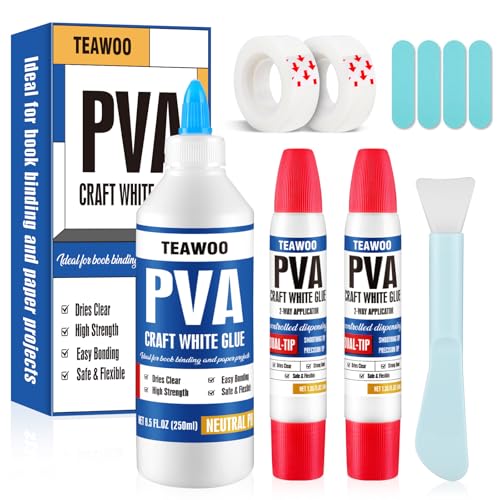
- Bulk and travel-size acid-free PVA glue
- Includes brush, tape, and emery boards
- Clear, flexible formula for books and crafts
Best For: Recurring repairs and larger bookbinding projects
Best Press-Based Option
Wooden Hardcover Binding Repair Kit

- 13-by-7.9-inch adjustable wooden book press
- Includes bone folder, awl, needles, and thread
- Designed for structural repairs and DIY binding
Best For: Hardcover rebuilding and hands-on bookbinding
Clear Reinforcement Tape
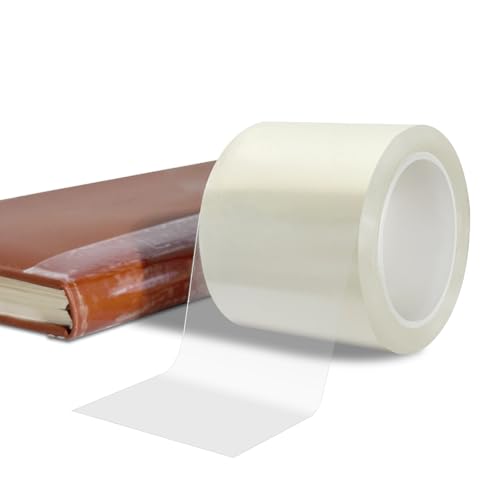
- Clear, acid-free acrylic tape
- 2-inch by 16.5-foot roll
- Designed for spines, pages, and paper items
Best For: Quick transparent reinforcement of hardcover spines and damaged pages
Complete PVA Repair Set
All-in-One Hardcover Binding Kit

- 250g acid-free, neutral-pH PVA glue
- Precision bottles, brush, tape, and sanding strips
- Dries clear and stays flexible
Best For: Repeated hardcover repairs, bookbinding, and paper craft projects
Archival Cloth Restoration Kit

- Acid-free archival bookbinding cloth
- Two bone folders for smoothing and creasing
- Brush for applying PVA adhesive
Best For: Cloth-based restoration of hardcover spines and vintage books
Quick Reinforcement Pick – Scotch Book Repair Tape
For straightforward book repair kits for hardcovers, this clear Scotch tape is a practical choice when you need to reinforce a loose spine, cracked cover, or torn page. Its 2-inch width and 15-yard roll provide plenty of material for repeated repairs, while the transparent finish keeps text, images, and barcodes visible.
Best For: Fast repairs and reinforcement of frequently handled books, notebooks, documents, maps, and other paper materials.
Pros:
- Strong adhesive helps mend torn pages and reinforce worn covers and spines.
- Clear glossy finish creates a neat, unobtrusive repair.
- Long 45-foot roll supports numerous repairs.
- Unwinds and cuts cleanly for quick application.
Cons:
- Glossy tape may be more noticeable than a matte finish.
- Not water resistant.
- Single-sided tape is intended for surface reinforcement rather than complete rebinding.
This is a useful option when you want a simple, durable repair material instead of a full restoration kit. It is especially convenient for routine hardcover maintenance and quick cover or page reinforcement.
Complete DIY Restoration Set – pamctry Book Binding Kit
Among book repair kits for hardcovers, this pamctry set is geared toward hands-on restoration and rebinding rather than a single patch. It includes a small wooden book press, book cloth, waxed thread, needles, awls, bone folders, adhesive, and other tools, plus instructions to help beginners get started.
Best For: Beginners and experienced hobbyists repairing old hardcovers, reinforcing bindings, making handmade books, or working on albums.
Pros:
- 50-piece set includes a book press and core binding tools.
- Adjustable press accommodates books of different thicknesses.
- Book cloth can be trimmed for refurbishing and reinforcement.
- Instruction manual supports first-time users.
Cons:
- More involved than necessary for a simple tape repair.
- At 2.15 kg, it is less portable than a compact repair kit.
- Successful repairs require learning binding techniques.
This is the most comprehensive choice in the group for repairing or rebuilding hardcover structures. Its press and broad tool selection make it better suited to projects than quick maintenance.
Wide Archival Coverage – ChromaLabel BookGuard Tape
This ChromaLabel BookGuard roll is a strong candidate among book repair kits for hardcovers when a repair extends across the spine and onto the cover. Its 3-inch width provides broader coverage than standard repair tape, while the clear matte vinyl finish reduces glare and keeps titles and artwork visible.
Best For: Wider spine and cover repairs on textbooks, hymnals, Bibles, library books, and other frequently handled hardcovers.
Pros:
- 3-inch width covers larger repair areas.
- Clear matte finish reduces glare and remains visually unobtrusive.
- Acid-free, archival-safe vinyl is designed for book repair.
- Printed grid liner helps measure and cut straight strips.
Cons:
- Permanent adhesive requires careful alignment before application.
- The 10-yard roll is shorter than the 15-yard Scotch roll.
- Wider tape may be excessive for small page tears.
Choose this roll when coverage and a low-glare finish matter more than compact patching. The grid liner and 3-inch format are particularly helpful for long, straight repairs across a hardcover spine.
Conservation-Style Essentials – Lineco Book Repair Tool Kit
For buyers seeking book repair kits for hardcovers with more than tape, this Lineco kit combines repair, cleaning, and mending supplies. It includes water-activated book repair tape, transparent mending tissue, a genuine bone folder, neutral pH adhesive, a document cleaning pad, and a gum eraser for simple repairs and conservation applications.
Best For: Simple hardcover repairs, document cleaning, and careful mending of tears and cover attachments.
Pros:
- Combines tape, mending tissue, adhesive, and cleaning tools in one set.
- Acid-free linen repair tape uses a water-activated neutral pH adhesive.
- Transparent mending tissue is non-yellowing and removable with solvents.
- Bone folder helps burnish tissue and work adhesive into tears.
Cons:
- Water-activated tape requires moistening before use.
- Designed for simple repairs rather than a complete rebinding setup.
- Includes smaller tape and tissue lengths than standalone rolls.
This kit offers a balanced set of materials for users who want to repair and clean books with conservation-oriented supplies. It is more versatile than a tape-only product but remains focused on simple restoration work.
Precision Glue Pick – Clear-Flex Book Repair Adhesive
For shoppers comparing book repair kits for hardcovers, this 60 ml liquid adhesive is a focused option for precise repairs. Its clear-drying, flexible formula and metal precision nozzle suit loose pages, paper projects, and small binding fixes where controlled application matters.
Best For: Precise hardcover, page, and paper repairs when you already have basic tools.
Pros:
- Dries clear and remains flexible to help avoid cracking or page distortion.
- Precision metal nozzle supports controlled application and is designed to resist clogs.
- Includes a reusable applicator and emery board alongside the 60 ml glue.
- Works with books, paper, collages, photos, and other craft materials.
Cons:
- This is primarily an adhesive-focused kit rather than a complete hardcover repair setup.
- The 60 ml volume may be less suitable for large or repeated restoration projects.
This is a practical choice for targeted repairs and craft work, especially when a clear, flexible bond and a tidy applicator are more important than a broad collection of binding tools.
Most Complete Repair Set – Archival PVA Book Repair Kit
If you want book repair kits for hardcovers with adhesive and supporting supplies in one package, this TEAWOO set is the most comprehensive option here. It combines an 8.5 oz bottle with two smaller bottles, a silicone brush, invisible tape, and emery boards for both larger projects and detail work.
Best For: Home restorers, crafters, and anyone handling multiple books or larger binding projects.
Pros:
- Includes bulk and travel-size acid-free, pH-neutral PVA adhesive.
- Dries clear and flexible, with a formula intended to help prevent yellowing and brittleness.
- Provides a brush, invisible tape, and four emery boards for more complete repairs.
- Adheres to paper, cardboard, fabric, and other porous materials.
Cons:
- The adhesive is not water resistant.
- Its high-viscosity formula may require more care for very delicate applications.
With its larger glue supply and included reinforcement and smoothing tools, this kit offers a strong balance for recurring repairs, journal work, and general bookbinding rather than a single minor fix.
Best Press-Based Option – Wooden Hardcover Binding Repair Kit
Among book repair kits for hardcovers, the FUXAFU set stands out for its physical binding equipment rather than adhesive. Its 13-by-7.9-inch wooden press, bone folder, awl, needles, waxed thread, binding tape, and related tools are aimed at structural repairs and handmade hardcover projects.
Best For: DIY binders repairing or rebuilding hardcovers, journals, photo albums, and antique books.
Pros:
- Includes a wooden press with an adjustable screw mechanism for different book thicknesses.
- Provides specialized tools such as a bone folder, awl, needles, threaders, and binding tape.
- Waxed thread and reinforced binding materials support sewn or structural binding work.
- Solid wood construction, stainless steel hardware, and non-slip pads are designed for repeated use.
Cons:
- The supplied notes do not identify an included book-repair adhesive.
- A press-based setup may be more equipment than needed for simple loose-page repairs.
This is the better match for hands-on hardcover reconstruction and new bookmaking. Pair it with a suitable book glue if your repair also requires adhesive work.
Clear Reinforcement Tape – Waterproof Hardcover Repair
For straightforward book repair kits for hardcovers, this clear archival-style tape is a practical choice for reinforcing spines, loose pages, and damaged covers. Its 2-inch width and 16.5-foot roll provide material for multiple repairs, while the transparent finish keeps printed content visible.
Best For: Reinforcing hardcover spines, broken pages, old magazines, letters, and archival materials where a clear repair strip is preferred.
Pros:
- Clear acrylic tape does not obscure the underlying text or cover.
- Acid-free construction and strong adhesion are suited to book and paper repairs.
- Waterproof design helps protect repairs from spills and moisture.
- One roll measures 2 inches by 16.5 feet and may cover more than 20 books.
Cons:
- Application requires careful measuring, cutting, pressing, and bubble removal.
- The tape should remain undisturbed and dry for 24 hours after application.
- It is a tape-focused repair option rather than a complete tool-and-adhesive kit.
This roll makes the most sense for quick, visible reinforcement work rather than full rebinding. Follow the preparation and curing instructions for the cleanest, most secure result.
Complete PVA Repair Set – All-in-One Hardcover Binding Kit
Among book repair kits for hardcovers, this set is geared toward users who need adhesive, application tools, reinforcement tape, and surface-preparation supplies together. It combines a large 250g bottle of PVA glue with smaller precision bottles, a brush, two tape rolls, and sanding strips.
Best For: Bookbinding, hardcover spine repairs, journal and scrapbook projects, and other paper crafts involving porous materials.
Pros:
- Includes large-volume PVA glue plus two precision applicator bottles.
- Neutral-pH, acid-free adhesive dries clear and remains flexible.
- Brush, bookbinding tape, and sanding strips support more detailed repairs.
- Glue is described as compatible with paper, cardboard, chipboard, cloth, canvas, and fabric.
Cons:
- The liquid adhesive is not water resistant once applied.
- The kit may include more supplies than needed for a single minor repair.
- Successful results still depend on careful glue placement and surface preparation.
This is the most comprehensive option of the three for repairs that require adhesive work rather than tape alone. Its mix of refill volume and precision applicators also makes it useful for repeated projects.
Archival Cloth Restoration Kit – Hardcover Spine Repair Tools
This book repair kit for hardcovers focuses on reinforcing and reshaping damaged bindings with archival cloth and basic bookbinding tools. It includes a large sheet of acid-free cloth, two bone folders, and a wooden stencil brush for applying PVA or similar adhesive.
Best For: Restoring hardcover spines, old books, family Bibles, documents, and vintage magazines with a cloth-based repair method.
Pros:
- Acid-free archival cloth is described as pliable and abrasion-resistant.
- Two bone folders help crease, smooth, and position the repair cloth.
- The brush supports even adhesive application across the spine or cloth.
- Cloth can be cut to fit projects ranging from small notebooks to large hardcover volumes.
Cons:
- The kit does not list adhesive as included, so PVA glue must be supplied separately.
- Cloth-based restoration requires cutting, shaping, and smoothing skills.
- Only four listed components are included, making it less complete than an all-in-one adhesive kit.
Choose this set when the repair calls for a flexible cloth reinforcement and hands-on control. It is a useful foundation for restoration work, provided you already have suitable PVA adhesive available.
How We Picked the Best Book Repair Kits for Hardcovers
We focused on kits and supplies designed for hardcover book maintenance, including clear repair tape, acid-free PVA adhesive, binding cloth, bone folders, brushes, awls, needles, and book presses. We also considered whether each option suits a quick repair or a broader rebinding project, along with practical details such as adhesive flexibility, drying appearance, included tools, and material quantity.
Because product contents and specifications can vary, check the current listing before buying—especially if you need archival materials, a particular tape width, or enough adhesive for multiple books.
Quick Comparison
| Best For | Look For | Typical Choice |
|---|---|---|
| Fast cover or hinge repair | Clear, strong repair tape | Book repair tape |
| Loose pages or lifted joints | Flexible, acid-free PVA | Bookbinding glue |
| Learning bookbinding | Multiple tools and instructions | Beginner kit |
| Repeated or advanced repairs | Press, bone folder, awl, and needles | Full binding kit |
Key Buying Factors for Book Repair Kits for Hardcovers
Adhesive and Archival Safety
For collectible, reference, or frequently handled books, prioritize acid-free, neutral-pH, or archival-safe materials. Flexible PVA is generally more suitable than a rigid glue because book covers and pages need to open without creating a brittle hinge. A clear-drying formula can also produce a cleaner result, but always test unfamiliar adhesive on scrap material first.
Tape Width and Material
Repair tape is useful for reinforcing hinges, torn covers, and exposed joints. Compare the tape width with the damaged area: narrow tape is easier to control, while wider tape can provide more coverage. Clear tape preserves the book’s appearance, whereas cloth-backed materials may offer additional reinforcement for heavier damage.
Tools and Project Scope
A bone folder helps smooth paper and tape, while a brush supports controlled glue application. Awls and needles matter more for sewing or structural binding work. If you only need to repair a few loose pages, a tape-and-glue option may be more practical than a large kit with tools you will not use.
Quantity and Storage
Check the adhesive volume, tape length, cloth size, and number of accessories. Larger multi-piece kits can be economical for libraries, classrooms, crafters, or households repairing several books. Store PVA adhesive sealed and follow the manufacturer’s instructions for temperature and shelf life.
Who Should Buy Which Book Repair Kits for Hardcovers?
Choose a clear repair tape if you need the fastest solution for a split hinge, scuffed cover, or exposed binding edge. Select an acid-free PVA glue when the main problem is loose pages or a lifting spine and you want a more flexible bond. Beginner sets are best for first-time DIY users who need several tools together, while kits with a press, awl, needles, and bone folder better suit repeated repairs or hands-on bookbinding projects.
For valuable or historically significant books, use archival-compatible materials and consider consulting a professional conservator before applying adhesive or tape.