Repairing a damaged book takes more than strong glue. The right archival book repair kit should help you reinforce pages, stabilize loose covers, and make careful repairs without adding brittle or acidic materials.
We compared these 10 options by adhesive quality, repair materials, tool selection, ease of use, and suitability for common home, library, and craft projects.
Best 10 Archival Book Repair Kits Picks for 2026
Best Complete Toolkit
Lineco Bookbinding Repair Tool Kit

- Includes tape, tissue, adhesive, bone folder, and cleaning tools
- Acid-free and neutral-pH repair materials
- Suited to simple repairs and document cleaning
Best For: Simple book repairs and basic conservation work
Best Flexible Adhesive

- Acid-free, pH-neutral PVA formula
- Dries clear and remains flexible
- Can be thinned and cleaned with water
Best For: Standalone glue for paper repairs and bookbinding
Best Archival Repair Tape

- 35-foot roll of one-inch translucent tape
- Designed for minor rips in paper materials
- Non-yellowing, pH-neutral adhesive
Best For: Quick repairs to documents, photos, and ephemera
Best Multi-Size Repair Set
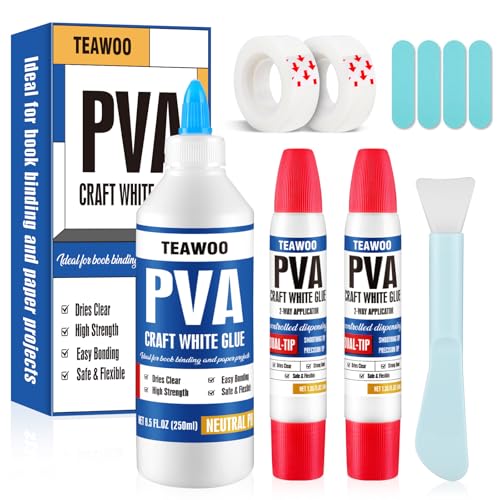
- Includes bulk and precision-size PVA bottles
- Adds brush, tape, and emery boards
- Acid-free glue dries clear and stays flexible
Best For: Repeated repairs, bookbinding, and related craft projects
Best Complete Kit
Archival PVA Glue Repairing Kit

- Includes adhesive, brush, and bone folder
- Dries clear and remains flexible
- Works with paper, board, and cloth
Best For: Multi-purpose bookbinding and paper crafts
Best for Cloth Repairs

- Archival-grade, acid-free binding cloth
- Includes two bone folders and a brush
- Sized for multiple or larger repairs
Best For: Book spines, documents, and broad restoration projects
Best for Spine Reinforcement

- Clear matte archival-safe vinyl tape
- 2 inches wide and 10 yards long
- Grid liner aids measuring and cutting
Best For: Everyday book spines, covers, and exterior hinges
Complete Archival Toolkit
Archival Book Repair Cloth & Tools

- Acid-free archival book cloth
- Two bone folders and a glue brush
- Suitable for spines, covers, and documents
Best For: Hands-on book cover and spine restoration
Precision Two-Tube Repair Set

- Two 15 ml tubes of clear glue
- Precision nozzle and anti-clog cap
- Includes brushes and sanding sticks
Best For: Small page, spine, and paper-craft repairs
High-Volume Adhesive Kit
60 ml Clear Flexible Book Glue

- 60 ml tube for multiple projects
- Clear, flexible bookbinding adhesive
- Applicator, emery board, and instructions included
Best For: Repeated book repairs and paper crafts
Best Complete Toolkit – Lineco Bookbinding Repair Tool Kit
For shoppers comparing archival book repair kits, this Lineco set is a practical starting point for simple repairs and document cleaning. It combines repair tape, transparent mending tissue, adhesive, and basic cleaning tools in one kit.
Best For: Simple book repairs, document cleaning, and basic conservation work.
Pros:
- Includes water-activated book repair tape, mending tissue, adhesive, and cleaning tools.
- Uses acid-free, neutral-pH materials, including non-yellowing mending tissue.
- Bone folder supports burnishing tissue and working adhesive into tears.
Cons:
- The book tape requires moistening with water before use.
- Designed for simple repairs rather than extensive restoration.
This is the most broadly equipped option in the group, especially if you need both repair materials and cleaning accessories rather than adhesive alone.
Best Flexible Adhesive – Neutral-PH PVA Book Glue
If your archival book repair kit mainly needs dependable glue, this 4-ounce PVA adhesive offers a focused solution. Its acid-free, pH-neutral formula dries clear and remains flexible for paper, bookbinding, framing, and craft applications.
Best For: Buyers who need a standalone archival adhesive for paper repairs and bookbinding.
Pros:
- Acid-free and pH-neutral for photos, books, and artwork.
- Dries clear with a flexible bond intended to avoid brittleness.
- Can be thinned with water and cleaned up with water while wet.
Cons:
- Includes adhesive only, without tape, brushes, or other repair tools.
- Not water resistant after application.
This compact bottle makes sense when you already have application tools or want to choose them separately. The clear, flexible finish is useful for repairs where visible residue would be distracting.
Best Archival Repair Tape – Lineco Document Repair Tape
For minor tears where a roll of tape is more useful than a full kit, this Lineco option is a straightforward choice among archival book repair kits. The translucent, one-inch tape is designed to mend and reinforce documents, books, photos, maps, and artwork.
Best For: Fast repairs of minor rips in paper documents, books, photos, and ephemera.
Pros:
- Provides 35 feet of one-inch archival repair tape.
- Translucent and nearly invisible after application.
- Uses a non-yellowing, pH-neutral adhesive and is listed as waterproof.
Cons:
- Contains tape only, so additional tools may be needed.
- Best suited to minor tears rather than full book restoration.
This roll is a good fit for keeping a dedicated repair supply on hand. Its narrow format and translucent finish help with discreet reinforcement of everyday paper damage.
Best Multi-Size Repair Set – TEAWOO Book Repair Kit
This TEAWOO set expands beyond basic adhesive with multiple PVA bottles, a brush, tape, and emery boards. Among archival book repair kits, it is suited to shoppers who want supplies for both delicate book repairs and larger binding or craft projects.
Best For: Beginners and experienced users who want bulk glue plus precision application tools.
Pros:
- Includes an 8.5-ounce bottle, two smaller bottles, brush, tape, and emery boards.
- Acid-free, pH-neutral PVA dries clear and remains flexible.
- Fine-tip bottles support controlled application to spines, pages, and covers.
Cons:
- The adhesive is not water resistant.
- Its high-viscosity formula may be more equipment than needed for a single small repair.
The combination of bulk and travel-sized adhesive makes this a versatile option for recurring repairs. It is particularly convenient if you want application and smoothing accessories included rather than purchasing them separately.
Best Complete Kit – Archival PVA Glue Repairing Kit
For shoppers comparing archival book repair kits, this set offers a practical starting point for adhesive-based repairs. It combines acid-free PVA glue with a foam brush and bone folder, and the adhesive dries clear, remains flexible, and is intended for materials such as paper, board, and cloth.
Best For: Beginners and experienced crafters handling bookbinding, scrapbooking, journaling, collage, and paper- or canvas-based projects.
Pros:
- Includes glue, brushes, a bone folder, and other basic repair supplies.
- Acid-free PVA adhesive dries clear and stays flexible.
- Suitable for porous materials including paper, board, and cloth.
- Useful across bookbinding and several paper-art applications.
Cons:
- The adhesive is not water resistant.
- It should be used between 60 and 80°F and protected from extreme heat or freezing.
- The liquid adhesive has a limited recommended usage period, although suitable storage may extend its life.
This is the most versatile choice of the three when you want one compact kit for gluing and smoothing tasks. Its temperature and storage requirements are worth noting before purchase.
Best for Cloth Repairs – Book Binding Cloth Repair Kit
Among archival book repair kits, this option is geared toward projects that need binding cloth rather than adhesive alone. The archival-grade, acid-free cloth comes with two bone folders and a wooden stencil brush, giving you materials for repairing book spines, magazines, documents, and other paper-based items.
Best For: Students, librarians, collectors, and home users repairing multiple books or larger binding areas.
Pros:
- Uses archival-grade, acid-free binding cloth.
- The generous sheet is intended to cover multiple spines or larger repairs.
- Includes two bone folders and a wooden stencil brush.
- Designed for beginners as well as experienced users.
Cons:
- The supplied notes list cloth and tools but do not identify an adhesive.
- The listed dimensions are inconsistent: the title says 75 x 45 inches, while the bullet describes 35 x 78 inches.
- It may be more material than needed for a single small repair.
This kit makes sense when cloth reinforcement and workspace tools are your priority. Confirm the actual sheet dimensions and plan to source compatible adhesive separately if your repair requires it.
Best for Spine Reinforcement – BookGuard Clear Repair Tape
For quick reinforcement of worn spines, covers, and exterior hinges, this archival-safe vinyl tape is a focused alternative to broader archival book repair kits. Its clear matte finish keeps titles and artwork visible while reducing glare, and the printed grid liner helps with measuring and cutting.
Best For: Frequently handled paperbacks, textbooks, hymnals, Bibles, and other everyday books in homes, classrooms, and libraries.
Pros:
- Archival-safe clear vinyl helps reinforce spines and covers.
- Matte finish reduces glare and keeps underlying artwork visible.
- The 2-inch-wide, 10-yard roll provides material for repeated repairs.
- Printed grid liner supports measuring and cutting accurate strips.
Cons:
- The permanent adhesive requires careful alignment because the tape is not intended for easy removal.
- It is a tape-only solution rather than a kit with glue or repair tools.
- It is designed for clean surfaces, so preparation is important before application.
This is the most convenient pick for visible, exterior reinforcement rather than full restoration. Choose it when you need a substantial roll of low-glare tape and can apply it accurately the first time.
Complete Archival Toolkit – Archival Book Repair Cloth & Tools
For hands-on archival book repair kits, this set covers the core tools for reinforcing worn spines and covers. It combines acid-free cloth with bone folders and a glue brush, making it a practical choice for basic restoration work on books, Bibles, documents, and magazines.
Best For: DIY repairers, students, librarians, teachers, and crafters working on damaged covers or bindings.
Pros:
- Includes archival-grade, acid-free cotton book cloth.
- Two bone folders support accurate creasing and smoothing.
- Large cloth sheet can be cut for different book sizes.
- Brush is designed for applying PVA or similar adhesives.
Cons:
- Adhesive is not included.
- Requires cutting and hands-on technique for a finished repair.
This is the most complete option of the three for users who need both repair material and shaping tools. It is especially useful when the project involves covering or reinforcing a spine rather than simply reattaching loose pages.
Precision Two-Tube Repair Set – Clear Flexible Book Glue
Among archival book repair kits, this set is centered on adhesive work rather than structural tools. It supplies two 15 ml tubes of clear, flexible glue plus brushes and sanding sticks for preparing and repairing pages, spines, and paper projects.
Best For: Small book repairs, loose pages, craft projects, and users who want a precision nozzle with repositioning time.
Pros:
- Flexible bond is intended to bend with turning pages.
- Clear formula is designed for low-visibility repairs.
- Precision metal nozzle helps target narrow repair areas.
- Includes brushes and sanding sticks in addition to two glue tubes.
Cons:
- Only 30 ml of glue is included overall.
- Full curing is listed at 24 hours.
- It does not include book cloth or bone-folder tools.
This is a focused choice for adhesive repairs and detailed paper crafting. The slow-setting formula can help with alignment, while the small tubes make the kit better suited to targeted projects than extensive restoration work.
High-Volume Adhesive Kit – 60 ml Clear Flexible Book Glue
This archival book repair kit focuses on a larger single supply of clear, flexible adhesive. The 60 ml tube includes a reusable applicator, emery board, and instructions, making it a practical option for repeated bookbinding, paper repair, and craft projects.
Best For: Users who need more adhesive for multiple repairs or broader bookbinding and paper-art projects.
Pros:
- 60 ml volume provides more glue than the two-tube alternative.
- Clear, flexible formula is intended not to crack as pages bend.
- Precision metal tip supports controlled application.
- Includes a reusable applicator, emery board, and instructions.
Cons:
- It includes glue and small accessories, but no repair cloth or bone folder.
- Water resistance is listed rather than full waterproofing.
- Supplied as one 60 ml tube, so there is no second tube as a backup.
Choose this set when adhesive quantity matters more than a broad assortment of restoration materials. Its larger volume and applicator make it well suited to several repairs, while the clear flexible finish supports less noticeable results on paper.
How We Picked These Archival Book Repair Kits
We focused on kits and repair supplies that address the most common bookbinding problems: detached pages, split hinges, worn spines, loose endpapers, and damaged covers. Priority went to acid-free or pH-neutral materials, flexible adhesives, archival-safe tapes, and tools that allow controlled application.
Because kits vary considerably, this roundup includes complete sets as well as focused products such as PVA adhesives, repair tape, and book cloth. A compact kit may be ideal for occasional maintenance, while a larger assortment can be more practical for repeated repairs or multiple books.
Quick Comparison
| Best For | Look For | Typical Contents |
|---|---|---|
| Basic home repairs | Simple tools and flexible PVA glue | Adhesive, brush, bone folder, or cleaning tools |
| Page and hinge reinforcement | Archival repair tape | Paper or clear tape in a useful roll length |
| Cover and spine restoration | Book cloth and strong acid-free adhesive | Cloth, glue, and folding tools |
| Frequent repair work | Larger quantities and varied materials | Multiple adhesives, tools, and reinforcement supplies |
Key Buying Factors for Archival Book Repair Kits
Adhesive Formula
PVA is a common choice because it dries clear and remains flexible when properly formulated. Look for acid-free or pH-neutral labeling, especially when repairing valuable, collectible, or frequently handled books. Avoid adhesives that dry excessively hard, yellow quickly, or cannot be repositioned during application.
Materials and Coverage
Check the quantity of glue, tape length, cloth dimensions, and number of included tools. A small bottle may be enough for a single repair, but larger containers or multipacks offer better value for a shelf of damaged books. Match tape width and cloth size to the areas you need to reinforce.
Tools and Ease of Application
Bone folders, glue brushes, cleaning tools, and spreaders can improve precision and reduce mess. A brush or narrow applicator is particularly useful for hinges and page edges, while a bone folder helps smooth cloth, tape, and paper without leaving bubbles or creases.
Archival Suitability
“Archival” can describe different features, so verify the specific claims. Acid-free, lignin-free, pH-neutral, and archival-safe materials are useful indicators, but they do not replace careful technique. Test unfamiliar products on scrap paper before working on an important volume.
Who Should Buy Which Archival Book Repair Kits?
Choose a complete book repair kit if you are new to repairs or want one purchase covering several tasks. An adhesive-only option suits experienced users who already own brushes, folders, and cutting tools. Select archival repair tape for quick reinforcement of tears, hinges, and vulnerable page areas. Book cloth is the better choice when the spine or cover needs structural restoration rather than a surface patch.
For valuable or historically significant books, use the least invasive method possible and consider consulting a professional conservator. For ordinary paperbacks, textbooks, journals, and family books, a flexible acid-free adhesive paired with a suitable tape or cloth can provide a practical, durable repair.