Logic puzzle books for kids are a simple way to turn screen-free time into focused thinking time. The best picks match a child’s age, attention span, and confidence level.
From easy pattern activities to tougher grid puzzles and mystery-solving books, this roundup helps you choose a title that feels fun first and educational second.
Best 10 Logic Puzzle Books for Kids Picks for 2026
Little Learners Logic Starter

- 50+ puzzles in 7 varieties
- Colorful, screen-free workbook format
- Built for ages 4 to 6
Best For: Young kids who need an easy first logic puzzle workbook
Mystery-Solver Pick

- 40 mini mysteries with logic grids
- Clues, codes, and illustrations included
- Ages 8 to 11 with family appeal
Best For: Story-loving kids who want detective-style logic puzzles
Skill-Building All-Rounder
Logic Workbook for Gritty Kids

- 150+ activities across many subjects
- Includes two-player games and answers
- Best for ages 6 to 10
Best For: Families wanting a varied workbook with puzzles, games, and practice
Interactive Mystery Pick

- 150+ puzzles in multiple formats
- Interactive story about a missing professor
- Ages 9 to 12 with broad topic mix
Best For: Older kids who like mystery stories and varied logic challenges
Advanced Grit Builder
Another Logic Workbook for Gritty Kids

- Over 200 activities across multiple subjects
- 90+ puzzle types plus two-player games
- Answers and achievement certificate included
Best For: Kids ages 8-12 who want a big variety of challenge-based puzzles
Beginner Grid Adventure
Logic Puzzle Book for Kids and Teens

- 50 easy-to-medium logic grid puzzles
- Smaller grids for younger readers
- Detailed full solutions included
Best For: Beginner to intermediate kids and teens who like grid logic puzzles
Early Learner Logic Pick
Logic Puzzles for Kids Ages 4-8

- Made for ages 4-8 with kid-friendly activities
- 5 themed chapters across several adventure settings
- Includes hints, answers, and varied puzzle types
Best For: Young children who are beginning with simple logic and pattern games
Hardest Challenge Pick
brainPLAY Trickiest Puzzles Ever
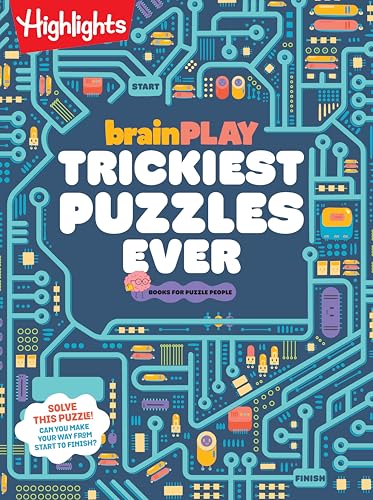
- 200+ brain games and puzzles
- Mixes logic riddles, mazes, crosswords, Hidden Pictures
- Ages 7+ with extra-tricky difficulty
Best For: Kids 7+ who want a tougher mix of brain teasers and logic puzzles
Logic Grid Workbook Pick
Logic Grid Puzzles & Other Games
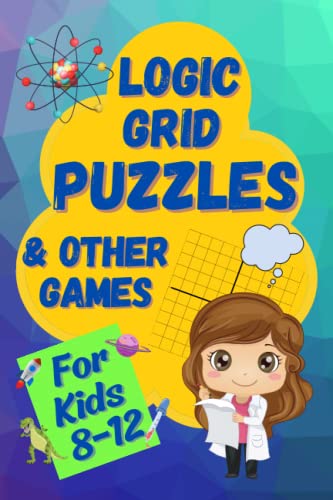
- Original logic grids and other games
- Ages 8-12 with increasing difficulty
- Full-color pages and complete solutions
Best For: Kids 8 to 12 who enjoy logic grids and deductive reasoning
All-Around Variety Pick

- 125+ activities including logic puzzles
- Mazes, sudoku, crosswords, and word searches
- Ages 8-12 with full-color illustrations
Best For: Kids 8 to 12 who want a big mix of screen-free puzzles
Little Learners Logic Starter – Logic Puzzles for Clever Kids
If you want logic puzzle books for kids ages 4 to 6, this workbook keeps the challenge light, colorful, and age-appropriate. It includes 50+ puzzles across 7 varieties, such as sequencing, patterns, analogies, and inferences, so young children can practice early reasoning without feeling overwhelmed.
Best For: Preschoolers and early elementary kids who enjoy screen-free summer learning and simple brain games.
Pros:
- 50+ logic puzzles give younger kids plenty of variety.
- Includes sequencing, patterns, analogies, and inferences.
- Colorful illustrations help keep attention on the page.
- Designed to support critical thinking and summer skill retention.
Cons:
- Best suited to younger readers, so older kids may outgrow it quickly.
- Focused more on early logic than on advanced puzzle formats.
This is a straightforward choice if you need an easy entry point into logic puzzle books for kids. Its mix of variety and visual appeal makes it a practical pick for short, engaging practice sessions.
Mystery-Solver Pick – Murdle Jr. Curious Crimes
Murdle Jr.: Curious Crimes for Curious Minds: Solve Your Way Through 40 Puzzle Mysteries!
Check Price On AmazonAmong logic puzzle books for kids, this title stands out for turning every challenge into a mini mystery. It combines 40 puzzle cases with illustrations, clues, codes, and a logic grid, making it a strong fit for readers who like story-driven problem solving.
Best For: Kids, tweens, and families who want puzzle-solving wrapped in a detective adventure.
Pros:
- 40 mini mysteries keep the format fresh and engaging.
- Includes clues, codes, and a helpful logic grid.
- Built around a fast-paced interactive story.
- Targets ages 8 to 11 with family-friendly appeal.
Cons:
- Older or more advanced puzzlers may finish it quickly.
- The mystery focus may be less appealing to kids who want only standalone puzzles.
If your child likes detective stories, this book makes logic practice feel like part of the plot. It is a good pick for keeping puzzle time active, social, and story-led.
Skill-Building All-Rounder – Logic Workbook for Gritty Kids
This option is a broad, activity-rich choice in logic puzzle books for kids, especially for ages 6 to 10. It offers over 150 activities, including spatial reasoning, math puzzles, word games, logic problems, focus activities, and two-player games, so it can work well for both learning and play.
Best For: Kids who like varied activities and families looking for a workbook with lots of replay value.
Pros:
- Over 150 developmentally appropriate activities.
- Covers spatial reasoning, math, word games, and logic.
- Includes 13 pencil-and-paper two-player games.
- Answers and a certificate of achievement are included.
Cons:
- Its wide range may feel less focused if you want only pure logic puzzles.
- Most appropriate for ages 6 to 10, so younger children may need help.
This workbook is a strong fit if you want a single book that mixes challenge, encouragement, and variety. The added games and certificate give it more staying power than a basic puzzle pad.
Interactive Mystery Pick – The Codebreakers Club
The Codebreakers Club Solve the Mystery of the Missing Puzzle Professor: 150+ Logic Puzzles
Check Price On AmazonIf you want logic puzzle books for kids that feel like a true mystery adventure, this one delivers a lot of content. It features 150+ puzzles, including crosswords, logic grids, rebuses, word searches, and cypher codes, all tied to an interactive story about a missing professor.
Best For: Ages 9 to 12 who enjoy mixed puzzle types and story-based problem solving.
Pros:
- 150+ logic puzzles provide a lot of material.
- Mixes crosswords, logic grids, rebuses, and code puzzles.
- Interactive mystery structure keeps kids moving through the book.
- Covers topics like history, science, geography, and pop culture.
Cons:
- Best for older kids, so it may be too challenging for younger readers.
- The story-driven format may not suit kids who prefer quick standalone puzzles.
This is a good pick for older puzzle fans who want variety and narrative momentum in one book. The mix of clue types makes it feel more like a mission than a worksheet.
Advanced Grit Builder – Another Logic Workbook for Gritty Kids
If you want logic puzzle books for kids that mix challenge with variety, this workbook offers a broad set of spatial reasoning tasks, math puzzles, word games, logic problems, focus activities, and two-player games. It leans a little harder than the original series entry, but the puzzles are built with a low floor and high ceiling so kids can ease in and still keep growing.
Best For: Kids ages 8-12 who enjoy a large mix of puzzle types, STEM-style thinking, and game-like challenges.
Pros:
- Over 200 activities organized by subject for plenty of variety
- Includes 90+ unique puzzle types plus 13 pencil-and-paper two-player games
- Answers are in the back, with a certificate of achievement included
- Playful characters and spirited rhymes add encouragement and keep the tone light
Cons:
- The difficulty is slightly higher than the first book in the series
- Best suited to children who like longer workbooks and many activity styles
This is a strong pick if you want one book that can both entertain and build problem-solving stamina. The range of puzzle types makes it especially useful for kids who get bored with repetitive formats.
Beginner Grid Adventure – Logic Puzzle Book for Kids and Teens
For families shopping for logic puzzle books for kids, this one focuses on 50 easy-to-medium logic grid puzzles with smaller grids and detailed solutions. The adventure theme, comic-style references, and portable 6×9 format make it a practical choice for beginners who want screen-free puzzle time on the go.
Best For: Novice or intermediate puzzle fans who want approachable logic grid puzzles with full walkthroughs.
Pros:
- 50 logic grid puzzles with detailed solutions explained in full
- Smaller grids are designed to be easier for young readers to handle
- Adventure-themed content adds a fun, story-driven feel
- Handy 6×9 size works well for travel or waiting rooms
Cons:
- Focused specifically on logic grid puzzles, so the variety is narrower than some workbooks
- Best fit for kids who are ready for grid-based deductive reasoning
This book is a solid pick if you want clear structure and complete solutions rather than a broad mix of activities. It should work especially well for kids who like logic grids but still need a beginner-friendly format.
Early Learner Logic Pick – Logic Puzzles for Kids Ages 4-8
If you need logic puzzle books for kids in the early elementary range, this workbook is built around simple, kid-friendly activities that practice critical thinking, patterns, sequences, comparisons, and more. Its themed chapters and illustrated pages make it a practical choice for younger children who learn best through hands-on play.
Best For: Kids ages 4-8 who are just starting with puzzles, mazes, and pattern-based thinking.
Pros:
- Designed for ages 4-8 with developmentally appropriate activities
- Includes 5 themed chapters for variety, from jungle and space to pirates and dinosaurs
- Features mazes, counting, pattern-spotting, and missing-piece games
- Answer keys and hints are included for support
Cons:
- Shorter at 96 pages, so advanced kids may outgrow it quickly
- Best suited to younger children rather than older puzzle fans
This is a straightforward, age-appropriate starter workbook for building early logic skills. It works well when you want educational activities that still feel playful and accessible.
Hardest Challenge Pick – brainPLAY Trickiest Puzzles Ever
If you’re shopping for logic puzzle books for kids who have already outgrown the easiest activities, this Highlights brainPLAY collection is a strong fit. It mixes Hidden Pictures, mazes, logic riddles, crosswords, and other brain teasers in a challenging format designed for kids ages 7 and up.
Best For: Kids 7+ who want a tougher mix of brain teasers, hidden pictures, and logic challenges.
Pros:
- Includes more than 200 puzzles and brain games.
- Combines logic puzzles with mazes, riddles, crosswords, and Hidden Pictures.
- Built to support confidence, creativity, and critical thinking.
- 176 pages of screen-free puzzle variety from Highlights.
Cons:
- May be too challenging for younger kids or beginners.
- Best suited to puzzle fans who want extra-tricky activities.
This is a good pick if you want a single book that leans hard into variety and difficulty. It should keep strong puzzlers busy with plenty of fresh challenges and a playful presentation.
Logic Grid Workbook Pick – Logic Grid Puzzles & Other Games
For families looking for logic puzzle books for kids that focus on deductive reasoning, this workbook is a compact, colorful option. It centers on logic grid puzzles and other original games for ages 8 to 12, with every puzzle designed to build problem-solving skills while keeping the experience engaging.
Best For: Kids 8 to 12 who enjoy logic grids, deductive thinking, and science-based facts.
Pros:
- Focused on logic grid puzzles and cross-referencing games.
- Includes original puzzles with increasing difficulty.
- Full-color illustrations on every page.
- Solutions included for checking work.
Cons:
- Only 80 pages, so it’s slimmer than larger activity books.
- Best for kids who like grid-style reasoning rather than mixed puzzle formats.
This book makes sense if you want a straightforward logic workbook instead of a broad puzzle sampler. The science and history facts add an extra reward for kids who like learning while they solve.
All-Around Variety Pick – Ultimate Puzzle Challenge!
If you want logic puzzle books for kids that go beyond one puzzle type, this Highlights jumbo book is a versatile pick. It packs in more than 125 activities, including mazes, brain teasers, word searches, crossword puzzles, sudoku, and logic puzzles for ages 8 to 12.
Best For: Kids 8 to 12 who like a big mix of puzzles and want plenty of screen-free activities.
Pros:
- More than 125 puzzle activities in one book.
- Includes logic puzzles plus mazes, sudoku, word searches, and crosswords.
- Designed to sharpen logic, concentration, and reasoning skills.
- 256 pages with full-color illustrations and travel-friendly format.
Cons:
- Less specialized if you only want pure logic puzzles.
- Large format may be less portable than smaller workbooks.
This is the best all-around option if you want broad puzzle variety from a trusted brand. It gives kids a lot to do, and the mix of challenge and humor should help keep them engaged.
How We Picked These Logic Puzzle Books for Kids
We looked for books that balance fun with real skill-building. That means clear instructions, age-appropriate difficulty, variety in puzzle types, and enough content to keep kids engaged beyond a single sitting. We also prioritized books that support important early learning skills such as reasoning, pattern recognition, visual scanning, and persistence.
Quick Comparison
Not all Logic Puzzle Books for Kids serve the same purpose. Some are best for younger children just learning to spot patterns, while others focus on grid-based deductive thinking, mystery solving, or mixed activity formats. If your child likes quick wins, choose simpler puzzle workbooks. If they enjoy being challenged, look for books with larger sets, trickier problems, or multi-step mysteries.
Key Buying Factors for Logic Puzzle Books for Kids
Age and Skill Level
Start with the child’s current comfort level, not just the suggested age range. Younger kids usually do best with visual clues, sequences, comparisons, and short activities. Older kids may prefer logic grids, deduction puzzles, and more open-ended challenge books.
Puzzle Variety
A strong book keeps interest high by mixing formats. Look for a blend of logic problems, mazes, word games, riddles, and pattern-based tasks if you want broader engagement. For targeted practice, a focused logic grid book may be the better fit.
Difficulty Progression
The best books build gradually. Early wins help kids stay motivated, while later puzzles should stretch reasoning without feeling frustrating. This is especially important for children who are new to independent puzzle solving.
Layout and Clarity
Large print, clean page design, and uncluttered instructions matter a lot. Younger readers and reluctant puzzlers often quit quickly if the pages feel crowded or confusing.
Replay Value
More puzzles usually means better value, but only if the variety stays fresh. Books with over 100 activities, themed mysteries, or mixed challenges often provide more use over time than shorter books with repetitive tasks.
Who Should Buy Which Logic Puzzle Books for Kids?
Choose simpler, picture-friendly books for ages 4-8, especially if you want a gentle introduction to reasoning and sequencing. For ages 8-12, logic grid books and mixed-brain-game collections tend to offer the best challenge. If your child loves stories, a mystery-based puzzle book can be the most motivating. For families wanting one versatile option, a mixed-activity title is usually the safest choice.
In short, the best Logic Puzzle Books for Kids are the ones that match both ability and interest. Pick a book that feels achievable now, then choose a slightly harder one once confidence grows.