Choosing the right nursing reference books can save time on the floor, sharpen clinical judgment, and support safer documentation and medication administration.
Below, we focus on practical, high-value picks for bedside use, exam prep, and fast lookups so you can match each book to your workflow and experience level.
Best 10 Nursing Reference Books Picks for 2026
Drug Safety Essential

- Over 5,000 drugs with updated online access
- High-alert and REMS safety guidance
- Patient teaching, IV, and special population notes
Best For: Nursing students and nurses who need a trusted medication reference
Critical Care Confidence Builder
Critical Care Nursing Made Incredibly Easy

- Clear review of acute and life-threatening conditions
- Chapter tools for study and test prep
- Includes a new practice exam
Best For: Critical care students, new nurses, and CCRN prep
Pocket Medication Pick
2026 Lippincott Pocket Drug Guide for Nurses

- Portable guide with 2,500+ medications
- Updated warnings, interactions, and indications
- Includes nursing considerations and patient teaching
Best For: Nurses who need a compact drug reference on the go
Longtime Clinical Standard
Mosby's 2027 Nursing Drug Reference
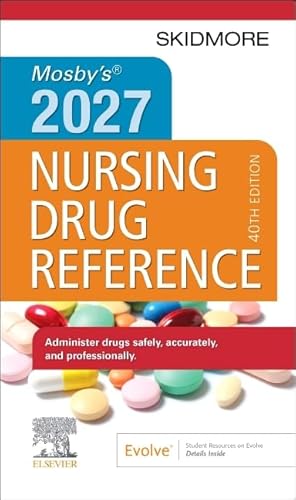
- More than 5,000 drugs with new FDA-approved entries
- Black Box Warning and High Alert safety features
- IV guidance plus nursing process organization
Best For: Nurses and students needing a detailed, safety-focused drug guide
Charting Confidence

- Documentation-focused nursing reference built on standards and legal risk
- 35+ templates for admissions, falls, code blue, restraints, and more
- Covers SOAP, DAR, narrative notes, and EMR charting habits
Best For: Nurses who want a practical charting guide for defensible documentation
Pocket Reference

- Pocket-sized rapid reference with charts, tables, and color updates
- Covers lab values, orders, radiology, medications, and more
- QR codes link to video lessons for CXR, EKG, and arrhythmias
Best For: Students and clinicians who need a compact quick-reference tool
Medication Mastery
Nursing Drug Guide New Edition

- Quick-reference drug guide with 700+ medications organized by class
- Highlights dosages, side effects, nursing considerations, and teaching
- Flags high-alert, LASA, emergency drugs, and IV compatibility
Best For: Nursing students and RNs who need a concise medication guide
Quick Reference
Nursing Pharmacology QuickStudy

- Color-coded pharmacology overview
- Covers uses, administration, side effects
- Laminated 3-panel quick reference
Best For: quick pharmacology review for students and nurses
Visual Clinical Guide

- Image-rich review of diseases and skills
- Step-by-step assessment and treatment guidance
- Covers major body systems and patient care
Best For: visual learners needing a broad clinical nursing review
Exam Prep Pick

- Covers reading, math, science, and English
- Updated for TEAS 7 chemistry content
- Laminated 6-page exam review
Best For: TEAS 7 prep and nursing school admission review
Drug Safety Essential – Davis's Drug Guide for Nurses
If you want a core nursing reference books pick for medication administration, Davis’s Drug Guide for Nurses is built for safe, fast lookups. This 19th edition focuses on patient safety, with organized monographs, high-alert markers, and plenty of updated drug coverage for everyday clinical use.
Best For: Nursing students and practicing nurses who need a dependable medication reference with strong safety guidance.
Pros:
- Covers over 5,000 generic and trade-name drugs with regularly updated online access.
- Highlights high-alert medications, life-threatening side effects, and REMS warnings.
- Includes patient teaching guidance, IV administration subheads, and special population notes.
- Comes with extra digital tools like audio pronunciations, calculators, and case studies.
Cons:
- Large 1,480-page format may be more than some users want to carry daily.
- Best value depends on using the included online access and digital tools.
Overall, this is a strong all-purpose drug guide if safety and up-to-date medication details matter most in your nursing workflow. It balances depth with practical organization, making it a reliable reference for school and clinical settings.
Critical Care Confidence Builder – Critical Care Nursing Made Incredibly Easy
For nursing reference books aimed at acute care, this updated critical care guide is designed to make complex material easier to absorb. It covers critical care basics, multisystem disorders, advanced life support topics, and exam prep in a format that is friendly, visual, and practical.
Best For: Students, new critical care nurses, and CCRN candidates who want a clear review text with practice support.
Pros:
- Fully illustrated, concise explanations of acute and life-threatening conditions.
- Includes systems-based coverage, emergency measures, and specialized care topics.
- Features chapter tools like quick summaries, expert tips, memory joggers, and quick quizzes.
- Includes a new end-of-book practice exam for certification and NCLEX-style review.
Cons:
- Focused on review and exam prep, so it is less of a deep clinical handbook.
- Best fit is critical care content, not general nursing topics.
This is a practical choice if you want an approachable way to build confidence in ICU and acute care concepts. It stands out as a study-friendly reference rather than a dense textbook.
Pocket Medication Pick – 2026 Lippincott Pocket Drug Guide for Nurses
If you need nursing reference books that are easy to carry, this pocket drug guide delivers quick medication facts in a compact format. It focuses on essential details for more than 2,500 medications, making it a practical choice for fast lookups during school or clinical shifts.
Best For: Nurses and students who want a small, portable drug reference for quick medication checks.
Pros:
- Covers over 2,500 medications in an alphabetized pocket-size guide.
- Updated with new indications, interactions, black box warnings, and larger font.
- Includes monographs with dosage, adverse effects, nursing considerations, and patient teaching.
- Handy appendices cover alternatives, topical drugs, contraceptives, biologicals, and more.
Cons:
- Compact size means abbreviated drug entries instead of deep detail.
- Best for quick reference, not comprehensive pharmacology study.
This guide makes sense if portability is a top priority and you want essential drug information at a glance. It is especially useful when you need a small reference that still stays current.
Longtime Clinical Standard – Mosby's 2027 Nursing Drug Reference
Mosby's 2027 Nursing Drug Reference (Surgical Pathology: A Case Based Approach to Diagnosis)
Check Price On AmazonAmong nursing reference books, Mosby’s Nursing Drug Reference is a strong option if you want a long-running drug handbook with a heavy focus on safety. This 40th edition covers more than 5,000 drugs, including newly approved medications, and organizes information so you can move quickly in clinical settings.
Best For: Nursing students and clinicians who want a detailed drug guide with safety alerts and broad medication coverage.
Pros:
- Profiles more than 5,000 generic and trade-name drugs, including newly FDA-approved entries.
- Emphasizes safety with Black Box Warnings and High Alert icons.
- Includes IV administration guidance, nursing process steps, and body-system side effects.
- Provides pharmacokinetic summaries and cross-referenced appendixes for easier lookup.
Cons:
- Large reference format may be more than some users need for very light use.
- Some extra monographs are available only through Evolve, not in the main text.
This is a dependable choice if you want a comprehensive drug reference with a clear nursing focus. The safety alerts and organization make it especially useful for clinical decision support and medication study.
Charting Confidence – Charting for Nurses
If you want nursing reference books that help with real-world shifts, this charting guide is built around documentation that stands up to scrutiny. It focuses on nursing standards, Joint Commission requirements, EMR habits, and the kinds of notes and mistakes that show up in board investigations and malpractice cases.
Best For: New graduates, experienced nurses, travel nurses, and students who want a practical charting reference for defensible documentation.
Pros:
- Built around legal and documentation risks nurses actually face
- Includes 35+ charting templates for common and high-risk scenarios
- Covers SOAP, DAR, narrative notes, and EMR documentation basics
- Includes a master template, safe abbreviations, and a shift checklist
Cons:
- Focused on charting, so it is not a broad all-in-one nursing handbook
- Legal guidance is educational only and not a substitute for facility policy
- Best suited to documentation support rather than bedside clinical review
For nurses who want a tighter, safer approach to charting, this is a highly practical reference. It is especially useful if you need examples, templates, and plain-language guidance for documenting clearly and consistently.
Pocket Reference – The Practitioner's Pocket Pal
The Practitioner's Pocket Pal: A "Made Ridiculously Simple" Rapid Medical Reference
Check Price On AmazonAmong nursing reference books, this pocket-sized medical guide is designed for fast lookups during clinical work and exam prep. It bundles frequently used reference material in chart format, with updated color tables and QR-coded video lessons for CXR, EKG/ECG, arrhythmia interpretation, and suturing.
Best For: Nursing students, new clinicians, and bedside staff who want a compact quick-reference tool for common medical topics.
Pros:
- Compact format that fits in a pocket for quick access
- Covers lab values, orders, medications, radiology, and organ systems
- Includes QR-coded video lessons for selected interpretation topics
- Useful for nurses, medical students, residents, PAs, and EMTs
Cons:
- Very concise, so it is not a deep textbook-style resource
- Broad medical scope may feel less nursing-specific than other guides
- Small size limits how much detail can be included on each topic
If you need a fast, portable reference rather than a full teaching text, this edition delivers a lot in a small package. It is especially handy when you want charts, tables, and quick reminders within reach.
Medication Mastery – Nursing Drug Guide New Edition
If you are comparing nursing reference books for medication study, this drug guide is built for fast, clinically focused lookups. It organizes more than 700 medications by class and highlights dosages, side effects, nursing considerations, patient teaching, IV compatibility, and high-alert or LASA drugs.
Best For: Nursing students, new grads, and practicing RNs who want a concise medication reference for clinical use and exam prep.
Pros:
- Comprehensive coverage of 700+ essential medications
- Drug-class organization makes information easier to find quickly
- Flags high-alert, LASA, and emergency drugs clearly
- Includes patient teaching tips, IV compatibility, and workbook tools
Cons:
- Focused mainly on medications, not broader nursing topics
- Concise format may not satisfy users wanting deeper pharmacology detail
- Best used as a quick reference rather than a full textbook replacement
This is a strong choice if your priority is safe medication review in a compact format. It gives nurses the core facts they need quickly, which makes it especially helpful for busy shifts and exam prep.
Quick Reference – Nursing Pharmacology QuickStudy
If you want nursing reference books that make drug study fast and portable, this QuickStudy laminated guide is built for quick review. It organizes drug information into color-coded sections covering drug types, uses, administration, and possible side effects, making it easy to grab the key facts without wading through extra text.
Best For: Nursing students and practicing nurses who need a compact pharmacology refresher.
Pros:
- Color-coded layout makes topics easier to scan quickly.
- Covers drug uses, administration, and side effects in a concise format.
- Laminated 3-panel design is made for fast, repeat use.
Cons:
- At 6 pages, it is not a deep-dive pharmacology textbook.
- Best suited for review and quick lookup rather than detailed study.
This guide works well as a pocket-style reference when you need essential pharmacology facts in a hurry. It is especially useful if you prefer a clutter-free study tool you can revisit often.
Visual Clinical Guide – Lippincott Visual Nursing
Lippincott Visual Nursing: A Guide to Clinical Diseases, Skills, and Treatments
Check Price On AmazonFor nursing reference books that support visual learning, this updated clinical guide offers a detailed look at common diseases, skills, and treatments. It combines concise explanations with abundant images, step-by-step assessment guidance, and body-system chapters that cover anatomy, symptoms, labs, interventions, and patient care.
Best For: Visual learners, nursing students, and nurses who want a disease-and-skills review text.
Pros:
- Abundant illustrations, photos, waveforms, and diagrams support learning.
- Covers major body systems with anatomy, pathophysiology, and nursing considerations.
- Includes step-by-step assessment and treatment guidance.
- Comparative charts help organize diseases, symptoms, and interventions.
Cons:
- At 560 pages, it is more of a full reference than a quick pocket guide.
- May be more than you need if you only want a narrow topic review.
This is a strong choice if you learn best from images and want a broad clinical refresher in one place. Its updated content and structured layout make it useful for both study and unit-level review.
Exam Prep Pick – Nursing TEAS 7 QuickStudy
If you’re comparing nursing reference books for entrance-exam prep, this laminated TEAS 7 guide is designed for quick, focused review. It condenses reading, math, science, and English language usage into a compact 6-page format, with updates that include chemistry coverage for the newer exam version.
Best For: TEAS 7 test-takers who want a compact study aid for nursing school admission.
Pros:
- Covers all major TEAS areas: reading, math, science, and English.
- Updated for the exam released in 2022/23, including chemistry.
- Laminated format is designed to hold up to spills and repeated use.
Cons:
- Only 6 pages, so it is best used as a review tool rather than a full prep course.
- Focuses on test essentials instead of detailed explanations.
This guide is a practical option if you want a low-cost, highly concentrated refresher for TEAS 7. It fits well into a nursing-school prep stack when you need the basics in a very portable format.
How We Picked These Nursing Reference Books
We prioritized books that nurses and nursing students actually reach for during study sessions, clinicals, and shifts: medication references, charting help, pharmacology summaries, and fast clinical review tools. Strong picks are easy to scan, current enough to be useful, and organized well for real-world use.
Quick Comparison
Some titles are built for medication safety and dosing checks, while others are better for documentation, critical care refreshers, or exam preparation. If you want a bedside companion, choose a pocket-style drug guide. If you need broader learning support, look for visual summaries, laminated quick references, or skills-focused content.
Key Buying Factors for Nursing Reference Books
Content Focus
Start with your main need. Drug guides are ideal for medication administration and side-effect checks. Charting references help with documentation language and note structure. Pharmacology and disease review books are better for concept building and clinical understanding.
Format and Portability
On-the-go use matters. Pocket guides, laminated sheets, and compact references are easier to carry during shifts, while larger books may offer more depth for study at home.
Organization and Speed
The best Nursing Reference Books make information easy to find quickly. Look for clear alphabetical layouts, visual callouts, concise tables, and straightforward navigation, especially if you expect to use the book in fast-paced settings.
Audience and Experience Level
Students often benefit from simplified explanations, visuals, and test-prep support. Working nurses may prefer drug references, charting examples, and practical clinical overviews that reduce lookup time.
Who Should Buy Which Nursing Reference Books?
If you want medication support, choose a drug guide or pharmacology reference. If charting is your biggest challenge, go with a documentation-focused title. For critical care or broader clinical review, select a skills-and-disease resource. If you are preparing for nursing exams, a streamlined study guide can offer the quickest payoff.
For most buyers, the best strategy is to pair one bedside reference with one study-oriented book. That gives you both immediate clinical utility and longer-term learning support.