Great sales books can sharpen your message, improve your process, and help you close more consistently. Whether you need better prospecting, stronger discovery, or more persuasive conversations, the right title can change how you sell.
This roundup highlights ten standout picks for 2026, with a focus on practical advice, proven frameworks, and books that still feel useful in real-world selling situations.
Best 10 Sales Books Picks for 2026
Mindset-First Sales Training

- Centers on the inner game of selling
- Helps with rejection and confidence
- Expanded unabridged audiobook format
Best For: Salespeople who need mindset and confidence support
Negotiation Skills for Sellers

- Built from FBI hostage-negotiation experience
- Focuses on empathy and influence
- Useful for business and personal deals
Best For: Sellers who negotiate and handle difficult conversations
Buyer-Centric Sales Strategy

- Focuses on the buyer's problem and gap
- Addresses objections, long cycles, and no-decision
- Aims to improve win rates and deal values
Best For: Teams that want a modern, problem-centric sales framework
Prospecting and New Business

- Built around prospecting and new business development
- Covers phone, email, voicemail, and social outreach
- Helps establish trust with new prospects
Best For: Reps who need a simple prospecting playbook
Persuasion-First Selling

- Step-by-step Straight Line Selling system
- Focuses on persuasion, influence, and closing
- Aimed at salespeople, entrepreneurs, and speakers
Best For: Readers who want a structured, persuasion-driven sales method
Challenger Selling Framework

- Research-backed study of top sales reps
- Teaches insight-led, assertive selling
- Best known for complex B2B sales
Best For: Sales teams and reps selling complex B2B solutions
Everyday Closing Mindset
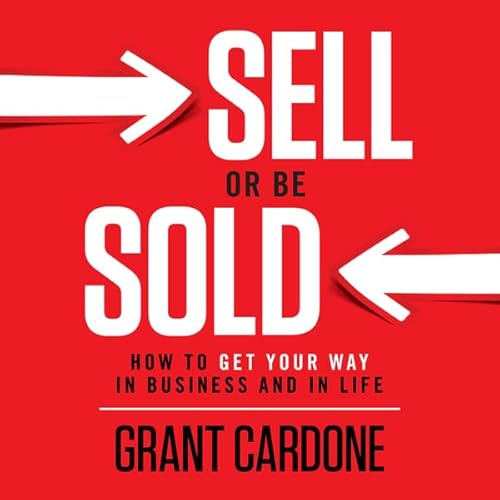
- Treats selling as a life skill
- Covers rejection, pipeline, and positivity
- Direct audiobook from Grant Cardone
Best For: Readers who want an energetic, all-purpose selling mindset that applies beyond work
B2B Sales Framework
P3 Selling: The Essentials of B2B Sales Success

- Clear framework for B2B sales success
- Non-manipulative techniques with practical use
- End-of-chapter activities support application
Best For: B2B sellers who want a simple, actionable system
Persuasion for Everyone

- Shows how selling applies to everyday life
- Backed by social science and practical examples
- Offers modern persuasion concepts and framing
Best For: Readers who want a broad, research-backed take on selling
Sales Fundamentals Classic
Jeffrey Gitomer's Little Red Book of Selling

- Focuses on how to sell and why people buy
- Bite-size lessons and self-tests
- Includes 12.5 principles for sales greatness
Best For: New salespeople and anyone wanting quick, memorable basics
Mindset-First Sales Training – The Psychology of Selling
The Psychology of Selling: Increase Your Sales Faster and Easier Than You Ever Thought Possible
Check Price On AmazonIf you want sales books that focus on the seller as much as the sale, this Brian Tracy classic is built around the inner game of selling. It centers on self-confidence, handling rejection, and controlling your thoughts, feelings, and actions so you can become more effective in real conversations.
Best For: Salespeople who want a mindset-driven guide to confidence, rejection resilience, and performance.
Pros:
- Focuses on the psychology behind selling, not just techniques.
- Teaches how to reduce fear of rejection and build self-confidence.
- Available as an expanded and updated unabridged audiobook.
Cons:
- More centered on mindset than step-by-step sales process tactics.
- Best suited to listeners who want a classic training-style approach.
As a sales book, it stands out for tackling the internal barriers that often hold sellers back. If your biggest challenge is consistency, confidence, or mental discipline, this is a practical place to start.
Negotiation Skills for Sellers – Never Split the Difference
Among sales books, this bestseller is especially useful if your deals depend on strong conversations and smart negotiation. Chris Voss brings hostage-negotiation lessons into business settings, showing how persuasion, tactical empathy, and calibrated questions can help you handle tough discussions.
Best For: Sellers who negotiate often and want a field-tested approach to persuasion and influence.
Pros:
- Uses real-world negotiation experience from an FBI hostage negotiator.
- Covers rapport, trust, tactical empathy, and active listening.
- Includes practical tools for business deals and difficult conversations.
Cons:
- Not a traditional end-to-end sales process handbook.
- Some examples are broader than pure sales situations.
This is a strong pick if your work involves complex negotiations, high-stakes conversations, or overcoming resistance. It is especially valuable for readers who want to improve influence without relying on pressure tactics.
Buyer-Centric Sales Strategy – Gap Selling
If you want sales books that challenge old assumptions, this one takes a problem-centric approach to selling. Keenan argues that buyers do not buy from people they like, and instead shows how to understand the gap between a buyer’s current state and desired outcome.
Best For: Sales teams and reps who want a modern, buyer-focused framework that improves deal quality and win rates.
Pros:
- Reframes selling around the buyer’s problem and decision process.
- Targets issues like long cycles, objections, and no-decision outcomes.
- Designed to raise sales IQ and increase influence throughout the process.
Cons:
- Its blunt style may not suit readers who prefer a softer tone.
- Less about traditional relationship-first selling.
For readers looking to move beyond outdated tactics, this book offers a sharp and structured alternative. It is best when you want a framework that connects sales behavior directly to buyer change.
Prospecting and New Business – New Sales. Simplified.
New Sales. Simplified.: The Essential Handbook for Prospecting and New Business Development
Check Price On AmazonFor sales books aimed at building pipeline, this handbook keeps the focus on prospecting and new business development. Mike Weinberg lays out practical steps for choosing the right prospects, crafting a customer-focused sales story, and staying consistent with business development activities.
Best For: Reps and managers who need a straightforward guide to prospecting and winning new accounts.
Pros:
- Provides a proven formula for prospecting and developing deals.
- Includes advice on phone calls, email, voicemail, and social media.
- Focuses on building trust and overcoming anti-salesperson resistance.
Cons:
- More focused on new business than account management or advanced closing tactics.
- Geared toward readers willing to follow a structured outreach process.
This is a practical choice if your main need is consistent pipeline creation. It is especially helpful for anyone who wants a clear, easy-to-follow prospecting system rather than a broad sales theory book.
Persuasion-First Selling – The Way of the Wolf
The Way of the Wolf: Straight Line Selling: Master the Art of Persuasion, Influence, and Success
Check Price On AmazonIf you want sales books that focus on direct persuasion, this one is built around Jordan Belfort’s Straight Line Selling system. It’s aimed at readers who want a step-by-step approach to influence, close more deals, and strengthen their sales conversations with a repeatable framework.
Best For: Readers who want a structured, persuasion-driven sales method from a high-profile closers’ playbook.
Pros:
- Breaks down a step-by-step sales and persuasion system.
- Focuses on influencing, closing, and negotiating in real situations.
- Written and narrated by Jordan Belfort for a consistent voice.
- Useful for salespeople, entrepreneurs, speakers, and negotiators.
Cons:
- The high-energy style may not suit readers who prefer a softer sales approach.
- Centered on a single selling system rather than a broad survey of sales methods.
As a practical sales book, it stands out for readers who want a clear system they can study and apply immediately. The emphasis on persuasion and closing makes it a strong fit if your goal is to sharpen execution rather than just absorb theory.
Challenger Selling Framework – The Challenger Sale
Among modern sales books, this one is known for its research-backed challenge-based approach to customer conversations. It argues that top performers don’t rely on relationships alone, but teach, tailor, and take control when selling complex business-to-business solutions.
Best For: Sales teams and reps selling complex B2B solutions who want a research-based framework.
Pros:
- Built on an exhaustive study of thousands of sales reps.
- Explains the Challenger profile and why it works.
- Focuses on unique insights, tailoring, and assertive control.
- Offers a replicable approach that can be taught across teams.
Cons:
- Less focused on relationship-first selling styles.
- Best suited to complex sales, so it may feel less relevant for simpler transactions.
This is a strong pick if you want a sales book that challenges conventional wisdom with data and a clear operating model. It’s especially useful for organizations looking to improve performance across a sales force, not just for lone reps.
Everyday Closing Mindset – Sell or Be Sold
If you’re comparing sales books that connect selling with everyday life, this Grant Cardone audiobook takes that broad view. It treats selling as a core skill for business and personal success, with advice on handling rejection, filling your pipeline, and staying positive under pressure.
Best For: Readers who want an energetic, all-purpose selling mindset that applies beyond the sales floor.
Pros:
- Frames selling as a skill relevant to business and life.
- Covers rejection, negativity, and maintaining momentum.
- Includes practical topics like pipeline building and shortening sales cycles.
- Narrated by Grant Cardone, which matches the book’s direct style.
Cons:
- The broad life-advice angle may be less focused than other sales books.
- Listeners looking for a highly structured framework may want something more specific.
This book works well if you want motivation paired with sales fundamentals in a straightforward format. It’s a good fit for readers who want to treat selling as a daily habit, not just a job function.
B2B Sales Framework – P3 Selling: The Essentials of B2B Sales Success
If you’re comparing sales books for B2B work, P3 Selling is built for readers who want a clear, practical framework rather than vague motivation. It breaks down the three most critical predictors of B2B sales success and shows why they matter, with non-manipulative techniques you can apply in real sales situations.
Best For: B2B sales professionals who want a straightforward system for improving deal flow, referrals, and long-term results.
Pros:
- Explains an easy-to-follow framework for B2B sales success.
- Focuses on non-manipulative techniques that preserve integrity.
- Includes activities at the end of each chapter for practical application.
- Grounded in navigating complex B2B selling environments.
Cons:
- Specifically aimed at B2B readers, so it is less useful for consumer sales.
- Shorter length may leave advanced sellers wanting more depth.
Overall, this is a strong pick if you want sales books that prioritize clear action over sales jargon. It is designed to help you apply a repeatable approach and build confidence while working toward more deals and referrals.
Persuasion for Everyone – To Sell Is Human
Among sales books, To Sell Is Human stands out for showing how selling shows up in everyday life, not just in formal sales roles. Daniel H. Pink combines social science with practical examples to explain how to move others more effectively at work, at home, and in everyday conversations.
Best For: Readers who want a broader, research-backed look at persuasion and modern selling.
Pros:
- Draws on social science for a fresh perspective on selling.
- Applies to many situations beyond traditional sales jobs.
- Includes practical concepts like the new ABCs and framing ideas.
- Helps readers think differently about persuasion and influence.
Cons:
- More conceptual than a step-by-step sales playbook.
- Readers looking for narrow B2B tactics may want a more specialized title.
This is a smart choice if you want sales books that blend insight with usefulness. It offers a clear, modern view of persuasion that can help you communicate more effectively in a wide range of settings.
Sales Fundamentals Classic – Jeffrey Gitomer's Little Red Book of Selling
If you’re shopping for sales books with fast, practical takeaways, Jeffrey Gitomer’s Little Red Book of Selling is a classic choice. It focuses on both how to sell and why people buy, and it delivers bite-size ideas that are easy to absorb and use right away.
Best For: New and working salespeople who want quick, memorable principles they can apply immediately.
Pros:
- Centers on both how to sell and why people buy.
- Uses short, easy-to-grasp lessons and self-tests.
- Includes Jeffrey Gitomer’s 12.5 Principles of Sales Greatness.
- Designed for immediate real-world use.
Cons:
- May feel more like a collection of principles than a structured system.
- Readers seeking deep, modern B2B strategy may want a more focused title.
As sales books go, this one is especially useful if you want compact advice that is easy to revisit. Its classic, practical style makes it a strong handbook for understanding why sales happen and how to put that insight to work.
How We Picked These Sales Books
We focused on books with lasting value for working sellers, sales leaders, and founders. The strongest picks combine clear frameworks, practical techniques, and broad relevance across B2B and B2C selling. We also favored books that address different parts of the sales process, from prospecting and negotiation to objection handling and customer conversation control.
Quick Comparison
This list covers a useful range of selling styles. Some Sales Books lean tactical and immediate, while others are more strategic or mindset-driven. If you want prospecting help, look first at books centered on new business development. If you need better deal control or negotiation outcomes, prioritize titles built around influence and conversation structure.
Key Buying Factors for Sales Books
Relevance to Your Sales Motion
Choose books that match how you sell. A B2B account executive, a founder doing outbound, and a retail seller will need different tactics. The best Sales Books speak directly to your pipeline stage and deal cycle.
Practicality Over Theory
Look for frameworks you can use quickly: discovery questions, prospecting sequences, negotiation language, and qualification methods. Strong books give you repeatable actions, not just motivation.
Depth of Skill Coverage
Some titles are excellent for one skill, such as negotiation or persuasion, while others provide a broader foundation. If you are building your library, mix both so you can improve across the full sales process.
Fit for Your Experience Level
New sellers often benefit from clear, step-by-step systems, while experienced reps may prefer sharper strategic insight. The best Sales Books meet you where you are and still offer takeaways you can apply immediately.
Who Should Buy Which Sales Books?
If you need help generating pipeline, choose books focused on prospecting and new business development. If your challenge is winning competitive deals, prioritize titles about negotiation, customer conversations, and controlling the sale. If you want a broader perspective on influence and human behavior, pick the more psychology-driven options. For teams building a shared sales language, a mix of foundational and advanced Sales Books works best.
In short, use this roundup to build a library that supports how you sell today and where you want your sales process to go next.