If you want better outcomes at work, in business, or in everyday conversations, the right negotiation books can give you a real edge. The best titles teach you how to prepare, listen, frame offers, and handle pressure without losing rapport.
This roundup focuses on widely respected books that cover both foundational strategy and modern tactics, so you can choose the right fit for your goals and experience level.
Best 10 Negotiation Books Picks for 2026
High-Stakes Tactics

- FBI hostage-negotiator methods
- Practical for work and home
- Centers on tactical empathy
Best For: Readers who want immediate, high-pressure negotiation tactics
Research-Driven Tactics
- Harvard Business School expertise
- Detailed strategies and talking points
- Strong on ethics and hardball tactics
Best For: Readers who want a detailed, business-focused negotiation guide
Foundational Classic

- Step-by-step Harvard framework
- Focuses on interests, not positions
- Concise and widely applicable
Best For: Readers who want a classic, easy-to-follow negotiation framework
Flexible Bargaining Guide

- Step-by-step bargaining strategy
- Helps you negotiate as yourself
- Covers online and cultural factors
Best For: Readers who want a practical, adaptable bargaining guide
Classic Conflict-Resolution Pick
Getting Past No: Negotiating in Difficult Situations

- Strategy for stubborn, difficult negotiations
- Teaches calm, pressure-tested responses
- Aims for agreements that satisfy both sides
Best For: Readers facing hostile or uncooperative negotiations
Practical Everyday Negotiation Guide
The Art of Negotiation: How to get what you want (every time)

- Covers fundamentals in a simple, practical way
- Applies to business and everyday purchases
- Includes real-world scenarios and confidence tips
Best For: Beginners who want usable negotiation advice for daily life
Modern Communication-Focused Pick
The Next Conversation: Argue Less, Talk More

- Actionable phrases for hard conversations
- Three-part system: control, confidence, connection
- Useful for boundaries and conflict management
Best For: Readers who want practical communication tools for difficult talks
Contrarian Deal-Making
Start with No: Counterintuitive Negotiation Tools
- Challenges win-win assumptions with a decision-based system.
- Focuses on controllable behaviors like agenda, questions, and listening.
- Covers both business deals and everyday negotiations.
Best For: Readers who want a contrarian negotiation framework
Three-Dimensional Strategy
3-d Negotiation: Setup, Design, and Table Tactics

- Covers table tactics, deal design, and pre-table setup.
- Shows how to approach the right parties in the right sequence.
- Backed by practical steps and deal-making cases.
Best For: People working on important or complex deals
Practical Commercial Guide
The Negotiation Book: Modern Commercial Playbook

- Covers power, process, and behavior in negotiation.
- Offers simple, realistic advice that is easy to use.
- Includes modern issues like virtual negotiation and economic change.
Best For: Business professionals seeking a modern commercial guide
High-Stakes Tactics – Never Split the Difference
If you want negotiation books that feel immediately usable, this one stands out for its practical, real-world tactics. Chris Voss turns hostage-negotiation experience into a guide for business deals, salaries, rent, car buying, and everyday conflicts, with an emphasis on empathy, active listening, and calibrated questions.
Best For: Readers who want a tactical, high-stakes negotiation book they can apply at work, at home, and in difficult conversations.
Pros:
- Draws on field-tested FBI hostage negotiation experience
- Covers both professional and personal negotiation scenarios
- Focuses on rapport, trust, and tactical empathy
- Includes step-by-step methods for handling conflict and persuasion
Cons:
- More tactical than theoretical
- May feel intense if you want a softer, relationship-first style
Overall, this is a strong pick if you want negotiation books that prioritize concrete tools over abstract theory. It is especially useful when you need to influence outcomes in challenging, high-pressure situations.
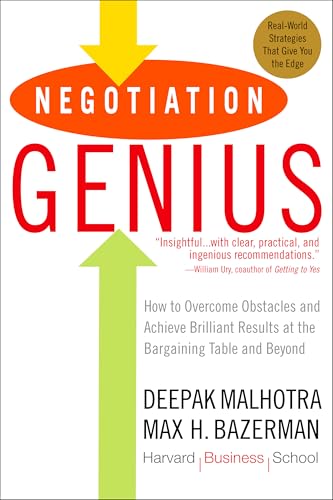
Research-Driven Tactics – Negotiation Genius
Among negotiation books, this one is a strong fit if you want a research-driven approach with real-world detail. Written by Harvard Business School leaders, it focuses on the mental habits and strategies that help you prepare, handle resistance, and improve outcomes even in tough bargaining situations.
Best For: Readers who want an in-depth, business-oriented negotiation book with detailed strategies and talking points.
Pros:
- Built on behavioral research and executive-education experience
- Includes detailed strategies and talking points
- Covers hardball tactics, resistance, and ethical negotiation
- Helps with both strong and weak bargaining positions
Cons:
- More detailed and study-oriented than a quick skim
- Leans heavily toward business and professional negotiation
This is a smart choice if you want negotiation books that give you a clear action plan and a deeper understanding of why certain tactics work. It balances strategy, ethics, and practical execution well.
Foundational Classic – Getting to Yes
If you are comparing negotiation books and want a proven classic, this one is hard to overlook. Based on the Harvard Negotiation Project, it offers a concise, step-by-step method built around separating people from the problem, focusing on interests, and creating fair options.
Best For: Readers who want a concise, widely applicable negotiation framework for work, home, and everyday disputes.
Pros:
- Clear, step-by-step negotiation strategy
- Focuses on interests rather than positions
- Designed for many situations, from business to personal conflict
- Concise and easy to absorb
Cons:
- Less tactical than some newer negotiation books
- May feel brief if you want lots of case-heavy detail
This book remains a foundational pick because it is practical without being overwhelming. If you want a straightforward method that has helped millions of readers, it belongs on the shortlist.
Flexible Bargaining Guide – Bargaining for Advantage
For readers browsing negotiation books with a more personal, adaptable angle, this updated edition offers a systematic approach built around negotiating as who you are. It draws on Wharton workshop experience, real examples, and newer insights on power, online negotiation, and cultural differences.
Best For: Readers who want a practical negotiation book that helps them play to their own strengths.
Pros:
- Teaches a step-by-step bargaining approach
- Built around negotiating as yourself, not as someone else
- Includes updates on online negotiation and impasses
- Covers gender and cultural differences that can affect outcomes
Cons:
- May be less famous than some other negotiation books
- More strategic than dramatic or story-driven
This is a solid pick if you want a negotiation book that feels grounded and flexible rather than overly scripted. Its emphasis on style, context, and practical adaptation makes it useful in many settings.
Classic Conflict-Resolution Pick – Getting Past No: Negotiating in Difficult Situations
If you want negotiation books that focus on stubborn people and high-pressure moments, Getting Past No is built for exactly that. William Ury’s guide centers on staying calm, defusing hostility, and turning a hard “no” into a workable discussion, making it a practical choice for tense workplace and personal situations.
Best For: Readers dealing with difficult counterparts, conflict-heavy conversations, and stubborn negotiations.
Pros:
- Offers a step-by-step strategy for difficult negotiations
- Includes tactics for staying in control under pressure
- Addresses hostile behavior and dirty tricks directly
- Focused on reaching agreements that satisfy both sides
Cons:
- Published in 1993, so the style may feel older than newer negotiation books
- Its emphasis is on difficult situations rather than broad business strategy
Overall, this is a strong pick if your main challenge is getting past resistance instead of simply learning basic negotiation theory. It’s especially useful when you need a calm, practical framework for tough people and tough conversations.
Practical Everyday Negotiation Guide – The Art of Negotiation: How to get what you want (every time)
Among negotiation books aimed at everyday life, The Art of Negotiation stands out for its hands-on, confidence-building approach. The author says anyone can learn to negotiate and covers fundamentals, clear objectives, and real-world scenarios that translate from business deals to buying a car or planning a wedding.
Best For: Readers who want a practical, straightforward negotiation guide for personal and business situations.
Pros:
- Breaks negotiation down into fundamentals anyone can learn
- Connects business skills to everyday decisions like homes, cars, and weddings
- Includes practical advice and real-world scenarios
- Focuses on building confidence and long-term relationships
Cons:
- Self-published format may appeal more to readers who prefer a direct, independent voice
- Less specialized for complex, high-conflict disputes
This is a sensible choice if you want a broad, approachable negotiation book that emphasizes usable skills over jargon. It looks especially helpful for readers who need advice they can apply right away in both work and personal life.
Modern Communication-Focused Pick – The Next Conversation: Argue Less, Talk More
If you’re comparing negotiation books that lean into communication skills, The Next Conversation is a modern, practical option. Jefferson Fisher’s framework focuses on saying less, staying controlled, and connecting more effectively, which makes it useful for arguments, boundary-setting, and any conversation where you want a better outcome without escalating conflict.
Best For: Readers who want concise communication tactics for conflict, boundaries, and difficult conversations.
Pros:
- Provides immediately actionable strategies and phrases
- Built around a simple three-part communication system
- Emphasizes control, confidence, and connection
- Useful in both personal and boardroom conversations
Cons:
- Available as an audiobook, which may not suit readers wanting a print-first format
- More communication-centered than traditional negotiation strategy
This is a strong fit if you want negotiation-adjacent guidance that is clear, current, and easy to apply in real conversations. It’s especially appealing for people who want practical phrasing rather than a heavy strategic playbook.
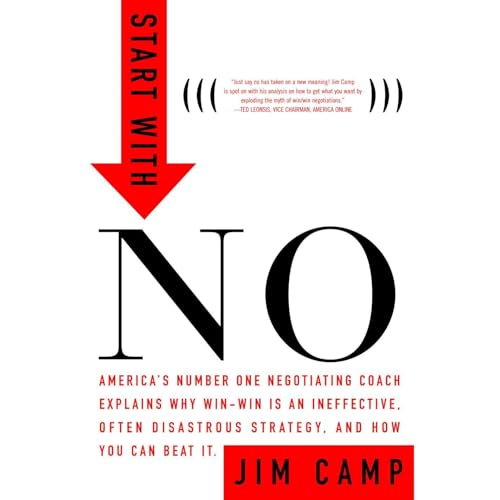
Contrarian Deal-Making – Start with No: Counterintuitive Negotiation Tools
If you want negotiation books that push back on the usual win-win advice, Start with No is built for that mindset. Jim Camp’s system focuses on what you can control: your agenda, your questions, your energy, and your willingness to avoid rushing to close.
Best For: Readers who want a contrarian, decision-based negotiation approach for business deals and everyday situations.
Pros:
- Offers a clear counterintuitive system centered on decision-based negotiation.
- Emphasizes practical controls like agenda-setting, listening, and managing time, energy, money, and emotion.
- Includes business and personal stories to illustrate the method.
- Useful for both major deals and everyday negotiations.
Cons:
- The “start with no” philosophy may feel unconventional if you prefer classic win-win tactics.
- Focuses more on behavior and process than on quick-fix techniques.
This is a strong pick if you want a negotiation book that challenges standard advice and gives you a disciplined framework to follow. It is especially appealing for readers who want to stay calm, avoid neediness, and negotiate with more intention.
Three-Dimensional Strategy – 3-d Negotiation: Setup, Design, and Table Tactics
3-d Negotiation: Powerful Tools to Change the Game in Your Most Important Deals
Check Price On AmazonAmong negotiation books for serious deal-making, 3-d Negotiation stands out for going beyond table tactics. It explains how to improve outcomes through three dimensions: what happens at the table, how the deal is designed, and how the negotiation is set up before anyone sits down.
Best For: Readers working on important deals who want a structured approach to setup, deal design, and bargaining.
Pros:
- Goes beyond face-to-face tactics to cover setup and deal design.
- Shows how to unlock value by approaching the right parties in the right sequence.
- Includes practical steps and cases drawn from real deal-making experience.
- Helps readers think more strategically before and during negotiation.
Cons:
- May feel more strategic than tactical if you want simple scripts or quick techniques.
- Best suited to important or complex deals rather than casual negotiations.
This book is a smart choice if you want a more complete negotiation model than standard win-win-versus-win-lose debates. Its strength is in helping you shape the deal before the meeting and improve the outcome through better structure.
Practical Commercial Guide – The Negotiation Book: Modern Commercial Playbook
If you’re comparing negotiation books for a practical, modern guide, The Negotiation Book is designed to help you improve step by step. It focuses on behaviors, power, process, and the other party’s interests, while keeping the advice grounded in real-world business negotiation.
Best For: Business leaders, lawyers, consultants, and professionals who want a hands-on negotiation playbook.
Pros:
- Provides a comprehensive model covering power, process, and behavior.
- Offers simple, realistic advice that is easy to apply and retain.
- Addresses modern negotiation challenges, including virtual negotiation and major economic changes.
- Written for commercial settings and professional use.
Cons:
- Skews toward business and commercial negotiation rather than personal everyday use.
- Its broad framework may feel less tactical than more narrowly focused books.
This is a solid all-around choice if you want a current, business-focused negotiation book with a practical framework. It aims to help you secure more agreements and realize more value without overcomplicating the process.
How We Picked These Negotiation Books
We prioritized books with a strong reputation, practical advice, and lasting relevance. The list balances classic frameworks with more tactical, real-world approaches, so readers can find Negotiation Books for beginners, professionals, and anyone who wants to improve day-to-day communication.
We also looked for clear writing, repeatable methods, and broad usefulness across salary talks, business deals, sales, conflict resolution, and personal boundaries.
Quick Comparison
Some titles are best for foundational strategy and principled bargaining, while others focus on difficult conversations, persuasion, or high-stakes dealmaking. If you want a simple starting point, choose a well-known classic. If you want sharper tactics, look for books that emphasize preparation, emotional control, and reading the other side.
Key Buying Factors for Negotiation Books
Your Experience Level
Beginners usually benefit from books that explain core concepts clearly and avoid jargon. More advanced readers may prefer books with case studies, psychological insight, or advanced strategy.
Use Case
Think about where you need help most. Some Negotiation Books are ideal for salary and career conversations, while others are stronger for sales, leadership, business development, or resolving conflict.
Style and Philosophy
Different authors emphasize different approaches. Some recommend collaborative, interest-based negotiation; others teach tougher tactical methods. The best choice depends on whether you want to build trust, push harder for value, or do both.
Actionability
Look for books that give you frameworks you can use right away: preparation checklists, question strategies, concession planning, and ways to manage silence, objections, and deadlines.
Who Should Buy Which Negotiation Books?
If you are new to the topic, start with a foundational title that explains the principles behind successful negotiation. If you already know the basics, choose a more advanced book that dives into strategy, psychology, and difficult scenarios. For readers who want practical communication skills, books focused on conversation and conflict can be especially useful.
In short, the best Negotiation Books are the ones that match your current skill level and the situations you face most often. Pick a book that you will actually apply, not just admire from the shelf.