Choosing the right small business books can save you time, money, and a lot of avoidable mistakes. The best titles give you practical steps, not just theory.
Whether you are launching your first company, refining operations, or thinking about buying a business, this roundup focuses on books that offer useful, real-world advice for different stages of ownership.
Best 10 Small Business Books Picks for 2026
Business Systems Essential
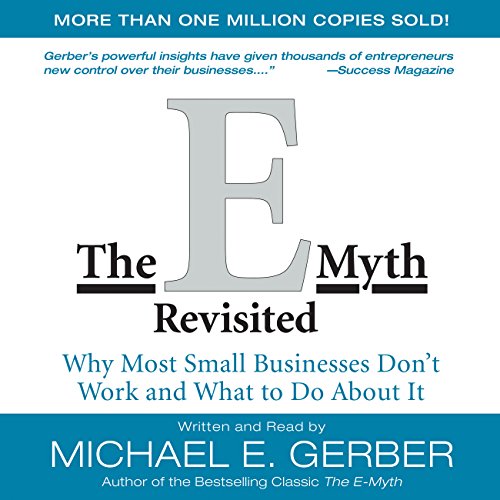
- Challenges common small-business myths
- Shows how to build repeatable systems
- Focuses on working on the business
Best For: Owners who want a systems-first growth mindset
Startup All-in-One Pick
Starting a Business All-in-One for Dummies

- Covers setup, planning, and bookkeeping
- Includes marketing, hiring, and taxes
- Built as a broad startup handbook
Best For: Beginners who want one wide-ranging startup guide
Growth Strategy Pick
How to Grow Your Small Business

- Offers a 6-step growth framework
- Includes worksheets and a Flight Plan
- Covers marketing, sales, and cash flow
Best For: Owners ready to build a structured growth plan
Beginner Blueprint
Starting a Business QuickStart Guide

- Simplifies startup basics for beginners
- Covers planning, pricing, and marketing
- Includes free digital bonuses
Best For: New founders who want a simplified launch roadmap
Startup Guide
Small Business Kit For Dummies

- Covers startup, tax, bookkeeping, and hiring basics.
- Includes business plans, contracts, and Internet growth tips.
- Comes with CD-ROM resources, forms, and sample software.
Best For: First-time owners who want a broad startup and operations reference.
Practical Operator Manual
The Small Business Owner's Manual

- Fast-reference format for quick business decisions.
- Covers financing, legal structures, marketing, and taxes.
- Includes modern web and e-store setup guidance.
Best For: Owners who want a concise, practical handbook for daily decisions.
Modern All-Rounder

- Updated 6th edition with current startup and management advice.
- Covers funding, bookkeeping, hiring, and common mistakes.
- Includes guidance for both new and existing business owners.
Best For: New or early-stage owners who want a current overview of the essentials.
Startup Roadmap Pick
The Only Book You'll Ever Need on Starting a Business

- Covers planning, LLC setup, operations, and growth basics
- Includes six bonuses like tax and LLC checklists
- Updated 2025 audiobook with Whispersync support
Best For: First-time entrepreneurs wanting an all-in-one launch guide
Acquisition Strategy Pick
HBR Guide to Buying a Small Business

- Covers buying, evaluating, and negotiating a small business
- Helps with capital raising and deal structure basics
- Useful for buyers seeking an existing company, not a startup
Best For: People considering buying an existing business
Tax Savings Pick
The Little Big Small Business Book

- Short 82-page guide with 17 money-saving lessons
- Written by a CPA and tax expert for online businesses
- Targets customer growth and tax-season savings
Best For: Owners wanting a concise, tax-focused business guide
Business Systems Essential – The E-Myth Revisited
The E-Myth Revisited: Why Most Small Businesses Don't Work and What to Do About It
Check Price On AmazonIf you’re comparing small business books that focus on building a company the right way, The E-Myth Revisited is a classic pick. Michael Gerber breaks down why many businesses struggle, then explains how to move from doing everything yourself to thinking like a business owner and building repeatable systems.
Best For: Owners who want a foundational framework for working on the business instead of only in it.
Pros:
- Explains common myths that can trip up small business owners
- Focuses on the stages of business growth from startup to maturity
- Highlights the value of applying franchising-style systems to any business
- Useful audiobook format with a long, in-depth listening length
Cons:
- More conceptual than a step-by-step startup checklist
- Best suited to readers willing to think through business structure
Overall, this is one of the strongest small business books for owners who need a mindset shift and a clearer operating model. It’s especially helpful if you want to build something that can grow in a predictable way.
Startup All-in-One Pick – Starting a Business All-in-One for Dummies
For readers who want one of the most broad-based small business books available, Starting a Business All-in-One for Dummies covers a lot of ground in one place. It brings together guidance on legal setup, business plans, bookkeeping, marketing, hiring, and first-year basics in an easy-to-use format.
Best For: New and would-be business owners who want a broad, practical overview from setup to early operations.
Pros:
- Covers legal, accounting, marketing, hiring, and planning topics
- Includes six books’ worth of material in one guide
- Designed to help with the challenges of the first year
- Useful for franchises, startups, and hobby businesses alike
Cons:
- Very broad, so it may not go deep on one specific topic
- Long audiobook length may feel heavy for readers wanting a quick intro
This is a strong all-purpose option if you want a single reference for the many moving parts of starting a company. It works best as a practical handbook you can return to as your business grows.
Growth Strategy Pick – How to Grow Your Small Business
If your focus is expansion rather than just opening the doors, this is one of the most practical small business books on the list. Donald Miller lays out a 6-step plan for growth, including vision, marketing, sales, product, productivity, and cash flow, with worksheets and companion PDF materials included.
Best For: Small business owners who want a clear, step-by-step growth framework.
Pros:
- Provides a simple 6-step plan for growing a business
- Includes a “Flight Plan” to help organize implementation
- Written and narrated by the author for a direct delivery
- Comes with graphics and worksheets in the companion PDF
Cons:
- More focused on growth than on startup basics
- Readers may need to put the worksheets into active use to get full value
This book stands out for owners who want a concrete playbook rather than broad advice. It’s a good fit if you need structure, clarity, and a growth process you can actually follow.
Beginner Blueprint – Starting a Business QuickStart Guide
Among small business books for first-time founders, this guide is built to simplify the launch process. It walks through the difference between an idea and an opportunity, business planning, customer identification, pricing, marketing, and other early essentials in a straightforward beginner-friendly style.
Best For: Beginners, students, and new owners who want a simplified step-by-step launch guide.
Pros:
- Breaks startup concepts into easy-to-follow steps
- Covers value proposition, business plan writing, and customer targeting
- Includes free digital bonuses and business resources
- Geared toward readers with zero prior experience
Cons:
- Strong on fundamentals, but not aimed at advanced operators
- Marketing claims in the description are very promotional in tone
If you want a plain-English introduction to starting a company, this is a useful entry point. It’s especially appealing for readers who want structure, templates, and a clear path from idea to launch.
Startup Guide – Small Business Kit For Dummies
If you’re comparing small business books for a new venture, this guide is built for owners who want broad, practical coverage in one place. It walks through the legal, financial, and operational basics, from choosing a business structure and handling taxes to hiring employees and writing proposals.
Best For: First-time entrepreneurs who want an all-in-one reference for launching and keeping a small business running.
Pros:
- Covers core startup topics like business structure, taxes, bookkeeping, and hiring.
- Includes advice on business plans, contracts, and using the Internet to grow.
- Comes with a CD-ROM of forms, contracts, and sample software resources.
- Practical for both setup and ongoing management needs.
Cons:
- Older edition, so some examples may feel dated.
- Very broad coverage may be more than you need if you only want one topic.
Overall, this is a solid pick if you want a wide-ranging small business book that balances startup tasks with day-to-day management basics.
Practical Operator Manual – The Small Business Owner's Manual
The Small Business Owner's Manual: Everything You Need to Know to Start Up and Run Your Business
Check Price On AmazonAmong small business books, this one is aimed at owners who want direct answers fast. It reads like a working manual, covering financing, legal structures, marketing, insurance, leasing, taxes, and employee issues in a straightforward way.
Best For: Entrepreneurs who want a quick-reference guide packed with practical decisions and checklists.
Pros:
- Offers fast, direct advice that can be read cover to cover or used as a reference.
- Breaks down financing, legal structures, marketing options, and business planning.
- Includes current topics like SEO, SEM, websites, and e-stores.
- Useful for handling taxes, insurance, leases, and employment issues.
Cons:
- Focuses on breadth and speed rather than deep, topic-by-topic detail.
- Some sections are highly compressed, which may not suit beginners who want slower explanations.
This is a strong fit if you want a compact business manual that helps you make decisions and move on quickly.
Modern All-Rounder – Small Business For Dummies
If you’re shopping for small business books that cover the full ownership journey, this updated edition focuses on launching, managing, and growing a business. It starts with choosing the right business and getting paperwork in order, then moves into funding, bookkeeping, hiring, and common mistakes to avoid.
Best For: New and early-stage business owners who want a current, jargon-free overview of the essentials.
Pros:
- Recent 6th edition with updated guidance for launching and managing a business.
- Explains funding, business planning, bookkeeping, and hiring in plain language.
- Covers buying an existing business as well as starting from scratch.
- Designed to help owners at different stages, from idea to growth.
Cons:
- Broad scope means it may not go deeply into any one specialty.
- Readers looking for advanced, niche strategies may want a more focused title.
For most buyers, this is the most current all-purpose pick in the group, especially if you want a clear starting point without heavy jargon.
Startup Roadmap Pick – The Only Book You'll Ever Need on Starting a Business
If you’re looking at small business books to help you move from idea to action, this 2025 guide focuses on the early steps and the scaling basics in one place. It covers business planning, LLC setup, operations, cash flow, marketing, taxes, and funding, with bonus checklists and cheat sheets for beginners.
Best For: First-time entrepreneurs who want an all-in-one starting-and-scaling guide with setup, tax, and growth topics.
Pros:
- Covers business plan, LLC, operations, cash flow, marketing, and funding.
- Includes six bonuses such as LLC and tax-deduction checklists.
- Updated 2025 version aimed at beginners.
- Audio format available with Whispersync for Voice.
Cons:
- Broad scope may be more useful as a general roadmap than a deep specialist manual.
- Marketing claims are promotional in tone rather than highly technical.
For readers who want one practical starting point instead of piecing together multiple small business books, this title is built to cover the early-stage essentials and a few growth topics. It is best treated as a broad launch guide with extra checklists, not a substitute for expert legal or tax advice.
Acquisition Strategy Pick – HBR Guide to Buying a Small Business
HBR Guide to Buying a Small Business: Think Big, Buy Small, Own Your Own Company (HBR Guide Series)
Check Price On AmazonAmong small business books, this HBR guide stands out for buyers who want a structured way to acquire an existing company instead of starting from scratch. It walks through deciding whether buying is right for you, raising capital, finding and evaluating prospects, negotiating with sellers, and avoiding deal problems.
Best For: Readers considering buying a small business and wanting a practical, research-based acquisition guide.
Pros:
- Explains the full buying process from self-assessment to closing the deal.
- Helps readers think through capital raising and target evaluation.
- Includes advice on negotiation and avoiding last-minute deal failures.
- Published by Harvard Business Review Press and part of the HBR Guide Series.
Cons:
- Focuses on acquisition, so it is not a general startup handbook.
- Best suited to readers with interest in buying an operating business rather than building one.
If your goal is ownership through acquisition, this guide offers a clear framework instead of general small-business theory. It is a strong pick for professionals who want to assess deals carefully and understand the tradeoffs of buying a “dull” but potentially sound business.
Tax Savings Pick – The Little Big Small Business Book
If you want small business books with a clear focus on money-saving tactics, this short guide centers on growing sales and improving tax-season outcomes. It offers 17 lessons from CPA Micah Fraim, with an emphasis on financial savings, customer growth, and practical tax tips for online businesses.
Best For: Small business owners who want a concise, tax-aware guide with practical money-saving ideas.
Pros:
- Short 82-page format makes it easy to read quickly.
- Focuses on money-making and money-saving lessons.
- Written by a CPA and tax expert for online businesses.
- Includes tools like Word Wise, enhanced typesetting, and screen reader support.
Cons:
- Much narrower in scope than broader small business books.
- Best suited to online-business readers and tax-minded owners.
This is a compact, tactical option for owners who want straightforward ideas rather than a long business-building manual. If your priority is improving financial efficiency and finding quick lessons you can apply, it fits well.
How We Picked These Small Business Books
We looked for books that are approachable, actionable, and relevant to real ownership challenges. Priority went to titles that cover startup basics, planning, operations, growth, and acquisition strategy without relying on jargon.
We also favored books with clear frameworks, strong reputations, and broad usefulness for first-time founders and experienced owners alike.
Quick Comparison: Which Type of Book Fits Your Goal?
If you are just getting started, choose a book that explains business setup, planning, and early-stage decision-making. If you already have revenue, look for books that focus on systems, management, and growth. If you are exploring acquisition, a buying-focused title is the better fit.
Key Buying Factors for Small Business Books
Stage of Business
Match the book to your current stage. Startup books help with launch decisions, while growth books are better for owners who need structure, hiring guidance, and scalability.
Depth Vs. Simplicity
Some Small Business Books are broad primers; others are more tactical. Beginners may prefer straightforward, all-in-one guides, while seasoned readers may want books with sharper advice on operations or acquisition.
Actionability
Look for books that include checklists, frameworks, and step-by-step guidance. The most useful titles make it easier to apply advice immediately.
Business Model Fit
Consider whether the book is designed for service businesses, product-based companies, solo operators, or teams. The more closely it matches your model, the more relevant the advice will be.
Who Should Buy Which Small Business Books?
First-time founders should start with beginner-friendly titles that explain the basics clearly. Owners who already have a business should prioritize books on growth, systems, and management. Buyers and would-be acquirers should focus on books about evaluating and purchasing a business.
If you want one dependable reading list, choose a mix of foundational Small Business Books and one specialized title based on your immediate goal. That gives you both the big picture and the tactical guidance you can use right away.