Choosing the right real estate investing book can save you time, money, and avoidable mistakes. The best titles teach practical strategies you can actually use, whether you want rental income, financial freedom, or a beginner-friendly path into the market.
In this roundup, we focus on books that offer clear instruction, useful frameworks, and value for different experience levels, from first-time investors to readers ready for more advanced deal analysis.
Best 10 Real Estate Investing Books Picks for 2026
Rental Property Cash-Flow Guide
The Book on Rental Property Investing

- Buy-and-hold rental investing focus
- Covers deal finding, financing, and management
- Useful for beginners and advanced readers
Best For: Readers who want a practical rental investing playbook
Millionaire Mindset Classic
The Millionaire Real Estate Investor

- Built from lessons from 100+ millionaire investors
- Covers mindset, deal criteria, and networking
- Strong foundation for building a real estate business
Best For: Readers seeking core investing principles and millionaire habits
BRRRR Strategy Blueprint
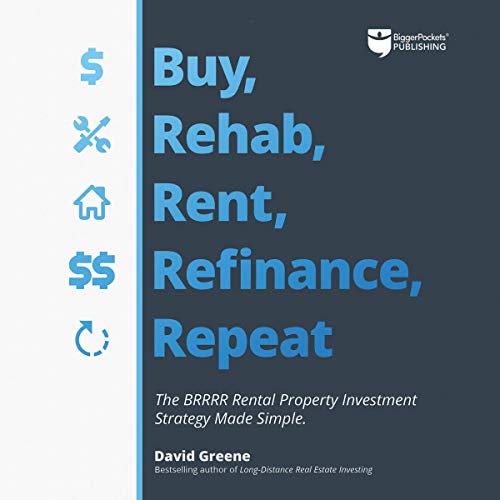
Buy, Rehab, Rent, Refinance, Repeat
- Explains the BRRRR method step by step
- Aims to help investors scale with limited cash
- Includes negotiation, value-add, and refinance tactics
Best For: Investors focused on BRRRR and faster portfolio growth
Beginner Real Estate Roadmap

- Broad overview of multiple investing strategies
- Helps match a plan to your goals and resources
- Includes 40+ real investor stories
Best For: New investors deciding which real estate path fits them
Creative Financing Playbook
The Book on Investing In Real Estate with No (and Low) Money Down

- Covers no-money-down and low-money-down strategies
- Shows how to use private money, lenders, and partners
- Includes wholesaling, flipping, rentals, and more
Best For: Beginners who want creative financing tactics
Multifamily Freedom Blueprint
Financial Freedom with Real Estate Investing

- Focuses on apartment building investing
- Teaches money-raising and offer-making basics
- Outlines a path to a first multifamily deal
Best For: Readers targeting financial freedom through apartments
Rental Wealth Shortcut
Skip the Flip: Secrets the 1% Know About Real Estate Investing

- Teaches rental-property basics for beginners
- Explains cash flow, deal value, and debt use
- Shows how to use other people’s money
Best For: Beginners wanting a simple rental investing guide
Practical Starter Guide
Real Estate Investing for Dummies, 4th Edition

- Step-by-step guidance from buying to property management
- Covers REITs, TICs, NNN investments, and tax reform
- Accessible overview written by industry experts
Best For: Beginners wanting a broad, practical introduction to real estate investing
Financial Analysis Focus

- Explains cash flow, cap rate, NOI, IRR, and more
- Adds updated case studies for real-world context
- Designed to help investors analyze deals with confidence
Best For: Investors who want a numbers-first guide to evaluating properties
Beginner Action Plan
Easy Real Estate Investing for Beginners

- Simple 9-step roadmap for new investors
- Covers house hacking, BRRRR, flipping, and turnkey
- Includes worksheets, case studies, and practical setup tips
Best For: First-time investors who want a simple, actionable starting plan
Rental Property Cash-Flow Guide – The Book on Rental Property Investing
If you want real estate investing books that focus on building steady income, this guide centers on buy-and-hold rentals with a practical, step-by-step approach. Brandon Turner covers how to find deals, analyze properties, finance rentals, and build a team, making it useful for both first-time investors and those refining a portfolio.
Best For: Beginners and rental investors who want a straightforward path to cash flow and passive income.
Pros:
- Explains how to find profitable rental deals in different markets
- Covers property analysis, financing, and team-building basics
- Includes guidance on property management and tax-season strategy
- Suitable for beginners and more advanced readers
Cons:
- Focused mainly on buy-and-hold rentals rather than broader strategies
- Some readers may want more depth on niche investing paths
This is a strong pick if your goal is to build a rental-based investing plan with clear, actionable steps. It leans practical rather than theoretical, which makes it an easy book to apply while you search for and manage deals.
Millionaire Mindset Classic – The Millionaire Real Estate Investor
Among real estate investing books, this one stands out for its no-nonsense look at the habits and models used by successful investors. Drawn from the wisdom of more than 100 millionaire investors, it focuses on mindset, deal criteria, networking, and the systems that support long-term wealth building.
Best For: Investors who want proven fundamentals, mindset guidance, and a broad framework for building a real estate business.
Pros:
- Based on lessons from over 100 millionaire investors
- Breaks down money mindset and investing myths
- Explains deal criteria, networks, and lead generation
- Includes models for tracking net worth and building a dream team
Cons:
- Published in 2005, so some examples may feel dated
- More strategy-focused than step-by-step on one investing method
This is a solid pick if you want a foundational book that emphasizes how successful investors think and operate. It’s especially helpful if you’re trying to build a repeatable system rather than chase a single tactic.
BRRRR Strategy Blueprint – Buy, Rehab, Rent, Refinance, Repeat
Buy, Rehab, Rent, Refinance, Repeat: The BRRRR Rental Property Investment Strategy Made Simple
Check Price On AmazonIf you’re comparing real estate investing books and want one centered on a single growth strategy, this BRRRR guide delivers a clear roadmap. David Greene explains how to buy below market value, renovate, rent, refinance, and repeat, with a strong emphasis on scaling without constantly needing new cash.
Best For: Investors who want a detailed BRRRR system and a practical plan for scaling faster.
Pros:
- Breaks down the five-step BRRRR process in simple terms
- Shows how to start with limited capital
- Includes tactics for identifying properties, negotiating, and increasing value
- Explains how the author scaled from two houses a year to two a month
Cons:
- Very strategy-specific, so it may not suit readers seeking a broad overview
- Best fit if you’re interested in renovation-heavy investing
This book works well if you want a focused execution guide rather than a general survey of the market. The step-by-step format makes it easier to see how BRRRR can be used to recycle capital and build momentum.
Beginner Real Estate Roadmap – How to Invest in Real Estate
How to Invest in Real Estate: The Ultimate Beginner's Guide to Getting Started
Check Price On AmazonThis is one of the most beginner-friendly real estate investing books for readers who want help choosing the right strategy. Josh Dorkin and Brandon Turner cover multiple paths to profitability, from rentals and BRRRR to flipping and partnerships, while tying each option to your goals, resources, and lifestyle.
Best For: Beginners who want to compare different real estate strategies before choosing one.
Pros:
- Offers a broad overview of many real estate investing approaches
- Helps readers match strategy to personality, goals, and resources
- Includes more than 40 true stories from active investors
- Covers LLCs, corporations, partnerships, and funding ideas
Cons:
- Less specialized than books focused on one tactic
- Readers wanting deep operational detail may need a follow-up title
This book is a strong starting point if you are still deciding how you want to invest. Its broad coverage makes it useful for building a plan before committing time and money to a specific strategy.
Creative Financing Playbook – The Book on Investing In Real Estate with No (and Low) Money Down
If you’re researching real estate investing books and want a practical guide to getting started without a large pile of cash, this title focuses on creative financing strategies. Brandon Turner breaks down how investors use other people’s money, private lenders, partners, wholesaling, flipping, and rentals to pursue deals with less upfront capital.
Best For: Beginners and active investors who want to learn no-money-down and low-money-down real estate strategies.
Pros:
- Explains multiple creative financing methods used by professional investors.
- Covers ways to attract private money, lenders, and partners.
- Includes strategies for wholesaling, flipping, rentals, and more.
- Written by an active investor and longtime BiggerPockets podcast co-host.
Cons:
- Focuses on creative funding strategies more than a broad real estate overview.
- Assumes you want to actively pursue deals rather than invest passively.
- Some tactics may be best suited to readers ready to put ideas into action.
This is a strong pick if your main obstacle is startup capital and you want a step-by-step mindset for structuring deals differently. It’s especially useful for readers who want a strategy-first book centered on financing.
Multifamily Freedom Blueprint – Financial Freedom with Real Estate Investing
Among real estate investing books, this one is aimed at readers who want a direct path toward quitting their job through multifamily investing. Michael Blank argues that apartment buildings can be the route to financial freedom and outlines a blueprint for getting into your first deal even if you have no experience or cash.
Best For: Readers who want a multifamily-focused plan for pursuing financial freedom with real estate.
Pros:
- Centers on apartment building investing as the main strategy.
- Explains how to raise money for a first deal.
- Shows how to get offers accepted without proof of funds.
- Includes deal analysis guidance and a suggested path to a first deal in 3-12 months.
Cons:
- More specialized than books that cover many property types.
- Best suited to readers interested in multifamily rather than single-family investing.
- Its approach is tightly focused on the author’s financial freedom blueprint.
If you want a focused roadmap instead of a general overview, this book makes a clear case for multifamily as the fastest route to scale. It fits buyers who are ready to pursue apartment investing with a structured plan.
Rental Wealth Shortcut – Skip the Flip: Secrets the 1% Know About Real Estate Investing
If you’re comparing real estate investing books and want something that emphasizes rentals, cash flow, and practical loopholes, this guide is built to remove barriers for new investors. It explains how to buy rental property with confidence, use other people’s money, value deals, and build monthly cash flow in an easy-to-read format.
Best For: New investors who want a straightforward rental-property guide with a cash-flow focus.
Pros:
- Breaks down the fundamentals needed to get started in real estate.
- Explains how to invest with no money using other people’s money.
- Covers how to value property and identify a good deal.
- Focuses on building monthly cash flow and using debt strategically.
Cons:
- Claims around taxes and wealth are broad and may not be detailed step-by-step.
- More of an introductory guide than a deep technical manual.
- Strongly opinionated in tone, which may not suit every reader.
This is a practical choice if you want a simple, motivating book that teaches rental-investing basics without overcomplicating the process. It’s especially appealing for readers who want cash-flow ideas and a confidence boost.
Practical Starter Guide – Real Estate Investing for Dummies, 4th Edition
If you want real estate investing books that focus on practical decision-making, this edition of Real Estate Investing For Dummies gives you a clear, step-by-step path. It covers the buying process, due diligence, closing, leasing, and ongoing property management, while also touching on tax reform, REITs, TICs, triple net investments, and tech tools for operations.
Best For: Beginners who want a broad, straightforward overview of real estate investing and property management.
Pros:
- Step-by-step primer for preparing to buy, identifying property, due diligence, and closing
- Includes practical coverage of leasing, property management, and ongoing operations
- Addresses current topics like tax reform, REITs/TICs, and NNN investments
- Written by experienced industry experts and presented in an accessible style
Cons:
- Broad overview may not be detailed enough for advanced investors
- Focuses more on general guidance than deep financial analysis
This is a solid buy if you want an easy-to-follow foundation before moving into more specialized real estate topics. It works especially well as a first book for learning the full investment process from start to finish.
Financial Analysis Focus – Cash Flow and 36 Key Measures
Among real estate investing books, this updated guide is built for readers who want to judge deals with numbers instead of guesswork. Frank Gallinelli explains how to measure cash flow, net present value, capitalization rate, cash-on-cash return, NOI, IRR, profitability index, and return on equity, with added investment case studies to make the calculations more concrete.
Best For: Investors who want a numbers-first guide to analyzing rental property and investment deals.
Pros:
- Breaks down key financial metrics used to evaluate real estate investments
- Includes updated case studies to support the calculations
- Helps readers assess long-term return potential with more confidence
- Useful for both newer investors and experienced professionals
Cons:
- Heavy on formulas and financial concepts rather than strategy variety
- Less focused on hands-on buying or property management steps
If your main goal is deal analysis, this book stands out as a strong technical reference. It is especially helpful when you need to compare properties and make more disciplined investment decisions.
Beginner Action Plan – Easy Real Estate Investing for Beginners
If you’re searching for real estate investing books that make getting started feel manageable, this beginner-focused guide lays out a simple 9-step path. It covers passive income, property value, common strategies like house hacking, BRRRR, flipping, and turnkey investing, plus worksheets, downloadable resources, and case studies of beginners who built portfolios from scratch.
Best For: First-time investors who want a simple, action-oriented plan they can follow while working full-time or starting from zero.
Pros:
- Simple 9-step framework for learning the basics and taking action
- Covers multiple starter strategies, including house hacking and BRRRR
- Includes worksheets, downloadable resources, and practical case studies
- Addresses common beginner concerns like risk, tenant screening, and collecting rent
Cons:
- Shorter than many traditional investing books, so depth may be limited
- Best suited to beginners rather than investors seeking advanced analysis
This book is a good fit if you want a modern, encouraging roadmap rather than a dense technical manual. Its hands-on structure makes it easier to turn ideas into a first investment plan.
How We Picked These Real Estate Investing Books
We looked for Real Estate Investing Books that are practical, easy to learn from, and relevant to today’s market. Priority went to books with clear frameworks, actionable strategies, and topics readers can apply to rentals, financing, cash flow, and deal selection.
We also favored a mix of beginner-friendly and more specialized titles so buyers can choose a book that matches their current experience level and investing goal.
Quick Comparison
If you want a broad starter guide, choose a general beginner book. If your goal is rentals, look for books centered on buy-and-hold, BRRRR, or cash flow analysis. If you are short on capital, prioritize books that cover creative financing and low-money-down strategies. For readers focused on metrics, a book about cash flow and financial analysis will be more useful than a general overview.
Key Buying Factors for Real Estate Investing Books
Skill Level
Some books are written for absolute beginners, while others assume you already understand basic terminology. Match the book to your level so you are learning at the right pace instead of getting overwhelmed or underchallenged.
Strategy Focus
Real Estate Investing Books can center on rentals, flipping, BRRRR, creative financing, or financial independence. Buy the one that aligns with the strategy you want to pursue first.
Actionability
The best titles explain what to do next, not just why real estate works. Look for books that include step-by-step processes, checklists, formulas, or decision-making frameworks.
Financial Depth
If you are screening deals, a book that explains cash flow, return metrics, and risk factors can be especially valuable. That is often more useful than broad motivational advice.
Who Should Buy Which Real Estate Investing Books?
Beginners should start with a simple, comprehensive guide that explains the basics of buying and managing property. Readers who want rental income may prefer books focused on buy-and-hold investing and long-term wealth building. Aspiring investors with limited cash should look for creative finance and low-down-payment strategies. If you already know the basics, choose a more specialized book on BRRRR or financial analysis to sharpen your investing decisions.
Ultimately, the best Real Estate Investing Books are the ones that fit your current stage and your next move. Pick the book that helps you take a real step forward, whether that means understanding your first deal, improving your underwriting, or building a repeatable rental strategy.