North American railroad books can be indispensable references for anyone researching routes, locomotives, systems, and the broader history of rail travel. The best titles balance solid historical coverage, clear maps, and useful visual detail.
This roundup focuses on books that help readers compare eras, understand regional networks, and choose the right depth of coverage for hobby use or serious study.
Best 10 North American Railroad Books Picks for 2026
North American Route Reference
The Historical Guide to North American Railroads

- Over 170 railroad systems in the U.S., Canada, and Mexico
- Maps plus merger and predecessor-line details
- Useful as a practical railroad reference book
Best For: Readers who want a route-and-history reference for North American railroad systems.
Big-Picture Rail History

- Sweeping history of trains in America
- Covers railroads' role in growth and wartime transport
- Illustrated narrative from a railroad expert
Best For: Readers looking for a narrative history of American railroads and their impact on the country.
Map-Heavy Rail Atlas
The Historical Atlas of North American Railroads

- Over 400 maps, plans, and photographs
- Shows networks, technology, and infrastructure
- Includes social history around rail expansion
Best For: Readers who want a richly illustrated atlas of North American rail transportation.
Illustrated Rail Sampler
Railroads Across North America

- Nearly 90 features on railroads past and present
- Nearly 600 images and collectibles
- Includes film, music, and museum resources
Best For: Readers who want a highly illustrated overview of North American railroads and rail culture.
Map-Driven Atlas Pick
Historical Atlas of the North American Railroad

- Nearly 400 old railroad maps, most in full color
- Includes photos, brochures, and posters
- Covers early rail origins through the modern railroad revival
Best For: Readers who want a visual, map-based history of North American railroads
Reference-Heavy Choice
Encyclopedia of North American Railroads

- More than 500 alphabetical entries
- Covers rail systems across North America and Cuba
- Includes appendices and a 130-book reading list
Best For: Anyone who wants a comprehensive railroad reference work
Locomotive-Focused Reference

- More than 400 locomotive images and examples
- Covers steam, diesel, and electric power
- Arranged alphabetically by railroad
Best For: Rail fans interested in locomotive history and photography
Atlas Pick
Atlas of North American Railroads

- Classic railroad system maps collected in one volume
- Capsule histories with mileage and years of operation
- Period photos and multi-page route spreads
Best For: Map-focused readers who want a mid-century railroad reference
History Pick
Illustrated History of North American Railroads
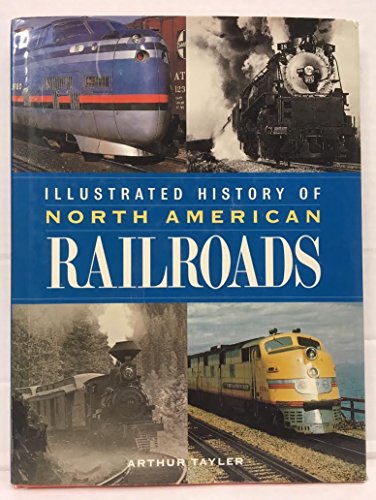
- Covers Canada and the U.S. from 1830 to the present
- Mixes historical pictures, color photos, diagrams, and maps
- Explains major industry shifts and key pioneers
Best For: General readers who want an illustrated railroad history
Locomotive Pick
Illustrated Directory of North American Locomotives

- Tracks locomotive development from early days to today
- Covers steam, diesel, and electric power
- Includes technical specs and full-color plus B&W photos
Best For: Locomotive enthusiasts who want a technical illustrated reference
North American Route Reference – The Historical Guide to North American Railroads
If you want a practical reference for North American railroad books, this guide focuses on more than 170 current and former railroad systems across the United States, Canada, and Mexico. It is especially useful when you need maps plus quick history notes, merger details, and predecessor-line information in one place.
Best For: Readers who want a route-and-history reference for North American railroad systems.
Pros:
- Covers over 170 railroad systems across three countries.
- Includes maps alongside history, mergers, and predecessor lines.
- Compact enough for regular consultation at 319 pages.
- Updated 3rd edition from a railroad-focused publisher.
Cons:
- More reference-driven than narrative-driven.
- Some readers may want a broader social or cultural history.
Overall, this is a strong pick if your main goal is identifying and comparing North American railroad systems with clear visual and historical context. It works best as a desk reference rather than a cover-to-cover story.
Big-Picture Rail History – The Great Railroad Revolution
Among North American railroad books, this title stands out for readers who want a sweeping history of how trains shaped America. It traces the rise of the railroads, their role in economic development and wartime transport, and the later shift in dominance to cars, trucks, and airplanes.
Best For: Readers looking for a narrative history of American railroads and their impact on the country.
Pros:
- Covers the rise and fall of railroads in the United States.
- Explains how trains connected the country and supported growth.
- Written by a recognized railroad expert.
- Illustrated edition adds visual interest to the history.
Cons:
- Focuses on American history rather than a broader North American system survey.
- Readers wanting dense technical detail may prefer a reference atlas.
This is a strong choice if you want an accessible, story-driven account instead of a catalog-style railroad guide. It gives useful historical context while staying centered on the broader American rail experience.
Map-Heavy Rail Atlas – The Historical Atlas of North American Railroads
If you want North American railroad books with a strong visual focus, this atlas is built around more than 400 maps, plans, and photographs. It covers the spread of rail networks, major intersections, bridges, tunnels, locomotives, stations, and the social and industrial changes tied to rail expansion.
Best For: Readers who want a richly illustrated atlas of North American rail transportation.
Pros:
- More than 400 high-quality maps, plans, and photographs.
- Covers network growth, stations, bridges, tunnels, and technology.
- Includes both transportation and social history context.
- Updated edition with substantial print length.
Cons:
- Large and heavy compared with a standard trade book.
- More atlas-style coverage than deep narrative analysis.
This book is a good match if you value maps and visual evidence as much as written history. It offers broad coverage of rail transportation and the world that grew around it.
Illustrated Rail Sampler – Railroads Across North America
This is a lively option for readers browsing North American railroad books, with nearly 90 features covering more than three dozen railroads past and present. It also broadens the scope with railroads in film and music, specialty railroads, and rail travel culture, supported by a very large image collection.
Best For: Readers who want a highly illustrated overview of North American railroads and rail culture.
Pros:
- Nearly 90 features covering more than three dozen railroads.
- Nearly 600 pieces of visual material, including photos and collectibles.
- Includes extra topics like film, music, specialty railroads, and travel.
- Provides resource lists and contact information for museums and historic sites.
Cons:
- With many topics, it may feel broad rather than deeply specialized.
- Heavily visual format may not satisfy readers wanting extensive technical detail.
Overall, this is an appealing browse-and-discover title for readers who enjoy images and variety. It works well as a general celebration of railroads rather than a narrow technical reference.
Map-Driven Atlas Pick – Historical Atlas of the North American Railroad
If you want North American railroad books that show how the rail network evolved over time, this atlas stands out for its map-driven approach. It traces the story from early 19th-century beginnings through Amtrak and modern intermodal freight, using contemporary maps, photos, brochures, and posters to give the history practical visual context.
Best For: Readers who want a visually rich, map-based history of rail development across North America.
Pros:
- Includes nearly 400 old railroad maps, most in full color.
- Combines maps with historical photos, brochures, and posters.
- Covers major eras from early rail origins to the modern railroad revival.
- Shows how railroads reshaped the economic and social life of the continent.
Cons:
- At 224 pages, it is more of a curated atlas than an exhaustive narrative history.
- The large 12-inch format may be less convenient for casual shelf storage.
This is a strong pick if you want a reference-style railroad history that prioritizes visual evidence and geographic context. Its strength is breadth of illustration, not just text, making it especially useful for readers who like to study rail expansion on maps.
Reference-Heavy Choice – Encyclopedia of North American Railroads
For shoppers comparing North American railroad books, this encyclopedia is the most reference-heavy option in the group. It covers the U.S., Canada, Mexico, Central America, and Cuba with more than 500 alphabetical entries, making it useful when you want a broad, researched overview of railroad history, operations, policy, and industry structure.
Best For: Readers who want an expansive reference book on North American railroads.
Pros:
- More than 500 alphabetical entries across a wide range of topics.
- Covers rail systems in the U.S., Canada, Mexico, Central America, and Cuba.
- Includes appendices with data on weight, fuel, statistical trends, and more.
- Lists 130 vital railroad books for further reading.
Cons:
- Very large at 1,296 pages, so it is not a quick browse.
- Its reference format is better for lookup than for narrative reading.
This is the strongest all-purpose desktop reference if you want one book that spans the continent and multiple facets of the railroad industry. It is especially practical for readers who value depth, organization, and research support over a linear story.
Locomotive-Focused Reference – North American Locomotives
If your goal is to browse North American railroad books focused on motive power, this volume is a strong fit. It spans more than 150 years of locomotive technology and uses rare historic and previously unpublished modern photography to examine steam, diesel, and electric locomotives across ninety North American railroads.
Best For: Rail fans who want a photo-rich guide to North American locomotive history.
Pros:
- Features more than 400 locomotive images and examples.
- Covers steam, diesel, and electric locomotives over 150+ years.
- Arranged alphabetically by railroad for easy comparison.
- Includes major builders and a mix of historic and modern equipment.
Cons:
- Focuses on locomotives rather than broader railroad history or operations.
- Best suited to readers interested in technical and photographic reference.
This book is a good buy if you want a detailed locomotive reference rather than a general railroad survey. Its combination of broad coverage and strong visual material makes it especially appealing to serious rail enthusiasts.
Atlas Pick – Atlas of North American Railroads
If you want North American railroad books that focus on routes and system maps, this atlas is built around the railroad industry at its postwar peak. It gathers classic railroad maps in multi-page spreads and pairs them with capsule histories, mileage figures, years of operation, and period photos for a broad, visual reference.
Best For: Readers who want a map-heavy overview of mid-century North American railroads.
Pros:
- Collects classic system maps in one volume.
- Includes capsule histories, track mileage, and operating years.
- Uses period photographs to add historical context.
- Focused on the mid-twentieth-century peak of the industry.
Cons:
- Less about narrative history than about maps and reference data.
- Best suited to readers interested in a specific historical era.
This is a strong choice if you want a visual, fact-rich railroad reference rather than a broad storytelling history. It stands out for showing the reach and scale of North American railroads at their height.
History Pick – Illustrated History of North American Railroads
This is a practical pick among North American railroad books if you want a single-volume overview from the 1830s to the present. It covers Canada and the United States, and it mixes historical pictures, color photographs, diagrams, and maps to show both the development and the changing fortunes of railroads over time.
Best For: Readers looking for a broad illustrated history of railroads in Canada and the United States.
Pros:
- Provides a comprehensive timeline from 1830 to the present.
- Covers both Canada and the United States.
- Includes pictures, color photos, diagrams, and maps.
- Touches on major historical shifts like the Civil War and the Great Depression.
Cons:
- Broad scope means it is less specialized than technical railroad titles.
- Readers wanting deep focus on one railroad or locomotive class may want a narrower book.
If you want an accessible overview with plenty of visuals, this book is easy to recommend. It balances historical narrative with image-rich presentation, making it useful for general readers and collectors alike.
Locomotive Pick – Illustrated Directory of North American Locomotives
For shoppers comparing North American railroad books with a stronger motive-power angle, this illustrated directory tracks locomotive development from the early days to electric-powered railways today. It covers steam, diesel, and electric power, with technical specifications and black-and-white plus color photos across 432 pages.
Best For: Readers who want a detailed illustrated reference on North American locomotives and motive power.
Pros:
- Charts locomotive progression from 1830 to the present.
- Covers steam, diesel, and electric power.
- Includes technical specifications for each engine type.
- Features both black-and-white and color photographs.
Cons:
- More of a reference directory than a narrative history.
- Best for readers interested in locomotives specifically, not broader railroad systems.
This title is a strong fit if your interest is locomotives first and general railroad history second. Its mix of technical detail and illustrations makes it especially useful as a long-form reference.
How We Picked North American Railroad Books
We prioritized books with strong editorial credibility, useful scope, and lasting reference value. That means clear organization, reliable historical coverage, good cartography where relevant, and content that serves both casual readers and serious researchers.
We also looked for variety. Some buyers want an atlas-style reference, while others need an illustrated history, locomotive directory, or encyclopedia-style overview. The best choice depends on whether you want broad context, detailed route information, or equipment-focused coverage.
Quick Comparison
Think of the lineup in three main groups: atlases for map-based research, illustrated histories for narrative reading, and reference books for fast lookup. If you want to trace expansions and mergers, an atlas is usually the best starting point. If you care more about the story of rail development, a history title may fit better. For locomotive identification and technical curiosity, equipment-focused books usually deliver the most value.
Key Buying Factors for North American Railroad Books
Coverage and Scope
Check whether the book covers the U.S. only or includes Canada and Mexico as part of North American coverage. Some titles focus on a specific era, while others span the steam age through dieselization and electrification.
Maps, Photos, and Diagrams
For many readers, maps are the biggest reason to buy North American Railroad Books. Look for legible route maps, system overlays, and captions that explain what you are seeing. Illustrated books should also offer strong photo quality and informative labeling.
Depth of Reference
An atlas or encyclopedia is better if you need lookup value. A narrative history is better if you want context and readability. If you collect model railroad equipment or study prototypes, prioritize books with locomotive classes, builder details, and chronological progression.
Edition and Reliability
Railroad history changes as new research emerges, so newer or revised editions can matter. Check publication date, author expertise, and whether the book is considered a standard reference in the field.
Who Should Buy Which North American Railroad Books?
Choose an atlas if you want to research routes, terminals, and system growth. Choose an illustrated history if you want an accessible read with visual appeal. Choose an encyclopedia or locomotive directory if you need quick facts and technical breadth. For gifts, the safest picks are broad, image-rich North American Railroad Books that appeal to both beginners and longtime enthusiasts.
If your priority is building a useful rail library, start with one map-heavy title and one history-heavy title, then add a locomotive reference if you want deeper technical coverage.