Choosing the right mushroom guide can make a real difference in the field. The best North American mushroom identification books help you compare lookalikes, check habitat clues, and build safer identification habits.
In this roundup, we focus on books that are practical for beginners and useful for experienced foragers who want dependable reference material before they harvest or photograph wild fungi.
Best 10 North American Mushroom Identification Books Picks for 2026
Classic Field Guide
National Audubon Society Field Guide to North American Mushrooms

- Portable field-guide format
- Part of National Audubon series
- Approachable for teen readers
Best For: Travel-friendly mushroom ID in the field
Photo-Heavy Foraging Guide
Mushrooms: How to Identify and Gather Wild Mushrooms and Other Fungi

- Over 450 species covered
- Strong visual ID charts and photos
- Includes habitat and toxicity info
Best For: Visual learners who want a broad fungi ID book
Portable Safety Pick
Peterson Field Guide To Mushrooms Of North America, Second Edition

- Beginner-friendly ID method
- Portable backpack size
- Focus on edible and poisonous species
Best For: New foragers who want safe, simple field identification
Definitive Photo Reference
Mushrooms and Other Fungi of North America
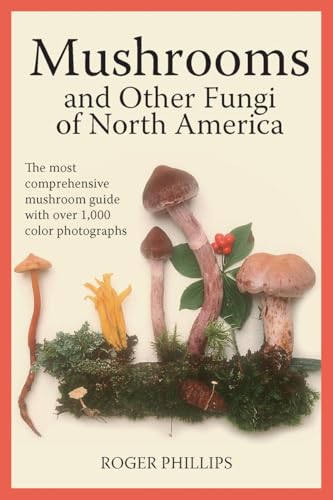
- 1,000 full-color specimens
- Detailed keys and warnings
- Strong depth for collectors
Best For: Users who want a deep, authoritative fungi reference
Comprehensive Field Reference
A Field Guide to Mushrooms: North America

- More than 1,000 species covered
- Over 700 paintings and drawings
- Compact field-guide format, 448 pages
Best For: Detailed study and broad mushroom identification coverage
Pocket Key Guide
Mushroom Finder: Identifying Fungi in North America

- Pocket-size guide for field use
- Dichotomous key for general ID
- More than 300 fungi types covered
Best For: Beginners who want a compact general-identification guide
Large-Format Reference

- Comprehensive guide for identification
- Shows where and when to find mushrooms
- Large 8.5 x 11.5-inch format
Best For: At-home study and broad reference use
Field-Ready Pocket Guide
Mushrooms: A Folding Pocket Guide

- Over 60 familiar edible species
- 14 poisonous species included
- Laminated pocket-sized field guide
Best For: Hikers and foragers who need a durable, portable reference
Classic Reference

- Comprehensive edible mushroom guide
- 360 pages of reference material
- Focuses on finding and collecting
Best For: Readers who want a classic, in-depth book on edible mushrooms
Deep Field Guide
A Field Guide to Mushrooms North America

- More than 1,000 species covered
- Drawings plus detailed descriptions
- Marks edible and poisonous mushrooms
Best For: Serious learners wanting broad, detailed field coverage
Classic Field Guide – National Audubon Society Field Guide to North American Mushrooms
If you want a compact, field-tested reference for North American mushroom identification books, this classic Audubon guide is built for quick use outdoors. It’s part of the National Audubon Society Field Guides series and is sized to travel, making it a practical choice for hikers, foragers, and learners who want a familiar, portable format.
Best For: Readers who want a classic pocket-style North American mushroom guide for field use.
Pros:
- Portable field-guide size fits easily in a pack.
- Part of the long-running National Audubon Society Field Guides series.
- Designed for readers ages 12–17, which suggests approachable presentation.
Cons:
- Older publication date may feel dated compared with newer guides.
- Compact format means less room for expansive coverage.
As a straightforward North American mushroom identification book, this edition makes sense when portability matters more than deep reference depth. It’s a solid pick if you want a classic guide you can actually carry into the field.
Photo-Heavy Foraging Guide – Mushrooms: How to Identify and Gather Wild Mushrooms and Other Fungi
This North American mushroom identification books roundup includes titles with very different styles, and this DK guide leans heavily on visuals. It offers over 450 species, clear photographs, cross-sections, annotations, identification charts, and habitat and fruiting information, so it’s a useful option if you prefer learning from images and structured visual cues.
Best For: Foragers and visual learners who want a heavily illustrated mushroom identification reference.
Pros:
- Covers over 450 species of fungi.
- Includes clear photos, cross-sections, annotations, and charts.
- Explains anatomy and identification features in an easy-to-use visual format.
- Includes habitat, fruiting, and edible-versus-poisonous information.
Cons:
- Covers fungi from around the world, not just North America.
- Larger hardcover-style format is less packable than a pocket field guide.
If you want a broad, image-first mushroom book for learning at home before heading out, this one is appealing. Its strength is the combination of photographs and identification charts rather than a strict North America-only focus.
Portable Safety Pick – Peterson Field Guide To Mushrooms Of North America, Second Edition
For shoppers comparing North American mushroom identification books, this Peterson field guide stands out for a simple, beginner-friendly approach. It focuses on the most common edible and poisonous species readers are likely to encounter and uses key features you can see without a microscope or technical vocabulary, which makes it easier to use on the trail.
Best For: Beginners who want a portable North American mushroom guide with a focus on safe foraging.
Pros:
- Simple identification method based on visible features.
- Targets common edible and poisonous North American species.
- Portable size works well in a backpack.
- Includes hundreds of illustrations, plus additional watercolors from the original edition.
Cons:
- Still broad enough that serious specialists may want a more advanced reference.
- Portable format limits the amount of detail per entry.
This is a strong all-around choice if you want a guide that balances ease of use, field portability, and practical safety. It’s especially appealing for new mushroom hunters who want a trusted reference without heavy technical language.
Definitive Photo Reference – Mushrooms and Other Fungi of North America
If you’re looking for a more exhaustive North American mushroom identification book, this Roger Phillips volume is built like a serious reference. It presents 1,000 specimens in full color on a neutral background, with multiple views and detailed notes on size, texture, odor, habitat, spores, edibility, and poison warnings.
Best For: Amateur collectors and advanced users who want a deep North American fungi reference.
Pros:
- Shows 1,000 specimens in full color.
- Includes detailed identification data such as habitat, spores, edibility, and poison warnings.
- Provides both a beginner identification key and a more advanced generic key.
- Designed for field and reference use with clear specimen presentation.
Cons:
- Heavier and larger than a pocket field guide.
- More detailed structure may feel overwhelming for casual beginners.
This is the most reference-like option in the group and a strong pick when you want depth over portability. It’s especially useful if you expect to compare many specimens and want more than a quick ID guide.
Comprehensive Field Reference – A Field Guide to Mushrooms: North America
If you want North American mushroom identification books that go beyond a quick pocket key, this Peterson field guide is built for broad coverage and close study. It describes more than 1,000 species and uses over 700 paintings and drawings to show subtle field marks that photos can miss, making it a strong option for careful comparison in the field or at home.
Best For: Mushroom hunters and nature readers who want a detailed, illustration-heavy guide with wide species coverage.
Pros:
- Covers more than 1,000 mushroom species
- Includes over 700 paintings and drawings for visual ID help
- Focused on subtle field marks that are hard to capture in photographs
- Compact field-guide format for a substantial 448-page book
Cons:
- At 448 pages, it is not the lightest option to carry
- More suited to detailed study than quick pocket use
Overall, this is a solid choice if you want a classic, comprehensive mushroom reference for North America. Its strength is in detailed visual comparison, not minimalism.
Pocket Key Guide – Mushroom Finder: Identifying Fungi in North America
For buyers comparing North American mushroom identification books, this pocket-size guide stands out for its practical, step-by-step approach. It uses a dichotomous key to help you work through location, shape, cap, spores, and stem, with professional line illustrations supporting a general identification rather than a species-level deep dive.
Best For: Beginners who want a small, easy-to-carry guide for general fungal identification across the continental U.S. and Canada.
Pros:
- Pocket-size format that fits easily into a pack
- Dichotomous key guides you through simple ID questions
- Covers more than 300 types of fungi
- Professional line illustrations highlight key markings
Cons:
- Designed for breadth rather than depth
- May not identify a fungus to a specific species or genus
- Not a guide to edible mushrooms
This is a smart pick if you want a compact starting point and do not need exhaustive species detail. It is especially useful when you want a general identification tool you can carry anywhere.
Large-Format Reference – Mushrooms of North America
If you prefer North American mushroom identification books with room to study, this large-format reference is geared toward thorough identification work. It is described as a comprehensive guide that tells where and when to find mushrooms and how to identify thousands of specimens, making it a strong option for readers who want depth over portability.
Best For: Readers who want a comprehensive, large-format reference for finding and identifying many North American mushrooms.
Pros:
- Described as a comprehensive identification guide
- Covers where and when to find mushrooms
- Helps identify thousands of specimens
- Large 8.5 x 11.5-inch format suits at-home study
Cons:
- Heavier at 2.6 pounds
- Less convenient for pocket carry or trail use
This title looks best for readers who want a serious desk or field-reference book rather than a minimalist guide. Its size and scope make it better for study sessions and extended comparisons.
Field-Ready Pocket Guide – Mushrooms: A Folding Pocket Guide
If you want North American mushroom identification books that are easy to carry into the field, this folding pocket guide is built for quick reference. It covers over 60 familiar edible species and 14 poisonous species, with identification and harvesting tips in a laminated, pocket-sized format made for portability.
Best For: Hikers, foragers, and beginners who want a durable, lightweight guide for on-the-go identification.
Pros:
- Highlights over 60 familiar edible species
- Includes 14 poisonous species for safer comparison
- Laminated, pocket-sized, and easy to bring into the field
- Includes tips on identifying and harvesting wild mushrooms
Cons:
- Only 12 pages, so it is limited in depth
- Best suited to familiar, widespread species rather than broad coverage
This is a practical choice if portability matters more than exhaustive detail. It works well as a fast visual aid, especially for visitors and residents who want a compact field companion.
Classic Reference – Mushrooms of North America
Among North American mushroom identification books, this older comprehensive guide is aimed at readers who want a deeper look at finding, identifying, and collecting edible wild mushrooms. With 360 pages, it offers a more substantial reference than a pocket guide and is best approached as a traditional book for study and comparison.
Best For: Readers seeking a classic, more detailed guide focused on edible wild mushrooms.
Pros:
- Described as a comprehensive guide
- Focuses on finding, identifying, and collecting edible wild mushrooms
- Offers 360 pages of reference material
Cons:
- Older first-edition title from 1972
- Notes do not mention poisonous species coverage
- Less portable than a pocket guide
This book fits buyers who value a substantial, classic reference over convenience. It is a stronger match for study sessions and home library use than quick field identification.
Deep Field Guide – A Field Guide to Mushrooms North America
If you are comparing North American mushroom identification books and want a broad field reference, this Peterson guide is built for extensive species coverage. It uses drawings and detailed descriptions to identify more than a thousand species of mushrooms, and it also indicates which are edible and which are poisonous.
Best For: Serious learners and field users who want wide species coverage with edible and poisonous notes.
Pros:
- Identifies more than a thousand species
- Uses drawings and detailed descriptions
- Indicates which mushrooms are edible and which are poisonous
- Substantial 448-page field guide format
Cons:
- Less pocket-friendly than a compact guide
- May be more detail than casual readers need
This is the strongest fit when you want breadth and detail in one volume. It is especially useful if you prefer a full-size field guide with clearly stated edible and poisonous distinctions.
How We Picked These North American Mushroom Identification Books
We looked for North American Mushroom Identification Books that are widely used, field-friendly, and built around accurate identification support rather than general nature reading. Strong visual references, clear species organization, and a practical format mattered most, along with coverage of common edible and toxic fungi.
Quick Comparison
Some guides are better as pocket companions, while others work best as home references with deeper detail. Field guides with compact layouts are easier to carry, but larger books often provide better photos, notes, and comparison tools for tricky species groups.
Key Buying Factors for North American Mushroom Identification Books
Photos or Illustrations
Choose the format that matches how you learn. Photos are helpful for seeing real-world variation, while illustrations can highlight key traits more clearly. Many buyers prefer books that combine both.
Range and Regional Relevance
Make sure the book covers species you are likely to encounter in your part of North America. Broad continental coverage is useful, but local relevance matters when you are trying to narrow down a find in the field.
Safety and Identification Detail
Look for books that explain lookalikes, spore prints, habitat, seasonality, and key identification features. For foraging, these details are more valuable than simple species listings.
Usability in the Field
A good field guide should be easy to flip through, durable enough to carry, and organized in a way that helps you compare similar mushrooms quickly. Pocket-sized options are ideal for hikes, while larger books are better for study sessions at home.
Who Should Buy Which North American Mushroom Identification Books?
Beginners should prioritize clear visuals and straightforward species descriptions. Intermediate foragers may want more comprehensive North American Mushroom Identification Books with stronger comparison notes and broader coverage. If you want a trail companion, go compact; if you want to study and verify finds carefully, choose a more detailed reference.
Ultimately, the best choice depends on how you plan to use it: quick field checks, deeper learning, or building a safer foraging library with multiple reference styles.