Paper quilling is a simple craft with a big payoff: a few strips of paper can become flowers, mandalas, borders, and detailed decorative art. The right book makes the learning curve much easier.
Below, we’ve rounded up 10 of the best paper quilling books for 2026, with options for absolute beginners, template-based learning, and more artistic project ideas.
Best 10 Paper Quilling Books Picks for 2026
Beginner-Friendly Pick
Paper Quilling for Beginners: Your Complete Guide to Creating Stunning Paper Art

- Covers tools, materials, and basics
- Step-by-step instructions build skills
- Includes beginner-to-advanced projects
Best For: New quillers who want a clear, practical starting guide
Project-Rich Classic
Beautiful Quilling Step-by-Step

- Large project variety from skilled crafters
- Clear basics plus step-by-step techniques
- Good for building confidence with motifs
Best For: Crafters who want a fuller library of project ideas
Relaxation-Focused Choice
Quilled Mandalas: 30 Paper Projects for Creativity and Relaxation

- 30 mandala-inspired quilling projects
- Step-by-step photos explain the shapes
- Covers beginner through advanced levels
Best For: Crafters looking for calming, repetitive projects
Contemporary Project Pick

- 20 modern quilling projects
- Step-by-step photos and templates included
- Works as a course in papercraft skills
Best For: Quillers who want modern designs and technique help
Beginner Project Guide

- 30 projects with 75 quilled objects
- Step-by-step photos and templates
- Beginner-friendly roll-shape-and-paste method
Best For: Beginners who want a visual, project-based starter guide
Starter Sampler

- 10 printable templates for quick starts
- Shape guide with core quilling forms
- Tools, paper width, and glue tips included
Best For: Complete beginners who want a compact, practical starter guide
Inspiration Gallery
Paper Quilling Flowers and Trees Gallery

- Flower and tree designs for visual inspiration
- Basics, templates, and product ideas included
- Adds online selling tips and a bonus download
Best For: Crafters seeking inspiration and product-selling ideas
Beginner-Friendly Pattern Starter

- Step-by-step tutorials for beginners
- Covers coiling, curving, and fringing
- Compact 60-page introduction
Best For: Absolute beginners wanting a simple, low-pressure starting point
Flower Project Guide
Beginner’s Guide to Quilling Paper Flowers

- Teaches 32 flower varieties
- Uses step-by-step photographic instructions
- Includes templates and display ideas
Best For: Beginners who want decorative flower projects with clear visual guidance
Skill-Building Project System
Paper Quilling and Projects for Beginners
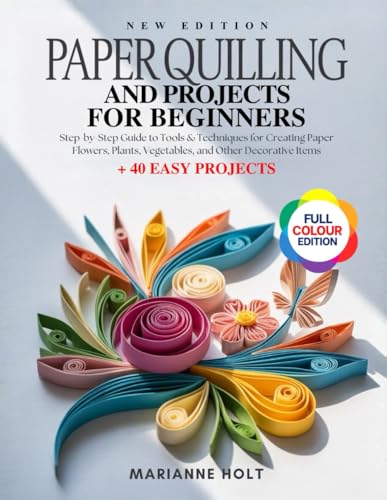
- Teaches tools, tension, glue, and layout basics
- Includes 40 sequenced beginner projects
- Covers cards, bookmarks, and decorative pieces
Best For: Beginners who want a structured, skill-building path with plenty of practice
Beginner-Friendly Pick – Paper Quilling for Beginners: Your Complete Guide to Creating Stunning Paper Art
Paper Quilling for Beginners: Your Complete Guide to Creating Stunning Paper Art
Check Price On AmazonIf you want a gentle starting point for paper quilling books, this beginner-focused guide keeps things practical. It covers essential tools and materials, then moves into clear step-by-step instructions and projects that build from simple shapes to more advanced designs.
Best For: New quillers who want an easy-to-follow introduction with project-based practice.
Pros:
- Explains essential tools and materials for getting started
- Includes clear guidance from basic to advanced quilling techniques
- Offers a range of inspirational projects to practice skills
- Compact 96-page format is easy to work through
Cons:
- Shorter than many more advanced quilling titles
- Focused mainly on beginners and skill-building basics
This is a straightforward choice if you want an accessible entry into paper quilling without a lot of extra complexity. The mix of fundamentals and projects makes it useful for learning as you create.
Project-Rich Classic – Beautiful Quilling Step-by-Step
Among paper quilling books, this one stands out for readers who want lots of projects and a fuller technique walkthrough. Four experienced paper crafters guide you from the basics into detailed quilled characters, flowers, and motifs, with step-by-step techniques supporting each project.
Best For: Crafters who want a larger project collection with clear technique support.
Pros:
- Created by four experienced paper crafters
- Includes a wide variety of projects, from frogs to hot air balloons
- Provides clear explanations of quilling basics
- Uses full step-by-step techniques throughout
Cons:
- Heavier and larger than some compact beginner books
- May feel broad if you only want a quick intro
If you want a dependable reference with plenty to make, this is a strong all-around option. The mix of technique and project variety gives it lasting value as your skills improve.
Relaxation-Focused Choice – Quilled Mandalas: 30 Paper Projects for Creativity and Relaxation
If you are browsing paper quilling books for a calming, repeatable craft, this mandala-focused title is a strong fit. It blends quilling basics with 30 projects in 4-, 6-, and 8-inch formats, supported by detailed step-by-step photos.
Best For: Quilters who enjoy meditative projects and mandala-inspired designs.
Pros:
- Features 30 paper projects centered on mandala designs
- Includes step-by-step photos for the required shapes
- Covers beginner, intermediate, and advanced levels
- Offers a mix of project sizes for flexible crafting
Cons:
- Theme is specifically mandala-oriented
- Less suited to crafters who want more varied subject matter
This book makes sense if you want structured projects that feel relaxing to complete. The clear photo guidance and level variety help it work for both practice and unwinding.
Contemporary Project Pick – Quilling Art
For shoppers comparing paper quilling books with a more modern feel, this title leans into contemporary designs and polished presentation. It includes 20 projects, step-by-step photographs, and templates, while also functioning as a course in the techniques needed to create your own work.
Best For: Quillers who want contemporary projects with templates and skill-building support.
Pros:
- Includes 20 stunning, contemporary quilling projects
- Uses step-by-step photographs and templates
- Designed for all skill levels with varying complexity
- Goes beyond projects to teach core papercraft techniques
Cons:
- Fewer projects than some larger quilling books
- Focuses on specific motifs and modern designs
This is a solid pick if you want inspiration plus instruction in one place. The combination of templates and skill development makes it especially useful once you’re ready to move beyond the basics.
Beginner Project Guide – Paper Quilling for Beginners
If you want paper quilling books that take you from basic rolls to finished projects quickly, this guide is built for exactly that. It focuses on a simple roll-shape-and-paste method and uses step-by-step photos to walk beginners through flowers, vegetables, decorative tiles, dolls, wearable pieces, and more.
Best For: Beginners who want a broad, project-focused quilling book with visual instructions and templates.
Pros:
- Step-by-step photographic instructions for 30 projects and 75 quilled objects
- Covers a wide variety of subjects, from flowers and produce to dolls and brooches
- Includes templates plus ideas for framing, cards, bouquets, and accessories
- Designed around a beginner-friendly method using only a few inexpensive tools
Cons:
- At 96 pages, it is a compact guide rather than an exhaustive reference
- Focuses on making the featured projects instead of deep technique theory
This is a practical pick if you want one of the paper quilling books that prioritizes getting you making right away. The mix of clear visuals, templates, and varied projects makes it a strong starter choice for hands-on learners.
Starter Sampler – Quilling for Beginners
Quilling for Beginners: 10 Printable Templates + Shape Guide (Starter Sampler)
Check Price On AmazonAmong paper quilling books for true beginners, this starter sampler is aimed at helping you make neat shapes and simple finished pieces without guessing. It includes a shape guide, tools and materials checklist, paper width guidance, glue and handling tips, and 10 printable templates for cards, tags, and small framed projects.
Best For: Complete beginners who want quick wins, printable templates, and a simple reference for core quilling shapes.
Pros:
- Includes 10 printable templates you can use immediately
- Covers core shapes like tight coil, loose coil, teardrop, marquise, and scroll
- Provides practical setup help with tools, materials, and paper width guidance
- Offers glue and handling tips to help avoid common beginner mistakes
Cons:
- Shorter and more limited than a full technique-and-project handbook
- Focused on starter projects rather than advanced designs
This is a good low-pressure entry point if you want a compact guide that helps you start confidently. It works especially well if you like printable templates and want a quick reference while learning the basics.
Inspiration Gallery – Paper Quilling Flowers and Trees Gallery
Paper Quilling Flowers and Trees Gallery: An Artistic Collection to Inspire Your Crafting Passion
Check Price On AmazonIf you’re browsing paper quilling books for visual inspiration, this collection focuses on flowers and trees rather than step-by-step instruction. It includes quilling basics, simple templates, creative product ideas, online selling tips, a bonus download, and even a word search puzzle for a lighter crafting experience.
Best For: Crafters who want design inspiration, simple templates, and ideas for turning quilling into products.
Pros:
- Showcases floral and tree-themed quilling designs for inspiration
- Includes quilling basics and simple templates to get ideas flowing
- Offers product and online selling tips for craft-minded makers
- Provides a bonus download and a relaxing word search activity
Cons:
- Does not include step-by-step tutorials
- More inspirational than instructional for beginners needing hands-on guidance
This book suits makers who prefer browsing ideas and adapting them into their own work. If you want a reference that combines inspiration with selling guidance, it offers a different angle than a standard beginner manual.
Beginner-Friendly Pattern Starter – Easy Paper Quilling Patterns
If you want paper quilling books that make the craft feel approachable, this step-by-step beginner guide focuses on the basics: coiling, curving, and fringing strips into simple paper art and card-making designs. At just 60 pages, it’s a compact introduction for anyone who wants to learn the core techniques without getting overwhelmed.
Best For: Absolute beginners who want a short, straightforward introduction to paper quilling patterns and foundational techniques.
Pros:
- Step-by-step tutorials are aimed specifically at beginners.
- Covers the core quilling motions used in paper art and card making.
- Short, compact format makes it easy to get started quickly.
Cons:
- Only 60 pages, so it’s a limited-depth resource.
- No detailed project count is listed in the supplied notes.
This is a practical pick if you want a simple first book and prefer learning the basics before moving on to more advanced designs. Its strength is clarity and accessibility rather than breadth.
Flower Project Guide – Beginner’s Guide to Quilling Paper Flowers
A Beginner's Guide to Quilling Paper Flowers: Beautiful Japanese-Style Paper Art
Check Price On AmazonAmong paper quilling books focused on projects, this guide stands out for its flower-first approach and detailed photographic instructions. It teaches you how to make long-lasting quilled paper flowers with a simple roll-shape-and-paste method, and it includes templates plus ideas for using the finished pieces in cards, frames, and shadow boxes.
Best For: Beginners who want a visually guided book centered on making decorative quilled paper flowers.
Pros:
- Includes step-by-step photographic instructions for easy follow-along learning.
- Teaches 32 different varieties of quilled flowers.
- Offers templates and display ideas for cards, gift toppers, and framed projects.
Cons:
- Focused heavily on flowers rather than general quilling techniques.
- Larger 8.5 x 11 format may be less portable than slimmer guides.
This is a strong choice if your goal is to make decorative floral pieces with clear visual instruction. It leans more toward project making than broad theory, which can be ideal for hands-on learners.
Skill-Building Project System – Paper Quilling and Projects for Beginners
If you’re comparing paper quilling books and want one that treats the craft like a learnable skill, this guide takes a structured approach from the start. It begins with tools, tension control, glue use, spacing, and troubleshooting, then moves into 40 sequenced beginner projects that build confidence step by step.
Best For: Beginners who want a structured, confidence-building quilling book with many step-by-step projects.
Pros:
- Starts with fundamentals like tool handling, tension, glue control, and layout planning.
- Includes 40 easy projects designed to build skills gradually.
- Covers a wide mix of practice panels, cards, bookmarks, and decorative pieces.
Cons:
- Publication date is listed as 2026, which may not suit buyers seeking an established title.
- No page count beyond 79 pages, so project depth may be concise.
This book is a smart pick if you want a more methodical path into quilling rather than jumping straight into decorative designs. Its biggest advantage is the emphasis on repeatable technique and gradual skill-building.
How We Picked These Paper Quilling Books
We focused on books that are useful for real buyers, not just attractive covers. Priority went to clear instruction, beginner-friendly pacing, variety of projects, and value for readers who want to build skills step by step. We also looked for books that cover essential quilling techniques, include patterns or templates, and offer enough project variety to stay motivating.
Quick Comparison: Which Book Style Fits You?
If you want a full beginner roadmap, choose a book with tools, techniques, and foundational projects. If you learn best by doing, pattern-heavy and step-by-step titles are usually easier to follow. For a more decorative or meditative experience, mandala and floral collections can be a better fit. Some Paper Quilling Books are broad and instructional, while others are narrow and project-focused, so your experience level should guide the choice.
Key Buying Factors for Paper Quilling Books
Skill Level
Check whether the book is truly beginner-friendly or assumes prior experience. A good starter book should explain basic shapes, scrolling, pinching, gluing, and shaping before moving into complex designs.
Project Type
Think about what you want to make. Some readers want flowers and botanical art, while others prefer geometric designs, cards, or relaxing decorative pieces. The best Paper Quilling Books match your preferred style of craft.
Instructions and Visuals
Clear photos, diagrams, and step-by-step layouts matter a lot in quilling. Because the craft is shape-driven, visual guidance is often more helpful than long explanations alone.
Templates and Patterns
Books with templates can save time and make practice less frustrating. They are especially useful for beginners who want quick wins and repeatable results.
Material Guidance
Look for titles that explain paper strips, tools, glue, slotted tools, tweezers, and board options. Good supply advice helps you avoid buying extras you do not need.
Who Should Buy Which Paper Quilling Books?
Absolute beginners should prioritize books that teach the basics from the ground up with simple exercises and straightforward projects. Template seekers will likely prefer starter samplers and pattern-based guides. Art-focused crafters may enjoy mandalas, floral galleries, or more creative collections that inspire original work. If you want one dependable starting point, choose a broad instructional title; if you want inspiration, go for a visually rich project book.
In short, the best Paper Quilling Books are the ones that match your skill level, your favorite motifs, and how you like to learn.