Starting modern calligraphy can feel intimidating, but the right workbook makes the process simple, structured, and enjoyable. The best beginner books focus on clear strokes, guided drills, and practical projects you can actually finish.
In this roundup, we narrowed the field to 10 approachable options for new lettering learners, from complete step-by-step guides to practice-heavy workbooks designed to build steady progress.
Best 10 Modern Calligraphy Books for Beginners Picks for 2026
Foundation-Friendly Guide
The Ultimate Guide to Modern Calligraphy & Hand Lettering for Beginners

- Straightforward beginner-friendly instruction
- Large 8.5" x 11" practice-friendly format
- Focuses on avoiding early mistakes
Best For: Beginners who want a clear, large-format introduction to hand lettering basics
Spiral-Bound Practice Pick
Modern Calligraphy: A Calligraphy Practice Workbook

- Spiral-bound layflat design
- Includes 12 alphabet styles
- Covers tools, design, and digital lettering
Best For: Learners who want a layflat workbook with lots of hands-on practice
Project-Based Starter
CreateSpace Classics Lettering and Modern Calligraphy: A Beginner's Guide
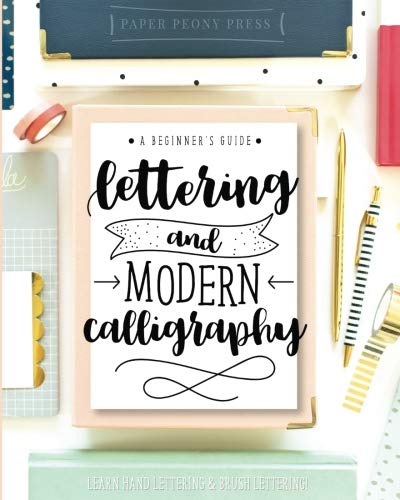
- Teaches five alphabet styles
- Includes 15 lettering projects
- Covers upper- and lowercase practice
Best For: Beginners who want guided practice plus project ideas
Theory-Plus-Bonus Choice
Calligraphy for Beginners + Course on the Theory of Traditional & Modern Calligraphy

- Step-by-step theory and technique
- Includes PDF practice pages and videos
- Large USA Letter print size
Best For: Adults and teens who want step-by-step lessons with extra video support
Foundations for First-Time Letterers
Modern Calligraphy for Beginners

- Covers pointed pen and brush pen basics.
- Includes alphabet guides and stroke-by-stroke instruction.
- Shows how to develop a personal lettering style.
Best For: Beginners who want a clear introduction to both pointed pen and brush pen lettering.
Best for Everyday Use
Pretty Simple Lettering Workbook
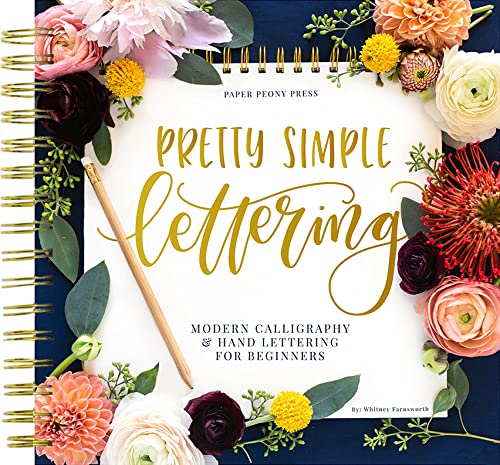
- Step-by-step teaching with beginner guidance.
- Spiral binding helps the book lay flat while practicing.
- Includes seven styles, ten alphabets, and brush pen tips.
Best For: Beginners who want a practice-heavy workbook that lays flat while they learn.
Most Complete Skill Builder

- 170+ pages covering basics through stylized projects.
- Includes six brush styles plus four extra alphabets.
- Premium paper and gold spiral binding support practice.
Best For: Beginners who want a larger workbook with room to progress into intermediate practice.
Beginner-Friendly Lettering Workbook
The Lettering Workbook for Absolute Beginners

- Covers multiple lettering styles and basic terminology
- Includes free downloadable practice pages
- Features a 12-day challenge for consistent practice
Best For: Absolute beginners who want a structured hand lettering and modern calligraphy workbook
Practice-First Calligraphy Pad
Calligraphy Practice For Beginners

- 120 traceable practice pages
- Large 8.5" x 11" format for easy writing
- Simple format for repeat drills
Best For: Beginners who mainly want traceable practice sheets
Mindful Modern Handwriting Guide
Calligraphy Workbook for Beginners
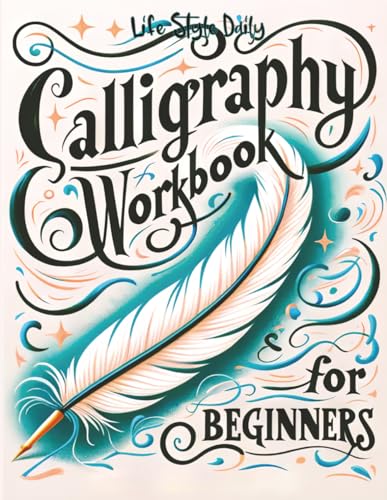
- Step-by-step exercises for starting from scratch
- Large format with smooth, bleed-resistant paper
- Blends calligraphy practice with handwriting improvement
Best For: New learners who want a calm, guided calligraphy workbook
Foundation-Friendly Guide – The Ultimate Guide to Modern Calligraphy & Hand Lettering for Beginners
If you want modern calligraphy books for beginners that focus on building a solid foundation, this guide is designed to keep things straightforward. It aims to cut down on research, trial-and-error, and early mistakes, while giving you an easy-to-follow explanation of the hand lettering process.
Best For: Beginners who want a clear, large-format introduction to hand lettering basics.
Pros:
- Written to help beginners avoid common early mistakes
- Large 8.5" x 11" format makes practice pages easy to use
- Premium matte cover and 60lb paper stock
- Focuses on a straightforward process for building fundamentals
Cons:
- Only 108 pages, so it is a relatively compact guide
- Primarily centered on hand lettering foundations rather than advanced instruction
This is a good pick if you want a polished beginner book that emphasizes clarity and structure over overwhelming detail. Its large page size and practical approach make it easy to work through at your own pace.
Spiral-Bound Practice Pick – Modern Calligraphy: A Calligraphy Practice Workbook
Modern Calligraphy: A Calligraphy Practice Workbook (Calligraphy Practice Book Series)
Check Price On AmazonFor shoppers comparing modern calligraphy books for beginners, this workbook stands out for its practice-first format. It is designed for beginner and intermediate calligraphers and includes space to explore letters, tools, design techniques, and personal style.
Best For: Learners who want a layflat workbook with lots of hands-on practice.
Pros:
- Spiral-bound, layflat format makes practicing easier
- Includes 12 new calligraphy alphabet styles
- Covers color, design, and digital hand lettering with a tablet
- Includes tips to help develop a personal lettering style
Cons:
- Publication date is listed as November 4, 2025
- Heavier on practice and technique than on broad theory
This is a strong option if you prefer to learn by doing and want a workbook that supports repeated practice. The spiral binding and broad skill coverage make it especially useful for hands-on learners.
Project-Based Starter – CreateSpace Classics Lettering and Modern Calligraphy: A Beginner's Guide
This is a practical choice if you want modern calligraphy books for beginners that combine instruction with finished projects. It teaches five alphabet styles, covers upper- and lowercase letters, and adds 15 lettering projects to help you apply what you learn.
Best For: Beginners who want guided practice plus project ideas.
Pros:
- Teaches five different alphabet styles
- Includes detailed instructions and practice space
- Features 15 lettering projects at the end
- Covers upper- and lowercase letters and connections
Cons:
- Smaller 8" x 10" format than some other beginner books
- Less expansive than larger all-in-one guides
If you want a book that moves beyond drills and into complete pieces, this one is a practical fit. The project section makes it easier to turn beginner practice into finished lettering work.
Theory-Plus-Bonus Choice – Calligraphy for Beginners + Course on the Theory of Traditional & Modern Calligraphy
If you want modern calligraphy books for beginners with a more course-like structure, this option pairs theory, technique, practice pages, and projects. It also includes free bonus PDF practice pages and video lessons, which may appeal if you like extra support while learning.
Best For: Adults and teens who want step-by-step lessons with extra video support.
Pros:
- Combines theory, technique, practice, and projects
- Includes free PDF practice pages
- Includes free video lessons on basics
- Uses a large USA Letter print size
Cons:
- Self-published title, which may matter to some buyers
- Title suggests a broad scope, so it may feel less streamlined than a simpler workbook
This book is a good fit if you want a structured beginner course rather than just a workbook. The extra videos and printable pages add value for learners who benefit from mixed-format instruction.
Foundations for First-Time Letterers – Modern Calligraphy for Beginners
If you’re comparing modern calligraphy books for beginners, this guide is a solid place to start because it covers both pointed pen calligraphy and brush lettering in one approachable package. The lessons move from tools and basic strokes to letter variations and simple style-building, so you can learn the fundamentals without feeling overwhelmed.
Best For: Beginners who want a clear introduction to both pointed pen and brush pen lettering.
Pros:
- Covers tools, papers, nibs, and recommended pens for beginners.
- Teaches upstrokes, downstrokes, and common shapes before moving into letters.
- Includes step-by-step alphabet guides with multiple ways to write each letter.
- Shows how to build a personal style with slant, spacing, bounce, shadows, and flourishes.
Cons:
- Focused on fundamentals, so it may feel basic for more advanced lettering practice.
- At 114 pages, it is shorter than some workbook-style alternatives.
Overall, this is a practical starter book if you want a broad but beginner-friendly introduction to modern calligraphy and lettering basics.
Best for Everyday Use – Pretty Simple Lettering Workbook
For shoppers browsing modern calligraphy books for beginners, this workbook stands out for its structured, step-by-step teaching style and practice-friendly spiral binding. It blends hand lettering and modern calligraphy basics with seven lettering styles, ten alphabets, and plenty of guidance for learning by doing.
Best For: Beginners who want a practice-heavy workbook that lays flat while they learn.
Pros:
- Step-by-step beginner instruction with a detailed introduction.
- Spiral-bound hardcover design lays flat for easier practice.
- Includes seven lettering styles and ten individual alphabets.
- Offers brush pen recommendations and bleed-resistant paper.
Cons:
- Leans more toward workbook practice than broad theory.
- Some readers may prefer a more focused calligraphy-only approach.
It’s a strong option if you want a polished, giftable workbook that helps you practice lettering in an organized, hands-on way.
Most Complete Skill Builder – Modern Lettering Workbook
Modern Lettering: A Beginner & Intermediate Hand Lettering & Modern Calligraphy Workbook
Check Price On AmazonIf you want modern calligraphy books for beginners that can also grow with your skills, this workbook offers a lot of depth. It starts with the basics of tools, grip, strokes, and letter construction, then expands into stylized alphabets, practice words, flourishes, and finished projects.
Best For: Beginners who want a larger workbook with room to progress into intermediate practice.
Pros:
- Over 170 pages of lessons and practice content.
- Teaches basic strokes, letterform construction, and simple alphabets.
- Includes six brush lettering styles, four more alphabets, and guided projects.
- Gold spiral binding and premium paper help support smoother practice.
Cons:
- Its size may be more than some absolute beginners need at first.
- Some content moves into intermediate territory after the basics.
This is a versatile choice if you want one book that covers the fundamentals and still gives you plenty of material to practice as your lettering improves.
Beginner-Friendly Lettering Workbook – The Lettering Workbook for Absolute Beginners
The Lettering Workbook for Absolute Beginners: A Simple Guide to Hand Lettering & Modern Calligraphy
Check Price On AmazonIf you’re looking for modern calligraphy books for beginners that start from the very beginning, this workbook gives you a structured way to learn hand lettering and modern calligraphy together. It covers multiple lettering styles, key terms and phrases, embellishment ideas, and practice pages you can download to keep building your skills.
Best For: Absolute beginners who want a guided workbook with styles, drills, and extra practice pages.
Pros:
- Covers multiple lettering styles and common lettering terminology
- Includes easy instructions for embellishments and creating your own artwork
- Offers free downloadable practice pages to refine technique
- Built-in 12-day challenge helps you form a consistent practice habit
Cons:
- Focused on beginner learning, so it may feel basic for experienced lettering artists
- Practice-heavy format may be better for hands-on learners than quick reference readers
This is a practical pick if you want a workbook-style introduction rather than a theory-heavy guide. The mix of instruction, practice, and challenge-based learning makes it easy to get started and stay consistent.
Practice-First Calligraphy Pad – Calligraphy Practice For Beginners
For shoppers comparing modern calligraphy books for beginners, this practice pad is the most straightforward option here if your main goal is repetition. It offers 120 pages of traceable letters in a large 8.5″ x 11″ format, making it a simple, hands-on way to practice calligraphy and hand lettering.
Best For: Beginners who want a large stack of traceable practice sheets for regular drill work.
Pros:
- 120 practice pages provide plenty of room for repeated drilling
- Large 8.5″ x 11″ format gives you space to write comfortably
- Traceable letters make it easy to follow along as you practice
- Matte-finish cover gives it a polished workbook feel
Cons:
- More of a practice pad than a lesson-based guide
- Notes do not mention step-by-step instruction or technique breakdowns
If you already have a basic sense of what you want to practice, this pad keeps things simple and repetitive in a useful way. It is a good fit when you want lots of pages and minimal setup.
Mindful Modern Handwriting Guide – Calligraphy Workbook for Beginners
If you want modern calligraphy books for beginners that feel calm, guided, and practical, this workbook is built around step-by-step exercises and mindful lettering. It is designed for people starting from scratch, with a clean layout, large practice space, and pages that work well with brush pens and markers.
Best For: New learners who want a gentle, step-by-step workbook with a mindful feel.
Pros:
- Beginner-friendly structure with clear, guided exercises
- Large 8.5 x 11 inch format leaves plenty of room to practice
- Premium smooth paper is described as bleed-resistant for brush pens and markers
- Balances creative lettering practice with everyday handwriting improvement
Cons:
- Shorter than some alternatives at 96 practice pages
- More focused on gentle guided practice than on a wide variety of lettering styles
This is a strong choice if you want a workbook that feels thoughtfully paced rather than overwhelming. Its emphasis on mindful practice and clean presentation makes it especially approachable for first-time lettering students.
How We Picked These Modern Calligraphy Books for Beginners
We focused on books that are genuinely beginner-friendly: clear instruction, gradual skill building, useful practice space, and coverage of core tools like brush pens or pointed pens. We also prioritized titles with a strong learning path rather than books that only showcase finished lettering.
Quick Comparison
When comparing Modern Calligraphy Books for Beginners, look at the format first. Some books are best for reading and understanding theory, while others are workbook-style and better for hands-on repetition. Spiral-bound and practice-pad formats can be easier to use at a desk, while hardcover guides may feel more durable for long-term reference.
Key Buying Factors for Modern Calligraphy Books for Beginners
Teaching Style
Choose a book that matches how you learn. If you want structure, look for step-by-step lessons. If you learn by doing, a workbook with tracing drills and blank practice space may be a better fit.
Tool Focus
Some books center on brush lettering, while others cover pointed pen calligraphy or a mix of both. Make sure the instruction aligns with the tools you already own or plan to buy.
Practice Layout
Good beginner books provide enough room to repeat strokes, letters, and words. Clear layouts reduce frustration and make it easier to build muscle memory.
Depth Vs. Simplicity
If you want a gentle introduction, avoid books that move too quickly into advanced flourishes or historical theory. For many learners, the best choice is a simple foundation before expanding into more decorative styles.
Who Should Buy Which Modern Calligraphy Books for Beginners?
If you want a complete introduction, choose a book that combines basics, drills, and guided projects. If you already know the fundamentals and want repetition, a practice pad or workbook is often the most useful option. For learners who prefer a more polished reference, a book with durable binding and a clean layout may be worth the extra cost.
Overall, the best Modern Calligraphy Books for Beginners are the ones that keep you practicing consistently. Pick the format that fits your routine, commit to short daily sessions, and prioritize clarity over complexity at the start.