If you’re new to yarn and hooks, the right book can make all the difference. The best crochet books for beginners break each stitch into manageable steps and help you build skills without feeling overwhelmed.
Below, we’ve rounded up 10 options designed to teach the basics, reinforce technique, and get you making simple projects with confidence.
Best 10 Crochet Books for Beginners Picks for 2026
Skill-Building Starter Guide

- 30 stitches and techniques
- 10 easy beginner projects
- Step-by-step illustrations throughout
Best For: New crocheters who want a visual, guided start
Fully Colored Absolute Beginner Guide

- Simple step-by-step instructions
- Fully colored beginner-friendly format
- Focuses on first projects and basics
Best For: Absolute beginners who want an easy visual guide
Project-Heavy Spiral-Bound Guide

- 27 simple crochet projects
- Spiral binding lies flat
- Covers pattern reading basics
Best For: Beginners who want lots of hands-on practice
Ultimate Visual Reference

- Step-by-step photography throughout
- Covers basics through specialty stitches
- Includes 10 novice-friendly patterns
Best For: Beginners who want a detailed reference that lasts
Beginner-Friendly Visual Course
Crochet School for Absolute Beginners

- Step-by-step illustrated instruction
- 20+ easy beginner projects
- Troubleshooting for common mistakes
Best For: Absolute beginners who want a clear visual guide
Pattern-Heavy Starter Book
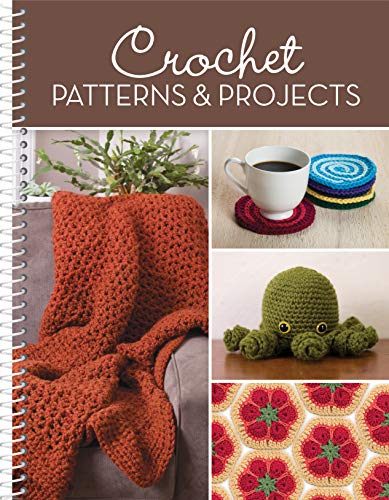
- 19 stitch patterns and 19 projects
- Color photos and helpful tips
- Spiral-bound and easy to use
Best For: Beginners who want lots of project variety
Absolute Beginner Friendly
Stress-Free Crochet for Absolute Beginners

- Explains the basics beginners usually struggle with
- Uses photos, QR videos, and simple troubleshooting
- Includes quick projects you can finish fast
Best For: New crocheters who want a guided, confidence-building first book
Stitch Reference Pick

- 200 stitches with written, charted, and photo guides
- Color-coded sections make browsing easy
- Best for expanding beyond the basics
Best For: Beginners ready to explore stitches beyond the starter level
7-Day Starter Plan

- Built around a clear 7-day action plan
- Teaches core stitches and pattern basics
- Includes 6 beginner projects to practice on
Best For: Beginners who want a structured, quick-win learning path
Skill-Building Starter Guide – Crochet for Beginners
Crochet for Beginners: A Stitch Dictionary with Step-by-Step Illustrations and 10 Easy Projects
Check Price On AmazonIf you want crochet books for beginners that cover the basics clearly and then help you practice, this guide is a practical choice. It explains essential tools, yarn, hook sizes, and 30 fundamental stitches and techniques, then follows with 10 easy projects to reinforce what you learn.
Best For: New crocheters who want a visual, step-by-step book with stitch instruction plus beginner projects.
Pros:
- Covers hooks, yarn, tools, and key crochet terms
- Includes step-by-step illustrations for 30 stitches and techniques
- Offers 10 beginner projects like a beanie, bag, and blanket
- Walks through skills such as pattern-following, joining, and color changes
Cons:
- Only 10 projects, so it is more of a starter guide than a large pattern collection
- Some readers may want even more in-depth practice before moving on
This is a solid all-around beginner option if you want a structured introduction and a small set of usable projects. The illustrated format makes it easy to learn fundamentals without feeling overwhelmed.
Fully Colored Absolute Beginner Guide – Crochet for Newbies
For shoppers comparing crochet books for beginners, this fully colored guide is aimed at absolute first-timers. It focuses on simple instructions and step-by-step illustrations, making it a friendly way to learn the basics before trying your first scarf, gift, or home décor project.
Best For: Absolute beginners who want a simple, visually guided introduction to crochet.
Pros:
- Designed specifically for beginners with no experience
- Uses simple instructions and step-by-step illustrations
- Fully colored format may be easier to follow visually
- Covers beginner-friendly project ideas like scarves and gifts
Cons:
- Contains fewer pages than some larger beginner guides
- Project details are described broadly in the notes
This book looks best suited to someone who wants a straightforward, approachable first crochet resource. Its visual style and simple teaching approach should make getting started feel less intimidating.
Project-Heavy Spiral-Bound Guide – Crochet for Beginners
If you want crochet books for beginners that balance instruction with lots of practice, this spiral-bound guide is worth a look. It explains tools, basic stitches, reading patterns, and working in the round, then gives you 27 simple projects to build confidence as you go.
Best For: Beginners who want a practical, lay-flat book with plenty of project practice.
Pros:
- Covers tools, materials, yarn weight, and hook sizes
- Includes photos for basic techniques and stitches
- Teaches pattern reading, abbreviations, and symbols
- Offers 27 projects ranging from amigurumi to home goods
Cons:
- More project-focused than a minimal quick-start guide
- Spiral binding may be less compact on a shelf or in a bag
This is a strong choice if you learn best by doing and want a lot of beginner projects in one place. The lay-flat spiral binding is especially helpful when you are following patterns at the table.
Ultimate Visual Reference – Complete Crochet Course
Among crochet books for beginners, this one stands out if you want a fuller reference that can grow with you. It uses step-by-step photography throughout to teach tools, materials, basic techniques, seaming, working in the round, and specialty stitches, while also including 10 patterns for first projects.
Best For: Beginners who want a more comprehensive, long-term reference guide.
Pros:
- Step-by-step photography throughout for a visual learning experience
- Explains tools, yarn, hooks, seaming, and specialty stitches
- Includes 10 patterns designed for novices
- Large 336-page format offers room for detailed instruction
Cons:
- Heavier and larger than a compact starter book
- May feel more extensive than needed for someone wanting only a few basics
This is a good pick if you want a beginner-friendly book that also serves as a reference as your skills improve. The depth and photography make it useful well beyond the very first lesson.
Beginner-Friendly Visual Course – Crochet School for Absolute Beginners
If you want crochet books for beginners that explain things clearly from the first stitch, this guide is built for absolute newcomers. It focuses on step-by-step illustrations, plain-language instruction, and beginner projects that help you build confidence without feeling overwhelmed.
Best For: First-time makers who want a visual, all-in-one beginner crochet guide with simple projects and troubleshooting help.
Pros:
- Step-by-step illustrated lessons make the basics easier to follow
- Covers yarn, hooks, tools, stitches, patterns, and diagrams in one place
- Includes 20+ easy projects, from quick evening makes to larger practice pieces
- Offers troubleshooting tips for common beginner issues like curling edges and uneven tension
Cons:
- At 85 pages, it is a shorter guide than some fuller crochet manuals
- Focuses on beginner learning, so advanced crocheters will likely outgrow it quickly
This is a practical pick if you want a supportive, confidence-building introduction to crochet with lots of visual guidance. It is especially useful if you learn best by doing and want projects that reinforce the lessons as you go.
Pattern-Heavy Starter Book – Crochet Patterns & Projects
For shoppers comparing crochet books for beginners, this one stands out if you want a mix of stitch patterns and finished projects. It pairs 19 motif and stitch patterns with 19 projects, making it a useful choice for practicing while you create scarves, granny squares, baby items, gifts, and more.
Best For: Beginners who want a project-focused book with colorful photos and a spiral-bound format.
Pros:
- Includes 19 motif and stitch patterns plus 19 projects
- Easy-to-follow instructions with colorful photographs and helpful tips
- Covers beginner-to-intermediate designs for steady skill-building
- Spiral-bound format can be convenient while working on projects
Cons:
- Some patterns are aimed beyond true basics and may feel harder than a starter-only book
- Only 64 pages, so the content is fairly compact
This book is a good fit if you learn by making a lot of different projects and want a pattern collection rather than a pure instructional manual. It offers a broader range of makes, which can help beginners practice new skills as they go.
Compact Step-by-Step Guide – How to Crochet for Beginners
If you want crochet books for beginners that get straight to the point, this compact guide is designed to make learning less stressful. It offers step-by-step crochet instructions with photos, plus beginner-friendly techniques and easy patterns that help newcomers start with confidence.
Best For: New crocheters who want a short, photo-based handbook with the basics and a few simple patterns.
Pros:
- Step-by-step instructions with photos support visual learners
- Includes crochet basics, techniques, and popular easy patterns
- Very compact size makes it easy to keep nearby while practicing
- Short format may appeal to readers who want a quick start
Cons:
- At 51 pages, it is brief compared with fuller beginner guides
- Less expansive than books that include lots of projects or troubleshooting detail
This is a practical choice if you want a slim beginner reference that explains the essentials without a lot of extra material. It works best as a simple starter book for learning the basics and trying a few easy patterns.
Absolute Beginner Friendly – Stress-Free Crochet for Absolute Beginners
If you want crochet books for beginners that focus on the frustrating basics most tutorials skip, this handbook is built to keep you moving. It explains hand position, yarn tension, the magic ring, and the first essential stitches with close-up photos, QR-linked videos, and quick-win projects that are actually finishable.
Best For: Absolute beginners who want a highly guided, frustration-reducing start with hands-on troubleshooting and simple weekend projects.
Pros:
- Covers common beginner pain points like the magic ring, tension, and second-row problems
- Includes 10 essential stitches with photos and QR-coded video tutorials
- Offers quick projects such as a coaster, scrunchie, bookmark, and granny square
- Includes a US vs UK terms cheat sheet for pattern clarity
Cons:
- At 122 pages, it is more of a beginner handbook than a deep reference library
- Focuses on foundational skills rather than advanced stitch variety
This is a practical pick if you want a book that anticipates where beginners quit and gives direct fixes instead of vague encouragement. It is especially useful if you learn best from visual support and step-by-step confidence-building.
Stitch Reference Pick – Crochet Stitch Dictionary
For shoppers comparing crochet books for beginners, this stitch dictionary is less about teaching the very first steps and more about building a library of stitches you can grow into. It offers 200 stitches with written, charted, and photographed instructions, plus clear swatch pages that make it easy to see how each stitch looks in finished form.
Best For: Beginners who already know the basics and want a broad visual stitch reference to explore new patterns.
Pros:
- Includes 200 stitches organized into 10 color-coded sections
- Provides written, charted, and photographed instructions for each stitch
- Shows large finished swatches, which helps with visual comparison
- Covers a wide mix of stitch styles, from basics to Tunisian
Cons:
- Not designed as a true first-day beginner lesson book
- May feel reference-heavy if you want project-led instruction
This is the strongest choice if you want a long-term stitch resource rather than a step-by-step course. It works best once you have the basics and want inspiration, variety, and a dependable stitch lookup tool.
7-Day Starter Plan – Crochet for Beginners
If you want crochet books for beginners that promise a structured start, this one is built around a clear seven-day plan. It teaches the core stitches, explains patterns and stitch counts, and includes six complete beginner projects so you can practice while working toward a finished result.
Best For: Beginners who want a day-by-day path to their first finished project with extra help on patterns and tension.
Pros:
- Uses a structured 7-day method that removes guesswork
- Teaches core stitches like slip knot, chain, single, half double, and double crochet
- Includes 6 beginner projects, including a scarf, blanket, and beanie
- Explains pattern reading, counting, and early error correction
Cons:
- Only 83 pages, so it is more of a fast-start guide than a deep reference
- Project count is solid, but the book is still focused on beginner foundations
This is a strong option if you like a clear plan and want to feel progress quickly. Its main appeal is structure: it aims to reduce confusion, help you stay consistent, and get you to a completed project without endless backtracking.
How We Picked These Crochet Books for Beginners
We focused on books that teach crochet in a clear, beginner-first way: step-by-step instructions, strong visual support, and projects that help reinforce core skills. We also looked for books that cover the essentials without assuming prior experience, so they’re easier to use as a first crochet reference.
Quick Comparison
Some of these Crochet Books for Beginners are best for absolute first-timers who need a gentle introduction, while others lean more like reference manuals with stitch dictionaries and broader technique coverage. A few include many small projects, which is helpful if you learn best by doing. If you want the fastest path to confidence, choose a book with photos or illustrations and simple practice patterns.
Key Buying Factors for Crochet Books for Beginners
Instruction Style
Look for books that explain tools, terminology, holding the hook, and basic stitches in plain language. Clear sequencing matters more than volume of content.
Visual Learning Support
Photos and illustrations are especially useful for beginners because crochet is easier to learn when you can see stitch placement and hand positioning.
Project Difficulty
Starter projects should be small, repeatable, and forgiving. Scarves, swatches, dishcloths, and simple accessories are ideal for practicing new stitches.
Reference Depth
If you want a book that stays useful as your skills grow, consider one with a stitch dictionary or broader course-style layout. Those books are often better long-term investments than ultra-brief crash courses.
Skill Progression
The best books move from basics to slightly more advanced techniques in a logical order. That structure helps prevent frustration and makes it easier to tell if you’re improving.
Who Should Buy Which Crochet Books for Beginners?
Absolute beginners who want the gentlest start should choose a book with step-by-step visuals and easy projects. Visual learners may prefer stitch-heavy guides with photos and diagrams. If you want a lasting reference, look for a more comprehensive course or stitch dictionary. And if you’re mainly motivated by making something quickly, pick a book with lots of simple beginner projects.
In short, the best choice depends on how you learn: some readers need reassurance, some need structure, and others want a handy reference they can return to after the basics click. Either way, the right crochet book should make learning feel approachable, practical, and fun.