Choosing among wood carving books is easier when you know what you want to make first. Some titles focus on knife basics and safety, while others emphasize relief carving, figures, or quick weekend projects.
This roundup highlights 10 beginner-friendly options for new carvers and hobbyists who want clear instruction, practical patterns, and a path from first cuts to finished projects.
Best 10 Wood Carving Books Picks for 2026
Master the Basics
Chris Pye's Beginner Carving Course

- Step-by-step beginner instruction
- Covers tools, sharpening, and wood selection
- Includes relief and in-the-round projects
Best For: Beginners wanting a complete wood carving course
Classic Beginner Reference

- Straightforward beginner instruction
- 34 illustrated designs and projects
- Only four tools needed for projects
Best For: New carvers who want a traditional, concise guide
All-Around Starter Guide
Beginner's Handbook of Woodcarving

- Covers line, relief, round, and bird carving
- More than 60 project patterns
- Includes finishing, painting, and exhibition tips
Best For: Beginners who want broad coverage and lots of patterns
Fast Whittling Projects

- Short whittling projects for quick sessions
- Step-by-step photos and instructions
- Good intro to safety, cuts, and finishing
Best For: Casual carvers who want simple giftable projects
Beginner Carving Basics

- Step-by-step beginner instruction
- Covers tools, wood, safety, and grain
- Includes sharpening and finishing basics
Best For: First-time carvers who want a clear, practical foundation
Scandinavian Animal Projects
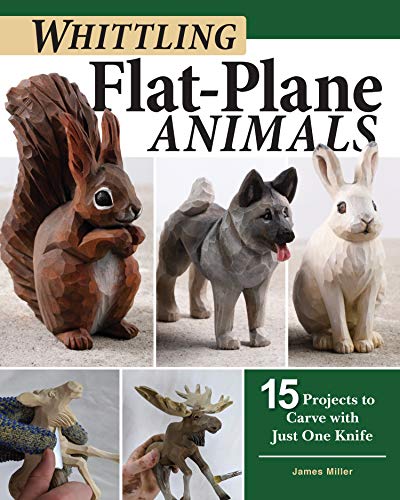
- 15 animal projects with templates
- Uses just one knife and minimal tools
- Teaches flat-plane carving step by step
Best For: Carvers who want easy Scandinavian-style animal projects
Face Carving Guide

- Step-by-step face carving instruction
- Covers features, proportions, and expressions
- Includes photos, QR videos, and projects
Best For: Carvers who want to learn lifelike facial features
Stylized Animal Project Guide

- Step-by-step stylized animal projects
- Full-size patterns and supply lists
- Covers basics, sanding, and finishing
Best For: Carvers who want contemporary animal patterns with beginner-friendly instruction
Beginner Caricature Carving Guide

- Easy caricature carving for beginners
- Practice exercises plus step-by-step photos
- Covers tools, sharpening, safety, and finishing
Best For: Beginners who want to carve humorous character figures
Classic Whittling Starter
Complete Starter Guide to Whittling

- 24 easy whittling projects
- Covers four cuts, safety, and sharpening
- Uses twig and branch wood from outdoors
Best For: First-time whittlers who want easy weekend projects
Master the Basics – Chris Pye's Beginner Carving Course
For shoppers comparing wood carving books, this one stands out as a true start-to-finish course. It walks beginners through tools, workbench setup, sharpening, grips, cuts, and practice exercises before moving into relief and in-the-round projects, so you can build skills in a steady order.
Best For: Beginners who want a thorough, teacherly guide with both fundamentals and step-by-step projects.
Pros:
- Covers tools, bench setup, wood selection, and sharpening in detail
- Includes practice exercises to build confidence before projects
- Teaches relief carving and in-the-round carving with clear steps
- Uses color photos and a conversational teaching style
Cons:
- More of a full course than a quick reference
- May be more detailed than a casual hobbyist needs
This is the best choice if you want a structured foundation rather than just project patterns. It reads like a guided class and should help a new carver move from setup to finished pieces with more confidence.
Classic Beginner Reference – The Book of Wood Carving
This classic entry in wood carving books focuses on a simple, practical path for beginners. It explains tools, materials, woods, stains, finishes, and workbench setup, then gives lessons and designs for incised, relief, and other cutting methods.
Best For: Beginners who want a concise, traditional introduction with many project designs.
Pros:
- Clear, straightforward instruction for beginning carvers
- 34 illustrated designs and project ideas to build technique
- Covers woods, finishes, and basic workbench preparation
- Uses only four tools for the included projects
Cons:
- Older title with a more traditional presentation
- Projects lean toward practical panels and decorative work
If you want a no-frills foundation book, this one keeps the focus on fundamentals and repeatable practice. The limited tool list and structured projects make it especially approachable for someone just getting started.
All-Around Starter Guide – Beginner's Handbook of Woodcarving
Among wood carving books for beginners, this handbook offers a broad and practical introduction. It covers line carving, relief carving, carving in the round, and bird carving, while also explaining tools, finishing, painting, and helpful tips for showing or gifting your work.
Best For: Novices who want a wide-ranging handbook with many project patterns and extra guidance.
Pros:
- More than 60 project patterns across multiple carving styles
- Includes a full chapter on carving birds
- Covers tools, finishing, painting, and competition tips
- Heavily illustrated with photos and line drawings
Cons:
- Less specialized if you only want one carving style
- Project variety may feel broad rather than deeply focused
This is a strong pick if you want one book that touches many parts of the craft. It combines instruction and pattern ideas in a way that should keep beginners busy without feeling locked into a single approach.
Fast Whittling Projects – 20-Minute Whittling Projects
If you want wood carving books that get you making things quickly, this whittling guide is built for short sessions. It focuses on simple, expressive figures you can carve in about 20 minutes or less, with step-by-step photos and essential advice on safety, cuts, sharpening, and finishing.
Best For: Beginners and casual carvers who want quick, giftable whittling projects.
Pros:
- Designed for fast projects that can be completed in 20 minutes or less
- Step-by-step photos make the process easy to follow
- Includes practical safety, sharpening, and finishing advice
- Projects are geared toward charming gifts and simple caricature carving
Cons:
- Focused on whittling rather than broader carving techniques
- Short projects may not satisfy readers looking for deep technical study
This book is a good match if your main goal is quick wins and low-stress practice. It is especially appealing for anyone who wants portable, fun projects without investing in lots of equipment or time.
Beginner Carving Basics – Wood Carving for Beginners
If you want wood carving books that make the first steps feel manageable, this beginner guide focuses on the basics that matter most: tool selection, wood choice, safe cuts, grain reading, sharpening, finishing, and simple pattern work. It is built for first-time carvers who need clear instruction instead of advanced theory.
Best For: New carvers who want a structured, step-by-step starting point with safety, practice cuts, and beginner pattern guidance.
Pros:
- Covers beginner tool basics without pushing a confusing kit.
- Explains safe hand positions, cutting risks, and grain reading.
- Includes whittling practice, common mistake correction, and sharpening help.
- Walks through finishing and sanding without overcomplicating the process.
Cons:
- Focused on fundamentals rather than advanced carving methods.
- Designed for simple beginner projects, not complex decorative work.
This is a practical pick if you want a clear learning path from first cut to first finished carving. It keeps the scope narrow so beginners can build confidence, fix common errors, and improve control before moving on to more detailed projects.
Scandinavian Animal Projects – Whittling Flat-Plane Animals
Among wood carving books aimed at beginners, this one stands out for its simple flat-plane approach and animal-focused projects. It teaches Scandinavian-style whittling with just one knife, helping you build skills through approachable patterns, roughing out, carving, and painting rather than a long tool list.
Best For: Beginners and intermediate carvers who want one-knife animal projects with a traditional Scandinavian style.
Pros:
- Includes 15 step-by-step animal projects with full-size templates.
- Uses minimal tools, making it easy to start with one knife.
- Projects are approachable and can be completed in about a day.
- Covers roughing out, carving, painting, and helpful project introductions.
Cons:
- Leans toward stylized flat-plane carving rather than realistic forms.
- Best suited to animal subjects, not a broad survey of carving styles.
This is a strong choice if you learn best by finishing small, satisfying projects. The book keeps the process simple and repetitive in a good way, which makes it easier to build knife control and confidence as you work through each animal.
Face Carving Guide – Carving Faces in Wood
If you are comparing wood carving books for a tougher subject, this guide is built around carving lifelike faces with clear instruction and strong visual support. It covers tools, wood types, sharpening, safety, proportions, facial features, and troubleshooting, then builds toward three detailed projects and feature practice.
Best For: Beginners ready to tackle facial carving with step-by-step help, photos, and practice exercises.
Pros:
- Breaks down eyes, noses, mouths, hair, and expressions into practice exercises.
- Includes full-color photos, clear layout, and QR codes to technique videos.
- Covers tools, wood selection, safety, sharpening, and troubleshooting.
- Offers three illustrated projects with patterns and an inspirational gallery.
Cons:
- Face carving is naturally more advanced than basic whittling projects.
- May feel dense if you only want the simplest starter projects.
This book is a good fit if your goal is to move beyond simple shapes and learn a high-value carving skill. The step-by-step structure and supporting visuals should help reduce guesswork, especially for carvers who want to understand facial structure before attempting finished pieces.
Stylized Animal Project Guide – Easy Animal Carvings
If you want wood carving books that help you create clean, modern animal figures, this guide focuses on simple stylized projects with clear step-by-step instruction. It covers beginner basics like carving cuts, safety, wood grain, finishes, and sharpening, then moves into full-size patterns and materials lists for a wide range of animals.
Best For: Carvers who want beginner-friendly animal projects with a contemporary look and room to grow.
Pros:
- Includes step-by-step projects for dogs, birds, wolves, cats, rabbits, foxes, and more
- Offers full-size patterns plus complete tools and materials lists for each project
- Supports multiple skill levels, from beginner through advanced
- Uses color photography, including detailed sanding steps for smoother results
Cons:
- Focused specifically on stylized animal carvings rather than general woodcarving
- Emphasizes sanding and finishing, so it may suit detail-oriented crafters best
Overall, this is a strong choice if you want wood carving books centered on attractive animal designs that are approachable yet polished. The layout makes it easy to follow along and build confidence while creating display-worthy carvings.
Beginner Caricature Carving Guide – Carving the Little Guys
This wood carving book is built for beginners who want to learn caricature carving in a simple, practical way. It walks you through creating expressive little characters from a basic block of wood, with step-by-step color photos, practice exercises, and clear advice on knives, honing, sharpening, safety, finishing, and painting.
Best For: New woodcarvers who want an easy introduction to funny, character-based carving.
Pros:
- Beginner-friendly lessons with clear step-by-step color photography
- Includes practice exercises to build confidence and skill
- Shows how to add features like faces, ears, hats, hands, and feet
- Uses one basic pattern to create multiple characters and roles
Cons:
- Only 32 pages, so it is more of a focused starter guide than a deep reference
- Centers on caricature characters, not broader woodcarving topics
If you want wood carving books that keep things approachable and fun, this one is a solid starting point. Its short format and hands-on instruction make it ideal for learning the basics while making charming carved figures right away.
Classic Whittling Starter – Complete Starter Guide to Whittling
Among wood carving books for beginners, this classic whittling guide stands out for its simple projects and clear progression. It teaches you to start with just a pocketknife and found wood, then builds skills through 24 projects with photos, ready-to-carve patterns, and fundamentals like safe habits, sharpening, and the four essential cuts.
Best For: First-time whittlers who want fast, confidence-building projects they can finish in a weekend.
Pros:
- 24 beginner projects with step-by-step tutorials and patterns
- Covers essential knife skills, safety, and blade care
- Projects use twig, stick, and branch wood that is easy to find
- Trusted, widely used guide with a long track record for beginners
Cons:
- Focused on whittling rather than broader carving styles
- Project scope is beginner-oriented, so advanced carvers may outgrow it quickly
This is a practical pick if you want wood carving books that get you carving quickly with minimal tools. The approachable project mix and clear instruction make it easy to build skills while finishing satisfying pieces fast.
How We Picked These Wood Carving Books
We prioritized books that are useful for real beginners and steady skill builders. That means clear teaching, dependable project progression, and instructions that match common hand tools and starter carving sets. We also looked for books that offer more than inspiration, with step-by-step guidance, pattern support, and practical safety advice.
Quick Comparison
Some of these titles are best for learning fundamentals, such as knife control, tool setup, and safe carving habits. Others are more project-driven, making them a better fit if you want fast wins and finished pieces. If you prefer a structured course, choose a technique-first book. If you want motivation and momentum, a project book may be the better pick.
Key Buying Factors for Wood Carving Books
Skill Level
Match the book to your current experience. True beginners should look for simple cuts, low-risk techniques, and diagrams that explain hand position and grain direction. More experienced hobbyists may want carving anatomy, stylized figure work, or specialized project styles.
Project Style
Wood Carving Books vary widely. Whittling titles usually favor compact knife projects, while relief and figure carving books tend to go deeper into form, shaping, and finishing. Pick a style that fits the kind of objects you actually want to make.
Instruction Quality
Look for books with step-by-step photos, pattern drawings, and clear explanations of why each cut matters. Strong visuals are especially important if you are learning from home without an instructor.
Tool and Safety Guidance
A good beginner book should explain basic tool care, blade control, workspace setup, and safe cutting practices. These details can make the difference between frustrating trial-and-error and steady progress.
Who Should Buy Which Wood Carving Books?
If you want a true starting point, choose a fundamentals-focused title with tool basics and core techniques. If your goal is to finish fun pieces quickly, a project-heavy whittling book is a smarter buy. If you are drawn to expressive carving, look for books centered on faces, animals, or caricature work. The best Wood Carving Books are the ones that match your patience level, tool kit, and preferred carving style.