The right rhyming dictionary can help songwriters move beyond obvious word matches and find lyrics that sound more natural, memorable, and original.
We selected 10 useful options for different writing styles, including compact references, comprehensive dictionaries, and books that combine rhyme support with practical songwriting instruction.
Best 10 Rhyming Dictionaries for Songwriters Picks for 2026
Best Pocket Reference
Essential Songwriter's Rhyming Dictionary

- 15,000 songwriter-focused entries
- Pocket-sized for fast reference
- Simple format for lyric drafting
Best For: Contemporary songwriters who want a compact rhyme-finding tool
Best Lyric-Writing Guide

- Includes 50 songwriting exercises
- Covers advanced lyric techniques
- Uses examples from chart-topping songs
Best For: Writers who want instruction beyond rhyme lookup
Best Comprehensive Coverage
The Complete Rhyming Dictionary

- More than 60,000 total entries
- Covers several rhyme types and syllable counts
- Includes a poetry craft guide
Best For: Writers seeking extensive rhyme coverage and poetry guidance
Best Modern Sound-Based Search
Merriam-Webster's Rhyming Dictionary

- More than 71,000 rhyming words
- Includes pronunciations and multi-syllable words
- Organized by rhyming sound
Best For: Lyricists needing broad, pronunciation-focused rhyme searches
Best for Songwriting Beginners
Quick & Easy Songwriter’s Rhyming Dictionary
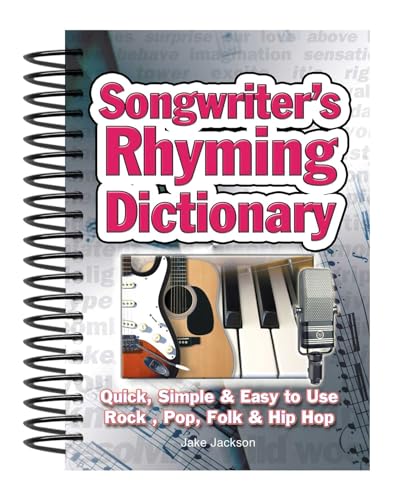
- Phonetic layout for fast rhyme searches
- Covers multiple rhyme and assonance types
- Written for rock, pop, folk, and hip-hop
Best For: Budding songwriters and lyricists facing writer’s block
Best All-Purpose Reference

- Offers rhymes for over 45,000 words
- Uses sound groups plus an alphabetical index
- Includes writing notes and rhyme examples
Best For: Songwriters and writers wanting broad, traditional coverage
Best for Unconventional Lyrics

- Lists over 150,000 alternative rhyme solutions
- Focuses on near, half, and false rhymes
- Designed to help avoid clichés
Best For: Songwriters seeking adventurous and unexpected lyric choices
Classic Sound-Based Choice

- Over 40,000 words by rhyming sound
- Includes multi-syllable and multi-word rhymes
- Alphabetical, easy-to-use format
Best For: Songwriters wanting a broad, straightforward print rhyming reference
Dedicated Songwriting Reference
Songwriters Rhyming Dictionary

- Specifically aimed at songwriters
- 286-page print reference
- Portable 5.5-by-8.25-inch format
Best For: Lyricists seeking a traditional, songwriting-focused reference
Best Simple Pick
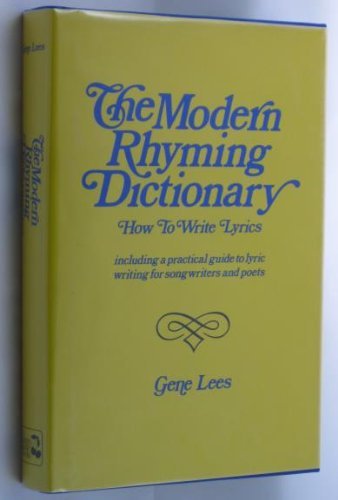
- Combines rhyming reference with lyric guidance
- Includes chapters on technique and word choice
- 360-page expanded edition
Best For: Writers wanting songwriting instruction alongside rhyme support
Best Pocket Reference – Essential Songwriter's Rhyming Dictionary
For songwriters who want quick access to familiar, usable rhymes, the Essential Songwriter’s Rhyming Dictionary is a compact choice. Its songwriter-focused format includes 15,000 entries and is designed for fast reference while drafting lyrics.
Best For: Contemporary songwriters who prioritize portability and quick rhyme searches.
Pros:
- Specifically geared toward contemporary songwriting
- 15,000 entries provide a broad selection of rhyme options
- Pocket-sized format supports quick reference
Cons:
- Smaller entry count than the larger comprehensive dictionaries in this roundup
- Published in 1996, so it may not reflect newer language or usage
This is a practical pick for keeping beside a notebook or instrument. Choose it when speed and songwriter-oriented word selection matter more than maximum coverage.
Best Lyric-Writing Guide – Writing Better Lyrics
Writing Better Lyrics is a songwriting guide rather than a traditional rhyming dictionary, making it useful for writers who need help developing and refining lyrics. It combines instruction, examples from more than 20 chart-topping songs, and 50 songwriting exercises.
Best For: New and experienced songwriters seeking broader lyric-writing instruction alongside practical exercises.
Pros:
- Includes 50 fun songwriting exercises
- Covers imagery, metaphors, repetition, meter, titles, and co-writing
- Offers examples from more than 20 chart-topping songs
Cons:
- Does not provide the dedicated rhyme-word coverage of a rhyming dictionary
- Its instructional approach may be less useful when you need an immediate rhyme lookup
Consider this book if your main challenge is writing stronger lyrics, not simply finding matching end words. It works well as a companion to dedicated rhyming dictionaries for songwriters.
Best Comprehensive Coverage – The Complete Rhyming Dictionary
With more than 60,000 entries, The Complete Rhyming Dictionary: Including The Poet’s Craft Book is built for writers who want extensive coverage. It includes multiple rhyme types, proper names, slang, scientific words, and a guide to poetry techniques and forms.
Best For: Songwriters and poets who want the widest range of rhyme categories and supporting poetry guidance.
Pros:
- More than 60,000 entries, including over 10,000 new entries
- Includes sight, vowel, consonant, and one-, two-, and three-syllable rhymes
- Adds proper names, slang, scientific words, and a poetry craft guide
Cons:
- Its extensive coverage may be more than casual writers need
- Published in 1992, making it an older reference edition
This is the strongest fit when breadth and rhyme variety are your priorities. Its additional poetry material also makes it more than a simple word list.
Best Modern Sound-Based Search – Merriam-Webster's Rhyming Dictionary
Merriam-Webster’s Rhyming Dictionary offers more than 71,000 rhyming words organized alphabetically by rhyming sound. Pronunciations, multi-word answers, multi-syllable words, and entries for names, brands, and trademarks make it a versatile option for songwriters and lyricists.
Best For: Lyricists who need extensive sound-based results, pronunciations, and multi-syllable options.
Pros:
- Features more than 71,000 rhyming words
- Includes thousands of multi-word and multi-syllable answers
- Provides pronunciations and groups words by rhyming sound
- Includes biographical and geographical names, brands, and trademarks
Cons:
- Its broad reference format may feel less songwriting-specific than a dedicated lyric guide
- Published in 2007, so newer terms may not be represented
Choose this edition when pronunciation and sound-based organization are especially important. It is a well-rounded reference for songs, rap, poetry, jingles, and other word-driven writing.
Best for Songwriting Beginners – Quick & Easy Songwriter’s Rhyming Dictionary
Songwriter's Rhyming Dictionary: Quick, Simple & Easy to Use; Rock, Pop, Folk & Hip Hop
Check Price On AmazonIf you want one of the most practical rhyming dictionaries for songwriters, this compact guide is designed for quick lyric-writing reference. It covers rhyme types and assonance across rock, pop, folk, and hip-hop, with phonetic organization intended to help you find usable options without interrupting your writing flow.
Best For: Budding songwriters and experienced lyricists dealing with writer’s block who want a straightforward, music-focused reference.
Pros:
- Explains end, last-syllable, double, beginning, and first-syllable rhymes.
- Arranged phonetically for quick searching.
- Includes songwriting tips and coverage of several popular musical styles.
- Portable 5-by-7.38-inch format with 384 pages.
Cons:
- Its focus on popular musical styles may be less suited to strictly literary or classical poetry.
- The compact format may provide less room than a larger reference volume.
This is a sensible choice when speed, accessibility, and songwriting-specific guidance matter more than having the broadest general-purpose word reference.
Best All-Purpose Reference – New Oxford Rhyming Dictionary
The New Oxford Rhyming Dictionary is a strong general-purpose option among rhyming dictionaries for songwriters, poets, and other writers. It offers rhymes for more than 45,000 words, with entries grouped by sound and supported by an alphabetical index for easier navigation.
Best For: Songwriters who want a comprehensive, traditional reference that also works for poetry, speeches, cards, and other creative writing.
Pros:
- Includes rhymes for over 45,000 words.
- Covers proper names, place names, and foreign terms used in English.
- Combines sound-based grouping with a complete alphabetical index.
- Provides usage notes, rhyme examples, and an introduction to rhyme and creative writing.
Cons:
- Its broad, literary focus may feel less tailored to specific music genres than a songwriting-only guide.
- At 448 pages and 1.2 inches thick, it is less compact than a pocket-style reference.
Choose this edition if you value coverage and clear organization, especially when your writing moves between lyrics, poetry, and other forms of wordplay.
Best for Unconventional Lyrics – Surprising Rhyming
For writers who find perfect rhymes predictable, Surprising Rhyming takes a more adventurous approach. This 624-page brainstorming tool presents over 150,000 rhyming solutions across roughly 1,400 rhyme sounds, emphasizing false, half-, and near-rhymes for more unexpected lyric choices.
Best For: Pop, rock, country, folk, hip-hop, and poetry writers who want to avoid clichés and experiment with less obvious rhyme relationships.
Pros:
- Provides over 150,000 solutions for approximately 1,400 rhyme sounds.
- Emphasizes alternative, near-, half-, and false rhymes rather than only perfect matches.
- Includes examples inspired by unconventional rhymes used by influential songwriters and lyricists.
- Supports a broad range of music genres as well as poetry.
Cons:
- Its unconventional suggestions may be less useful when you need only strict perfect rhymes.
- At 624 pages, it is a substantial desk reference rather than a lightweight portable guide.
- The broad number of options may require more judgment during editing.
This is the standout pick for breaking predictable patterns: it is less about finding the obvious match and more about discovering a rhyme that gives a lyric a fresh turn.
Classic Sound-Based Choice – Webster's Rhyming Dictionary
For writers seeking rhyming dictionaries for songwriters, Webster’s Rhyming Dictionary offers a straightforward reference organized by rhyming sounds. Its broad word coverage and inclusion of multi-syllable and multi-word rhymes make it useful when developing lyrics, poetry, slogans, or jingles.
Best For: Songwriters and lyricists who want an easy-to-use, alphabetically arranged print reference.
Pros:
- Includes over 40,000 words arranged by rhyming sounds.
- Covers multi-syllable and multi-word rhymes.
- Uses an easy-to-use alphabetical format.
- Suitable for lyrics, poetry, slogans, ad copy, and jingles.
Cons:
- Its 224-page format may offer less discussion of lyric-writing technique than a dedicated guide.
- The listed reading and grade levels may make it feel more introductory for advanced professional writers.
This is a practical, compact choice for quickly exploring sound-based word relationships, especially when you value breadth and simple navigation over extended writing instruction.
Dedicated Songwriting Reference – Songwriters Rhyming Dictionary
Among rhyming dictionaries for songwriters, this title is the most directly focused by name and intended audience. Its 286-page format provides a dedicated print resource for lyricists who prefer a traditional book while drafting and revising songs.
Best For: Songwriters looking for a purpose-specific rhyming dictionary in a substantial print edition.
Pros:
- Designed specifically for songwriters.
- Provides a 286-page reference.
- Compact enough at 5.5 by 8.25 inches for a songwriting workspace or bag.
Cons:
- The supplied notes do not detail its word count, organization, or special rhyme features.
- Published in 1974, so its vocabulary and presentation may feel dated.
Choose this edition when a songwriting-specific title matters most. Because the available description is brief, shoppers who need confirmed features such as multisyllabic rhymes or alphabetical organization may prefer a more fully documented option.
Best Simple Pick – The Modern Rhyming Dictionary
For buyers comparing rhyming dictionaries for songwriters, The Modern Rhyming Dictionary stands out by combining a rhyming reference with practical lyric-writing instruction. Its expanded edition addresses lyric techniques, word choice, and standards, making it useful for writers who want guidance alongside rhyme help.
Best For: Beginners, songwriters, poets, and teachers who want a deeper guide to writing lyrics.
Pros:
- Includes a practical guide to lyric writing.
- Offers chapters on lyric techniques and choosing words.
- Includes a foreword by songwriters Alan and Marilyn Bergman.
- Provides 360 pages of material for study and reference.
Cons:
- Its 1981 publication date means examples and commentary may reflect an older songwriting era.
- At 1.69 pounds, it is less lightweight than the smaller reference books listed here.
- The supplied notes do not specify a word count or exact rhyme-listing format.
This is the strongest fit for shoppers who want more than a lookup tool. It provides substantial instruction on lyric craft, though writers seeking a modern vocabulary-focused reference may want to consider its age.
How We Picked the Best Rhyming Dictionaries for Songwriters
We focused on usefulness during the actual writing process: how quickly you can find a rhyme, how broad and creative the word coverage is, and whether the book supports more than simple end-rhyme searches. We also considered organization, portability, clarity, and the value of added lyric-writing guidance.
The selection includes traditional alphabetical references, modern alternatives designed to encourage unexpected rhymes, and hybrid books that explain poetic craft or songwriting technique. Because writers work differently, no single title is ideal for every project.
Quick Comparison
| Best For | Look For |
|---|---|
| Fast everyday reference | Clear alphabetical organization and compact formatting |
| Expanding rhyme choices | Near rhymes, multisyllabic options, and less-obvious matches |
| Learning lyric craft | Exercises, explanations, and guidance on meter or song structure |
| Broad genre use | Current vocabulary and coverage suited to pop, rock, folk, or hip-hop |
| Desk-based writing | Comprehensive coverage, even if the book is larger or heavier |
Key Buying Factors
Organization and Search Speed
A useful reference should let you locate options quickly without interrupting your creative flow. Alphabetical listings are familiar, while more specialized layouts may group sounds or provide additional rhyme categories. Check sample pages or the description if fast lookup is a priority.
Perfect Rhymes, Near Rhymes, and Sound Variety
Perfect rhymes are only one tool. Near rhymes, slant rhymes, compound rhymes, and multisyllabic matches can make lyrics feel less predictable. Choose a comprehensive reference if you often get stuck with obvious pairs; choose a focused book if you mainly need quick end-word suggestions.
Songwriting Guidance
Some Rhyming Dictionaries for Songwriters are primarily word lists, while others include advice on meter, phrasing, imagery, and revision. A guide-heavy title may be more valuable for beginners, but experienced writers may prefer a concise reference that keeps the focus on word discovery.
Portability and Format
A compact paperback works well for rehearsals, travel, and writing away from your desk. Larger editions can offer more words and easier-to-read pages but are better suited to a home studio or writing space. Consider whether you prefer a physical reference you can annotate and browse or a digital tool with search functionality.
Who Should Buy Which Rhyming Dictionaries for Songwriters?
Beginners should favor a title that combines rhyme lookup with practical lyric-writing instruction. Experienced songwriters may prefer a broad, traditional dictionary or an alternative reference built around surprising rhymes. Genre-focused writers should look for vocabulary and examples that fit their style, particularly if they write rock, pop, folk, or hip-hop. Poets and lyricists who revise heavily will benefit from extensive coverage of near rhymes and poetic craft.
Before buying, decide whether your main goal is speed, originality, or instruction. The best choice is the book that supports your most common writing bottleneck without adding unnecessary complexity.