The best bird field guide books make identification faster, clearer, and more reliable in the field. The right choice depends on where you bird, how much detail you need, and whether portability or coverage matters most.
We compared 10 trusted North American guides, including regional Peterson, Sibley, Audubon, and National Geographic editions, to help beginners and experienced birders choose confidently.
Best 10 Bird Field Guide Books Picks for 2026
Best Comprehensive Illustrated Guide
The Sibley Guide to Birds, 2nd Edition

- Nearly 7,000 digitally remastered paintings
- Expanded habitat and voice information
- More than 700 updated range maps
Best For: Detailed North American bird identification and reference use
Best Photo Reference
National Audubon Society Birds of North America

- Covers more than 800 species
- Includes over 3,500 full-color photographs
- Adds conservation and climate-impact information
Best For: Photo-based identification and comprehensive home reference
Best All-Around Field Guide
National Geographic Birds of the U.S. and Canada

- Covers 1,155 species across North America
- Uses eBird-powered range maps
- Includes thumb tabs and a visual index
Best For: Portable, broad coverage for new and experienced birders
Best for Eastern and Central Regions
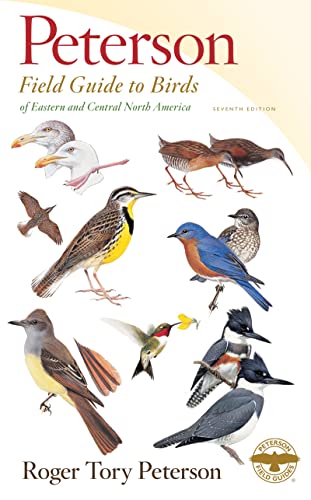
- Uses the classic Peterson Identification System
- Updated range maps and migration information
- Compact 392-page regional format
Best For: Birding in Eastern and Central North America
Top Eastern Region Pick
National Geographic East 2nd Edition

- Covers 800+ eastern species
- Annotated art and data-driven maps
- Portable thumb-tabbed paperback
Best For: Birders east of the Rockies, from beginners to life-listers
Top Western Region Pick

- Covers 715 western species
- Includes 5,046+ accurate illustrations
- Revised maps and comparison-friendly layout
Best For: Western birders seeking detailed visual identification
Photo-Based Eastern Guide

- Uses hundreds of full-color photographs
- Covers eastern bird characteristics and habitats
- Includes ranges and identification tips
Best For: Eastern birders who prefer photo-based reference material
Comprehensive North American Pick
Peterson Birds of North America

- Updated text and range maps
- Peterson identification system
- 25 new Hawaiian bird plates
Best For: Birders wanting an extensive North American reference
Western Region Update
National Geographic Birds West

- Nearly 1,000 western species
- eBird-based range maps
- Thumb tabs and visual index
Best For: Birders exploring the western U.S. and Canada
Classic Western Coverage
Peterson Birds of Western North America

- Fifth-edition regional guide
- Updated art, text, and range maps
- 25 new Hawaiian bird plates
Best For: Western birders who favor Peterson’s identification system
Best Comprehensive Illustrated Guide – The Sibley Guide to Birds, 2nd Edition
For birders seeking one of the most detailed bird field guide books for North America, The Sibley Guide to Birds, 2nd Edition combines nearly 7,000 digitally remastered paintings with expanded identification information, habitat notes, voice descriptions, and updated range maps.
Best For: Dedicated beginners, experienced birders, and anyone who wants extensive painted coverage in a substantial reference volume.
Pros:
- Illustrations are reproduced 15 to 20 percent larger for easier viewing.
- Includes more than 600 new paintings and over 700 updated range maps.
- Expanded species accounts add habitat, voice, and field-finding information.
Cons:
- At 3 pounds and 624 pages, it is less convenient for lightweight field trips.
- Its comprehensive scope may be more than casual backyard birders need.
This is a strong choice when visual detail and depth matter more than portability. The flexibound format adds some flexibility, but its size makes it especially useful as a home or car-based reference.
Best Photo Reference – National Audubon Society Birds of North America
National Audubon Society Birds of North America (National Audubon Society Complete Guides)
Check Price On AmazonNational Audubon Society Birds of North America is a large, authoritative option among bird field guide books, covering more than 800 species with over 3,500 full-color photographs, range maps, identification details, and conservation information.
Best For: Birders who prefer photographs, broad species coverage, and a detailed reference for home, library, or backyard use.
Pros:
- Features more than 3,500 photographs, often showing several views of each species.
- Includes information on voice, nesting, habitat, similar species, and physical descriptions.
- Adds conservation-status information and range maps reflecting climate-change impacts.
Cons:
- At 912 pages and 4 pounds, it is not especially portable.
- Its reference-oriented format may be slower to handle during active field walks.
This guide favors breadth and photographic realism over compactness. The ribbon marker, glossary, index, and taxonomic organization make it a useful long-term reference for serious birders.
Best All-Around Field Guide – National Geographic Birds of the U.S. and Canada
National Geographic Field Guide to the Birds of the United States and Canada, 8th edition
Check Price On AmazonThe 8th edition of the National Geographic Field Guide to the Birds of the United States and Canada is a practical choice among bird field guide books, with coverage of 1,155 species, updated taxonomy, eBird-based maps, annotated art, and a field-friendly flexible binding.
Best For: New and experienced birders who want broad regional coverage in a portable guide with quick-reference features.
Pros:
- Covers the continental United States, Canada, Alaska, and Hawaii.
- Includes 240 new illustrations, updated text, and maps developed with eBird data.
- Flexible paperback binding, thumb tabs, and a visual index support quick use outdoors.
Cons:
- The 592-page guide may still feel substantial for ultralight day trips.
- Its extensive coverage can be more than needed for a narrowly regional birder.
With matching art and text layouts, annotated field marks, and updated distribution data, this is a balanced option for both backyard observation and travel across North America.
Best for Eastern and Central Regions – Peterson Field Guide to Birds
For birders focused on Eastern and Central North America, the seventh-edition Peterson Field Guide to Birds is one of the most regionally practical bird field guide books, pairing the classic Peterson Identification System with revised text, updated maps, and familiar illustrations.
Best For: Backyard birders and field observers in Eastern and Central North America who want a focused, lighter regional guide.
Pros:
- The Peterson Identification System emphasizes key markings for fast recognition.
- Updated range maps cover distribution and migration routes.
- At 392 pages and 1.26 pounds, it is relatively manageable to carry.
Cons:
- Its regional coverage is not designed for the entire continent.
- It may be less suitable for birders traveling outside the Eastern and Central region.
This guide is a sensible match for regional birding rather than all-North-America coverage. Its compact size and emphasis on key field marks make it especially useful for routine walks and backyard identification.
Top Eastern Region Pick – National Geographic East 2nd Edition
National Geographic Field Guide to the Birds of the United States and Canada―East, 2nd Edition
Check Price On AmazonIf you need bird field guide books for the eastern United States and Canada, this updated National Geographic edition offers broad species coverage in a compact paperback. It combines annotated illustrations, explanatory text, thumb tabs, a visual index, and data-derived range maps for practical identification in the field.
Best For: Beginners and experienced birders covering areas east of the Rockies.
Pros:
- Covers more than 800 species, including common and rarer birds.
- Uses matching text and annotated artwork for efficient identification.
- Includes updated maps based on Cornell Lab of Ornithology eBird data.
- Portable paperback format includes thumb tabs and a visual index.
Cons:
- Its geographic coverage does not extend west of the Rockies.
- At 448 pages and 1.31 pounds, it may feel substantial for some day trips.
This is a strong all-around choice for eastern birders who want current taxonomy, extensive coverage, and a field-friendly layout in one guide.
Top Western Region Pick – Sibley Birds West
Among bird field guide books for western North America, Sibley Birds West stands out for its detailed illustrations and extensive species accounts. The compact guide covers birds west of the Rockies with updated maps, identification notes, behavior information, and multiple regional forms.
Best For: Western birders who prioritize detailed visual comparisons and comprehensive regional information.
Pros:
- Covers 715 species and includes more than 5,046 illustrations.
- Captions highlight important field marks for identification.
- Provides updated habitat, behavior, voice, food, and nesting information.
- Includes more than 652 revised maps and current taxonomic ordering.
Cons:
- Its coverage is limited to regions west of the Rocky Mountains.
- At 504 pages and 1.45 pounds, it is heavier than some compact guides.
The revised layout and unusually rich artwork make this a particularly useful reference when subtle plumage differences or regional populations matter.
Photo-Based Eastern Guide – Audubon Eastern Region
National Audubon Society Field Guide to North American Birds: Eastern Region, Revised Edition
Check Price On AmazonFor shoppers comparing bird field guide books with photographic coverage, the National Audubon Society guide offers full-color images alongside information on eastern North American birds. Its entries address species characteristics, habitats, ranges, and identification tips in a substantial revised volume.
Best For: Birders who prefer full-color photographs and broad eastern-region reference coverage.
Pros:
- Features hundreds of newly added full-color photographs.
- Includes species information, habitat and range details, and identification tips.
- Provides a large 800-page reference in a compact 7.75-inch format.
Cons:
- The supplied edition was published in 1994, making it older than the other listed guides.
- Photographic pages may make the 800-page book less streamlined for quick field use.
This guide is worth considering if photographic identification is your priority, but shoppers seeking the newest maps or taxonomy may prefer a more recently published option.
Comprehensive North American Pick – Peterson Birds of North America
For birders seeking broad coverage, this Peterson edition is a substantial choice among bird field guide books. It combines the Peterson Identification System with updated text, range maps, and a dedicated section featuring 25 new plates of Hawaiian birds.
Best For: Beginners through experienced birders who want one comprehensive North American reference.
Pros:
- Covers North American birds with updated text and range maps.
- Uses Peterson’s identification system to emphasize key differences between similar species.
- Adds 25 all-new plates covering Hawaiian birds.
- Includes 1,185 pages of detailed reference material.
Cons:
- Its 1,185-page length may be less convenient for lightweight field use.
- The supplied edition is an English-language digital edition, not a compact physical guide.
This is the strongest all-around option here for readers who prioritize expansive coverage and a long-established identification method over portability.
Western Region Update – National Geographic Birds West
National Geographic Field Guide to the Birds of the United States and Canada―West, 2nd Edition
Check Price On AmazonBirders in the Rockies and farther west should consider this regional option among bird field guide books. The second edition covers nearly 1,000 species in the western United States and Canada, including Hawaii, with updated art, text, taxonomy, and eBird-based maps.
Best For: Western North American birders who want a current, portable paperback guide.
Pros:
- Covers nearly 1,000 species, including common and rarer sightings.
- Uses updated maps based on Cornell Lab of Ornithology’s eBird data.
- Pairs explanatory text with matching annotated illustrations.
- Includes thumb tabs and a visual index for easier navigation.
Cons:
- Its coverage is regional rather than a guide to all of North America.
- The guide does not provide the same page count as the much longer comprehensive Peterson edition.
With a 496-page paperback format and region-specific information, this is a practical pick for western birders who value quick access and updated distribution data.
Classic Western Coverage – Peterson Birds of Western North America
This fifth-edition Peterson guide is a focused choice among bird field guide books for the western United States and Canada. It updates the text, range maps, and artwork while adding 25 new plates for Hawaiian species.
Best For: Western birders who prefer Peterson’s illustration style and identification approach.
Pros:
- Provides focused coverage of Western North America.
- Includes updated text and range maps.
- Features artwork updated to reflect current ornithological knowledge.
- Adds 25 all-new plates covering Hawaii’s birds.
Cons:
- It does not offer full North American coverage in this regional edition.
- At 1.5 pounds, it may be heavier than some field companions.
This guide suits readers who want the trusted Peterson format with western regional focus, refreshed content, and expanded Hawaiian coverage.
How We Picked These Bird Field Guide Books
We focused on established guides with strong reputations for accurate identification, useful illustrations or photographs, readable species accounts, and practical range information. The selection includes broad North American references as well as eastern and western regional editions, so shoppers can match coverage to their usual birding locations.
We also considered field usability. A guide may be excellent at home but less helpful outdoors if it is too large, difficult to navigate, or overly detailed for a beginner. Edition updates, range maps, image quality, organization, and the balance between depth and portability all influenced the comparison.
Quick Comparison
- Best comprehensive reference: The Sibley Guide to Birds, 2nd Edition
- Best for photography: National Audubon Society Birds of North America
- Best for broad visual coverage: National Geographic Field Guide to the Birds of the United States and Canada
- Best eastern regional option: Peterson Field Guide to Birds of Eastern & Central North America
- Best western regional option: Peterson Field Guide to Birds of Western North America
- Best compact regional alternatives: National Geographic East, National Geographic West, Audubon Eastern, and Sibley Birds West
Key Buying Factors for Bird Field Guide Books
Coverage Area
Choose a national guide if you travel widely or want one reference for varied trips. Regional guides usually reduce visual clutter and make local species easier to compare. Eastern and western editions are especially useful for regular birding in one part of North America.
Illustrations, Photos, and Identification Detail
Illustrated guides often emphasize field marks, plumage variation, and side-by-side comparisons. Photographic guides can provide a more realistic sense of appearance but may show fewer diagnostic poses or seasonal variations. Consider which format helps you recognize birds most quickly.
Size and Portability
For hikes and daily outings, check the book’s dimensions and weight before buying. A larger reference can offer more detailed maps and species information, while a smaller guide is easier to carry and consult at a trailhead or backyard feeder.
Edition and Range Maps
Recent editions may improve taxonomy, distribution data, images, and range maps. If you already own an older guide, compare the stated updates to decide whether a replacement adds meaningful value.
Who Should Buy Which Bird Field Guide Books?
Beginners should prioritize clear organization, strong visual comparisons, and manageable coverage. A regional National Geographic, Audubon, or Peterson guide can be less intimidating than an expansive reference.
Frequent travelers will benefit from a comprehensive Sibley, Audubon, or National Geographic guide that covers birds across the United States and Canada. These are practical choices when your birding locations change often.
Eastern birders should consider an eastern or eastern-and-central edition for more focused coverage. Western birders can similarly save space and improve local relevance with a western guide, including options that cover Hawaii where specified.
Serious observers and students may prefer the most detailed guide they are willing to carry. Look for extensive species accounts, plumage information, vocalization notes, and precise range maps rather than choosing solely by price.