The best field guide books turn an outdoor walk into a more rewarding learning experience. Whether you are identifying birds, wildflowers, mushrooms, minerals, or constellations, the right reference should be accurate, portable, and easy to use in the field.
We selected 10 trusted guides covering major areas of nature study, with options for beginners, dedicated observers, and experienced naturalists. Use the guide below to match each book to your interests and buying priorities.
Best 10 Field Guide Books Picks for 2026
Best Medicinal Plant Reference
Peterson Medicinal Plants & Herbs

- Covers 530+ medicinal plants
- 700+ images with color organization
- Includes uses and safety warnings
Best For: Eastern and central North American plant study
Best Night-Sky Guide

- Covers both Northern and Southern hemispheres
- 700+ photos plus sky charts
- Durable vinyl binding
Best For: Broad, visual stargazing reference
Best Mushroom Identification Guide
Peterson Mushrooms of North America

- Beginner-friendly visual identification
- Covers edible and poisonous species
- Portable 416-page second edition
Best For: Learning cautious North American mushroom identification
Best Waterproof Rock Guide
U.S. Rocks and Minerals Field Guide

- Covers 120+ U.S. specimens
- 300+ raw and cleaned specimen photos
- Waterproof, spiral-bound field design
Best For: Beginner rockhounding on trails, beaches, and road trips
Classic Birding Pick
Peterson Birds of Eastern & Central North America
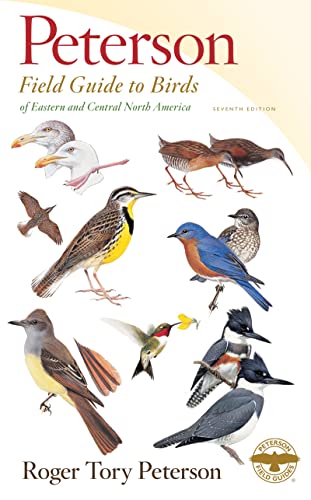
- Signature identification system
- Updated range and migration maps
- Revised text and artwork
Best For: Regional birders of all experience levels
Freshwater Specialist
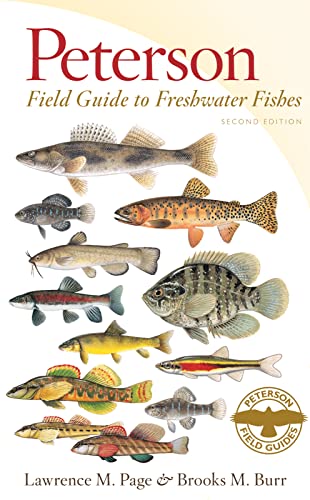
- Nearly 1,000 species covered
- Detailed habitat and location maps
- Revised fish identification plates
Best For: Fish identification across North America
Insect Photo Guide
Kaufman Insects of North America

- More than 2,350 photographs
- Accessible ecological approach
- Covers major insect groups
Best For: Beginning and general-interest insect observers
Best Geology Reference
Rocks and Minerals Field Guide

- 385 color photographs
- Covers hundreds of minerals
- Compact field-friendly format
Best For: Rockhounds, geology students, and mineral identifiers
Best Comprehensive Mammal Guide
North American Mammals Field Guide
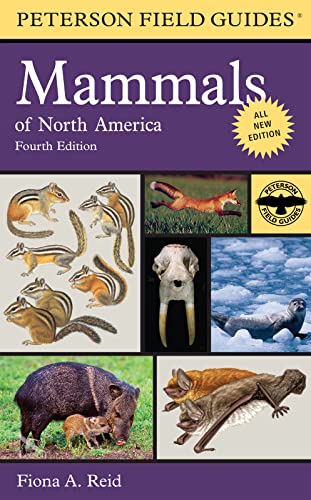
- Covers mammals north of Mexico
- Nearly 400 range maps
- Includes plates, photos, and skull images
Best For: Wildlife watchers and North American naturalists
Best Updated Herpetology Guide
Eastern and Central Reptiles Field Guide

- Adds 122 recognized or non-native species
- 322 color distribution maps
- Detailed reptile and amphibian accounts
Best For: Herpetologists, naturalists, and regional wildlife observers
Best Medicinal Plant Reference – Peterson Medicinal Plants & Herbs
For readers comparing field guide books for plant study, this Peterson guide offers detailed coverage of more than 530 medicinal plants found in eastern and central North America. Its color organization system, extensive images, and concise entries make it a practical reference for identification, habitats, uses, and warnings.
Best For: Naturalists, hikers, and readers researching medicinal plants in eastern and central North America.
Pros:
- Covers more than 530 native and introduced medicinal plants.
- Includes over 700 images and a color-based organization system.
- Provides practical information on traits, habitats, uses, and warnings.
Cons:
- Its geographic focus does not cover all of North America.
- At 480 pages, it may be more reference-oriented than lightweight.
This is a strong choice when medicinal plant identification is the priority. Because the subject involves potential health risks, use the included warnings and treat the book as an identification reference rather than a substitute for professional medical advice.
Best Night-Sky Guide – Field Guide to the Night Sky
Among field guide books for stargazing, this compact National Audubon guide combines sky charts, constellation charts, photographs, and explanatory text. It ranges from planets and stars to galaxies, comets, and astronomical phenomena, making it useful at home or in a day pack.
Best For: Beginning and experienced stargazers who want a broad visual reference for the night sky.
Pros:
- Covers planets, constellations in both hemispheres, stars, galaxies, and more.
- Includes over 700 full-color photographs and sky charts.
- Durable vinyl binding suits repeated reference use.
Cons:
- Published in 1991, so some astronomy information may be dated.
- Its broad coverage may be less convenient than a guide focused on one region.
This guide is a useful all-around companion for exploring the sky, especially for readers who value visual material and extensive coverage. Its older publication date is worth considering if you need current astronomical data or modern observing technology guidance.
Best Mushroom Identification Guide – Peterson Mushrooms of North America
For mushroom hunters choosing field guide books, this second-edition Peterson guide focuses on recognizable features rather than microscopes or heavy technical vocabulary. It covers common edible and poisonous species across North America in a portable format, with expanded illustrations and practical identification guidance.
Best For: Beginners, naturalists, and foragers learning to distinguish North American mushrooms.
Pros:
- Uses a beginner-friendly identification method based on visible features.
- Covers edible and poisonous mushrooms, including morels, boletes, truffles, and puffballs.
- Portable size fits easily in a backpack.
- Adds hundreds of illustrations to the original watercolor artwork.
Cons:
- It cannot cover every mushroom species found across North America.
- Identification still requires care because some mushrooms can be deadly.
This is a well-rounded pick for building mushroom-identification skills in the field. Its safety-focused coverage is valuable, but no guide should replace expert confirmation before eating a wild mushroom.
Best Waterproof Rock Guide – U.S. Rocks and Minerals Field Guide
For families and beginners comparing field guide books for rock collecting, this guide emphasizes quick visual matching. It covers more than 120 rocks, crystals, minerals, and gemstones with over 300 photos, while waterproof laminated pages and a spiral binding make it especially suited to trails, beaches, and wet conditions.
Best For: Beginner rockhounds, families, and anyone who wants a durable guide for outdoor identification.
Pros:
- Shows specimens raw and cleaned for easier visual comparison.
- Uses plain-English explanations without requiring a geology background.
- Waterproof laminated pages and a lay-flat metal spiral binding suit field use.
- Compact design fits a daypack or glovebox.
Cons:
- Its 44-page format provides less depth than larger geology references.
- The coverage is limited to more than 120 selected specimens.
This is the most rugged and accessible option in the group for casual outdoor discovery. Choose it for portability, family activities, and quick identification rather than an in-depth geological textbook.
Classic Birding Pick – Peterson Birds of Eastern & Central North America
For birders comparing field guide books, this seventh-edition Peterson guide is a dependable choice for identifying birds across Eastern and Central North America. Its signature identification system, updated range maps, revised text, and refreshed artwork make it useful both at home and outdoors.
Best For: Backyard bird watchers, traveling birders, and experienced ornithologists who want a regional bird identification reference.
Pros:
- Uses Peterson’s well-known identification system focused on key markings.
- Includes updated distribution and migration range maps.
- Revised text and artwork reflect current ornithological knowledge.
- Compact 392-page format is practical for field use.
Cons:
- Its coverage is limited to Eastern and Central North America rather than the entire continent.
- At 1.26 pounds, it may feel substantial for lightweight day trips.
This is a strong all-around birding reference when clear visual identification and current regional range information matter most.
Freshwater Specialist – Peterson Freshwater Fishes
Peterson Field Guide to Freshwater Fishes, Second Edition (Peterson Field Guides)
Check Price On AmazonAmong field guide books for aquatic naturalists, this second-edition Peterson guide stands out for its extensive freshwater fish coverage. It adds newly recognized and nonnative species, updated maps, and revised illustrated plates designed to clarify subtle differences in coloration and shape.
Best For: Anglers, fisheries students, and naturalists identifying freshwater fish in North America.
Pros:
- Covers nearly 1,000 North American freshwater fish species.
- Adds new species, including marine invaders and established nonnative fish.
- Features detailed location maps for finding species in varied habitats.
- Illustrated plates help distinguish fish with minor visual differences.
Cons:
- The 688-page length makes it less convenient for minimalist field kits.
- Published in 2011, so some information may not reflect later developments.
Choose this guide when breadth and detailed species comparison are more important than carrying the lightest possible reference.
Insect Photo Guide – Kaufman Insects of North America
For readers seeking accessible field guide books about insects, the Kaufman Field Guide combines broad coverage with more than 2,350 digitally enhanced photographs. Its ecological approach and approachable language make insect identification and natural-history exploration less intimidating for beginners and useful for experienced observers.
Best For: Families, beginning naturalists, gardeners, and anyone curious about observable insect behavior across North America north of Mexico.
Pros:
- Includes photographs representing every major insect group in the region.
- Uses accessible language instead of heavily technical terminology.
- Discusses observable behaviors and fascinating life histories.
- Compact 392-page format balances broad coverage with portability.
Cons:
- It is a first edition published in 2007.
- Photographic identification may be less effective for insects distinguished by minute details.
This is an inviting choice for general insect discovery, especially if you value engaging explanations and photographic breadth over a narrowly technical treatment.
Best Geology Reference – Rocks and Minerals Field Guide
For readers comparing field guide books for geology, A Field Guide to Rocks and Minerals offers a compact reference focused on identification and mineral details. Its 385 color photographs and coverage of hundreds of minerals make it useful for examining specimens, rocks, and geologic formations in the field or at home.
Best For: Rockhounds, geology students, and outdoor enthusiasts identifying rocks and minerals.
Pros:
- Includes 385 color photographs of rocks, minerals, and geologic formations.
- Covers hundreds of minerals with physical properties, chemical composition, and crystalline structures.
- Provides geographic distribution and formation information.
- Compact 4.5-by-7.25-inch format is practical for field use.
Cons:
- Published in 1998, so it is not a recent edition.
- Its specialist focus may be less useful for readers seeking a general nature guide.
This is a strong choice when mineral identification and technical reference information matter most. The extensive visual coverage and portable format make it a practical companion for collecting trips, though buyers seeking the newest research may prefer a more recently published guide.
Best Comprehensive Mammal Guide – North American Mammals Field Guide
Among field guide books for wildlife identification, this Peterson guide stands out for its broad coverage of mammals across North America north of Mexico. It combines paintings, photographs, skull images, range maps, and identification-focused text in a substantial but portable reference.
Best For: Naturalists, wildlife watchers, students, and anyone identifying North American mammals.
Pros:
- Covers mammals found across North America north of Mexico, including near-shore species.
- Uses Peterson’s visual identification system to highlight distinguishing features.
- Includes 80 color plates, more than 100 color photographs, and 46 additional color illustrations.
- Provides nearly 400 range maps plus photographs of mammal skulls.
Cons:
- At 608 pages and 1.45 pounds, it is less lightweight than a minimal pocket guide.
- Published in 2006, so some information may not reflect the latest research.
This is a detailed, image-rich selection for buyers who want comprehensive mammal coverage rather than a narrowly focused checklist. Its range maps and identification illustrations are especially useful for field observations, while the larger page count adds depth at the expense of some portability.
Best Updated Herpetology Guide – Eastern and Central Reptiles Field Guide
For field guide books focused on herpetology, this updated Peterson guide provides detailed identification coverage for reptiles and amphibians in eastern and central North America. It combines species accounts, color visuals, and 322 distribution maps to help readers compare characteristics, ranges, habitats, and similar species.
Best For: Amateur and professional herpetologists, naturalists, outdoor enthusiasts, and students.
Pros:
- Includes 122 newly recognized or recently established non-native species.
- Features more than 100 color photographs and detailed identification illustrations.
- Provides 322 full-color distribution maps.
- Species accounts cover key characteristics, similar species, habitats, voices, and conservation status.
Cons:
- Its regional scope does not cover all of North America.
- At 512 pages and 1.4 pounds, it may be more substantial than a lightweight trail guide.
- Its specialized content may be more detailed than casual users need.
This is a particularly useful option for readers who want current, structured reptile and amphibian identification information for the eastern and central regions. The updated species coverage, photographs, and maps provide strong field support for both serious learners and experienced observers.
How We Picked These Field Guide Books
We focused on established identification guides with broad regional or continental coverage, clear illustrations or photographs, useful range information, and practical organization. The selection spans birds, mammals, plants, mushrooms, insects, fish, reptiles, amphibians, rocks, minerals, and the night sky, so readers can choose a specialized reference rather than rely on a single general-purpose book.
We also considered field usability. A good guide should be portable enough for a backpack, structured for quick comparisons, and detailed enough to help distinguish similar species or specimens. Updated editions receive special consideration when they add revised taxonomy, range maps, or improved identification information.
Quick Comparison
- Best for birdwatching: Peterson Field Guide to Birds of Eastern and Central North America
- Best for mammals: Peterson Field Guide to Mammals of North America
- Best for plants: Peterson Field Guide to Medicinal Plants and Herbs
- Best for mushrooms: Peterson Field Guide to Mushrooms of North America
- Best for insects: Kaufman Field Guide to Insects of North America
- Best for geology: A Field Guide to Rocks and Minerals or Rocks and Minerals of the United States
- Best for freshwater species: Peterson Field Guide to Freshwater Fishes
- Best for herpetology: Peterson Field Guide to Reptiles and Amphibians
- Best for astronomy: Field Guide to the Night Sky
Key Buying Factors for Field Guide Books
Coverage and Location
Choose a guide that matches where you will use it. Regional books can provide more precise range maps and local species coverage, while North America-wide references offer broader usefulness for travel.
Identification Format
Look for sharp illustrations, distinguishing features, comparison notes, and reliable visual keys. For birds and mammals, range maps and seasonal information are especially helpful. For rocks, plants, and mushrooms, habitat and physical characteristics can be equally important.
Portability and Durability
Check the book’s size, weight, binding, and resistance to wear. A compact paperback is convenient on a hike, while a larger reference may be preferable for detailed study at home.
Safety and Responsible Use
Identification guides should support observation, not careless collection or consumption. Mushroom and medicinal-plant references are valuable learning tools, but no book replaces expert confirmation or current safety guidance.
Who Should Buy Which Field Guide Books?
Birders should prioritize the bird guide with updated range maps, while families and beginners may prefer a subject with clear visual comparisons and simple organization. Hikers interested in broad natural history can pair a mammals or birds guide with a rocks, plants, or insects reference. Foraging learners should choose specialized mushroom or medicinal-plant coverage and use it conservatively. Stargazers need a night-sky guide designed around seasonal visibility and easy sky navigation.
Ultimately, the best field guide is the one you will carry and consult regularly. Start with your main interest, confirm that the geographic coverage fits your area, and then choose the clearest, most portable edition within your budget.