The right workbook can turn a vague idea into a regular writing habit. These creative writing workbooks with exercises cover fiction, poetry, screenwriting, journaling, setting, prompts, and everyday craft practice.
Whether you are overcoming writer’s block or building a more disciplined routine, this roundup compares workbooks by exercise style, structure, and the kind of writer they suit best.
Best 10 Creative Writing Workbooks with Exercises Picks for 2026
Best All-Round Coursebook
The Creative Writing Coursebook

- Three-stage path from ideas to finished work
- Advice and exercises from 40 authors
- Covers fiction, poetry, and writing groups
Best For: Writers wanting comprehensive guidance from first notes to polished work
Best Prompt Journal
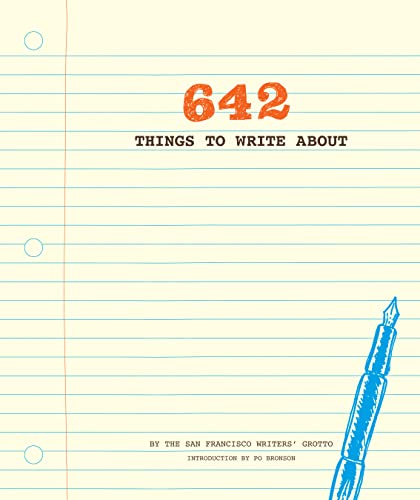
- Contains 642 imaginative writing prompts
- Includes space to write responses
- Designed to combat creative block
Best For: Writers seeking playful, low-pressure inspiration
Best for Fiction Experimentation

- Includes more than 200 fiction exercises
- Encourages experimental approaches
- Addresses ideas, revision, and writer's block
Best For: Fiction writers ready to challenge established habits
Best Step-by-Step Guide
Creative Writing Exercises For Dummies

- Covers writing from idea to manuscript
- Includes prompts and visual planning tools
- Addresses fiction and creative nonfiction
Best For: Writers wanting structured craft and editing guidance
Fiction Craft Deep Dive
What If? Writing Exercises for Fiction Writers

- More than 75 fiction exercises
- Covers dialogue, structure, and language
- Suitable for beginners and experienced writers
Best For: Focused fiction-writing practice
Genre-Spanning Practice
101 Creative Writing Exercises

- Includes 101 writing exercises
- Covers fiction, poetry, and nonfiction
- Also explores memoir, articles, and blogs
Best For: Writers exploring multiple genres
Daily Writing Momentum
A Writer's Workbook: Daily Exercises

- Exercises for warm-ups and idea generation
- Includes revision-focused activities
- Uses humor to address writing blocks
Best For: Building a consistent writing practice
Best for Craft-Shaking Practice

- Over 50 themed writing exercises
- Covers character, structure, stakes, and technique
- Includes guidance on the writer’s mindset
Best For: Screenwriters, playwrights, and fiction writers needing fresh creative practice
Best for Place-Based Inspiration

- Centers exercises on setting and environment
- Adaptable across fiction, poetry, memoir, and travel writing
- Uses ideas from art, geography, mythology, and psychology
Best For: Writers developing vivid, location-driven creative material
Best for Beating the Blank Page

- Short prompts designed to break writer’s block
- Two lined pages provided for each prompt
- Large format supports handwritten warm-ups
Best For: Beginners and writers who need quick, low-pressure practice
Best All-Round Coursebook – The Creative Writing Coursebook
The Creative Writing Coursebook: 40 Authors Share Advice and Exercises for Fiction and Poetry
Check Price On AmazonFor writers comparing creative writing workbooks with exercises, The Creative Writing Coursebook offers a broad, structured program covering fiction and poetry. Its three-stage approach moves from gathering ideas and observations to shaping drafts and finishing work.
Best For: Beginners, developing writers, and writing groups seeking broad guidance for fiction or poetry.
Pros:
- Organizes practice into Gathering, Shaping, and Finishing stages.
- Includes advice and exercises from 40 authors.
- Covers notes, memory, structure, character, setting, workshops, and publication.
- Suitable for personal writing, publication goals, or group work.
Cons:
- Its wide coverage may feel less specialized than a fiction-only workbook.
- The substantial 416-page format may be more than casual writers need.
This is a strong choice when you want one comprehensive coursebook rather than a collection of isolated prompts. It is especially useful for writers who want support from initial ideas through revision and next steps.
Best Prompt Journal – 642 Things to Write About
642 Things to Write About: (Guided Journal, Creative Writing, Writing Prompt Journal)
Check Price On AmazonAmong creative writing workbooks with exercises, 642 Things to Write About stands out as a playful guided journal built around a large variety of prompts. It provides plenty of space for responding to imaginative, humorous, and reflective scenarios.
Best For: Writers of all levels who want quick inspiration, playful practice, or a way to work through writer’s block.
Pros:
- Includes 642 writing prompts.
- Offers varied exercises, from fictional obituaries to odes and imaginative arguments.
- Encourages regular pen-and-paper practice with dedicated writing space.
- Contributions come from 35 writers at the San Francisco Writers’ Grotto.
Cons:
- Focuses on prompts rather than step-by-step instruction in craft.
- Its playful format may be less suitable for writers seeking detailed revision guidance.
Choose this journal if your main need is a reliable stream of ideas rather than a formal writing course. The range of prompts makes it easy to open the book and start writing without extensive preparation.
Best for Fiction Experimentation – The 3 A.M. Epiphany
For fiction writers browsing creative writing workbooks with exercises, The 3 A.M. Epiphany delivers more than 200 focused activities designed to challenge familiar writing patterns. The exercises address idea generation, experimentation, revision, and common fiction obstacles.
Best For: Fiction writers who want unconventional exercises to expand their range and develop fresher ideas.
Pros:
- Provides more than 200 fiction-writing exercises.
- Targets stale writing habits, anxiety, writer’s block, and revision concerns.
- Encourages combining personal experience with imagination.
- Exercises were refined through 15 years of teaching experience.
Cons:
- Its emphasis is on fiction rather than poetry or creative nonfiction.
- It offers less of a sequential course structure than a step-by-step guide.
This is a practical pick for writers who already write fiction but want to take creative risks. Its exercise-based format makes it easy to select a challenge whenever you need a new direction.
Best Step-by-Step Guide – Creative Writing Exercises For Dummies
Creative Writing Exercises For Dummies is a practical option among creative writing workbooks with exercises, combining step-by-step instruction with prompts, mind maps, flow charts, and diagrams. It covers the process from developing an initial idea to editing and formatting a manuscript.
Best For: New or developing writers who want structured guidance across novels, short stories, and creative nonfiction.
Pros:
- Uses an activity-based course format for different ability levels.
- Covers character development, plot, structure, description, and continuity.
- Includes prompts, visual planning tools, and self-editing guidance.
- Addresses both drafting and polishing a manuscript.
Cons:
- The broad genre coverage may not provide deep specialization in one form.
- Its large, instructional format may feel less casual than a prompt journal.
This guide suits writers who want clear instruction alongside exercises rather than prompts alone. It is particularly useful if you need help organizing a story and then stepping back to edit it critically.
Fiction Craft Deep Dive – What If? Writing Exercises for Fiction Writers
For writers seeking creative writing workbooks with exercises focused specifically on fiction, What If? offers more than 75 activities for developing both craft and creative thinking. Its exercises address story openings and endings, dialogue, indirect discourse, transforming real events into fiction, and precise, expressive language.
Best For: Beginning and experienced fiction writers who want focused practice in story construction, narrative technique, and language.
Pros:
- Includes more than 75 fiction-writing exercises.
- Covers both writing skills and writerly thinking.
- Addresses practical fiction techniques, including dialogue and story structure.
- Written by authors with more than 25 years of combined creative-writing teaching experience.
Cons:
- Its focus is fiction, so it offers less coverage of poetry and creative nonfiction.
- Published in 1991, it may feel less current than newer writing guides.
This is a focused choice for shoppers who want a substantial fiction-practice book rather than a broad survey of writing forms. Choose it when story craft and repeated exercise-based learning are your priorities.
Genre-Spanning Practice – 101 Creative Writing Exercises
101 Creative Writing Exercises is a versatile option among creative writing workbooks with exercises, covering fiction, poetry, creative nonfiction, freewriting, memoir, articles, and blogs. Its activities introduce writing concepts, tools, and techniques while encouraging projects that can be developed for publication.
Best For: New and experienced writers who want to sample multiple genres and build a varied writing practice.
Pros:
- Provides 101 exercises across several writing forms.
- Includes fiction, poetry, creative nonfiction, memoir, article, and blog writing.
- Introduces practical concepts, tools, and techniques.
- Suitable for both new and experienced writers.
Cons:
- Its broad coverage may provide less concentrated fiction instruction than a fiction-specific workbook.
- Writers seeking only one genre may skip many of the exercises.
With its wide range of formats and a high exercise count, this workbook is a strong fit for experimentation. It is especially useful if you want to move between genres instead of following a single-track fiction curriculum.
Daily Writing Momentum – A Writer's Workbook: Daily Exercises
For shoppers comparing creative writing workbooks with exercises that support an ongoing routine, A Writer’s Workbook offers prompts designed to inspire, warm up, and restart the writing process. Exercises such as “Roget’s Resume,” “Emulating Ernest,” “End Well,” and “The Rewrite Rut” target ideas, revision, and common writing blocks.
Best For: Writers who want encouraging daily-style practice, fresh ideas, and help getting through stalled or self-critical writing sessions.
Pros:
- Designed to help writers focus, practice, and make progress.
- Includes exercises for warm-ups, idea generation, and revision.
- Addresses common writing anxieties and “can’t-write” days.
- Uses an encouraging and humorous tone.
Cons:
- At 176 pages, it is shorter than the other listed workbooks.
- The supplied description emphasizes general writing practice rather than specific genre instruction.
This workbook stands out as a supportive companion for maintaining momentum. Choose it if motivation, routine, and overcoming writing resistance matter as much to you as learning formal technique.
Best for Craft-Shaking Practice – Creative Writing Exercises
Creative Writing Exercises: Improve Your Craft Through Play (Screen and fiction writing craft)
Check Price On AmazonFor writers seeking creative writing workbooks with exercises that go beyond basic prompts, Creative Writing Exercises offers more than 50 activities designed to disrupt routines and reconnect writing with play. Its coverage spans ideas, character, story world, stakes, structure, technique, and the writer’s mindset.
Best For: Screenwriters, playwrights, fiction writers, and writers who want structured exercises to overcome creative stagnation.
Pros:
- Includes over 50 themed exercises.
- Covers both craft development and the writer’s mental health.
- Suitable for beginners and experienced writers across multiple formats.
Cons:
- Its focus includes screen and fiction writing, so it may be less specialized for poetry or nonfiction.
- At 190 pages, it may offer less extensive discussion than a larger craft reference.
This is a versatile pick when you want exercises connected to specific storytelling skills rather than a journal of short prompts. The range of topics makes it useful for both targeted practice and general inspiration.
Best for Place-Based Inspiration – The Soul of Place
The Soul of Place: A Creative Writing Workbook: Ideas and Exercises for Conjuring the Genius Loci
Check Price On AmazonThe Soul of Place stands out among creative writing workbooks with exercises by making setting the central source of inspiration. Linda Lappin’s activities help writers observe and interpret landscapes, homes, cities, and other environments for use in fiction, memoir, poetry, travel writing, and creative nonfiction.
Best For: Writers who want to deepen sensory awareness of place or generate material from travel, local surroundings, and meaningful environments.
Pros:
- Exercises are adaptable to fiction, poetry, memoir, travel writing, and creative nonfiction.
- Draws on architecture, painting, geography, mythology, psychology, and other fields.
- Works well for creative writing courses or travel-based writing practice.
Cons:
- Its place-centered approach may be less useful for writers seeking general plot or character drills.
- The interdisciplinary material may feel more exploratory than step-by-step.
Choose this workbook if setting is more than background in your writing. It is especially appealing for writers who want to turn observation, travel, and the character of a location into richer creative material.
Best for Beating the Blank Page – Writer's Prompt Journal
This prompt journal is a straightforward option among creative writing workbooks with exercises, pairing short imagination challenges with two lined pages for each response. It is designed as a low-pressure warm-up for writers’ block, daily prose practice, or simply getting words onto the page without aiming for polished fiction.
Best For: Beginners, journaling writers, and anyone who wants quick prompts with dedicated space for handwritten practice.
Pros:
- Provides a variety of short prompts to start writing quickly.
- Offers two lined pages per prompt for immediate practice.
- Large 8.5-by-11-inch format provides generous writing space.
Cons:
- It is intended for warm-ups and breaking writer’s block, not detailed craft instruction.
- The prompts may be too brief for writers seeking extended lessons or technique analysis.
- Its lined format may be less convenient for writers who prefer digital or unstructured practice.
This is the most practical choice for consistent, low-pressure writing sessions. It works best when your main obstacle is starting, rather than learning a particular element of story craft.
How We Picked the Best Creative Writing Workbooks with Exercises
We focused on books that provide active writing practice rather than relying only on theory. The selection includes guided journals, craft-focused workbooks, prompt collections, daily exercise books, and broader course-style references. We also considered how clearly each book supports a specific goal, such as developing fiction, exploring poetry, strengthening screenwriting skills, creating vivid settings, or maintaining a consistent writing habit.
Because writers work differently, variety matters. Some picks offer short warm-ups for busy days, while others provide deeper exercises designed to reshape a draft or expand a story idea. We also looked for practical guidance, approachable organization, and exercises that can be reused instead of completed only once.
Quick Comparison
| Best For | Look For |
|---|---|
| Daily practice | Short prompts, journal space, and repeatable routines |
| Fiction development | Character, plot, scene, dialogue, and point-of-view exercises |
| Poetry and creative exploration | Open-ended prompts and experimentation with language |
| Screenwriting | Exercises focused on visual storytelling, structure, and scenes |
| Setting and atmosphere | Observation and place-based writing activities |
| Beginners | Clear explanations, progressive lessons, and varied examples |
Key Buying Factors for Creative Writing Workbooks with Exercises
Exercise Type and Depth
Decide whether you want quick prompts, guided lessons, or intensive craft challenges. Prompt journals are useful for generating ideas, while structured workbooks may be better for improving technique over several sessions.
Your Writing Format
A fiction writer may prioritize character, conflict, pacing, and point of view. Poets may want language-based experimentation, while screenwriters often benefit from scene, dialogue, and visual storytelling exercises. Choose a book whose examples and assignments match the work you actually want to produce.
Structure and Writing Space
Some books are designed to be written in directly; others work better alongside a notebook or digital document. Check whether you prefer a daily sequence, a reference-style format, or the freedom to open to any prompt.
Difficulty and Flexibility
Beginners generally benefit from clear explanations and manageable assignments. More experienced writers may prefer unusual constraints, genre challenges, or exercises that push them beyond familiar habits. Flexible books are useful if your interests change between projects.
Who Should Buy Which Creative Writing Workbooks with Exercises?
Choose a coursebook-style title if you want broad instruction and a guided introduction to multiple forms. A prompt journal or warm-up workbook is a practical choice for overcoming writer’s block and building a low-pressure daily routine. Writers focused on fiction should favor books with substantial exercises for character, plot, scenes, and point of view. Screenwriters should look for activities that translate ideas into visual action and structured scenes.
If place, atmosphere, and sensory detail are central to your work, choose a workbook dedicated to setting. Writers who already understand the basics may get more value from unconventional exercises that challenge routine approaches. Finally, consider buying a general exercise collection if you want variety across projects rather than a fixed course. The best option is the one you are most likely to open regularly and use actively.