The best creative writing workbooks turn a blank page into a manageable next step. They combine prompts, readings, exercises, and practical instruction to help writers generate ideas and build a consistent practice.
This roundup includes options for adult beginners, experienced fiction and poetry writers, screenwriters, and children. Use the guide below to compare formats and choose a workbook that fits your goals, age group, and preferred way to learn.
Best 10 Creative Writing Workbooks Picks for 2026
Best Complete Course
Creative Writing: A Workbook with Readings

- Covers fiction, poetry, and life writing
- Pairs readings with guided exercises
- Includes advice on presenting work to publishers
Best For: Structured, multi-genre creative writing study
Best for Craft and Revision

- Follows writing from idea to final revision
- Explains craft with literary examples
- Works for solo writers and classes
Best For: Fiction and creative nonfiction development
Best Daily Practice
A Writer's Workbook: Daily Exercises

- Provides warm-ups and jump-start exercises
- Uses humor to address writing anxieties
- Compact format suits short writing sessions
Best For: Building a regular writing habit
Best Prompt Journal
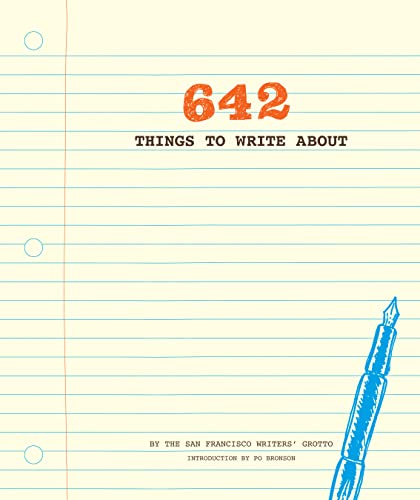
- Includes 642 imaginative writing prompts
- Provides space for written responses
- Useful for beginners and experienced writers
Best For: Beating writer's block with playful prompts
Best All-Rounder
The Creative Writing Coursebook

- Three-stage approach from ideas to finishing
- Advice and exercises from 40 authors
- Covers fiction, poetry, workshops, and publishing
Best For: Writers seeking comprehensive, course-style guidance
Best Prompt Tool

- Nine dice generate open-ended story prompts
- Covers character, setting, conflict, and theme
- Works for solo, group, and classroom writing
Best For: Writers who want playful, instant inspiration
Best for Craft Practice

- Includes more than 50 themed exercises
- Targets ideas, character, structure, and technique
- Suitable for fiction, screenwriting, and playwriting
Best For: Writers seeking active, targeted craft exercises
Best Gamified Pick
Story Quests for Reluctant Writers

- Short, low-pressure writing missions
- Builds stories through micro-steps
- Full-color pages for writing and sketches
Best For: Ages 8–12 who need an engaging, screen-free way to overcome writer’s block
Best Skills-Building Choice

- Covers five essential writing styles
- Includes 50 engaging prompts
- Adds brainstorming and lined writing pages
Best For: Grades 3–5 students building confidence across narrative, opinion, informative, descriptive, and persuasive writing
Best Variety Pick
Interactive Writing Activities

- Includes stories, poetry, comics, and journaling
- Adds perspective challenges and word games
- Encourages flexible self-expression
Best For: Ages 8–12 who prefer varied, open-ended writing activities over repetitive prompts
Best Complete Course – Creative Writing: A Workbook with Readings
For writers looking for comprehensive creative writing workbooks, this second-edition Routledge guide combines instruction, readings, and exercises across fiction, poetry, and life writing. Its step-by-step structure also covers presenting work to agents and publishers.
Best For: Writers who want a broad, course-style workbook covering multiple genres and the path toward publication.
Pros:
- Covers fiction, poetry, autobiography, biography, and travel writing.
- Combines technique discussions with readings and practical exercises.
- Includes contemporary authors with diverse styles and approaches.
- Helps writers experiment while developing an individual voice.
Cons:
- Its broad, 648-page format may feel more substantial than a quick exercise book.
- Readers seeking only fiction or only prompts may find the scope wider than necessary.
This is the strongest all-around choice for writers who want structured instruction rather than a simple prompt journal. The updated edition and genre range make it particularly useful for sustained study.
Best for Craft and Revision – The Making of a Story
Among creative writing workbooks, Alice LaPlante’s guide stands out for connecting inspiration, craft, reading, and revision. It addresses fiction and creative nonfiction with accessible explanations, examples, and a process that runs from initial idea to final manuscript.
Best For: Independent writers and students who want a detailed guide to developing, shaping, and revising work.
Pros:
- Covers the full creative process from idea generation through revision.
- Explains craft topics such as characterization with clear examples.
- Uses excerpts from classic and contemporary fiction and essays.
- Suitable for introductory and advanced creative writing classes.
Cons:
- Its 677-page length may be more than casual writers need.
- The focus is on fiction and creative nonfiction rather than poetry.
This is a strong pick for writers who want to understand not just what to write, but how to improve a manuscript. Its combination of process, craft, and reading makes it especially useful for serious practice or classroom work.
Best Daily Practice – A Writer's Workbook: Daily Exercises
Writers seeking approachable creative writing workbooks may prefer this compact collection of exercises. Caroline Sharp’s prompts are designed to inspire, warm up, and restart a stalled writing habit, with an encouraging and humorous tone.
Best For: Writers who want short, motivating exercises for regular practice and overcoming writer’s block.
Pros:
- Offers exercises intended to inspire and jump-start writing.
- Addresses common writing anxieties with humor and encouragement.
- Includes varied activities such as “Emulating Ernest” and “The Rewrite Rut.”
- Compact 176-page format is easy to use in short sessions.
Cons:
- Provides less extended instruction than a full creative writing course.
- The exercises may be better suited to practice than to comprehensive manuscript development.
This workbook is a practical choice when consistency is the main challenge. It emphasizes getting words moving and keeping ideas fresh, making it a useful companion between larger craft guides.
Best Prompt Journal – 642 Things to Write About
642 Things to Write About: (Guided Journal, Creative Writing, Writing Prompt Journal)
Check Price On AmazonFor writers who mainly need fresh ideas, this prompt journal offers 642 playful starting points. The creative writing workbook includes imaginative, humorous, and philosophical scenarios with space to respond, making it accessible to both novice and experienced writers.
Best For: Writers who want a large variety of prompts to overcome creative blocks or explore ideas without a formal course structure.
Pros:
- Provides 642 prompts across a wide range of tones and subjects.
- Includes unusual exercises such as writing an obituary or an ode to an onion.
- Offers plenty of space to write responses directly in the journal.
- Created with contributions from 35 San Francisco Writers’ Grotto writers.
Cons:
- Focuses on prompts rather than systematic instruction in craft or revision.
- The prompts may feel deliberately playful for writers seeking a formal curriculum.
- Its listed reading age is 18 years and up.
This is the most immediately accessible option in the group for breaking out of a blank-page rut. Choose it for variety and low-pressure experimentation, not for a step-by-step writing course.
Best All-Rounder – The Creative Writing Coursebook
The Creative Writing Coursebook: 40 Authors Share Advice and Exercises for Fiction and Poetry
Check Price On AmazonFor writers comparing creative writing workbooks, The Creative Writing Coursebook offers a broad, structured approach covering the full process from gathering ideas to shaping and finishing work. Its advice and exercises come from 40 authors, making it suitable for developing skills across fiction and poetry.
Best For: Beginners and developing writers who want guidance for independent practice, writing groups, publication goals, or personal enjoyment.
Pros:
- Organizes practice into Gathering, Shaping, and Finishing stages.
- Covers observations, memory, structure, character, setting, point of view, workshops, and publishing.
- Includes contributions from 40 authors with varied advice and experience.
- Works for both fiction and poetry writers.
Cons:
- Its wide coverage may feel less specialized than a book focused on one genre or craft area.
- At 416 pages, it may be more extensive than readers seeking a quick prompt book.
This is the strongest choice for a comprehensive, course-style reference. Choose it when you want a substantial workbook that supports writing from first notes through revision and possible publication.
Best Prompt Tool – Two Tumbleweeds Writing Dice
These writing dice offer a hands-on alternative to traditional creative writing workbooks. Roll the nine color-coded wooden dice to combine prompts for characters, time, place, point of view, conflict, and theme, giving you a quick starting point without dictating the entire story.
Best For: Teens and adults, classrooms, writing groups, teachers, and writers who want playful prompts for stories, screenplays, comics, poetry, or tabletop RPGs.
Pros:
- Nine dice create open-ended combinations with room for original ideas.
- Useful for solo writing, group activities, workshops, and classroom exercises.
- Solid-wood, one-inch dice feature color-coded, easy-to-read prompts.
- Includes instructions and teaching variations.
Cons:
- It is a prompt tool rather than a workbook with extended craft instruction.
- The manufacturer recommends it for ages 15 and up.
Writing Dice are best when the main challenge is getting started or breaking a familiar routine. They provide structure in seconds while leaving the actual story, characters, and direction to the writer.
Best for Craft Practice – Creative Writing Exercises
Creative Writing Exercises: Improve Your Craft Through Play (Screen and fiction writing craft)
Check Price On AmazonCreative Writing Exercises is a focused option for shoppers seeking creative writing workbooks built around active practice. Mark Boutros provides more than 50 themed exercises for fiction and screenwriting, along with explanations of how they can strengthen craft and guidance for managing the writer’s mindset.
Best For: Beginner and experienced authors, screenwriters, and playwrights who want exercises addressing ideas, character, story world, stakes, structure, technique, and the writer’s mind.
Pros:
- Includes over 50 exercises designed to reconnect writing with play.
- Covers both creative development and craft areas such as character, structure, and technique.
- Offers explanations of each exercise’s value rather than prompts alone.
- Written by an Emmy-nominated writer and creative writing teacher with university teaching experience.
Cons:
- Its 190-page format may provide less breadth than a larger reference coursebook.
- The focus is fiction and screen craft, so it may be less suitable for poetry-only writers.
This is a practical pick for writers who learn by doing and want to shake up an existing process. Its themed exercises make it especially useful when a project feels stuck or when you want targeted practice rather than general writing advice.
Best Gamified Pick – Story Quests for Reluctant Writers
Among creative writing workbooks for ages 8–12, this option stands out for its game-inspired format and short, low-pressure activities. Kids move through challenges involving mysteries, fantasy, comedy, drawing, mapping, characters, dialogue, and story structure.
Best For: Reluctant or hesitant writers who benefit from five-minute, screen-free writing activities with plenty of space to sketch and write.
Pros:
- Uses quests, badges, secret missions, and power-ups to encourage participation.
- Micro-step prompts help children develop a story without facing a blank page all at once.
- Covers storytelling skills such as plot, vocabulary, dialogue, and story structure.
- Large, full-color 8.5-by-11-inch pages provide room for handwriting, sketches, and story maps.
Cons:
- The gamified approach may be less suitable for children seeking formal, grade-specific writing instruction.
- It is a write-in workbook, so completing the activities uses up the pages.
This is a practical choice when the main goal is to make writing feel approachable and playful. Its guided progression and short activities may be especially useful for homeschool supplements, classroom support, travel, or summer learning.
Best Skills-Building Choice – Five-Style Writing Practice
This creative writing workbook combines imaginative prompts with structured practice for grades 3–5. It covers narrative, opinion, informative, descriptive, and persuasive writing, making it a useful option for families looking to develop several core writing styles in one book.
Best For: Students in grades 3–5 who need guided practice with paragraphs, longer responses, and multiple Common Core writing styles.
Pros:
- Includes 50 prompts spanning five major writing styles.
- Each prompt uses a two-page format with brainstorming or drawing space plus a lined writing page.
- Writing guides support practice in narrative, opinion, informative, descriptive, and persuasive work.
- Can supplement classroom lessons, essay practice, or homeschool learning.
Cons:
- Its grade-focused structure may feel more instructional than open-ended activity books.
- The listed reading age is 8–11, so it may not suit every 5th-grade writer equally.
Choose this workbook if you want creative prompts alongside clearly defined writing objectives. The range of formats makes it more versatile than a book focused only on storytelling, while the brainstorming pages give children a supported starting point.
Best Variety Pick – Interactive Writing Activities
For children who tire of conventional prompts, this activity-focused choice offers a broad mix of creative writing workbooks exercises. Activities include letters, journaling, poetry, comics, storytelling, word games, creative lists, perspective changes, and narrator swaps.
Best For: Ages 8–12 who want flexible ways to experiment with writing, wordplay, storytelling, and self-expression.
Pros:
- Offers varied formats, including poetry, comics, journaling, letters, and stories.
- Perspective and narrator challenges encourage experimentation with storytelling techniques.
- Word games, puzzles, and creative lists provide alternatives to standard written assignments.
- Balances structured guidance with open-ended creative freedom.
Cons:
- It does not present the same explicit five-style writing framework as a grade-focused workbook.
- The wide activity mix may be less suitable for buyers seeking a sequential writing curriculum.
This is the strongest fit when variety and self-expression matter more than a tightly sequenced lesson plan. Its 154 pages give children multiple entry points into writing and may help reduce blank-page anxiety through playful, interactive challenges.
How We Picked the Best Creative Writing Workbooks
We evaluated these Creative Writing Workbooks by looking at the quality and variety of their exercises, the usefulness of their instruction, and how well each format supports regular writing practice. We also considered whether a book is designed for independent study, guided lessons, classroom use, or open-ended idea generation.
Because writing goals vary, the selection includes craft-focused references, daily practice workbooks, prompt journals, activity books, and a reusable writing-prompt tool. Age range and subject focus were also important factors, especially for children’s workbooks.
Quick Comparison
| Best For | Look For |
|---|---|
| Learning core craft | Readings, explanations, and structured exercises |
| Building a daily habit | Short prompts and repeatable practice |
| Fiction and poetry | Genre-specific advice and varied assignments |
| Screen or fiction writing | Exercises focused on characters, scenes, and story structure |
| Children | Age-appropriate language, playful challenges, and clear directions |
| Group activities | Flexible prompts that work well aloud or collaboratively |
Key Buying Factors for Creative Writing Workbooks
Instruction Versus Inspiration
Choose a coursebook or workbook with readings and explanations if you want to understand technique. Prompt journals and activity books are better when your main goal is to start writing quickly without a lesson-heavy format.
Writing Format and Genre
Some books cover broad creative writing, while others emphasize fiction, poetry, screenwriting, narrative writing, or general school assignments. Match the exercises to the kind of writing you want to produce so the practice feels relevant.
Age, Independence, and Difficulty
Children’s books should match the reader’s age and school level. For adults, consider whether you prefer guided instruction, independent prompts, or challenging exercises that assume some familiarity with craft terms.
Use and Reusability
A workbook designed for writing directly on the page may suit a one-time course or project. A prompt book or writing dice set can be more reusable for ongoing practice, classrooms, writing groups, and brainstorming sessions.
Who Should Buy Which Creative Writing Workbooks?
New adult writers should prioritize a structured workbook with readings, explanations, and graduated exercises. Writers who already understand the basics may prefer a craft-focused coursebook or a collection of exercises designed to push experimentation.
If consistency is the biggest challenge, choose a daily workbook or guided journal with short assignments. For quick idea generation, a broad prompt collection or writing dice set offers less instruction but more flexibility.
Parents and teachers should select children’s workbooks based on the child’s grade or age, preferred genres, and willingness to write independently. Choose playful prompts and interactive challenges for reluctant writers; choose a skills-based workbook when the goal includes practicing narrative, descriptive, informative, opinion, or persuasive writing.