The best short story collections for book clubs make it easy to read widely, compare literary styles, and find plenty to discuss in a single meeting. This selection includes landmark American anthologies, international fiction, focused author collections, and recent prize-winning stories.
Whether your group prefers classic literature, modern voices, or a broad survey of short fiction, these books offer flexible reading schedules and strong discussion potential. Use the guide below to match each collection with your club’s interests, reading habits, and experience level.
Best 10 Short Story Collections for Book Clubs Picks for 2026
Best Modern American Range
Contemporary Short Story Anthology

- Covers American fiction from 1970–2020
- Includes literary, science fiction, horror, and fantasy
- Features established and overlooked voices
Best For: Book clubs wanting contemporary American fiction with wide genre variety
Best Classic Sampler

- Includes 50 acclaimed stories
- Ranges from Hawthorne and Poe to Hemingway and O’Connor
- Provides broad variety in style and subject
Best For: Book clubs building a classic short-fiction reading list
Best International Focus

- Spans Japanese fiction from the 19th century to today
- Includes Murakami, Akutagawa, Mishima, and Yoshimoto
- Features new translations and lesser-known writers
Best For: Book clubs exploring Japanese literature and translated fiction
Best American Century Overview

- Includes 55 stories from across a century
- Features Hemingway, Faulkner, O’Connor, Carver, and others
- Mixes canonical works with rediscovered stories
Best For: Book clubs tracing the history of American short fiction
Best Complete Classic
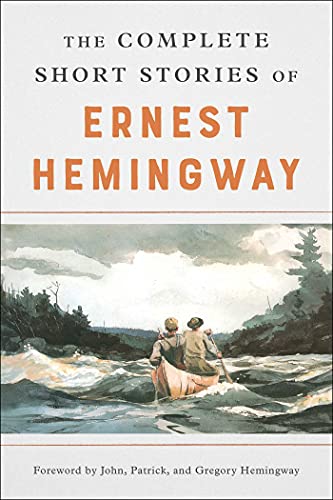
- 60 stories, including seven previously unpublished tales
- Includes several frequently discussed Hemingway classics
- 650 pages for extended single-author study
Best For: Hemingway-focused book clubs
Best Literary Survey

- Nearly 60 stories spanning American literary history
- Includes classic and unexpected selections
- Introductions provide author and cultural context
Best For: Broad, discussion-driven American literature surveys
Best Contemporary Picks

- 20 prizewinning stories from the previous year
- Includes established and emerging writers
- Author notes and a magazine resource list support discussion
Best For: Book clubs focused on contemporary literary fiction
Best Classic American Survey

- 19 canonical American stories
- Writers from Hawthorne to Hemingway
- Compact 256-page edition
Best For: Book clubs exploring foundational American short fiction
Best Century-Spanning Discussion Pick
100 Years of the Best American Short Stories

- 40 stories across a century
- Includes editorial historical context
- Features diverse American voices
Best For: Book clubs wanting deep, era-by-era discussion
Best Classic Craft Anthology

- 35 American and British stories
- Focused on the early 20th century
- Strong choice for literary analysis
Best For: Book clubs studying classic short-story technique
Best Modern American Range – Contemporary Short Story Anthology
For book clubs seeking broad, contemporary material, The Penguin Book of the Modern American Short Story covers American fiction from 1970 to 2020. Its mix of literary fiction, science fiction, horror, and fantasy gives groups plenty of contrasting styles and themes to discuss.
Best For: Book clubs that want contemporary American stories and genre variety in one substantial anthology.
Pros:
- Spans five decades of American short fiction.
- Includes widely known and underrepresented writers.
- Blends literary fiction with science fiction, horror, and fantasy.
- Features authors including Ursula K. Le Guin, Toni Cade Bambara, Jhumpa Lahiri, and Ted Chiang.
Cons:
- The broad range of styles may feel uneven for readers seeking a tightly unified collection.
- At 496 pages, it is a substantial group-reading selection.
This is a strong choice for groups that enjoy comparing literary movements, genres, and perspectives across modern American fiction. The varied contents can support multiple meetings or themed discussions.
Best Classic Sampler – Fifty Great Short Stories
Fifty Great Short Stories is a practical pick for book clubs that want a traditional survey of acclaimed short fiction. It brings together writers from Hawthorne, Maupassant, and Poe through Hemingway, Faulkner, and Flannery O’Connor, offering substantial variety across periods and styles.
Best For: Groups looking for a classic, globally sourced introduction to widely recognized short fiction.
Pros:
- Contains 50 selected stories.
- Includes authors from multiple literary periods and traditions.
- Offers considerable variety in style and subject.
- Its 592-page length provides material for an extended reading schedule.
Cons:
- The older publication date may make it feel less contemporary than newer anthologies.
- The compact reissue format may be less comfortable for extended reading.
For a club building its shared foundation in short fiction, this anthology offers recognizable names and varied discussion material. Its large contents list also makes it easy to select stories that fit different meeting themes.
Best International Focus – Japanese Short Stories
Book clubs wanting a focused international perspective should consider The Penguin Book of Japanese Short Stories. Covering Japanese short fiction from the nineteenth century to today, it combines familiar authors with newer discoveries and includes stories translated into English for the first time.
Best For: Groups interested in Japanese literature, translation, and the contrast between classic and contemporary voices.
Pros:
- Covers more than a century of Japanese short fiction.
- Includes writers such as Tanizaki, Akutagawa, Murakami, Mishima, Kawabata, and Yoshimoto.
- Features an introduction by Haruki Murakami.
- Offers newly translated and lesser-known stories alongside established works.
Cons:
- The collection’s cultural and historical range may require additional context for some groups.
- Its 576 pages may be more material than a club wants for a short reading cycle.
This anthology gives discussion groups a clear regional focus while preserving considerable variety in tone, period, and author. It is especially useful for clubs that want to explore how translation and cultural context shape short fiction.
Best American Century Overview – Best American Short Stories
The Best American Short Stories of the Century suits book clubs seeking a substantial historical overview of American short fiction. Its 55 selections represent a century of writing, from Willa Cather and Ernest Hemingway to Raymond Carver, Joyce Carol Oates, and other influential voices.
Best For: Groups that want to trace major developments and enduring works in American short-story literature.
Pros:
- Collects 55 stories spanning a century.
- Includes many writers who shaped American short fiction.
- Combines established classics with rediscovered literary gems.
- The expansive 864-page format supports a long-term club schedule.
Cons:
- Its length can be demanding for groups with limited reading time.
- The focus on American literature makes it less suitable for internationally balanced reading lists.
- Some selections reflect an older literary canon.
This is one of the strongest choices here for a club planning a chronological or author-focused series. Its century-long scope creates natural opportunities to discuss changing literary styles, themes, and definitions of the American short story.
Best Complete Classic – Hemingway Short Stories
For book clubs seeking substantial short story collections, this authoritative Hemingway edition offers 60 stories, including widely discussed classics and seven previously unpublished tales. It is a strong choice for groups interested in concise prose, recurring themes, and close reading across an influential author’s career.
Best For: Hemingway-focused discussions and clubs that want a single-author collection with plenty of material.
Pros:
- Includes 60 stories, from “The Snows of Kilimanjaro” to “Hills Like White Elephants.”
- Features seven stories published for the first time in this collection.
- Covers varied subjects, including World War II and father-son relationships.
- Provides a substantial 650-page reading selection.
Cons:
- Its single-author focus may offer less stylistic variety than a multi-author anthology.
- At 650 pages, it may be more extensive than some book clubs need.
This is the most focused pick for groups that want to study Hemingway’s style and compare stories across a large, definitive volume.
Best Literary Survey – American Short Stories
Among short story collections for book clubs, this anthology stands out for its broad historical and stylistic range. Joyce Carol Oates brings together nearly 60 American stories by classic, modern, women, minority, and emerging voices, with introductions that can help frame group discussion.
Best For: Book clubs that want varied authors, literary context, and a wide survey of American short fiction.
Pros:
- Combines familiar works by Poe and Irving with less commonly anthologized selections.
- Includes writers ranging from Melville and Kate Chopin to Langston Hughes and Stephen King.
- The second edition adds newer stories by authors including Lorrie Moore, Junot Díaz, and Amy Hempel.
- Features biographical and critical introductions to each writer.
Cons:
- Its 896-page length may be difficult to complete as one group reading assignment.
- The wide range of periods and styles may require more planning for a cohesive discussion.
Choose this volume when variety matters most: clubs can select individual stories or organize meetings around periods, themes, or literary movements.
Best Contemporary Picks – O. Henry Prize Winners 2024
This annual anthology is a timely option for book clubs looking for contemporary short story collections. Guest editor Amor Towles selects 20 prizewinning stories from the previous year, mixing established and emerging writers while adding author reflections and a resource list for further discovery.
Best For: Clubs that prefer recent literary fiction and want a manageable set of award-recognized stories.
Pros:
- Offers 20 selected stories by writers including Kate DiCamillo, Jess Walter, Dave Eggers, and Allegra Goodman.
- Includes an introduction by Amor Towles and comments from winning authors.
- Features translated stories alongside works originally written in English.
- At 432 pages, it is more approachable for a multi-session club discussion.
Cons:
- Because it focuses on one recent prize cycle, it offers less historical breadth than larger anthologies.
- Readers seeking only familiar authors may encounter many emerging voices.
Its mix of current voices, writer commentary, and award recognition makes this a practical pick for clubs that want fresh material and easy meeting-by-meeting selections.
Best Classic American Survey – Great American Short Stories
For readers seeking short story collections for book clubs, Great American Short Stories offers an approachable survey of 19 major works spanning 1835 to 1927. Its compact 256-page format makes it practical for group reading, while the range of authors and styles provides plenty of discussion material.
Best For: Book clubs and classrooms that want a broad introduction to classic American short fiction.
Pros:
- Includes recognizable stories such as “The Tell-Tale Heart,” “Bartleby,” “To Build a Fire,” and “The Killers.”
- Features influential writers including Hawthorne, Poe, Melville, Twain, Chopin, Cather, and Hemingway.
- At 256 pages, it is relatively manageable for a shared reading schedule.
Cons:
- The selection focuses on an earlier American literary tradition and concludes in 1927.
- Its 19-story format offers less historical breadth than larger anthologies.
This is a strong value pick for groups that prefer canonical stories, varied reading lengths, and a clear historical arc rather than contemporary fiction.
Best Century-Spanning Discussion Pick – 100 Years of the Best American Short Stories
Among short story collections for book clubs, 100 Years of the Best American Short Stories stands out for its scale and historical context. Lorrie Moore selects 40 stories from the first century of the series, while editorial commentary examines changing literary trends decade by decade.
Best For: Established book clubs that enjoy comparing eras, voices, cultural perspectives, and literary styles.
Pros:
- Brings together 40 stories from more than 2,000 previously published selections.
- Covers a wide range of writers, including Hemingway, Faulkner, Baldwin, Carver, Paley, Díaz, and Alexie.
- Includes historical commentary and behind-the-scenes anecdotes alongside the fiction.
Cons:
- The 753-page length may be demanding for clubs seeking a quick anthology.
- Its broad scope may require members to choose individual stories rather than read straight through.
With its century-long perspective and editorial framing, this is the most substantial option here for sustained, comparative conversations about American literature.
Best Classic Craft Anthology – Short Story Masterpieces
Short Story Masterpieces is a dependable choice for book clubs looking for classic short story collections with a focused literary scope. Its 35 American and British stories from the first half of the 20th century were selected for their innovative style, subject matter, or tone.
Best For: Groups interested in influential 20th-century writing and close discussion of short-story technique.
Pros:
- Offers 35 stories by writers such as Faulkner, Joyce, Hemingway, Welty, Saki, and Katherine Anne Porter.
- Balances American and British fiction within a defined historical period.
- Includes widely taught selections such as “Barn Burning,” “The Open Window,” and “Why I Live at the P.O.”
Cons:
- Its focus on the first half of the 20th century excludes newer writers and contemporary perspectives.
- The 528-page volume may be more material than a casual club wants to cover in full.
This anthology suits readers who value established literary craftsmanship and a curated set of stories with strong potential for formal analysis and comparison.
How We Picked the Best Short Story Collections for Book Clubs
We selected these ten titles for their discussion value, literary range, accessibility, and usefulness across different types of book clubs. The list balances broad anthologies with author-focused collections, classic works with contemporary fiction, and American literature with international perspectives.
We also considered whether a collection offers enough variety to support multiple meetings. Anthologies with contrasting authors, periods, settings, and themes give groups more opportunities to compare approaches to character, structure, voice, and symbolism.
Quick Comparison
- Best broad modern overview: The Penguin Book of the Modern American Short Story
- Best classic variety: Fifty Great Short Stories
- Best international choice: The Penguin Book of Japanese Short Stories
- Best century-spanning survey: The Best American Short Stories of the Century
- Best single-author option: Hemingway’s Complete Short Stories
- Best recent fiction: The Best Short Stories 2024
- Best compact classic anthology: Short Story Masterpieces
Key Buying Factors for Short Story Collections for Book Clubs
Range and Representation
Look for collections that provide meaningful variety rather than repeating one period or style. A wide range of authors and perspectives can produce richer conversations, while a focused anthology may suit groups studying a particular tradition.
Reading Length and Meeting Schedule
Check the number and average length of stories before buying. A large anthology may support months of meetings, but a shorter volume can be better for clubs that meet frequently or prefer complete books between sessions.
Discussion Potential
Prioritize stories with distinctive narrators, unresolved endings, shifting perspectives, or complex themes. Collections with introductory notes, author biographies, or historical context can also help groups prepare without requiring extensive outside research.
Edition and Format
Compare paperback, hardcover, and ebook editions for page count, notes, introductions, and portability. For shared reading, confirm that every member can easily obtain the same edition, especially when page references matter during discussion.
Who Should Buy Which Short Story Collections for Book Clubs?
Choose a broad anthology such as Fifty Great Short Stories or The Oxford Book of American Short Stories if your club wants a flexible sampler of established writers. These are strong starting points for mixed-experience groups.
Groups seeking a historical overview should consider 100 Years of the Best American Short Stories or The Best American Short Stories of the Century. Readers interested in international literature may prefer the Japanese anthology, while Hemingway’s complete collection suits clubs that want to examine one author’s development in depth.
For contemporary discussion, The Best Short Stories 2024 offers recent prize-winning work. If your members prefer concise, recognizable classics, Great American Short Stories or Short Story Masterpieces may be easier to schedule. The best choice ultimately depends on whether your club values breadth, historical context, cultural perspective, or close study of a single writer.