The best book presses with adjustable pressure help you flatten signatures, secure glued bindings, and repair books with more consistent pressure than improvised weights. The right model depends on your project size, materials, workspace, and how much force you need.
We compare 10 manual presses ranging from compact bamboo and wooden designs to heavy-duty steel machines rated for high pressure. Use the guide below to narrow the choices by capacity, construction, control, portability, and value.
Best 10 Book Presses with Adjustable Pressure Picks for 2026
Heavy-Duty Pick

- Steel frame with up to 1,500 kg of claimed pressure
- 12 x 9-inch working area for A4-sized materials
- Stable base with alignment baffles
Best For: Frequent office and bookbinding flattening
Flexible Bamboo Option

- Bamboo frame with a smooth, page-friendly surface
- Central screw and guide rods promote even pressure
- Adjusts from single sheets to 5-inch books
Best For: DIY book repair and craft projects
Compact Wood Pick

- Compact 7.9 x 11.6-inch wooden format
- Adjustable screw spacing suits different book thicknesses
- Includes instructions for easier setup
Best For: Portable DIY bookbinding and A5 projects
Large-Format Steel Press

- Designed for A3 and A4-sized paper
- Up to 1,500 kg of claimed pressing force
- Steel frame with three-sided anti-slip guide plate
Best For: Large documents and repeated flattening work
Large Wood Pick
Extra-Large Handmade Book Press

- 14.7 x 11.4-inch pressing area
- Extended screws for thicker books
- Anti-slip base and portable grip handle
Best For: Home bookbinding and versatile paper or flower pressing
Heavy-Duty Steel Pick
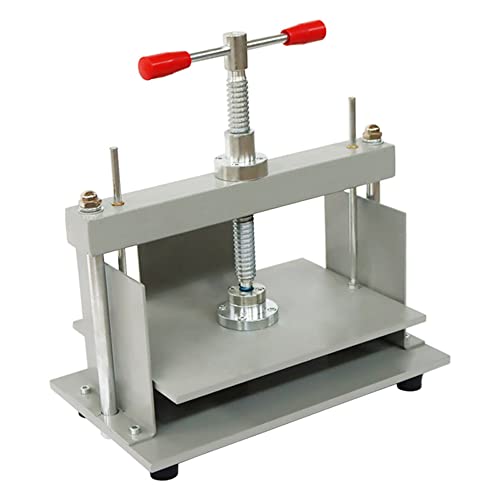
- Up to 1,500 kg of stated pressure
- Thickened steel frame and screw rod
- Detachable baffles support paper alignment
Best For: A4 document flattening and heavy-duty office pressing
Portable Bamboo Pick
Compact Bamboo Bookbinding Press
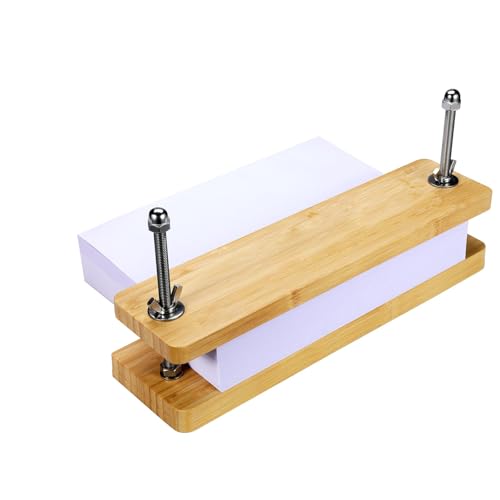
- Lightweight bamboo construction
- Stainless steel hardware and anti-slip mat
- Also works as a paper or flower press
Best For: Portable beginner bookbinding and small pressing projects
High-Pressure Office Pick
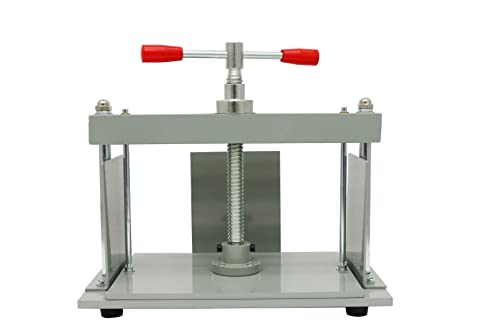
- About 1,500 kg of stated pressure
- Three-sided alignment baffle
- Built for documents and book flattening
Best For: Office document pressing and heavy-duty paper flattening
Complete Starter Kit

- Includes binder boards and bookbinding cloth
- Leather handle for even pressure
- Extended skewers fit thicker books
Best For: Beginner bookbinding and repair projects
Compact Adjustable Clamp

- Adjustable screw clamps control pressure
- Solid beech construction
- Suitable for A4 and craft projects
Best For: Home studios and versatile DIY bookbinding
Heavy-Duty Pick – VEVOR Manual Paper Press
For shoppers comparing book presses with adjustable pressure, the VEVOR stands out as a steel-built option with a large A4-oriented working area and a claimed pressing force of up to 1,500 kg. Its rotary handle, balance rods, and three-sided baffles are designed for controlled, stable flattening.
Best For: Frequent paper flattening, book files, ledgers, bills, stamps, albums, and other office materials.
Pros:
- Thickened steel construction is designed for long-term durability.
- 12 x 9-inch working area and up to 5.9-inch flattening thickness accommodate substantial stacks.
- Non-slip feet, balance rods, and an 8 mm baseplate support stability under pressure.
- Detachable three-sided baffles help keep documents aligned.
Cons:
- At 32 pounds, it is considerably less portable than wooden presses.
- Its commercial-style construction may be more than occasional hobby projects require.
The VEVOR is a practical choice when pressing strength and a stable metal frame matter more than portability. It is especially well suited to repeated office or bookbinding work involving larger paper stacks.
Flexible Bamboo Option – Dmnnlp Adjustable Book Press
This Dmnnlp model is a lighter choice for shoppers seeking book presses with adjustable pressure for repair and craft work. Its central screw and two guide rods are intended to distribute pressure evenly, while the screw adjusts for projects ranging from single sheets to books up to 5 inches thick.
Best For: DIY book repair, handmade books, album making, cover binding, pressing flowers, and other home craft projects.
Pros:
- Natural bamboo construction is described as sturdy, warp-resistant, and smooth.
- Central screw and side rods help apply even pressure across the stack.
- Adjustable height accommodates thin sheets and books up to 5 inches thick.
- At 3.21 pounds, it is easier to move than the metal presses in this roundup.
Cons:
- The 14.2 x 8-inch surface may not suit larger-format projects.
- Bamboo construction is better suited to craft-scale use than heavy commercial pressing.
With its broad thickness adjustment and manageable weight, the Dmnnlp offers a convenient balance for hobbyists. Choose it when even pressure and flexibility are more important than maximum industrial-style force.
Compact Wood Pick – JUPEAN Portable Book Press
The JUPEAN is a compact wooden option for shoppers looking at book presses with adjustable pressure for A5-sized books and craft projects. Its screw-and-nut design lets you change the distance for different book thicknesses, and the included instructions make setup approachable for beginners.
Best For: Portable DIY bookbinding, paper flattening, embossing, and plant specimen projects.
Pros:
- Three-layer cross-laminated construction is designed for stability.
- Stainless steel screws and nuts resist rust and corrosion.
- Adjustable screw spacing accommodates books of varying thicknesses.
- Rounded edges and a smooth surface improve handling and help protect the desktop.
Cons:
- The 7.9 x 11.6-inch size is more limited than the larger metal presses.
- Its wooden design is intended for portable craft use rather than high-force commercial pressing.
The JUPEAN makes sense for beginners and hobbyists who want a smaller press with straightforward adjustment. Its included manual and compact format are useful where easy assembly and portability are priorities.
Large-Format Steel Press – Manual A3/A4 Paper Press
For larger documents, this manual paper press is a strong contender among book presses with adjustable pressure. Its hand wheel, thickened screw, enlarged nut, and stainless steel components are designed to deliver up to 1,500 kg of pressure for A3- and A4-sized paper.
Best For: Flattening documents, books, banknotes, invoices, accounting books, stamps, and other larger-format materials.
Pros:
- Supports A3 and A4 paper sizes for broader coverage.
- Claims pressing force of up to 1,500 kg through its enlarged screw and nut.
- Thickened steel construction and stainless steel hardware are designed to resist deformation.
- Non-slip feet, balance bars, and an 8 mm base support stable operation.
Cons:
- Its 27.5-pound weight makes it less convenient to relocate frequently.
- The supplied notes do not specify exact working-area dimensions.
This press is best suited to users who need high pressure and A3 capability in a manual machine. Its guide plate and stable base also make it practical for repeated document-flattening tasks.
Large Wood Pick – Extra-Large Handmade Book Press
For crafters looking for book presses with adjustable pressure, this large wooden model offers a practical manual setup with extended screws for accommodating thicker books. Its 14.7 x 11.4-inch format, grip handle, and anti-slip base make it suitable for repeat bookbinding and related pressing projects.
Best For: Home bookbinders who need a spacious, portable press for books, paper, or flower pressing.
Pros:
- Large surface accommodates a variety of book sizes.
- Extended screws support pressing thicker books.
- Cross-laminated wood construction, embedded nuts, and anti-slip pads improve stability.
- Can also be used as a paper or flower press.
Cons:
- Manual adjustment requires hands-on setup.
- Its large footprint may be less convenient for very small workspaces.
- No warranty is listed in the supplied details.
Choose this press if workspace and portability matter more than industrial pressing capacity. The included instructions and enlarged plate holes make installation approachable for beginners.
Heavy-Duty Steel Pick – 1500 kg Manual Paper Press
Among book presses with adjustable pressure, this steel machine stands out for its thickened screw rod and enlarged nut, which deliver up to 1,500 kg of stated pressure. Its A4-oriented work area and alignment baffles make it a strong choice for flattening documents and bookbinding materials.
Best For: Offices, workshops, and users pressing A4 papers, ledgers, invoices, albums, and other flat materials.
Pros:
- Stated pressure capacity reaches 1,500 kg (3,306 lb).
- Thickened steel construction is designed to resist deformation.
- Three detachable baffles help keep papers aligned.
- Non-slip feet improve stability and help protect the tabletop.
Cons:
- At 33.2 pounds, it is substantially less portable than wooden presses.
- The work area is oriented toward A4-size materials rather than oversized books.
- Manual operation requires physical adjustment.
This is the practical option for users who prioritize pressing force and rigid construction. Its heavier steel body suits stationary use, while the baffles add useful control when flattening office documents or book materials.
Portable Bamboo Pick – Compact Bamboo Bookbinding Press
For shoppers comparing book presses with adjustable pressure for portable crafting, this bamboo model provides a compact manual option with an embedded screw system. Stainless steel hardware, an anti-slip mat, and simple installation instructions make it suitable for everyday bookbinding projects.
Best For: Beginners and mobile crafters who want a lightweight press for journals, paper, or flowers.
Pros:
- Bamboo construction gives it a lightweight, portable design.
- Embedded screws and an anti-slip mat support stable operation.
- Stainless steel screws and nuts resist rust and corrosion.
- Versatile enough for bookbinding, paper pressing, and flower pressing.
Cons:
- The compact 15 x 3.14-inch format may not suit larger books.
- Supplied details do not state a maximum pressure rating.
- Manual adjustment may be slower than powered equipment.
This press favors portability and straightforward crafting over high-capacity production. It is a sensible fit for beginners or anyone who needs a small, multipurpose tool that can move easily between workspaces.
High-Pressure Office Pick – INTBUYING 1500kg Paper Press
For buyers comparing book presses with adjustable pressure, the INTBUYING Manual Paper Press stands out for its substantial stated capacity and office-focused design. Its thick screw rod, enlarged nut, balance rods, and reinforced base are intended to distribute pressure evenly across documents and books.
Best For: Flattening invoices, ledgers, book files, checks, notes, receipts, albums, and other paper materials in an office or workshop.
Pros:
- Stated pressure capacity of about 1,500 kg (3,306 lb).
- Three-sided baffle helps keep papers aligned during pressing.
- Non-slip feet, balance rods, and an 8 mm baseplate support stability.
- Detachable baffles make loading and positioning documents easier.
Cons:
- At about 37.2 lb, it is relatively heavy to move.
- The effective working area is limited to about 11.8 by 8.5 inches.
- Its office-oriented design may be more than casual paper crafters need.
This is the strongest choice in the group for users who prioritize high pressure and organized document flattening. Confirm the effective working-area dimensions before buying for larger books or projects.
Complete Starter Kit – Pressandco Wooden Book Press
For shoppers seeking book presses with adjustable pressure for hands-on binding, the Pressandco combines a wooden press with useful starter supplies. The leather handle is designed for applying even pressure, while the extended steel skewers accommodate thicker books and larger projects.
Best For: Beginners and hobbyists making, repairing, rebinding, or decorating journals, sketchbooks, handmade books, and recipe books.
Pros:
- Includes 10 60 PT binder boards and bookbinding cloth.
- Four-layer laminated bamboo construction is designed for strength and durability.
- Leather handle and anti-scratch base support comfortable, stable use.
- Extended steel skewers allow room for thicker books.
Cons:
- The supplied notes do not specify a maximum pressure rating.
- Assembly is required, although instructions are included.
- It is less clearly suited to heavy-duty office flattening than a metal press.
The Pressandco is a practical entry point when included materials matter as much as the press itself. It offers a more approachable craft setup, but buyers needing a quantified pressure capacity should consider the product’s unspecified rating.
Compact Adjustable Clamp – Solid Beech A4 Book Press
This solid beech press is a compact option for shoppers comparing book presses with adjustable pressure. Its screw clamps provide control for pressing, gluing, edge painting, and paper flattening, while the A4-oriented format suits many home and studio projects.
Best For: DIY book repair, handmade bookbinding, watercolor paper pressing, leather work, and edge-painting projects.
Pros:
- Solid beech construction is designed for durability and stability.
- Adjustable screw clamps allow pressure control for different tasks.
- Non-slip base supports steadier use on a work surface.
- At 6.38 lb, it is lighter and easier to position than the INTBUYING press.
Cons:
- The supplied notes do not provide a maximum pressure rating.
- The 15.5 by 11.3-inch overall size may limit larger projects.
- It does not include the binding materials supplied with the Pressandco kit.
Choose this model if you want a straightforward, adjustable clamp in a relatively compact wooden format. Its versatility favors home crafting and studio work, while users requiring a documented high-pressure capacity may prefer a metal press with a stated rating.
How We Picked the Best Book Presses with Adjustable Pressure
We focused on presses that let you apply pressure gradually and release it without disturbing the work. Our comparison considers usable platen size, frame construction, adjustment method, stated pressure capacity, portability, included accessories, and suitability for bookbinding or paper flattening.
Because product listings can use different pressure ratings and dimensions, treat advertised capacity as a reference rather than a guarantee for every material. A rigid frame, even contact surfaces, and a stable base often matter as much as the maximum number.
Quick Comparison
| Best For | Look For | Typical Choice |
|---|---|---|
| Book repair and rebinding | Even platen pressure and controlled adjustment | Wooden or bamboo book press |
| Large sheets and thicker projects | Wide platen and strong frame | Large-format manual press |
| Frequent workshop use | Steel construction and high load rating | Hand-wheel paper press |
| Small spaces or mobile work | Compact footprint and carrying handle | Portable wooden press |
Key Buying Factors for Book Presses with Adjustable Pressure
Size and Working Area
Choose a platen that extends beyond the largest book or sheet you plan to press. A4-focused models suit common notebooks, signatures, invoices, and repairs, while larger presses provide more flexibility for oversize books and multiple smaller projects.
Pressure Control
Look for a threaded screw, hand wheel, or similar mechanism that allows gradual adjustment. Fine control helps prevent crushed spines, warped boards, glue squeeze-out, and damage to delicate paper. A pressure gauge is useful when repeatability matters, but it is not essential for occasional craft work.
Frame and Platen Construction
Steel frames generally tolerate heavier loads and repeated use. Bamboo and solid-wood presses can be excellent for bookbinding when their platens remain flat and the hardware turns smoothly. Check for reinforced corners, rigid boards, and surfaces that will not easily flex under load.
Stability and Protection
An anti-slip mat or grippy base helps keep the press aligned. For finished covers and delicate paper, use clean waste sheets or protective boards between the press and the project. Confirm that the press can sit securely on your workbench without rocking.
Portability and Maintenance
Handles and lighter wooden construction make a press easier to store, but compact models may have less capacity. Keep threaded hardware clean, avoid overtightening, and store the press dry to reduce wear and swelling.
Who Should Buy Which Book Presses with Adjustable Pressure?
Choose a compact bamboo or wooden press if you make handmade books, repair occasional bindings, or need a straightforward tool for a small craft workspace. These models are usually easier to move and store.
Choose a large wooden press if you work with oversize covers, multiple signatures, or projects that need a broad, even pressing surface. Prioritize platen dimensions and stability over the highest advertised pressure.
Choose a steel manual paper press if you flatten paper frequently, handle thicker stacks, or want a durable tool for an office or workshop. These presses are typically heavier, so verify bench space and installation requirements before buying.
For most buyers, the best value comes from matching the press to the largest project and the level of pressure control required—not simply choosing the model with the biggest capacity rating.