Science gifts can invite a closer look at the natural world, make abstract ideas easier to explore, or help a curious person build something of their own. This collection covers hands-on learning, observation, measurement, and space-themed discoveries for a range of ages and interests.
20 Science Christmas Gifts to Explore
1. TOMLOV DM9 Max Digital Microscope
For Close-Up Discoveries
TOMLOV DM9 Max Digital Microscope

- A 10.1-inch screen displays coins, plants, and small repair details.
- Zoom ranges from 5X to 1500X, with adjustable LED lighting.
- Capture photos and video, or connect to a PC or TV; a 16GB card is included.
Best For: Collectors, hobbyists, or learners who want to explore tiny details
2. SVBONY SV202 8×42 ED Binoculars
For Birding and Outdoor Observation
SVBONY SV202 8x42 ED Binoculars

- 8×42 optics and a wide 8.12° field of view help follow birds and wildlife.
- ED glass and multi-layer coatings are designed for clear, bright views.
- Waterproof body, adjustable eyecups, and a tripod mount support outdoor use.
Best For: A nature lover who watches birds, wildlife, or distant scenery
3. PalliPartners Compound Microscope Kit
For First Microscope Experiments
PalliPartners Compound Microscope Kit

- Four magnification settings combine 4X, 10X, and 40X objectives with a 25X eyepiece and 2X lens.
- Includes 10 prepared slides, 18 blank slides, and a phone adapter.
- Top and bottom LED lights suit opaque objects and translucent specimens.
Best For: A curious teen or adult examining cells, plants, and everyday specimens
4. ELEGOO UNO R3 Smart Robot Car Kit V4
For Building and Coding Together
ELEGOO UNO R3 Smart Robot Car Kit V4

- Assemble and program a robot car using the Arduino IDE and example programs.
- Explore line tracking, obstacle avoidance, and live camera video.
- Includes sensors, an IR remote, and a rechargeable 2000 mAh battery.
Best For: A young maker or family ready for a guided robotics project
5. Skybasic Wireless Digital Microscope
For Portable Nature Studies
Skybasic Wireless Digital Microscope

- Connect wirelessly to iOS or Android devices, or by USB to Windows and Mac computers.
- Eight adjustable LEDs and one-button photo or video capture support close-up viewing.
- Handheld design is suited to examining plants, minerals, and insects.
Best For: A student who enjoys exploring specimens at home or outdoors
6. JOLABEAR 15-Piece Lab Glassware Set
For At-Home Demonstrations
JOLABEAR 15-Piece Lab Glassware Set

- Set includes three beakers, three flasks, and three graduated cylinders in assorted sizes.
- Five transfer pipettes and a glass stirring rod are also included.
- The 3.3 borosilicate glass pieces have graduations for approximate volume reference.
Best For: An older student or adult with a suitable, supervised workspace
7. Newentor Wireless Weather Station
For Everyday Weather Watching
Newentor Wireless Weather Station

- Color display shows indoor and outdoor temperature and humidity, plus forecast and barometric pressure.
- Includes one remote sensor and supports up to three sensors.
- Wall power enables an always-on display; battery operation uses a brief glance mode.
Best For: A weather enthusiast or household curious about local conditions
8. PmoYoKo 3-in-1 pH and TDS Meter
For Water and Garden Checks
PmoYoKo 3-in-1 pH and TDS Meter

- Measures pH, total dissolved solids, and temperature with one pocket-sized meter.
- Backlit LCD and automatic temperature compensation support readings in varied conditions.
- Can be used for water-related checks in aquariums, pools, gardens, and liquid mixes.
Best For: An aquarium hobbyist, gardener, or home experimenter
9. HARDELL 6-Inch Digital Caliper
For Precise Maker Measurements
HARDELL 6-Inch Digital Caliper

- Measures up to 6 inches or 150 mm and switches between metric and imperial units.
- Jaw pairs and a depth probe support inside, outside, depth, and step measurements.
- Includes a case, batteries, mini screwdriver, and stainless steel ruler.
Best For: A maker, engineering student, or detail-minded hobbyist
10. Lucky Doug 12-in-1 Solar Robot Kit
For Sun-Powered Building
Lucky Doug 12-in-1 Solar Robot Kit

- More than 190 pieces can be assembled into 12 crawling, rolling, or floating robot models.
- Solar power introduces a hands-on way to explore renewable energy.
- Step-by-step instructions guide young builders through assembly.
Best For: Ages 8–13 builders curious about energy and mechanisms
11. POCOCO Galaxy Star Projector
For a Bedroom Planetarium

- Interchangeable discs show constellations, star fields, the Milky Way, or planets.
- Adjustable angle and rotating disc create changing projected scenes.
- A built-in timer and rechargeable, cordless operation suit bedroom use.
Best For: A space enthusiast who enjoys astronomy-themed room ambience
12. Bambu Lab P1S Combo 3D Printer
For Turning Designs into Objects
Bambu Lab P1S Combo 3D Printer
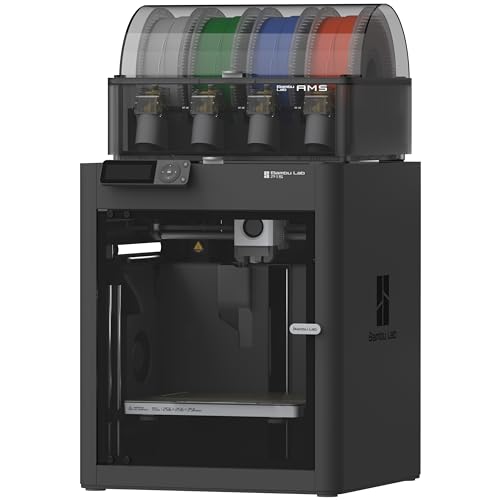
- The enclosed printer includes an AMS for multi-color and multi-material printing.
- Automatic bed leveling and a ready-to-use design are listed features.
- Supports PLA, PETG, TPU, PVA, PET, ABS, and ASA filaments.
Best For: A maker interested in designing and printing prototypes
13. Replogle Eureka 16-Inch Desktop Globe
For Exploring Earth and Geography
Replogle Eureka 16-Inch Desktop Globe

- Antique-style map design pairs with up-to-date cartography.
- Raised relief and more than 4,000 place names add geographic detail.
- Full rotation uses a gyromatic meridian assembly.
Best For: A geography or Earth science enthusiast of any age
14. MEEZAA 150EQ Reflector Telescope
For Learning the Night Sky
MEEZAA 150EQ Reflector Telescope
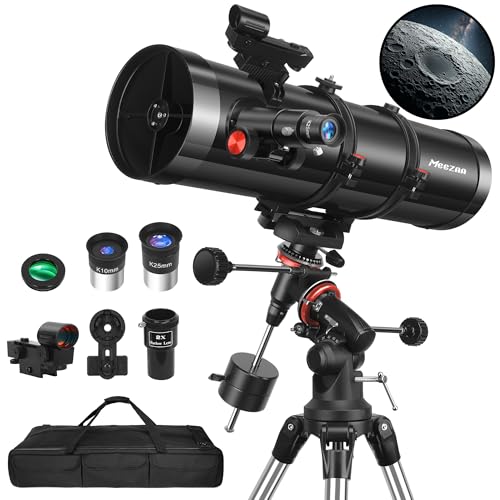
- 150 mm aperture and 650 mm focal length are designed for lunar, planetary, and deep-sky viewing.
- Two eyepieces and a 2X Barlow lens provide 26X to 130X magnification.
- Includes an equatorial mount, tripod, moon filter, phone adapter, and carry bag.
Best For: An aspiring stargazer with access to a clear night sky
15. SunFounder Arduino Uno R4 Sensor Kit
For Circuits and Sensor Projects
SunFounder Arduino Uno R4 Sensor Kit

- Includes an Arduino Uno R4 Minima board and more than 30 sensors and modules.
- Online tutorials and more than 50 project ideas support different skill levels.
- Projects cover electronics, programming, IoT, and environmental monitoring.
Best For: A teen or adult ready to experiment with circuits and sensors
16. Dual-Mode Spinning Solar System Building Kit
For Modeling Planetary Motion
Dual-Mode Spinning Solar System Building Kit
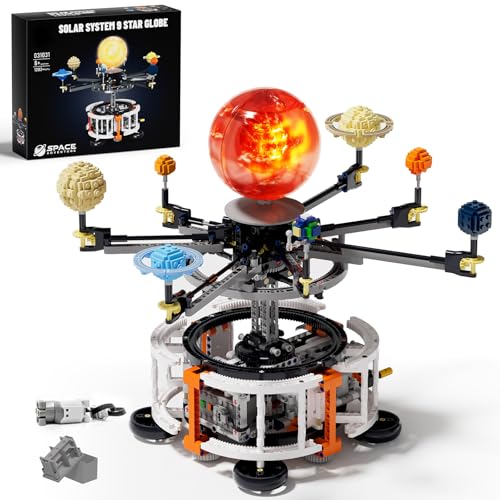
- Build a Sun and eight-planet model from 1,282 pieces.
- Turn a hand crank or use the motorized mode to move the planets.
- The Sun model lights up when manually activated.
Best For: A young learner who enjoys building and displaying space models
17. USB Temperature and Humidity Data Logger
For Comparing Environmental Data
USB Temperature and Humidity Data Logger

- Records temperature, humidity, and atmospheric pressure over time.
- Stores up to 16,000 data groups and can mark changes in a recording.
- Connects by USB to generate PDF and Excel reports using built-in software.
Best For: A student or hobbyist who likes collecting and comparing data
18. Texas Instruments TI-84 Plus CE Calculator
For Math and Science Coursework
Texas Instruments TI-84 Plus CE Calculator

- Graphing functions display in color, and MathPrint shows textbook-style symbols and fractions.
- Rechargeable battery and lightweight design suit classroom use.
- Includes a four-year subscription to the online calculator.
Best For: A high-school or university student studying math or science
19. SFXYJ 32-Part Human Torso Anatomy Model
For Hands-On Anatomy Learning
SFXYJ 32-Part Human Torso Anatomy Model

- The life-size model has 32 removable parts, including organs, heart, brain, and skull.
- Interchangeable male and female genital parts are included.
- A product manual accompanies the model for study or course development.
Best For: A biology student or lifelong learner interested in human anatomy
20. LEGO Technic Earth and Moon in Orbit
For Seeing Orbits in Motion
LEGO Technic Earth and Moon in Orbit
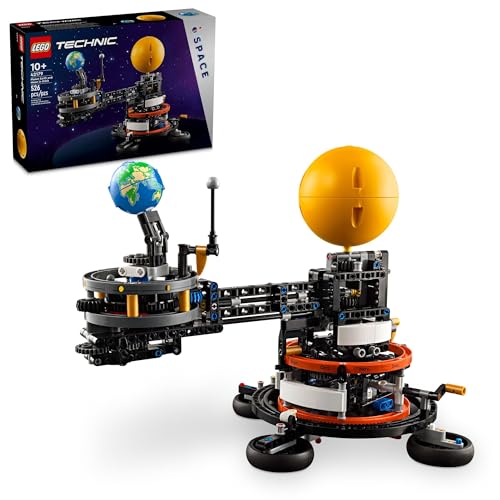
- Turn a crank to show how Earth and the Moon orbit the Sun.
- Printed month and moon-phase details connect orbital movement with seasons.
- The 526-piece model stands over 9 inches high when built.
Best For: Ages 10 and up who enjoy space, building, and moving models
Choosing a Science Christmas Gift for This Recipient
Start with what the recipient already likes to do. A bird watcher may get more use from binoculars than from a microscope, while a student who enjoys biology might appreciate slides and a compound microscope. For someone fascinated by space, consider whether they want to observe the actual night sky, learn from a moving model, or create a relaxing astronomy-inspired scene indoors. A telescope is built for viewing celestial objects; the orbit models explain motion at tabletop scale; the projector provides themed light and images.
Think about how much participation the gift asks of them. A weather station or globe can become part of daily life with little setup. Robotics, Arduino, and 3D printing invite ongoing projects and problem-solving. Glassware, pH meters, and data loggers make measurement tangible, but suit recipients who have a clear purpose and an appropriate place to work. For younger builders, check the listed age guidance and consider whether an adult can help with setup and activities.
Budget and the Full Cost of Use
The product list spans small measurement tools and bookshelf-size models to larger equipment. Compare what comes in the box with what the recipient would need to use it. The microscope kits include slides or a memory card, and the robot kits list controllers, sensors, or power sources. The weatherproof logger connects to a Windows computer to retrieve reports, while the Arduino kit uses online tutorials and programming. The pH meter’s notes describe calibration with buffer solutions, so include those materials in your planning if the recipient will want to calibrate it.
For a larger purchase, consider the ongoing space and supplies. A 3D printer needs a stable place and filament; a telescope needs storage and a suitable viewing spot; lab glassware is only the glassware, so any demonstration materials must be chosen separately and safely. A globe, anatomy model, or solar system model can offer a lasting display after the initial exploration is done.
Compatibility and Personalization
Check the recipient’s devices, workspace, and experience before choosing. The digital microscopes connect to different combinations of phones and computers; confirm that the intended device matches the listed connection method. The 3D printer’s multi-color setup uses its included AMS, and filament compatibility varies. The graphing calculator may be most useful when it suits the recipient’s course requirements. If in doubt, ask discreetly about the phone, computer, software, or classroom needs they already use.
Personalization can come from the project rather than a custom design. Pair a microscope with a plan to examine leaves or coins, binoculars with a local birding walk, or a model of Earth and the Moon with a conversation about seasons and phases. For an Arduino or robot kit, the first build can be a shared activity. Choose a starting project that fits the recipient’s confidence so the gift feels inviting rather than like homework.
Christmas Timing and Last-Minute Decisions
For a Christmas gift that needs assembly or setup, allow time to check the pieces and prepare a simple first activity. This is especially useful for a microscope, telescope, electronics kit, or data logger that may need an app, computer connection, or calibration. Ordinary science tools do not need festive styling: thoughtful wrapping and a short note suggesting a first observation or build can make them feel personal.
If time is short, choose based on the information already available. A globe, anatomy model, calculator, or projector may be easier to give without planning a particular outdoor outing or project. For observation gifts, consider whether weather, daylight, and the recipient’s location will affect first use. A telescope can be enjoyed later on a clear night, and binoculars can accompany a future walk. Match the gift to their curiosity and practical circumstances, and the science will have room to continue well after Christmas.