The best jigsaw puzzles for classrooms combine age-appropriate challenge with meaningful practice in visual reasoning, vocabulary, geography, and collaboration. This roundup includes classroom-friendly sets for preschoolers through early elementary students.
Use the comparison and buying advice below to match puzzle size, piece count, materials, and subject matter with your students, storage space, and lesson plans.
Best 10 Jigsaw Puzzles for Classrooms Picks for 2026
Best Classroom Value Pack
14-Pack Wooden Animal Jigsaw Puzzles

- 14 themed puzzles with 30 pieces each
- Rounded wooden pieces with non-toxic printing
- Supports fine motor and problem-solving skills
Best For: Preschool puzzle centers and small-group activities
Best Group Variety Set
Kellogg's Cereal 6-Pack Puzzles

- Six colorful 100-piece puzzles
- Finished puzzles measure 9 by 13.25 inches
- Useful for screen-free tabletop activities
Best For: Elementary activity rotations and independent work
Best Geography Activity
70-Piece United States Map Puzzle

- Shows all 50 states, capitals, and landmarks
- Large 23.6-by-17-inch floor-puzzle format
- Encourages spatial reasoning and observation
Best For: Elementary geography lessons and cooperative floor play
Best Literacy Center Pick

- 12 self-correcting CVC word puzzles
- Color-coded consonants and vowels
- Connects early spelling with picture clues
Best For: Kindergarten phonics centers and independent practice
Best Geography Pick
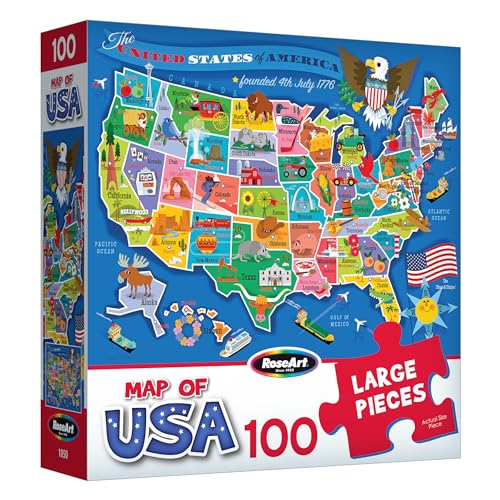
- 100 large pieces featuring all 50 states
- 24-by-18-inch finished map
- Supports geography and spatial skills
Best For: Elementary geography activities and homeschool learning
Best Variety Set

- Four animal-themed 60-piece puzzles
- Reference artwork and frame words
- Supports logic, memory, and concentration
Best For: Rotating activity stations and partner play
Best Durable Set
SYNARRY Wooden Puzzle Collection

- Six themed 60-piece wooden puzzles
- Frames and guide images aid assembly
- Supports coordination and spatial reasoning
Best For: Reusable classroom centers and tabletop practice
Map & Space Learning Pick
USA, World Map & Solar System Puzzles
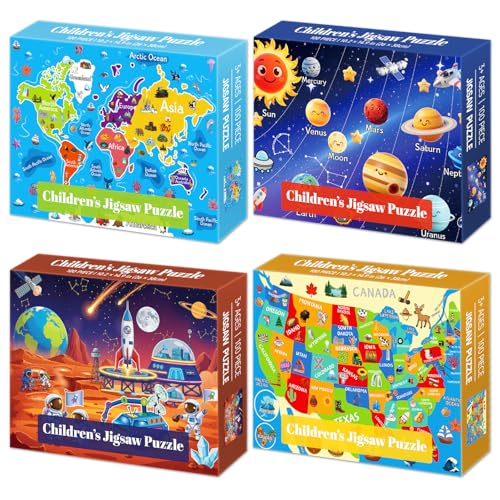
- Four 100-piece map and space themes
- Posters and back letters support sorting
- Thick cardboard with bright printing
Best For: Elementary geography, science, and learning centers
Bright Teamwork Choice
Dogs, Cats, Cupcakes & Donuts Puzzles

- Four colorful 100-piece themes
- Supports solo or group activities
- Includes reference posters and sturdy cardboard
Best For: Small-group centers and collaborative classroom play
Organized Classroom Set

- Four 100-piece puzzles for varied activities
- Includes posters, boxes, and storage bags
- Back letters aid sorting and assembly
Best For: Organized centers, prizes, and daycare activities
Best Classroom Value Pack – 14-Pack Wooden Animal Jigsaw Puzzles
For classrooms seeking variety and repeat-use activities, this 14-pack of 30-piece wooden puzzles offers multiple themes, including animals, dinosaurs, insects, buses, and space. The rounded edges, portable size, and beginner-friendly format make it a practical option for puzzle stations serving children ages 4 to 8.
Best For: Preschool classrooms, homeschool settings, Montessori shelves, and teachers who need several themed puzzles for small-group or independent play.
Pros:
- Includes 14 different 30-piece puzzles for varied classroom activities.
- Wooden construction with rounded, smoothed edges and non-toxic printing.
- Supports hand-eye coordination, fine motor skills, and problem-solving.
- Compact 8.8-by-5.8-inch finished size is easy to handle and store.
Cons:
- Small parts make the set unsuitable for children under 3.
- Each puzzle is designed for one player at a time.
Its combination of quantity, colorful themes, and manageable piece count makes it one of the more flexible jigsaw puzzles for classrooms with younger learners. Teachers should plan a storage system to keep the 14 sets organized.
Best Group Variety Set – Kellogg's Cereal 6-Pack Puzzles
This Kellogg’s set provides six colorful 100-piece jigsaw puzzles, each featuring a familiar cereal theme. For classrooms using jigsaw puzzles for classrooms as independent work or rotating indoor activities, the collectible cereal-box packaging also offers an easy way to distinguish and organize each puzzle.
Best For: Elementary classrooms, indoor activity rotations, and children ages 4 and up who are ready for a larger 100-piece challenge.
Pros:
- Includes six separate 100-piece puzzles with colorful food imagery.
- Each completed puzzle measures 9 by 13.25 inches.
- Provides screen-free practice with fine motor skills and problem-solving.
- Cereal-box-style packaging can make selection and storage engaging.
Cons:
- The 100-piece format may be challenging for younger or beginning puzzlers.
- Paper construction may require more careful handling than wooden pieces.
- The set is intended for indoor, tabletop use.
With 600 pieces across six puzzles, this set gives a classroom several substantial activities without requiring identical designs. It is particularly useful when students can work independently or in pairs at a table.
Best Geography Activity – 70-Piece United States Map Puzzle
This 70-piece United States floor puzzle combines hands-on assembly with geography practice. Its state-shaped pieces, illustrations of all 50 states, capitals, landmarks, and landscapes make it a strong choice for classrooms looking for jigsaw puzzles for classrooms that connect play with social studies.
Best For: Geography lessons, classroom floor activities, and children ages 4 to 10 working independently or with classmates.
Pros:
- Features all 50 states, capitals, landmarks, and landscapes.
- Large 23.6-by-17-inch completed format suits floor-based activities.
- State-shaped pieces support observation, spatial reasoning, and map awareness.
- Safety-tested and compliant with ASTM F963 and CPSIA, according to the supplied notes.
Cons:
- The large assembled footprint needs a clear floor or tabletop area.
- Some younger children may need guidance with the geography content.
This puzzle does more than fill an activity period: it creates opportunities to discuss locations and landmarks while students place pieces. Its larger format also makes cooperative classroom use more practical than a small tabletop puzzle.
Best Literacy Center Pick – CVC Phonics Word Puzzles
Junior Learning’s CVC Puzzles turn early phonics practice into a hands-on matching activity. The 12 self-correcting puzzles use color-coded consonants and vowels, making this 36-piece set a focused option for literacy centers seeking educational jigsaw puzzles for classrooms.
Best For: Kindergarten classrooms, early readers ages 4 to 6, phonics stations, and independent literacy practice.
Pros:
- Builds consonant-vowel-consonant words through hands-on play.
- Color coding distinguishes consonants from vowels.
- Self-correcting pieces encourage independent learning and confidence.
- Completed puzzles reveal images that connect words with meaning.
Cons:
- The educational focus is specifically on CVC words and early phonics.
- With 36 total pieces, it offers less general puzzle variety than larger multipacks.
- Recommended primarily for ages 4 to 6.
For teachers who want puzzle work to reinforce reading instruction, this set is more targeted than a picture-only jigsaw. Its self-correcting design can help students practice word construction with limited adult intervention.
Best Geography Pick – RoseArt USA Map Puzzle
For classrooms seeking jigsaw puzzles for classrooms with a geography focus, this RoseArt USA map puzzle combines hands-on play with state recognition. Its 100 large pieces form a 24-by-18-inch map featuring all 50 states, landmarks, and regional illustrations.
Best For: Elementary geography lessons, homeschool activities, and small-group tabletop work for children ages 6 and up.
Pros:
- Introduces all 50 states, major landmarks, and regional icons.
- Large cardboard pieces are designed for easier handling by young children.
- Supports spatial awareness, memory, and problem-solving.
- Made in the USA with kid-safe finishes.
Cons:
- Only one puzzle is included, limiting theme variety.
- The 24-by-18-inch finished size may require a larger work surface.
- Its geography theme may be less suitable for children uninterested in maps.
This is a practical choice when the goal is to reinforce U.S. geography through an accessible, visually engaging activity. The large pieces and classroom-friendly subject make it especially useful for early elementary learners.
Best Variety Set – Quokka Animal Puzzle Pack
This four-pack is a flexible option for classrooms needing jigsaw puzzles for classrooms at different tables or activity stations. Each 60-piece puzzle uses animal imagery, vibrant colors, and search-and-find details to add an observation component to standard assembly play.
Best For: Early elementary learners ages 4 to 8, rotating centers, partner work, and animal-themed classroom activities.
Pros:
- Includes four separate 60-piece animal puzzles.
- Frame words and images help children follow the finished artwork.
- Unique, self-correcting shapes provide an added challenge.
- Supports concentration, logical thinking, memory, and patience.
Cons:
- Each puzzle is more compact than the RoseArt map puzzle at about 13.8 by 9.8 inches.
- The animal themes may not support a specific curriculum topic.
- Pieces are cardboard rather than wood.
With four themes in one package, this set offers useful variety for classroom rotation and small-group play. The visual references and moderate piece count make it approachable while still giving older children an observation-based challenge.
Best Durable Set – SYNARRY Wooden Puzzle Collection
For classrooms that need repeat-use jigsaw puzzles for classrooms, this SYNARRY collection provides six 60-piece wooden puzzles with dinosaur, farm, vehicle, animal, sea life, and space themes. Each puzzle includes a wooden frame and an illustration underneath to guide younger solvers.
Best For: Reusable classroom centers, tabletop activities, and children ages 4 to 8 who benefit from visual references.
Pros:
- Six distinct themes provide substantial activity variety.
- Wooden pieces and polished edges are designed for repeated handling.
- Frames help keep pieces in place during assembly.
- Supports hand-eye coordination, matching, observation, and spatial reasoning.
Cons:
- Each finished puzzle is smaller than the RoseArt map puzzle at about 11.8 by 8.8 inches.
- The set is generally suited to one or two players per puzzle.
- Wooden construction may be less convenient to replace if an individual piece is lost.
This collection stands out for classrooms prioritizing durability and thematic variety. The built-in frames and reference images can reduce frustration, while the six designs support repeated use across activity periods.
Map & Space Learning Pick – USA, World Map & Solar System Puzzles
For classrooms looking for jigsaw puzzles for classrooms that reinforce geography and science topics, this four-pack offers USA map, world map, solar system, and Mars Adventure designs. Each 100-piece puzzle includes a reference poster and measures 15 by 10 inches when completed.
Best For: Elementary classrooms, science or geography centers, and students ages 3–10 who benefit from guided, hands-on activities.
Pros:
- Four educational themes support map and space-related learning.
- Reference posters and letters on the backs can make sorting and assembly easier.
- Thickened cardboard, precision cutting, and bright printing are designed for repeated tabletop use.
Cons:
- At 100 pieces per puzzle, the set may be too challenging for some younger learners without support.
- The four themes are academic rather than broadly character-focused.
This set is a strong choice when a classroom wants puzzle time to connect with geography, astronomy, concentration, and problem-solving practice. The separate boxes also make the themes easier to organize between activities.
Bright Teamwork Choice – Dogs, Cats, Cupcakes & Donuts Puzzles
These colorful 100-piece sets are practical jigsaw puzzles for classrooms when you want familiar, kid-friendly images and multiple activity options. The pack includes dog, cat, donut, and cupcake themes, with each puzzle supplied with a reference poster.
Best For: Elementary classrooms, small-group tabletop stations, indoor activity periods, and children ages 3 and up.
Pros:
- Four appealing themes can keep students engaged across repeat sessions.
- Thick recycled cardboard is described as sturdy, smooth-edged, and non-toxic.
- Designed for individual play, family collaboration, or group challenges with up to four players.
Cons:
- The product details list inconsistent dimensions, so available table space should be checked before use.
- These themes provide less direct academic content than map or science puzzles.
Choose this set for flexible classroom centers where collaboration and logical thinking matter more than subject-specific instruction. Its four themes also allow small groups to work simultaneously or rotate through different puzzles.
Organized Classroom Set – Dogs, Cats, Flowers & Donuts
For teachers prioritizing easy distribution and cleanup, this four-pack is a convenient option among jigsaw puzzles for classrooms. It includes 100-piece dog, cat, flower, and donut puzzles, plus matching posters, individual boxes, and zip-lock storage bags.
Best For: Classroom prize boxes, daycare activities, independent work stations, and small groups of children ages 4–8.
Pros:
- Four distinct themes provide variety for repeat classroom use.
- Individual storage bags, boxes, and posters support organization and quick setup.
- Back-letter markings can help children sort pieces and build confidence progressively.
Cons:
- The 100-piece format may require adult guidance for some younger children.
- Its cute lifestyle themes are less suited to lessons requiring specific curriculum content.
This is a particularly practical pick for classrooms that need puzzles to stay separated and ready for repeated use. The storage accessories make it easier to manage rotations, prizes, or take-home activities.
How We Picked the Best Jigsaw Puzzles for Classrooms
We focused on puzzles that can support structured classroom activities rather than one-time entertainment. The selection covers multiple difficulty levels, from 30-piece wooden sets for younger children to 100-piece designs for students ready for longer, more independent work.
We also looked for educational value, including phonics practice, U.S. geography, maps, visual matching, and age-appropriate themed artwork. Multipacks received special attention because they can provide enough boards for centers, small groups, or rotating activities. Materials, piece size, clear age guidance, and practical classroom storage were also considered.
Quick Comparison
| Type | Best Use | Typical Challenge | Classroom Advantage |
|---|---|---|---|
| Wooden 30- to 60-piece sets | Preschool and kindergarten centers | Low to moderate | Durable and easy to handle |
| 100-piece themed sets | Independent work and partner play | Moderate | Longer activity with varied artwork |
| Map puzzles | Geography lessons | Moderate | Reinforces place-based learning |
| Phonics puzzles | Literacy centers | Low to moderate | Connects images, letters, and word patterns |
Key Buying Factors for Jigsaw Puzzles for Classrooms
Age, Piece Count, and Challenge
Choose piece counts based on students’ fine-motor skills and attention span, not just stated age ranges. Smaller children often benefit from larger pieces and simpler images. Older or experienced puzzlers may need 70- or 100-piece designs to stay engaged. For mixed-age rooms, a tiered selection makes differentiation easier.
Educational Alignment
Match the image or format to your objective. Map puzzles can complement geography, CVC puzzles can reinforce early reading, and general picture puzzles can support sequencing, visual discrimination, persistence, and descriptive language. Avoid choosing educational artwork that is too visually crowded for the target age.
Durability and Classroom Management
Wooden pieces may withstand frequent handling, while thick cardboard can be easier to replace or organize in quantity. Check whether each set includes a reference image and whether pieces can be separated into labeled bags. Multipacks are useful, but identical or similar designs can increase sorting confusion, so storage labels are important.
Group Size and Available Space
Floor maps work well for collaborative activities, while smaller trays or tabletop puzzles suit individual centers. Buy enough sets for the number of students expected to work at once, and consider using sorting trays to prevent pieces from spreading between groups.
Who Should Buy Which Jigsaw Puzzles for Classrooms?
Preschool and kindergarten teachers: Start with large wooden pieces, 30- to 60-piece puzzles, and familiar pictures. These are typically easier to manage during independent centers.
Early literacy classrooms: Choose phonics-focused puzzles when the goal is sound-letter or word-pattern practice. Use them with teacher guidance until students understand the matching system.
Geography and social studies teachers: Map puzzles are a hands-on way to introduce states, regional shapes, and spatial relationships. Pair them with maps or discussion prompts for deeper learning.
Teachers building rotating centers: Multipacks offer variety and allow several students to work simultaneously. Select sets with clear age ranges and manageable storage requirements.
Mixed-ability classrooms: Combine simpler wooden or large-piece puzzles with more demanding 100-piece options. This lets students work at an appropriate level while sharing the same general activity format.