Accurate color starts with the right reference or measuring device. The best portable color calibration tools help photographers, designers, editors, decorators, and print professionals reduce guesswork across cameras, displays, surfaces, and materials.
This roundup covers compact color cards, monitor colorimeters, spectrophotometers, and Bluetooth color readers so you can choose a tool suited to your workflow, accuracy needs, and budget.
Best 10 Portable Color Calibration Tools Picks for 2026
Best Portable Camera Kit
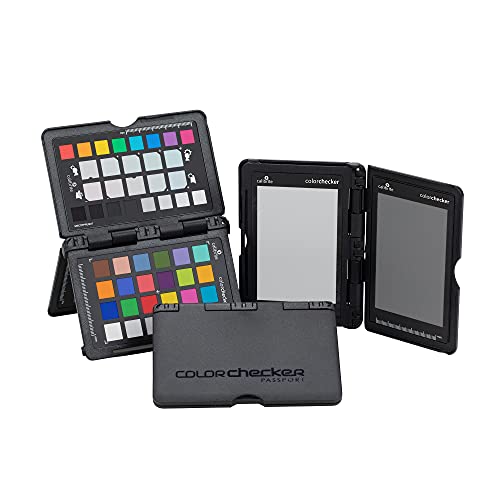
- Four targets for exposure, white balance, and profiling
- Supports DNG and ICC camera profiles
- Folding case with lanyard for location work
Best For: Photographers needing a complete portable camera-color workflow
Best Portable Paint Matcher

- Scans flat surfaces for matching paint colors
- Wireless app offers extensive brand color libraries
- Stores and shares multiple digital color values
Best For: Wall-to-wall paint matching and color coordination
Best Portable Video Reference

- Includes video, white-balance, and 24-patch targets
- Supports in-camera and post-production workflows
- Designed for matching multiple cameras
Best For: Filmmakers managing mixed lighting and multi-camera shoots
Best Portable Camera Color Checker

- 24 color targets plus a gray target
- Useful for white balance and HSL presets
- Compact design with protective sleeve
Best For: Location and multi-camera photography
Best Easy Monitor Colorimeter

- Guided 1 2 3 calibration workflow
- Supports up to two displays
- Includes before-and-after color check
Best For: Photo and video editing workstations
Best Portable Paint Color Matcher

- Matches more than 300,000 paint colors
- Returns RGB, HEX, and CMYK values
- No calibration required; IPX4 resistant
Best For: Paint matching and surface color identification
Complete Workflow Control

- Profiles displays, projectors, printers, cameras, and scanners
- Includes ColorChecker Classic Mini for camera profiling
- Ambient-light measurement supports print matching
Best For: Photographers and studios managing capture through print
Pocket Surface Matching
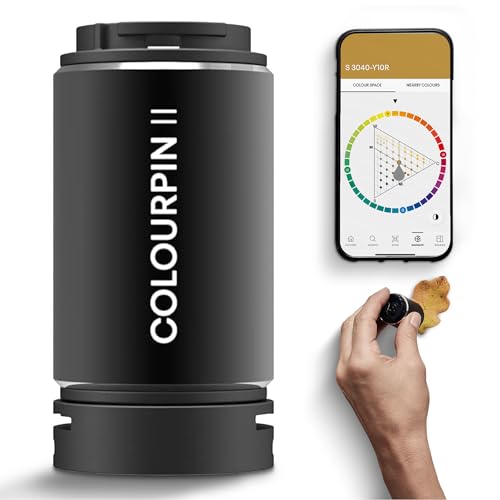
- Scans walls, fabrics, furniture, and other surfaces
- Bluetooth connects to the NCS+ app
- Includes calibration cap and USB cable
Best For: Designers and decorators matching colors on the go
Professional Material Matching

- Targets coated surfaces, textiles, and industrial applications
- Bluetooth works with the NCS+ app
- Includes case, calibration tile, and USB cable
Best For: Professionals matching materials and textiles in the field
Best Portable Camera Kit – ColorChecker Passport Photo 2
The ColorChecker Passport Photo 2 is one of the more complete portable color calibration tools for photographers and video creators. Its four targets support exposure checks, custom white balance, camera profiling, and color enhancement, while the folding case keeps the kit protected during location work.
Best For: Photographers and hybrid creators who need consistent color from capture through editing, especially when working across changing locations or lighting conditions.
Pros:
- Four targets cover exposure, white balance, profiling, and color enhancement.
- Supports DNG and ICC camera-profile workflows through Calibrite PROFILER software.
- Folding protective case and included lanyard make it convenient to carry and position.
Cons:
- Its camera-focused workflow may be more than needed for casual photography.
- Profile creation requires using the included software workflow.
This is a strong all-around choice when repeatable camera color matters more than having the smallest possible reference target. The case and lanyard are particularly useful for fast-paced travel or location shoots.
Best Portable Paint Matcher – Color Muse SE Colorimeter
The Color Muse SE is a compact colorimeter designed for scanning smooth, flat surfaces and finding closely matching paint colors. As portable color calibration tools go, it is aimed at practical paint matching rather than camera or monitor profiling, with wireless app connectivity and a rechargeable handheld design.
Best For: Homeowners, decorators, and painting professionals matching wall colors for larger repainting projects.
Pros:
- Wireless-enabled design works with the Color Muse app for convenient scanning.
- Provides access to color libraries from brands including Sherwin-Williams, Behr, Benjamin Moore, Valspar, and Munsell.
- Shares color values in formats such as HEX, CMYK, RGB, LAB, LCH, LRV, HSB, and HSV.
- Includes a carrying pouch, lanyard, and extra calibration cap.
Cons:
- Best results require smooth, flat surfaces.
- It is not recommended for small spot touch-ups; matches are intended for wall-to-wall painting.
- Colors shown on a phone screen may vary slightly from the scanned color.
The Color Muse SE makes sense for paint selection and coordination rather than technical imaging calibration. Its broad app-based color information and compact form are useful, provided the surface and project match its intended use.
Best Portable Video Reference – ColorChecker Passport Video 2
The ColorChecker Passport Video 2 is a focused set of portable color calibration tools for filmmakers and creators working in varied or mixed lighting. It combines a 24-patch ColorChecker Classic, a white-balance target, and two video targets to support both in-camera control and post-production matching.
Best For: Video creators and multi-camera productions that need more consistent color rendition across changing lighting conditions.
Pros:
- Includes dedicated video targets plus a 24-patch classic target and white-balance target.
- Helps match multiple cameras for more similar color rendering.
- Targets can be used in-camera or in post-production video editing software.
- Portable protective case adjusts to multiple positions and includes a lanyard.
Cons:
- Its specialized video focus may be unnecessary for still-photo-only users.
- The compact target set provides fewer reference functions than the four-target Photo 2 kit.
This is a practical choice for productions where mixed lighting and camera matching create recurring color problems. Its video-specific targets and flexible case make it especially suitable for location shoots and multi-camera workflows.
Best Portable Monitor Calibrator – Calibrite Display Pro HL
The Calibrite Display Pro HL is a portable colorimeter for calibrating and profiling modern LCD, mini-LED, OLED, and compatible projector displays. Its high-luminance sensor measures up to 3000 nits, while PROFILER software provides adjustment controls and validation tools for creative workstations.
Best For: Photographers, designers, and studios calibrating bright or HDR-capable displays and matching multiple screens.
Pros:
- Measures displays up to 3000 nits, including high-brightness and HDR-oriented panels.
- Works with Mac and Windows through USB-C, with a USB-A adapter included.
- PROFILER software supports white point, luminance, contrast ratio, gamma, presets, and custom patch sets.
- Includes profile validation, uniformity checks, quick checks, and flare correction.
Cons:
- Its advanced controls may be more than casual users need.
- Requires compatible computer software and a connected display workflow.
- The device is intended for displays and compatible projectors, not camera-scene color references.
This is the strongest fit for users who need dependable monitor color across modern high-brightness screens. Its validation and multi-display features add value for studios and anyone delivering color-sensitive work from more than one workstation.
Best Portable Camera Color Checker – SpyderCheckr 24
The Datacolor SpyderCheckr 24 is one of the most straightforward portable color calibration tools for photographers who need consistent camera color across changing locations, lenses, and lighting. Photograph the chart, then use the captured color and intensity data for white-balance adjustments and software-based HSL presets.
Best For: Location photographers, event shooters, and creators working with multiple cameras, smartphones, drones, or action cameras.
Pros:
- Includes 24 spectrally engineered color targets plus a gray target.
- Supports visual comparisons and custom white-balance adjustments.
- Compact 5.3-ounce design includes a protective sleeve for travel.
- Helps streamline batch RAW processing and multi-camera alignment.
Cons:
- It is a camera reference chart rather than a monitor colorimeter.
- Software-based calibration is part of the workflow after taking the test photo.
The SpyderCheckr 24 is a practical reference target for photographers who want repeatable capture color without carrying a bulky accessory. Its small format and protective sleeve make it particularly useful when lighting and camera systems change frequently.
Best Easy Monitor Colorimeter – Calibrite Display 123
The Calibrite Display 123 is a compact monitor colorimeter for creators who need portable color calibration tools for photo editing and more reliable on-screen color. Its guided 1 2 3 workflow simplifies setup, while USB-C connectivity and support for two displays suit small creative workstations.
Best For: Photographers, video editors, and creators calibrating one or two monitors with minimal setup.
Pros:
- Guided software workflow makes calibration approachable.
- Supports calibration for up to two displays.
- Offers Native or Photo brightness target selection.
- Includes a before-and-after comparison to verify the change.
Cons:
- Designed for displays, not direct paint or physical-surface matching.
- The supplied notes do not specify support beyond two monitors.
For users who want a simple monitor calibration process, the Display 123 focuses on the essentials: guided operation, flexible screen placement, and a quick before-and-after check. Its small body also makes it easier to keep available for regular recalibration.
Best Portable Paint Color Matcher – Nix Mini 3
The Nix Mini 3 is a portable color sensor for matching physical surfaces and translating them into digital color values. It can identify matches across more than 300,000 brand-name paints and provide RGB, HEX, and CMYK information, making it a useful alternative to traditional portable color calibration tools for paint and design work.
Best For: Home improvement, interior and exterior color selection, and designers who need paint matches or digital color codes.
Pros:
- Matches scans to a large library of brand-name paints.
- Provides RGB, HEX, CMYK, Pantone, RAL, and NCS color information.
- Requires no calibration and is rated IPX4 for dust and splash resistance.
- Includes a diagnostics tile, lanyard, and USB-C cable.
Cons:
- Works better on matte samples than highly reflective surfaces.
- Paint-library availability varies by country or region.
- It is intended for surface matching rather than monitor calibration.
The Nix Mini 3 is the most specialized option here: it measures real-world surfaces instead of calibrating a camera or display. Its no-calibration operation, broad paint database, and splash resistance make it convenient for paint-selection jobs and on-site color checks.
Complete Workflow Control – Studio Spectrophotometer
For photographers and color-critical creators comparing portable color calibration tools, the Calibrite ColorChecker Studio is a broad workflow solution. It profiles displays, projectors, printers, paper, cameras, and scanners, while the included ColorChecker Classic Mini supports custom camera profiling.
Best For: Photographers and studios that need one tool for capture, screen, projector, and print color management.
Pros:
- Supports monitor, laptop, projector, printer, paper, camera, and scanner profiling.
- Adaptive iterative profiling can optimize results for each display.
- Ambient-light measurement helps with print-to-screen matching.
- Includes the ColorChecker Classic Mini, USB cable, and monitor holder pouch.
Cons:
- Its wide feature set may be more than needed for simple display calibration.
- At 14.5 ounces, it is less pocket-friendly than compact color readers.
This is the strongest choice here for end-to-end color control rather than quick surface matching. Choose it when consistent results across camera, display, and output are more important than minimal size.
Pocket Surface Matching – Colourpin II Color Reader
The NCS Colourpin II is one of the most portable color calibration tools for quick surface-color matching. It scans walls, fabrics, furniture, and other surfaces, then connects by Bluetooth to the NCS+ app for saving, organizing, and sharing selections.
Best For: Interior designers, decorators, and homeowners who need quick, portable color matching on everyday surfaces.
Pros:
- Compact design weighs about 0.038 kg and fits easily in a pocket.
- Bluetooth connection enables color storage, sharing, and mood-board creation in the NCS+ app.
- Includes a calibration cap and USB charging cable.
- Designed to read gloss and surface colors across interior and exterior projects.
Cons:
- It is focused on surface matching rather than full monitor, printer, or camera profiling.
- Using the device’s features requires a compatible smartphone and NCS+ app connection.
The Colourpin II prioritizes portability and straightforward surface scans. It is a practical pick for matching colors in the field, especially when app-based organization and collaboration are useful.
Professional Material Matching – Colourpin PRO Color Reader
The NCS Colourpin PRO is a portable color calibration tool aimed at professional material matching. It is designed for coated surfaces and textiles, connects to a smartphone through Bluetooth, and includes a calibration tile, protective case, and USB cable.
Best For: Interior design, painting, manufacturing, and other professional projects requiring repeatable matching on coated materials or textiles.
Pros:
- Designed for coated surfaces, textiles, and industrial color-matching work.
- Bluetooth connectivity supports scanning, saving, sharing, and mood-board organization through NCS+.
- Includes a protective case and calibration tile for field use.
- Battery-powered and compact for on-the-job portability.
Cons:
- Its stated focus is material and surface matching, not display or printer profiling.
- The listed dimensions are inconsistent in the supplied specifications.
Choose the Colourpin PRO when your work centers on physical materials and professional color consistency. The included calibration accessories and case make it better suited to repeated field use than a basic color-reference workflow.
How We Picked These Portable Color Calibration Tools
We selected tools that address distinct color-management tasks rather than treating every device as interchangeable. The lineup includes camera reference charts for white balance and exposure, display colorimeters for monitor profiling, broader spectrophotometers for device-based color management, and portable readers for paint, coated surfaces, and textiles.
Our comparison focuses on measurement purpose, portability, supported surfaces or devices, software workflow, connectivity, durability, and the level of precision each tool is designed to provide. A compact color reader may be ideal for field matching, while a monitor colorimeter or spectrophotometer is better suited to controlled production work.
Quick Comparison
- Camera and video color: ColorChecker Passport Photo 2, ColorChecker Passport Video 2, and SpyderCheckr 24 provide physical reference targets for consistent capture and correction.
- Monitor calibration: Display Pro HL and Display 123 are designed for profiling compatible screens, with different levels of brightness support and workflow complexity.
- Complete color management: ColorChecker Studio is the broadest option for display, projector, printer, and scanner profiling.
- Paint and surface matching: COLOR MUSE SE and Nix Mini 3 are compact color-matching sensors for practical field use.
- Design and textile workflows: NCS Colourpin II and Colourpin PRO emphasize Bluetooth sharing and portable surface-color measurement.
Key Buying Factors for Portable Color Calibration Tools
Choose the Right Calibration Task
First decide whether you need to correct camera capture, calibrate a display, profile an output device, or identify a physical color. A gray card or target cannot replace a monitor colorimeter, and a paint reader is not designed to profile a printer.
Check Compatibility and Software
Review operating-system support, required apps, USB or Bluetooth connectivity, and whether the workflow integrates with your editing or design software. Simple guided software can be more valuable than advanced features if multiple people will use the device.
Consider Brightness, Surfaces, and Accuracy
For modern high-brightness LCD, Mini LED, and OLED displays, verify the device’s supported luminance range. For physical samples, check whether the reader is intended for paint, coated materials, textiles, or other surfaces. Controlled lighting and clean reference targets also affect results.
Balance Portability with Versatility
Small tools are easier to carry, but broader measurement capability often increases size, setup time, and cost. Select the lightest device that supports your actual workflow rather than paying for unused functions.
Who Should Buy Which Portable Color Calibration Tools?
Photographers and videographers should prioritize a camera chart with dependable white-balance, exposure, and color references. Photo editors and content creators will usually benefit most from a monitor colorimeter matched to their display type and brightness.
Print studios and color-management professionals should consider a spectrophotometer capable of profiling multiple devices. Interior designers, retailers, decorators, and contractors may prefer a Bluetooth color reader for quick paint or surface matching. Textile and product designers should look for a reader built around coated surfaces or fabrics, with easy color sharing and documentation.